Voice AI Recruiters: How They Cut Screening Time
Voice AI recruiters screen candidates in minutes instead of days. How they work, where they fit, and where human judgment still wins.
Ployo Team
Ployo Editorial

TL;DR
- Strong candidates accept offers within ~10 days (Genius).
- 60% of job seekers abandon long applications (SHRM).
- Voice AI screens 1,000 candidates simultaneously, 24/7.
- 75% of candidates report better experience with AI immediate response (ApolloTechnical).
- The strongest version of this today is a live AI video interview, not a phone call. Ployo runs it that way, with a full recording and transcript for every candidate.
- AI does instant qualification; humans handle final judgment + culture.
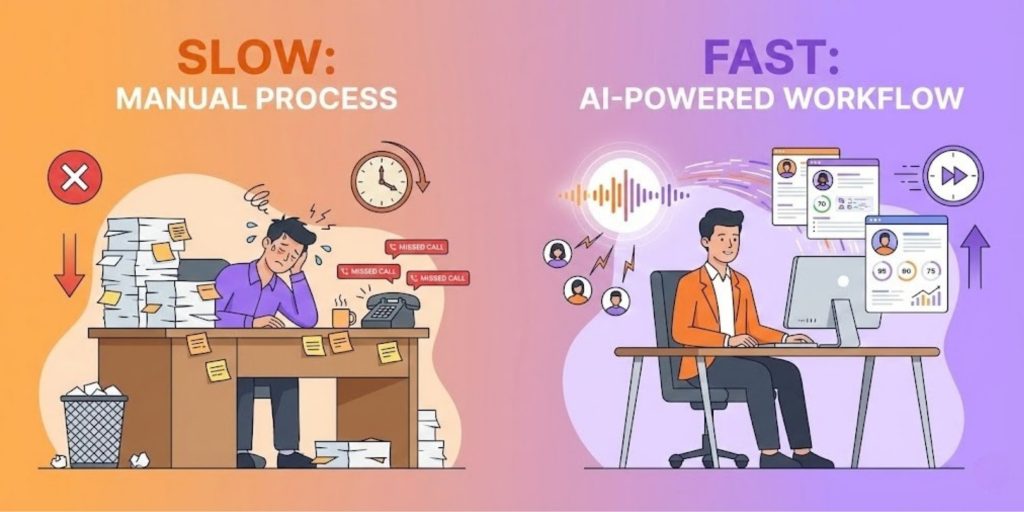
Hiring is fast, but most teams still rely on slow manual screening. Strong candidates accept offers while recruiters are still trying to schedule first calls. Voice AI recruiters fix this by handling initial screening automatically. This guide explains how they work, where they excel, and where human judgment still has to step in.
What a Voice AI Recruiter Is
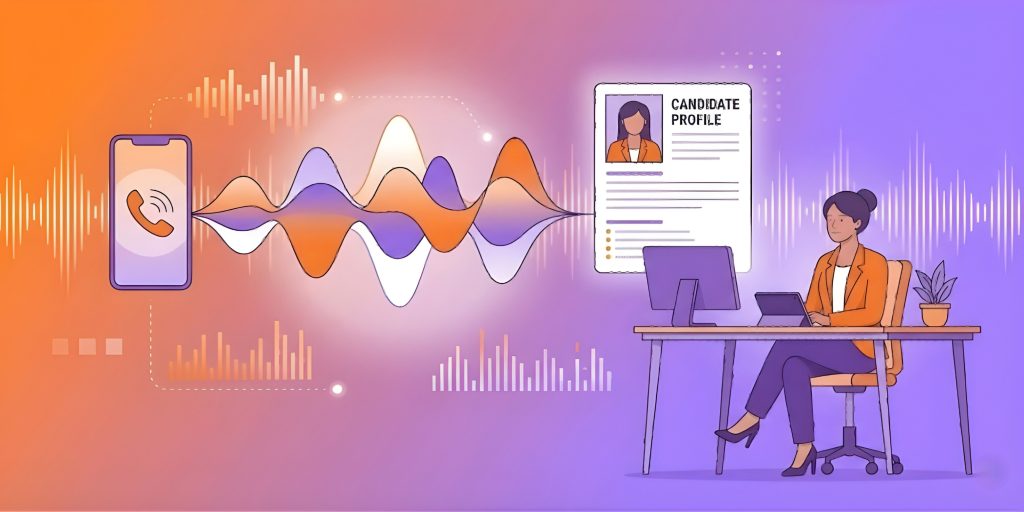
Software that runs a live, adaptive conversation with a candidate during early screening instead of a static form. Unlike text chatbots, it listens to the full answer, asks follow-up questions, and reacts in the moment.
The category started on the phone: an automated call working through a fixed script. Ployo runs the same job as a live AI video interview instead. Sarah, Ployo's AI interviewer, asks role-aware questions, listens, and asks intelligent follow-ups whenever an answer is vague or needs more depth. Every interview is recorded on video with a full transcript, so a recruiter reviews exactly what was said and how it was said, not just a score.
Core function
Verify basic qualifications, availability, and interest, then integrate results into your ATS so only qualified leads reach human interviews.
Why Screening Speed Matters

Three pressures driving urgency.
Strong candidates move fast
Per Genius data, top candidates accept offers within ~10 days. Two weeks to set up an initial call = opportunity gone.
Bad hires are expensive
Per HR.com analysis, a poor hire costs ~30% of first-year pay. Recruiters then over-correct with slow second-guessing.
Application abandonment
Per SHRM research, 60% of seekers abandon applications that take too long.
How Voice AI Improves Speed
Four ways it accelerates hiring.
Instant engagement
Resume submitted → screening call initiated. Eliminates the callback "black hole".
Simultaneous processing
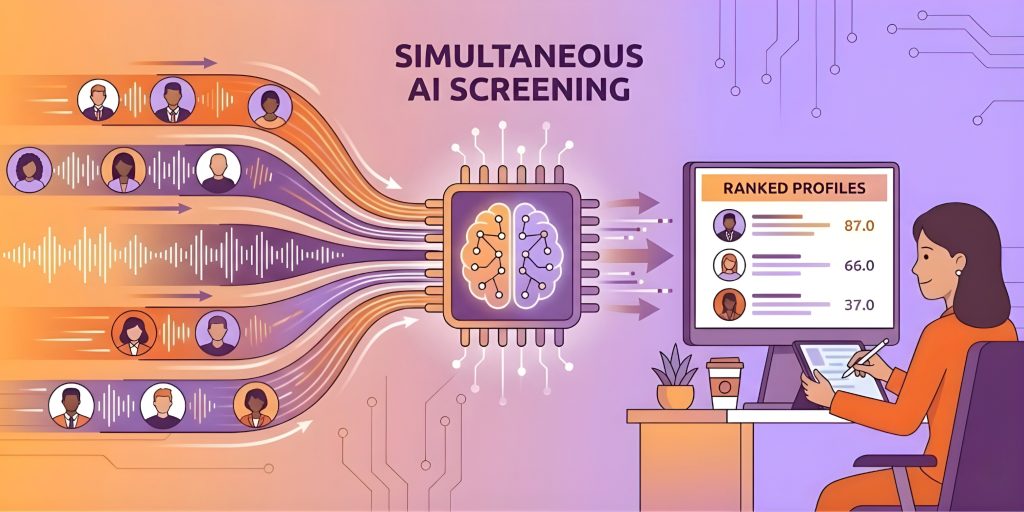
While a human handles one call at a time, voice AI screens 1,000+ simultaneously.
Better data handling
AI candidate matching ranks candidates from the screening data instantly, so your team skips straight to the top 10%. Ployo does this from the video transcript of the interview itself, with a Met, Partial, or Not Met verdict against every requirement.
Reduced admin work
Automated scheduling and data entry save recruiters 15–20 hours weekly. Time reinvests into final-stage interviews.
Voice AI vs Traditional Screening
| Feature | Traditional | Voice AI |
|---|---|---|
| Response time | 2–5 days | Under 5 minutes |
| Availability | 9 AM – 5 PM, Mon–Fri | 24/7/365 |
| Scalability | Limited by headcount | Unlimited |
| Consistency | Varies with mood/bias | 100% consistent |
| Data capture | Manual notes | Auto transcription + analysis |
Where Voice AI Excels (and Doesn't)
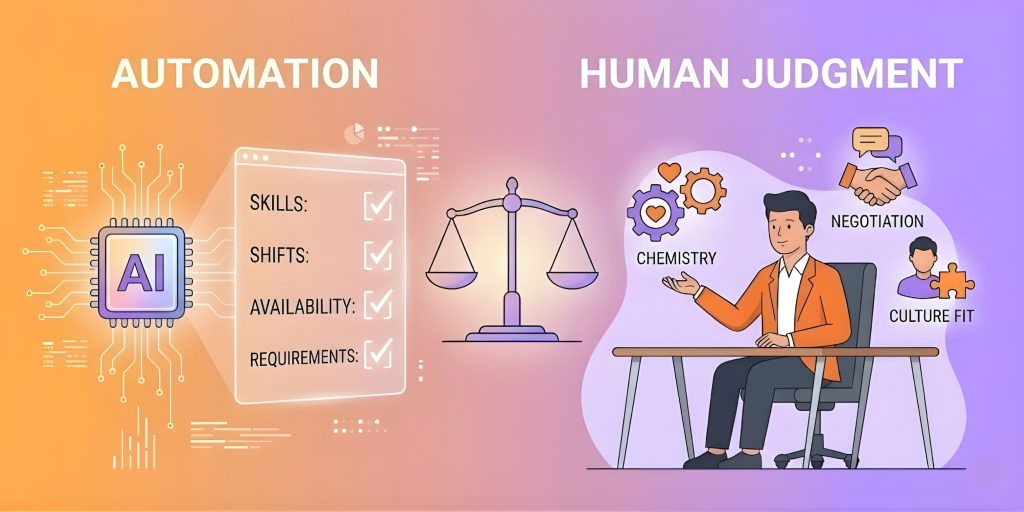
What Voice AI does well
- Filters must-have requirements (licensing, shifts, salary expectations)
- AI cognitive testing and situational judgment tests
- High-volume roles in retail, logistics, customer service
- Reduces ghosting via constant communication
Where humans still own the decision
- Complex cultural fit and chemistry assessment
- Executive comp negotiation
- Final hiring decisions
Candidate Experience

Common assumption: candidates dislike AI. Reality: they prefer fast AI to human silence.
Per ApolloTechnical surveys, 75% of candidates report better experience with recruitment automation because of immediate feedback.
Keep experience positive: always disclose AI involvement up front and provide an easy path to request human assistance.
How Voice AI Fits Modern Hiring
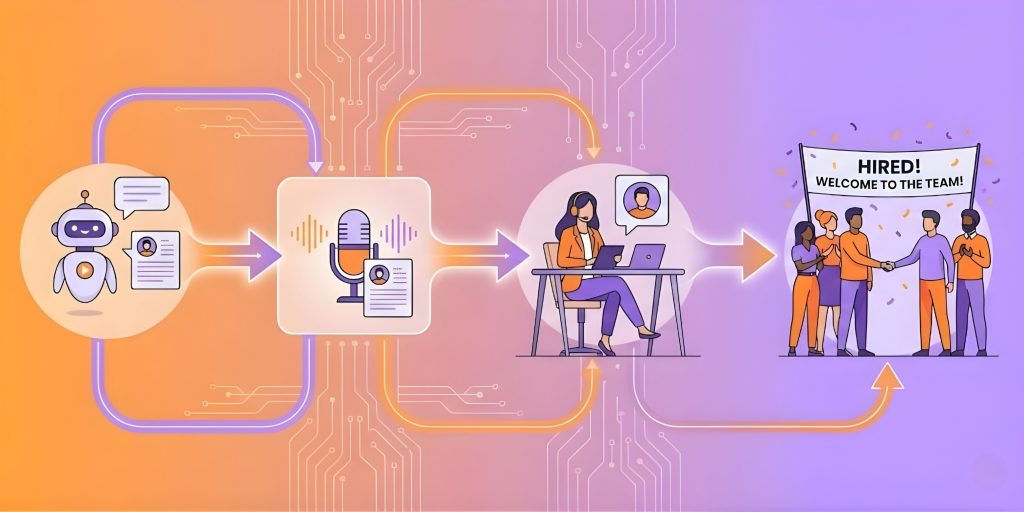
AI screening works best paired with conversational recruiting chatbots on career pages. The chatbot captures the lead, then a live interview qualifies it in minutes instead of days. With Ployo that qualifying step is a video conversation, not a phone call, and the recording plus transcript are what a recruiter reviews afterward. Creates a frictionless entry into your company.
This "high-tech, high-touch" pattern automates the funnel top so human recruiters can deliver empathy and personalisation to the final few candidates most likely to join.
The Bottom Line
In modern hiring, timing decides outcomes. AI screening cuts response time from days to minutes, screens at scale, and frees human recruiters to focus on the conversations that actually matter. The strongest implementation of this today is a live AI video interview rather than a phone call: same speed, same 24/7 availability, but you're left with a video recording and transcript for every candidate, not just a call log. Start with one high-volume role, measure the lift, then expand. The case usually makes itself within the first cycle.
FAQs
Is voice AI replacing recruiters?
No. It's a co-pilot. AI handles the first round, live video interviews at scale, while recruiters handle persuasion, judgment, and culture fit.
Do candidates like voice AI screening?
Many do, because of the immediate response. A short AI video interview beats weeks of waiting for a recruiter to find time.
Is voice AI fair?
When properly configured, yes. Same questions in the same way for everyone reduces bias common in human phone screens.
How accurate is voice AI screening?
Strong at clear answers and simple signals. May miss subtleties, but reliably identifies candidates meeting main requirements.
What's the highest-leverage starting move?
Deploy a live AI video interview on your single highest-volume role for 30 days. Measure response rate, time-to-shortlist, and recruiter hour reclamation. The data speaks louder than vendor pitches.
Curious what this looks like in practice? Book a Demo and we'll walk through a live Ployo interview.