
Hiring mental health, AOD and peer support workers
These roles sit at frontline hiring volume with the same queues and no-shows as disability support, and none of them carries a statutory registration. What makes them different is that for peer and lived experience roles the qualifying credential is something a candidate discloses about the hardest period of their life, which is not a normal screening question and should not be designed like one.
30-minute call · See Ployo on one of your live roles
Which of these roles is registered, and which is not?
None of them, and getting this wrong in either direction causes problems. Demanding a registration that does not exist screens out good candidates; assuming a title implies one puts an unassessed person in a sensitive role.
| Role | Registration | What that means for screening |
|---|---|---|
| Mental health support worker | None | Certificate IV entry, SCHADS award. Volume hiring |
| AOD worker | None | Reported shortage often worsened by a slow process |
| Peer / lived experience worker | None | Lived experience is the credential. Needs its own design |
| Mental health nurse | Ahpra registered | Free public register. Scarce and candidate-led |
| Psychologist | Ahpra registered | Free public register. Scarce and candidate-led |
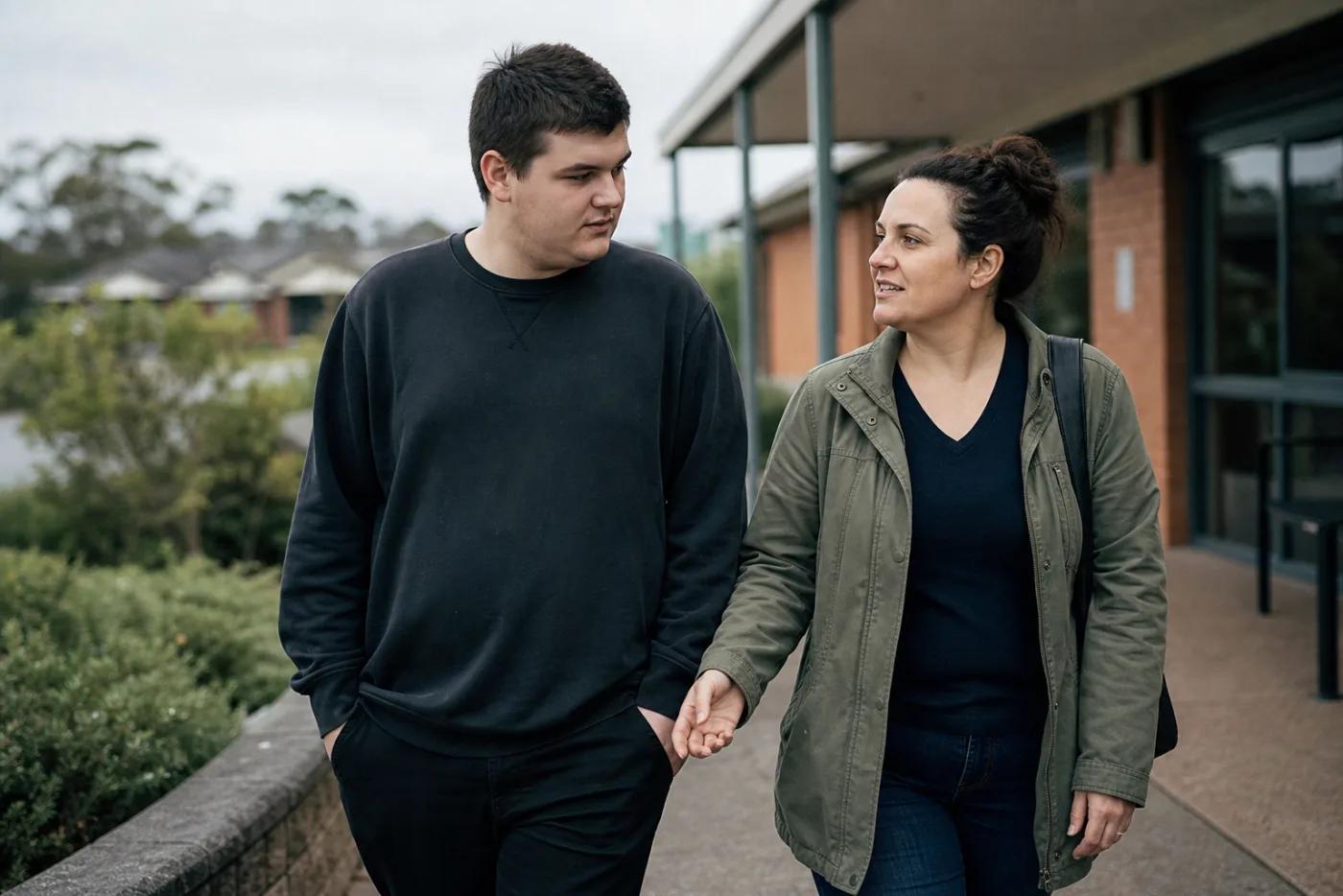
Peer and lived experience roles need a different screening design
This is the section worth reading twice, because standard recruitment practice fits these roles badly.
For a peer worker, lived experience of mental illness, disability or recovery is the qualification. It is not a document to verify, it is something a person discloses about themselves, and a screening process designed for verifying certificates will handle it clumsily.
Two practical positions. Ask about the capability the role needs, which is the ability to use one's own experience purposefully in support of somebody else, rather than asking for the experience itself in detail. And be deliberate about what gets recorded, because a recording of someone describing their mental health history is sensitive information under the Privacy Act and carries obligations that a normal interview record does not.
What to establish at interview for the volume roles
For mental health support, AOD and peer roles the useful facts are narrow, consistent, and largely absent from a CV.
Which cohorts they have worked with. Mental health, AOD, disability and aged care are not interchangeable, and strength in one says little about another.
What they have actually done, in duties rather than titles. Group facilitation, one to one support, outreach and crisis response are different jobs.
How much autonomy they have worked with, and who they escalated to. Community roles are frequently solo.
How they respond when a plan does not work. The first answer to a difficult client question is rehearsed; the follow-up is where you learn something.
Actual availability, including evenings and weekends, and travel distance. This is the mismatch that produces the week-three resignation.
Whether their certificate is completed or in progress. Both can be fine. You need to know which.
Why does hiring take so long for these roles?
Three causes compound, and only one of them is a shortage.
Applicants apply broadly and the provider who speaks to them first is usually the one who hires them. Screening capacity is the bottleneck rather than applicant volume, because these roles pull frontline-level numbers into services that rarely have a dedicated recruiter. And the checks take the same time regardless.
The AOD sector in particular reports difficulty filling roles, and part of what gets attributed to shortage is a process that loses available candidates to a faster competitor.
The record matters more here than almost anywhere
None of these roles has a register to check, which changes what your file needs to contain.
For a physiotherapist you can verify registration in seconds and the interview does less work. For a mental health support worker there is nothing to verify, so what you have is what the candidate told you and what you wrote down. If a decision is ever questioned, by a participant, a funder or a regulator, a transcript quoting the candidate's own words is a materially better record than a coordinator's note.
A real interview, on video, that follows the answer
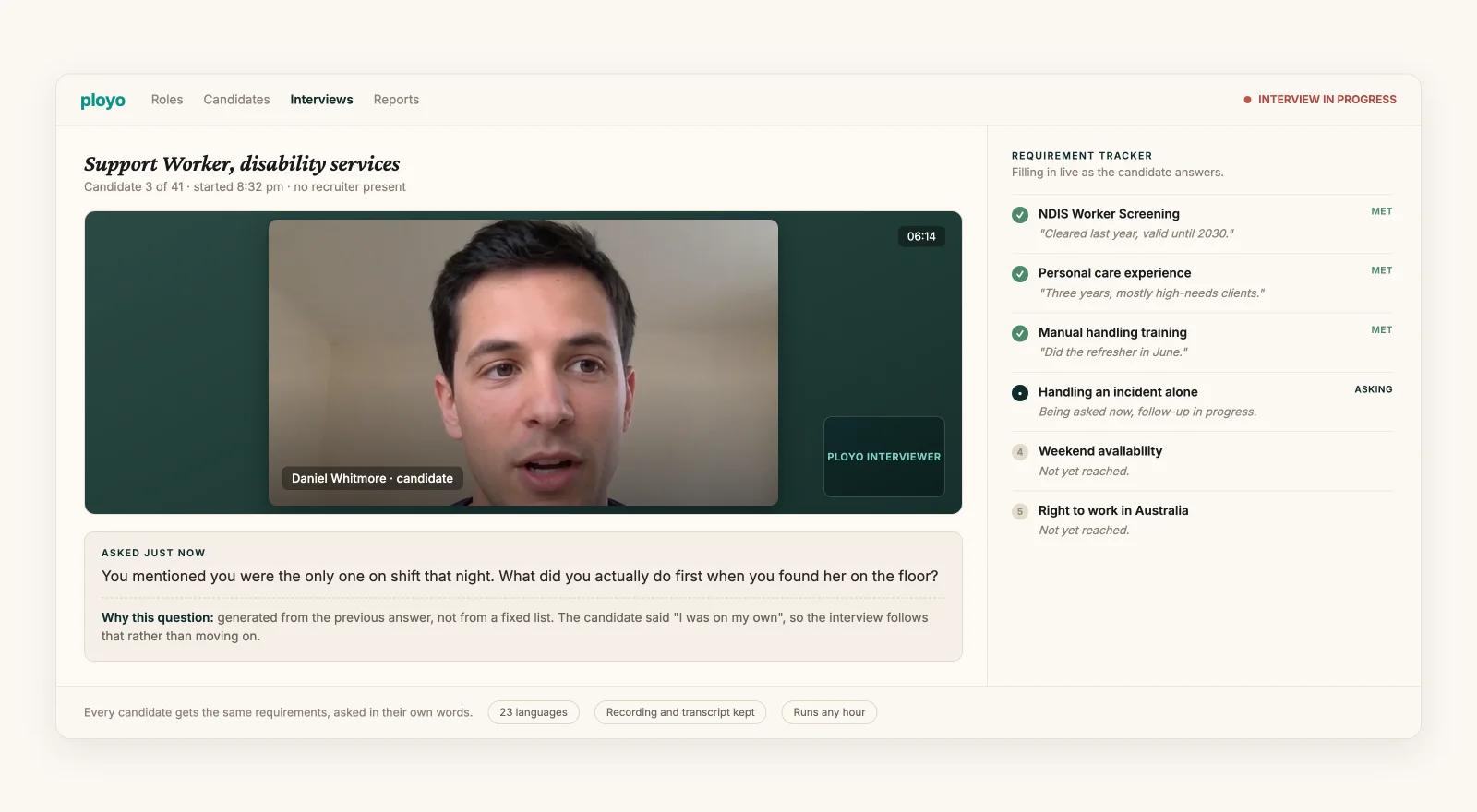
How Ployo handles these roles
Ployo is an AI video interviewer built for Australian care and health providers hiring at volume. Every applicant is interviewed on video, usually within minutes of applying, and comes back with a transcript and the evidence behind the assessment.
Ployo ranks and evidences. It does not auto-reject, and every verdict quotes the candidate's own words from the transcript.
For peer and lived experience roles that matters: what gets asked, and therefore what gets recorded, is your decision and not a default.
Plans start at US$249 a month with interviews included, no per-seat licence and no volume floor, so a small service buys the same product a group does.
Under about ten hires a year, for Ahpra-registered clinical roles where volume is low, and for candidates whose connection will not hold a live video call. There is no audio-only fallback.
Frequently asked
01Are mental health support workers or AOD workers registered?
No. Neither carries a statutory registration, and nor do peer or lived experience workers. Entry is typically a Certificate IV or lived experience, and the roles sit under the SCHADS award. Mental health nurses and psychologists are Ahpra registered; the support roles are not.
02How should we screen for lived experience in a peer worker role?
Ask about the capability the role needs, which is using one's own experience purposefully to support someone else, rather than asking for the experience itself in detail. Be deliberate about what is recorded: information about a person's mental health is sensitive information under the Privacy Act.
03Is automated screening appropriate for peer support roles?
It can be, provided you author the questions and think about what is recorded. These roles deserve more design attention than a default template gives them, and if you run one process across a whole portfolio, this is the role it will fit worst.
04Why is it so hard to fill AOD worker roles?
A genuine shortage is part of it, but so is process. These roles pull frontline volume into services that rarely have a dedicated recruiter, so screening capacity becomes the bottleneck and available candidates go to whoever speaks to them first.
05What should we establish at interview for these roles?
Which client cohorts they have actually worked with, what they did rather than their title, how much autonomy they had and who they escalated to, how they respond when a plan does not work, and their real availability including evenings and travel.
Trusted by hiring teams at








See it on one of your live roles
Book a Demo, a 30-minute call. We'll set Ployo up on a role you're hiring for right now and walk through the shortlist together.
30-minute call · See Ployo on one of your live roles