

Automated CV Screening: The Real Cost Case for Replacing Manual Review
Automated CV screening cuts review time by 75% and lifts hiring accuracy — the recruiter hours, dropped candidates, and hidden costs it quietly removes.
Ployo Team
Ployo Editorial
TL;DR
- Automated CV screening compresses initial review time by 75-80% and parses resumes at 95%+ accuracy.
- Manual screening burns recruiter hours and quietly loses candidates to slow feedback loops.
- Open roles cost real money for every day they stay open — automation closes that gap.
- The technology removes a major source of unconscious bias by applying the same rubric to every resume.
- The ROI shows up everywhere: lower cost-per-hire, faster time-to-fill, better candidate experience.
Manual CV screening is the most expensive part of recruiting that no one writes down on a budget. Hours of recruiter time, candidates who drop out while they wait, roles that stay open because the funnel is bottlenecked at the read-the-resume step. Automated CV screening removes most of that cost. This guide walks through the actual cost case — the recruiter hours saved, the candidate retention lifted, the bias reduced — and what a modern automated screening tool brings to the recruiter's day.
The Real Problem With Manual Screening

Recruiters skim. A widely cited eye-tracking study found that the typical first-pass review takes 6 to 8 seconds per resume. At 500 applicants for one role — a normal volume for a popular posting — that is still an hour of solid first-pass review, plus a second deeper pass for the survivors.
The cost is not just time. While the recruiter is buried in resumes, candidates are waiting. Roughly one in six candidates drops out of a process if they do not hear back quickly — meaning the slow review actively pushes good candidates out of the funnel. The default methods of recruitment compound the problem: every additional manual step is another opportunity for the strong candidates to find an offer somewhere faster.
The Hidden Cost of Manual Screening

Time is the most visible cost, but it is not the largest one.
- Recruiter time at market rate. One study calculated that manually screening 100 resumes consumes around €375 in recruiter time alone; the total downstream savings from automating that work runs closer to €4,000 per 100 candidates once dropped applicants and slow time-to-fill are included.
- Open-role drag. Every day a role stays open costs the business in lost productivity — common estimates run up to $500 per day per open seat, and that is before the recruiting cost itself.
- Decision fatigue. Reviewing 500 resumes is genuinely tiring. By resume 300, the recruiter is grading on a different scale than they were on resume 50. Inconsistency at scale produces uneven shortlists.
Add those three together and the cost of manual screening is far higher than the line item on the recruiting budget suggests.
What Automated CV Screening Actually Is

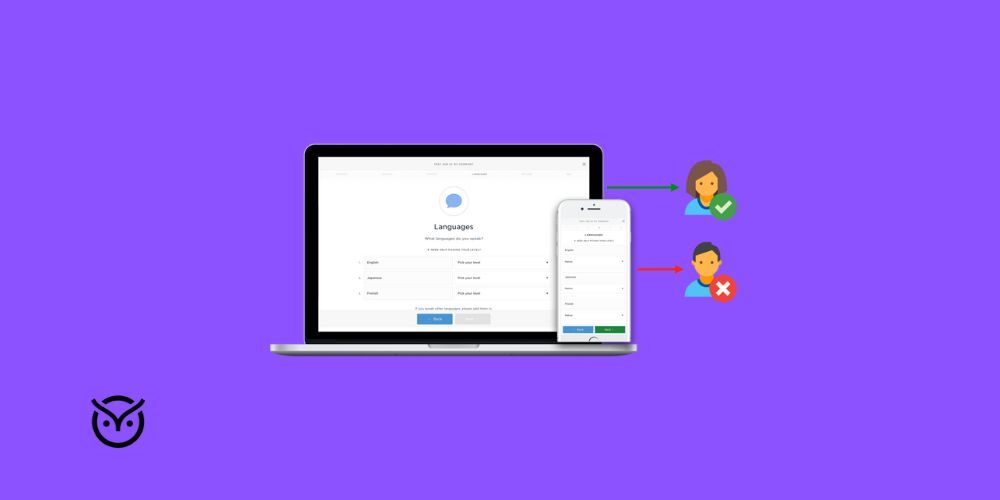
At its core, automated CV screening is a model that reads incoming resumes, parses them into structured candidate records, scores each against the role's requirements, and surfaces the strongest matches first. The recruiter still owns the decision; the model removes the manual triage that precedes it.
Modern parsing tools hit around 95% accuracy on extracting work history, skills, and education — accurate enough to drive a real shortlist rather than a noisy "AI-ranked" list that needs full re-review. The recruiter ends up with a clean, searchable candidate database and a sorted shortlist for every role, in the time it used to take to read the first ten resumes. It is the practical core of any modern pre-screening workflow.
Why the Cost Case Lands So Decisively

The savings show up in four places at once:
- Recruiter hours back. The same shortlist that took 16 hours of manual work takes 30 minutes of review on an automated pipeline.
- Lower cost-per-hire. A Deloitte HR automation analysis found that companies using automation in hiring see roughly 30% lower cost-per-hire on average.
- Faster time-to-hire. Open roles close faster, which compresses the per-day drag cost of every unfilled seat.
- Bias reduction. Resume redaction features and uniform scoring rubrics remove some of the structural sources of bias that creep into manual review.
For startups, the cost case is the time. For larger teams, it is the cost-per-hire and the compliance posture. Both add up to the same conclusion.
Manual vs Automated, At a Glance

| Factor | Manual Screening | Automated Screening |
|---|---|---|
| Time per 500 CVs | ~16 hours | ~30 minutes |
| Cost per 100 CVs | €375+ in recruiter time | ~€40-60 in tool cost |
| Consistency | Drifts with recruiter fatigue | 95%+ accurate parsing across the pile |
| Bias controls | Hard to apply uniformly | Built-in redaction and structured scoring |
| Candidate experience | Slow, often silent | Faster responses, smoother flow |
The shape of the comparison is consistent: every row that matters tilts the same direction.
How Ployo's Free CV Scanning Tool Fits

Ployo's free CV scanning tool puts automated screening in front of any recruiter without a procurement cycle. Resume parsing, fit scoring, and a sorted shortlist run inside one dashboard powered by the same AI in recruitment layer used in larger Ployo deployments.
Practically, the tool functions as an ATS-compatible front end: it ingests resumes from whatever source recruiters use, parses them cleanly, and produces a sorted candidate list. Recruiters spend their time talking to the strongest candidates; candidates spend less time waiting. Try the tool here.
The Bottom Line
Manual CV screening is not a free baseline — it is an expensive habit that quietly drains recruiter time, loses qualified candidates to slow feedback, and produces shortlists that drift with the recruiter's energy levels. Automated CV screening removes most of those costs in one move. The technology is mature, the parsing is reliable, and the savings show up in the metrics that recruiting teams actually report on. The question is no longer whether to automate the first pass — it is which tool to put in front of the recruiter.
FAQs
Is automated CV screening actually accurate?
Yes. Modern parsing tools hit around 95% accuracy on standard resume fields — work history, skills, education, certifications. That is accurate enough to drive a real shortlist rather than a noisy ranked list that needs re-review.
Does automation replace the human recruiter?
No. It replaces the manual triage that precedes the recruiter's actual work. Final hiring decisions, interview conversations, cultural fit, and offer construction remain firmly with humans.
How much does automated CV screening cost?
Pricing varies. Most tools charge per role or via a subscription that starts in the low hundreds of dollars annually. Ployo's free CV scanning tool removes the cost barrier entirely for teams that want to test automation first.
Can automated screening reduce hiring bias?
Yes, when used well. Resume redaction (blanking out names, photos, dates of birth), uniform scoring rubrics, and consistent prompts across candidates all measurably reduce the bias that creeps into freeform manual review.
Are employers allowed to share ATS data across companies?
No. Applicant data is private; sharing it outside the employer without the candidate's consent typically breaches GDPR or local labour law. Any reputable ATS or screening tool operates inside those rules by default.
Keep reading

How AI Reshapes Resume Screening: Speed, Quality, and Honest Limits

Beating CV Keyword Filtering in 2026: How AI Changes the Game
