

Beating CV Keyword Filtering in 2026: How AI Changes the Game
Modern AI screening understands meaning, not just keywords — what this means for candidates writing CVs and recruiters using the new tools.
Ployo Team
Ployo Editorial

TL;DR
- Traditional ATS keyword filtering rejects up to 75% of resumes before a human reviews them.
- 79%+ of organisations have integrated AI into their ATS in some capacity.
- ~65% of recruiters actively use AI in hiring.
- Modern AI screening reads semantic meaning, not just exact keywords.
- Best practice for candidates: mirror real job requirements in natural language, lead with measurable outcomes.
The "ATS will reject your resume if you don't stuff it with keywords" advice is increasingly out of date. Traditional keyword-matching ATS still exists, but the dominant trend is toward AI-driven screening that understands meaning rather than just words. This changes everything — for candidates writing resumes, and for recruiters using the tools. This guide walks through how keyword filtering used to work, why it failed, how AI changes it, and the new best practices for both sides.
What CV Keyword Filtering Used to Be

Traditional Applicant Tracking Systems (ATS) scan resumes for exact matches against keyword lists derived from job descriptions. If your resume said "led sales staff" and the system was looking for "managed sales team," you got filtered out — same meaning, different words, but the match failed.
The system penalised:
- Synonyms that didn't match the search terms exactly
- Career changers whose vocabulary didn't match the new industry's keywords
- Non-native English speakers using different idioms
- Anyone using formatting (tables, images) that confused the parser
It rewarded:
- Candidates who memorised current keyword trends
- Those who could match job description language exactly
- Heavy keyword-stuffing without supporting substance
The mismatch produced enormous false-negative rates — strong candidates filtered out, weak candidates promoted on keyword stuffing.
Why Traditional Keyword Filtering Failed
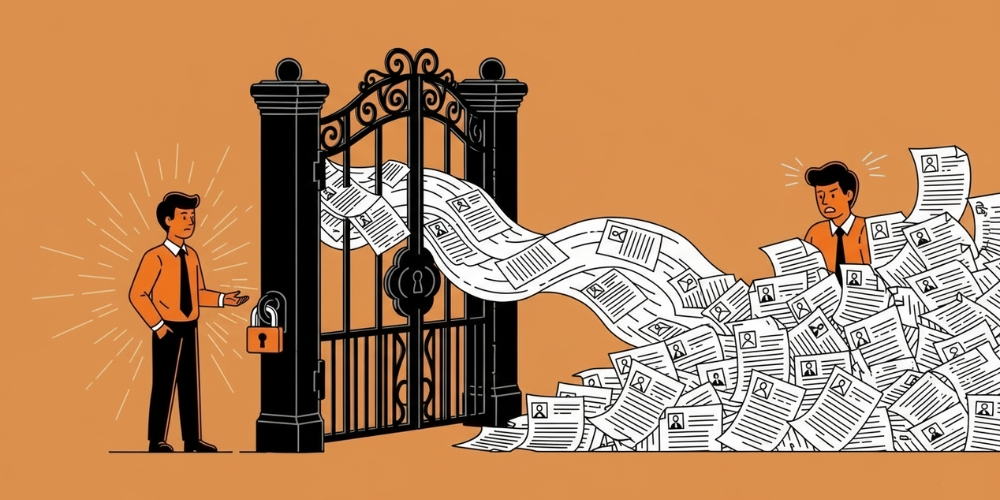
Five structural failures of pure keyword matching.
Missed talent
Strong candidates whose phrasing didn't match the keyword list got rejected. The system's job was to filter; it filtered too aggressively.
Bland CV writing
To beat keyword filters, candidates stripped substance and added buzzwords. The result: a generation of resumes optimised for parsing but empty of meaning.
Over-focus on words, under-focus on fit
Recruiters saw CVs that matched all the keywords but didn't actually fit the role. The keywords-vs-substance gap widened.
False negatives from format
Unusual file types, design elements, or table-based layouts confused parsers. Even strong candidates with right keywords could get filtered out.
False positives
Candidates who learned to keyword-stuff passed the filter while lacking real skills. Recruiters wasted time on these.
SelectSoftware Reviews data shows 79%+ of organisations have integrated AI into their ATS, and Tidio's recruiting research shows ~65% of recruiters actively use AI in hiring. The shift away from pure keyword matching is well underway.
How AI Changes Screening
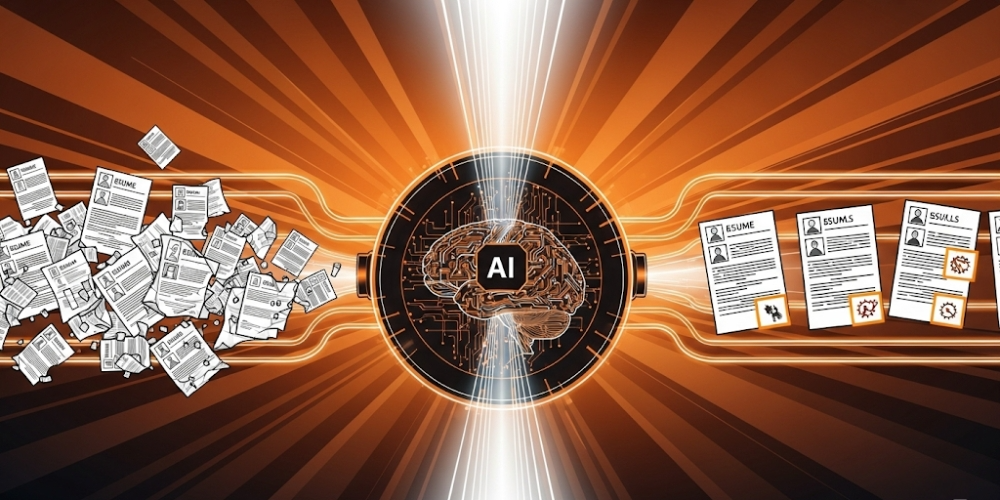
Modern AI screening makes five concrete improvements.
1. Semantic understanding
Modern tools understand meaning, not just words. "Led cross-functional teams" is recognised as relevant to a job asking for "management experience" even though the words don't match exactly.
2. Context over isolated terms
AI evaluates how skills appear together, what outcomes they produced, and how the experience fits the role. Substance gets credit; keyword stuffing without substance gets discounted.
3. Adaptive synonym matching
AI learns synonyms and related skills from many candidate examples. "Salesforce admin" and "CRM administration" become connected; "SQL" and "data analysis" link.
4. Format tolerance
Modern parsing handles unusual layouts, embedded images (with OCR), and multi-column resumes better than legacy ATS. Format mistakes are less fatal than they used to be.
5. Bias reduction (when designed well)
Consistent semantic evaluation across all candidates produces less variability than keyword matching combined with recruiter review. Bias still exists in training data — but it's more auditable than human first-pass screening.
What This Means for Candidates
The advice has shifted. The old advice — keyword-stuff your resume — produces worse outcomes against modern AI. The new advice:
Mirror real job requirements naturally
Use the language of the job posting where it genuinely fits your experience. Forced keyword stuffing reads worse to AI than authentic language.
Lead with measurable outcomes
"Increased revenue by 25% through new pipeline process" beats "results-driven professional." AI weighs outcomes more than adjectives.
Use clean format
Standard fonts, clear headings (Work Experience, Skills), no embedded images of text, no complex tables. Format clarity helps both AI and human reviewers.
Balance hard and soft skills
Technical keywords matter; behavioural skills (with examples) matter alongside them. Pure technical resumes feel one-dimensional; pure soft-skill resumes feel evidence-thin.
Customise per application
Generic resumes underperform tailored ones. Each application deserves 10-15 minutes of customisation — adjusting wording to mirror the specific role.
Stay current on industry trends
The most-searched keywords shift year to year. "Cloud computing" and "AI literacy" carry more weight in 2026 than they did in 2020. Stay current in your industry.
What This Means for Recruiters

For recruiters, the shift unlocks two important benefits.
Better signal on real fit
When the screening tool understands meaning, the shortlist reflects actual fit rather than keyword presence. Recruiters spend interview time on candidates who actually merit it.
Fewer false negatives
Strong candidates with non-standard backgrounds make it through more often. The talent pool widens without diluting quality.
IntelligentCV research notes ATS rejects up to 75% of resumes before any human sees them. Even modest improvement in false-negative rate dramatically expands accessible talent.
Faster shortlisting
Recruitment automation tools compress the time from application to decision. Recruiter time shifts from sorting toward evaluation, conversation, and closing.
Practical CV Tips for the AI Era
Seven practices that consistently outperform older keyword-stuffing approaches.
1. Mirror the job ad's phrasing naturally
If the posting says "data analysis," include that phrase where it actually applies — work history, skills section. Don't force it where it doesn't fit.
2. Use measurable outcomes
"Increased qualified leads by 40% over six months" beats "improved lead generation." AI and humans both weigh quantified outcomes.
3. Keep format clean
Standard fonts (Arial, Calibri, Times New Roman), clear hierarchy, no images of text, minimal use of tables. Reliable parsing matters.
4. Strong section headings
"Work Experience," "Skills," "Education." Standard headings help AI understand structure.
5. Balance hard and soft skills
Technical fluency + collaboration + leadership. The strongest resumes carry both.
6. Stay current on industry keywords
Cloud, security, AI literacy, data fluency — terms shift year to year. Check current job postings in your industry to stay aligned.
7. Customise each application
A 10-minute customisation per application typically produces dramatically better shortlist conversion than the same 10 minutes on additional generic submissions.
The Bottom Line
CV keyword filtering used to be brutal and crude — exact-match or rejection. The shift to AI-driven semantic screening makes the system more forgiving to authentic candidates and harsher to keyword-stuffers. The new game rewards substance: real outcomes, clear language, role-relevant experience expressed naturally. Candidates who write authentic resumes with measurable outcomes outperform candidates still optimising for legacy ATS. Recruiters who use AI screening tools well get better shortlists and faster cycles. The companies and candidates still operating on 2018-era keyword thinking are quietly losing to those who've updated their approach.
FAQs
Why do ATS systems still reject good candidates?
Older keyword-matching ATS reject resumes whose phrasing doesn't match the search terms exactly — even when the substance fits. Modern AI screening reduces this, but legacy systems are still widely in use.
How does AI improve CV screening?
By evaluating semantic meaning rather than just keyword presence. AI recognises that "led cross-functional teams" relates to "management experience" even when the exact words differ. The result: fewer false negatives, fairer shortlists.
Should I still use keywords on my CV?
Yes — naturally and where they actually fit your experience. Modern AI screening rewards authentic use of role-relevant language. Forced keyword stuffing without supporting substance now hurts more than it helps.
What's the highest-leverage CV improvement?
Adding measurable outcomes to every bullet point. "Increased revenue by 25% through X" beats "managed revenue growth" by a wide margin in both AI scoring and human evaluation.
Will AI eventually fully replace human CV review?
Unlikely. AI is increasingly good at first-pass screening; humans remain better at evaluating cultural fit, leadership potential, and nuanced judgement. The strongest hiring teams combine both rather than choosing.
Keep reading

How AI Reshapes Resume Screening: Speed, Quality, and Honest Limits

Automated CV Screening: The Real Cost Case for Replacing Manual Review
