

AI Staffing Solutions for Startups: Scaling Without Burning the Budget
Startup AI talent is expensive but accessible — how to hire smart, scale lean, and use modern AI staffing solutions to compete without overspending.
Ployo Team
Ployo Editorial

TL;DR
- Full-time US AI engineers average $100K-$135K base; agencies add 15-25% on top.
- About 88% of AI projects never reach production — usually from unclear goals, not weak talent.
- Lean alternatives: AI recruiting specialists, pre-vetted freelancers, hybrid in-house + contract teams, AI-as-a-Service platforms.
- Remote talent from EU, LATAM, and APAC regions can deliver comparable quality at 40-60% of US rates.
- Start with one strong generalist; specialise later when product-market fit is proven.
The biggest financial hurdle for startups building AI features is no longer the technology — it is the people. AI engineer salaries have climbed sharply, tech giants are absorbing the senior talent pool, and early-stage teams face the impossible choice of competing on compensation or compromising on capability. Modern AI staffing solutions exist precisely to solve this. This guide breaks down why AI hiring is so expensive, the common mistakes startups make, and the affordable, scalable alternatives that actually work.
Why AI Talent Is So Expensive Right Now
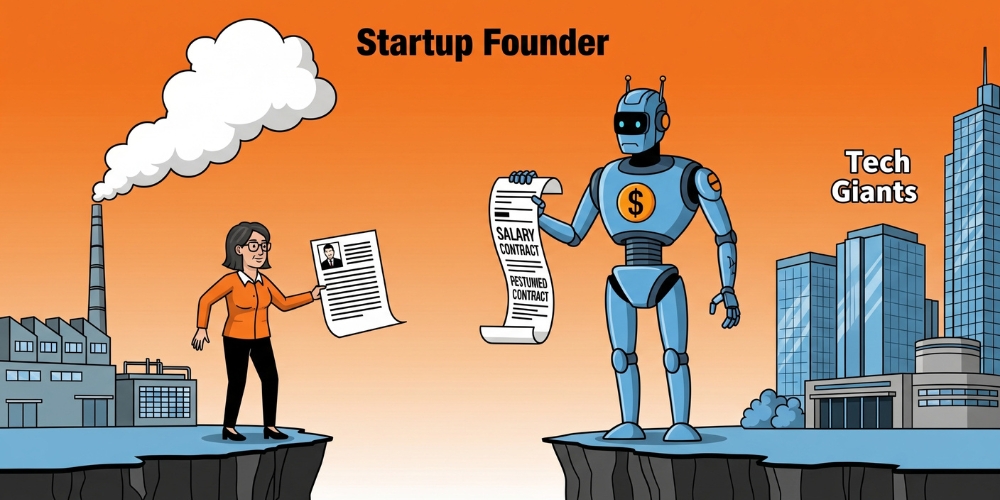
The supply-demand gap is real. There simply are not enough skilled professionals in machine learning, NLP, and computer vision to meet current demand. The shortage pushes compensation up across the board.
ZipRecruiter's salary data puts the US average AI engineer salary at around $101,752 per year as of 2025, with senior roles at major companies crossing $135,000 base — and that excludes equity and bonuses that often push total compensation 40-60% higher.
For startups competing against Google and OpenAI, the math is brutal. Those companies offer high salaries, research perks, and resource depth most startups cannot match. And AI projects need more than coders — strong data preparation, model tuning, and deployment specialists all command premium rates.
The cost cascades into adjacent industries. Dialog Health's research on AI in healthcare projects a $188B market by 2030 — meaning hospitals and healthtech startups now compete for the same scarce talent pool that funded AI startups want.
For most early-stage companies, the headline-salary model does not work. Total cost of full-time AI hires — salary, benefits, agency fees, equipment, infrastructure — adds up fast.
Common Mistakes Startups Make Hiring AI Talent
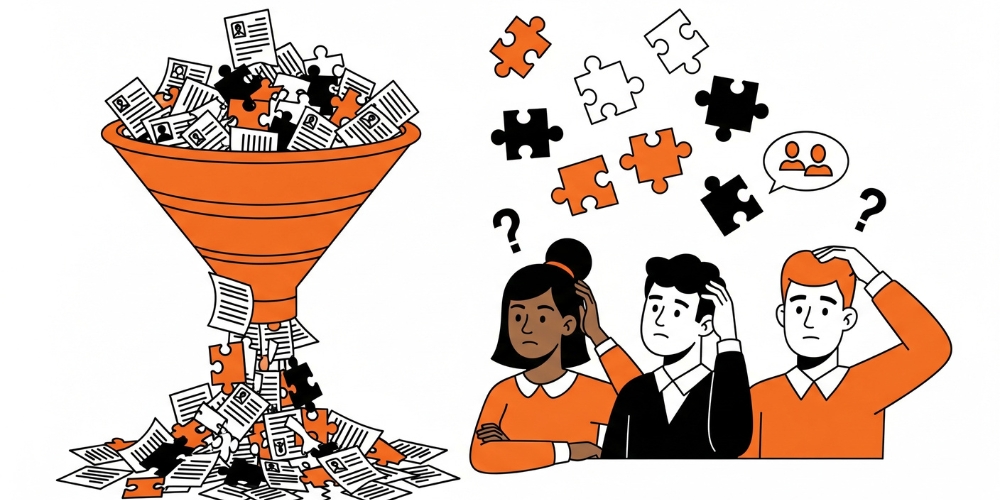
Five mistakes show up consistently in failed startup AI hiring.
1. Hiring too early or too many
Founders often rush into full-time AI hires before defining what the AI product actually does. The result: burn rate climbs, no clear roadmap, and projects stall. Freelancers or short-term specialists let you explore before committing to long-term overhead.
2. No clear AI strategy
CIO's analysis of AI projects found that nearly 88% of AI pilots never reach production — usually because objectives were unclear from the start. Hiring excellent engineers cannot fix this. Define what problem AI is solving, what data you have, and how you will measure success before the first hire.
3. Over-reliance on generalist recruiters
A general recruiter rarely has the technical depth to evaluate AI talent. The difference between a data scientist, a deep learning engineer, and an ML researcher is substantial — generalists tend to miss it. Specialised AI staffing agencies know the distinction and screen against it.
4. Ignoring remote and contract options
Defaulting to in-house full-time hires limits the pool unnecessarily. Modern AI staffing platforms with global remote vetting, payroll, and compliance handle the operational complexity that used to make international hiring impractical.
5. Over-weighting academic pedigree
A degree from a top university looks good on paper but does not always translate to startup execution. Strong researchers can struggle in fast-moving environments where shipping matters more than publishing. Hire for demonstrated execution, not credentials.
Affordable AI Staffing Solutions That Actually Work
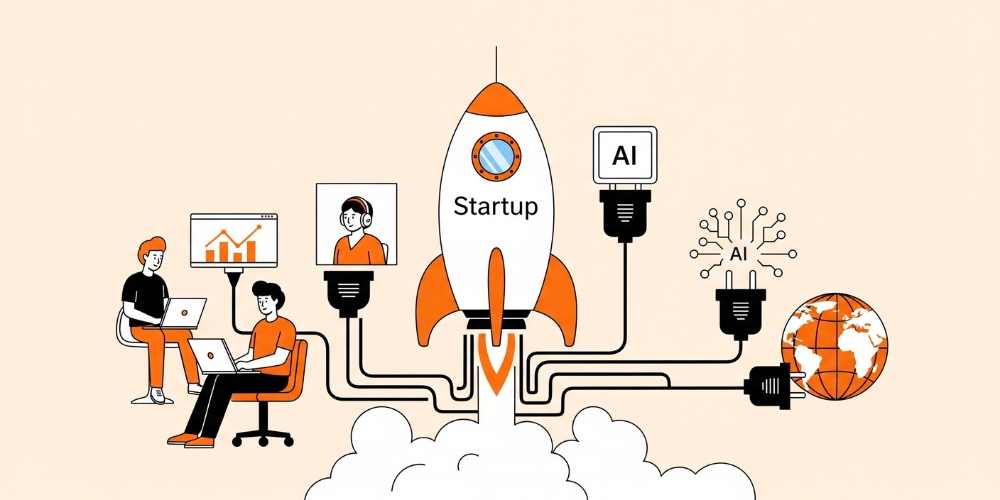
The modern hiring landscape offers several cost-efficient alternatives to traditional full-time hiring.
1. AI recruiting specialists focused on startups
Platforms like Ployo specialise in connecting startups with skilled machine learning talent without the full agency-overhead model. They handle screening, onboarding, and payroll — removing operational burden from founders.
Unlike traditional firms, they pull from global pools. Eastern Europe, Latin America, and parts of Asia produce strong machine learning talent at 40-60% lower compensation than US-based hires, with comparable work quality.
2. Pre-vetted freelance platforms
Upwork Pro, Contra, Lemon.io, and similar platforms offer pre-screened AI developers for project-based work. AI-driven matching algorithms in these platforms now help align project scope with appropriate freelancer profiles.
The advantage is agility — hire fast, scale down when the project is done, test ideas without long-term capital commitments. Especially valuable for MVPs, pilots, or specialised one-time builds.
3. Hybrid in-house and contract models
Hire one strong senior engineer in-house to own architecture and direction; outsource execution work to a small remote team. The hybrid model keeps strategic decisions close to the company while reducing execution costs. This pattern parallels the broader agency vs in-house hiring framework.
The model also supports faster iteration — experiment with computer vision, LLMs, or NLP with temporary talent, and convert to full-time when traction is proven.
4. AI-as-a-Service platforms
Sometimes you do not need to hire AI engineers at all. OpenAI, Google Vertex AI, AWS SageMaker, and similar platforms provide prebuilt models, APIs, and infrastructure that handle most of the heavy lifting.
For a medical-tool startup, for example, plugging into specialised AI platforms for radiology or lab analysis is dramatically faster than building from scratch. Strong HR automation similarly leverages AI-as-a-Service to eliminate the need for dedicated AI hiring for many internal use cases.
How to Build a Lean, Scalable AI Team
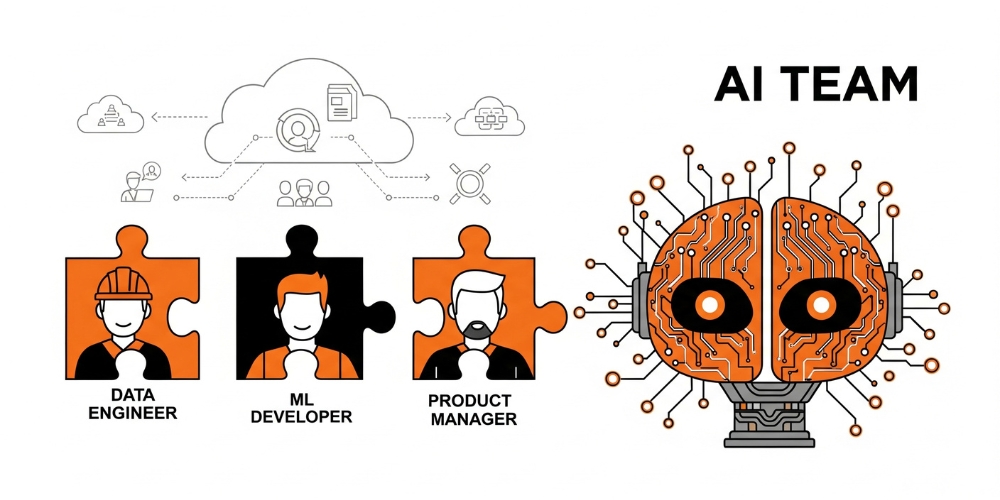
Five principles that consistently produce lean, capable AI teams.
Start with clear AI objectives
Before writing the first job description, define the specific business problem AI is solving. Fraud detection, recommendation, automation, predictive analytics — each requires different skill profiles.
Hire for impact over title
Your first AI hire should be a strong generalist who can handle data work, prototype models, and deploy them. Specialists come later, once product-market fit is established and the team can absorb deeper expertise.
Embrace remote and global talent
Strong AI talent exists in Poland, India, Ukraine, Argentina, and many other markets with significantly lower compensation expectations. Tools like Deel, Toptal, and Arc.dev handle the operational complexity of international hiring.
Build with AI tools that extend your team
Pre-trained models, open-source LLMs, and platforms like Hugging Face, LangChain, and Cohere let you deploy advanced functionality without custom training. AI in staffing applications (resume filtering, automated outreach, predictive analytics) lets a small team operate like a much larger one.
Don't skip MLOps early
Even with a small team, build with eventual scale in mind. Docker, basic model monitoring, and CI/CD-friendly deployment patterns save enormous cleanup work later when the team grows.
The Bottom Line
AI talent is expensive but accessible. The startups that hire successfully start with clear strategy, hire for impact rather than headcount, blend in-house ownership with flexible contract execution, and use modern AI staffing platforms to access global talent pools. The companies that fail to adapt — defaulting to expensive US-only full-time hiring — find themselves competing with funded competitors on terms they cannot win. The modern alternative is genuinely effective, and the gap with traditional hiring widens every year.
FAQs
What is the cheapest way to hire AI engineers?
Remote or freelance hiring through pre-vetting AI staffing platforms — Toptal, Arc.dev, Lemon.io, Turing, Andela. These reduce long-term salary commitments while maintaining talent quality.
Should startups hire AI talent in-house or freelance?
Most early-stage startups benefit more from freelance or contract AI staffing — flexibility, lower overhead, lower commitment. Once the product gains traction, bring key contributors in-house. Hybrid is often optimal.
Where can I find vetted remote AI developers?
Toptal, Arc.dev, Turing, Lemon.io, and Upwork all offer pre-vetted AI engineering talent. For specialised domains like medical AI, niche staffing platforms surface candidates with the relevant compliance and domain experience.
How much should I budget for my first AI hire?
US-based full-time AI engineers: $100K-$135K/year. Remote full-time from EMEA, LATAM, or APAC: $60K-$100K/year. Freelancers: $50-$150/hour. Agencies typically add 15-25% markup. Starting with contract or part-time keeps the budget flexible while you validate the role.
What is the single biggest mistake startups make in AI hiring?
Hiring before the strategy is clear. The hire follows the use case; the use case follows the business problem. Sequence those backwards and you spend significant money on talent that cannot produce because the brief was never properly defined.


