

Strategic Workforce Planning for Better Hiring Outcomes
Strategic workforce planning replaces reactive hiring with foresight — the framework, the metrics, and how AI tools sharpen forecasts without replacing judgement.
Ployo Team
Ployo Editorial
TL;DR
- Strategic workforce planning links hiring decisions to where the business is going, not where the gap is today.
- The payoff: lower cost-per-hire, stronger retention through internal mobility, and better onboarding outcomes.
- AI and analytics make forecasts faster and more accurate but cannot replace the human judgement that defines strategy.
- Plans should be revisited every 6-12 months — workforce planning is a continuous discipline, not an annual document.
- Even small companies benefit; the process is the same, just at smaller scale.
The most common failure mode in hiring is treating every open role as an emergency. The team is shorthanded, the budget gets stretched, training falls behind, and within a year the new hire is gone. Strategic workforce planning is the discipline that breaks that cycle — by linking every hire to where the business is going, not just where the gap happens to be today. This guide breaks down what strategic workforce planning actually is, why it matters more in 2026 than it did even five years ago, the steps that make it work, and where AI fits without overreaching.
What Strategic Workforce Planning Really Is
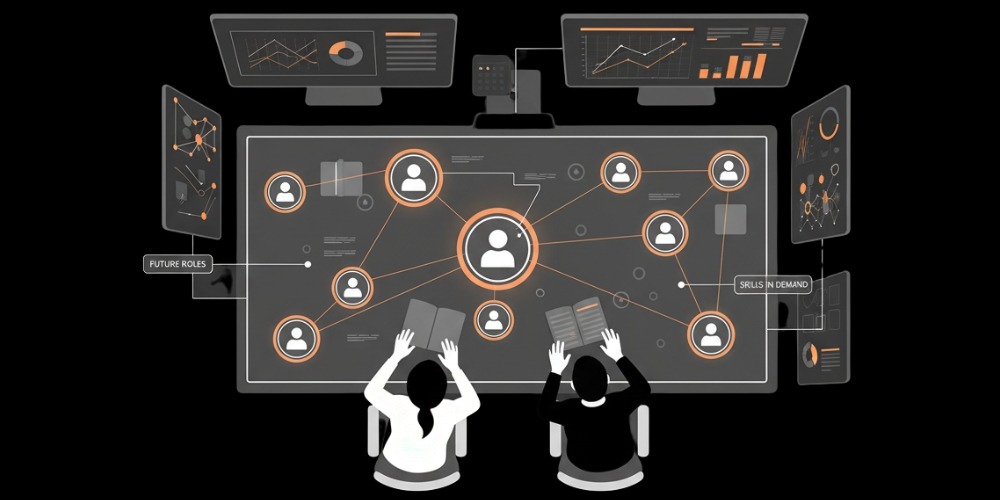
Strategic workforce planning is the process of understanding your current workforce, forecasting future talent needs, identifying gaps, and building a plan to close them. It is not headcount management — it is having the right skills, in the right roles, at the right time.
The CIPD definition frames it as balancing labour supply with future business demand, factoring in skill shifts, role evolution, and resource constraints. The discipline lives at the intersection of talent management and recruitment — what you hire shapes what you can do, and what you need to do shapes what you should hire.
The pressure on this discipline has intensified. McKinsey's research on AI's labour impact estimates that up to 30% of current work hours could shift by 2030 due to automation. Workforce planning is now as much about reskilling and redeploying as it is about hiring — the gap is moving faster than recruitment alone can fill.
Why Workforce Planning Lifts Hiring Efficiency
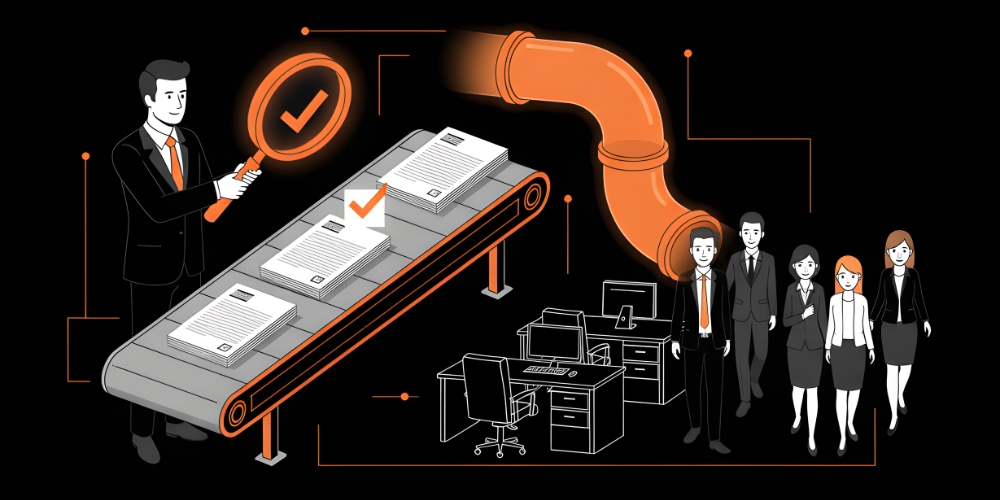
Without a plan, hiring is a series of one-off emergencies. With one, every hire is intentional. Five concrete reasons it matters.
Better cost control
Upwork's research on workforce planning benefits found that 31% of CEOs struggle to find qualified workers. Planning ahead reduces last-minute hiring premiums and over-reliance on recruiting agencies — both of which compound on every open role.
Stronger retention through internal mobility
Plans surface roles that current employees could grow into. Companies running structured workforce planning see materially higher retention because employees see a future inside the company, not just outside it.
Strategic alignment
When every hire reflects long-term business goals, the team starts looking like the team the company will need in 18 months, not just the one it needed yesterday. The compounding effect is significant.
Data-driven decisions
Modern workforce planning is grounded in turnover patterns, performance trends, and skill-gap analytics. Teams using workforce planning tools consistently report lower turnover and faster time-to-hire.
Better onboarding and ramp
When hiring is planned ahead, onboarding can be designed for it. The new hire arrives with role clarity, prepared mentors, and a training path — instead of being thrown into a role that no one had time to scope properly.
How to Optimise Hiring Through Strategic Workforce Planning
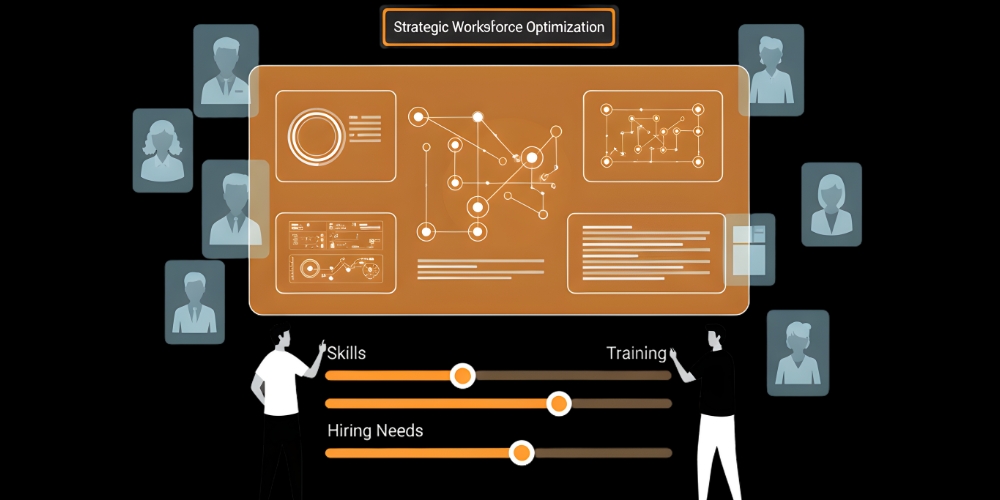
Five steps that translate planning theory into operational practice.
1. Map current talent and future demand
Audit the current team — who carries the highest-impact work, where the bench is thin, where the company is going in the next 6-18 months. The gap between the two is where the plan starts. This step is the foundation of any serious workforce planning and analytics practice.
2. Forecast skills with predictive data
Predictive analytics turns intuition into pattern recognition. Which roles will grow? Which will shrink? Which will change shape entirely? Modern AI-driven forecasting tools surface these signals far faster than annual planning meetings can.
3. Align people strategy with business strategy
Workforce planning is not an HR-only exercise. The strongest plans come out of joint sessions between HR and the leadership team responsible for product, growth, and operations. This is where talent management and workforce planning meaningfully intersect — hiring supports growth; growth feeds back into hiring requirements.
4. Integrate AI and automation deliberately
AI lifts accuracy by surfacing trends, flagging skill shortages, and recommending development pathways. It also strengthens onboarding by personalising training based on the gap between the new hire's profile and the role's requirements. The discipline is to use AI where it adds signal, not to delegate judgement to it.
5. Keep the plan continuous
A workforce plan written once a year is already out of date by Q2. Strong organisations review and update plans every 6-12 months. Companies like Cisco and Unilever explicitly treat workforce planning as a continuous cycle rather than an annual document — and their hiring agility shows it.
The Bottom Line
Strategic workforce planning is the difference between hiring as a series of emergencies and hiring as a coordinated practice that compounds over time. The mechanics are not exotic: audit the current team, forecast future demand, align with business strategy, use AI where it adds signal, and revisit the plan continuously. The teams that do this well hire fewer people, hire them better, and retain them longer. The teams that skip it spend more on emergency hires, lose talent to predictable gaps, and wonder why hiring feels harder every year.
FAQs
What is workforce planning in a recruitment context?
It is the process of analysing the current workforce, forecasting future needs, and building a plan that ensures the right people fill the right roles when needed. The shift is from reactive hiring to proactive talent strategy.
How does strategic planning specifically improve hiring outcomes?
It ties every hire to a longer-term business goal, which sharpens role definitions, improves candidate selection, and reduces the urgency premium that drives bad hires.
What metrics should HR leaders track in workforce planning?
Time-to-fill, turnover rates, cost-per-hire, internal mobility rate, and skill-gap closure rate. Paired with analytics, these metrics show whether hiring is supporting long-term performance.
Is strategic workforce planning only for large companies?
No. Smaller companies benefit even more proportionally — they have less margin for hiring errors. The framework scales down cleanly; the mechanics are the same, just at smaller volume.
How often should the workforce plan be updated?
Every 6-12 months at minimum, with shorter check-ins quarterly. Plans treated as static annual documents go stale fast and stop driving real decisions.
Keep reading

Choosing a Workforce Planning Model: Five Approaches Compared

Workforce Segmentation Strategies That Deliver Results
