

Workforce Segmentation Strategies That Deliver Results
Workforce segmentation explained — five proven strategies, common mistakes, and how to use it for smarter hiring, training, and succession planning.
Ployo Team
Ployo Editorial
TL;DR
- Segmentation gives a clear view of people, skills, and business impact.
- Skills-based organisations are 107% more likely to place talent effectively (Deloitte).
- Five proven strategies: skills, business impact, work type, performance, retention risk.
- Common mistakes: too many segments, title-only sorting, ignoring future skills.
- Best results come from clean data + daily use in decisions.
When companies face fast-changing markets and shifting skills, leaders struggle to make clear decisions. Workforce segmentation gives structure — clear groupings of people, skills, and impact that make every HR decision easier. This guide explains how to do it well.
What Workforce Segmentation Is

Dividing employees into meaningful groups based on skills, roles, behaviours, performance, or business impact. Removes guesswork by creating simple clusters leaders can act on.
Different segments need different support — some need deeper coaching, others faster tools, others project-based help. Per Deloitte's Human Capital Trends, skills-based organisations are 107% more likely to place talent effectively than job-based ones.
Helps link real skills to real business needs, which makes planning concrete.
Why Segmentation Matters

Three structural benefits.
Faster, more accurate workforce planning
Reactive becomes structured. Every people decision gets clearer.
Targeted resource allocation
Identify segments driving highest impact, those needing urgent support, future training, or redesign.
Less waste
Avoid training programs people don't need, hiring that doesn't match demand, job structures that slow business.
Five Strategies That Deliver Results
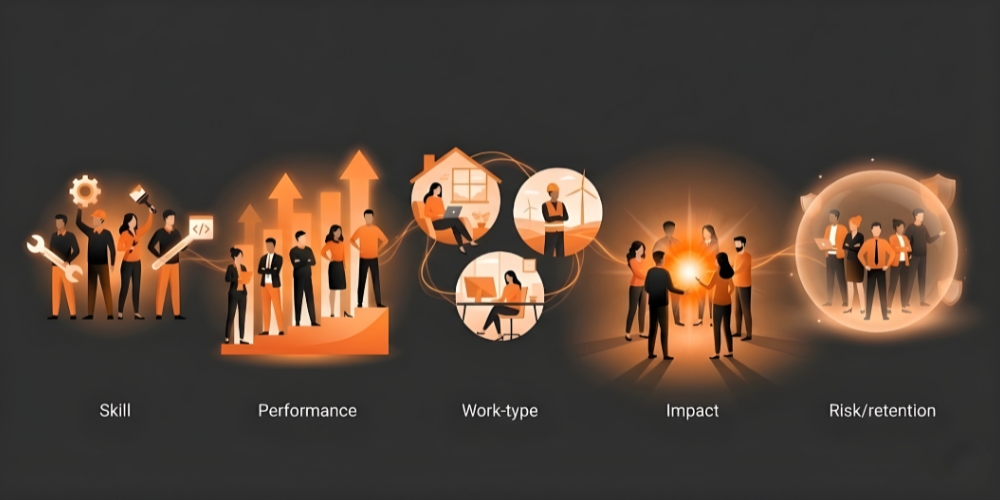
1. Segment by skills and capability
Sort by what people can actually do. Reveals capacity for new tasks, training needs, gaps in coverage. Best for fast-moving teams.
2. Segment by business impact
Some roles keep business running; others grow it. Impact-based segmentation identifies critical roles and continuity priorities.
3. Segment by work type or setting
Floor, field, remote workers all need different cadences and tools. Simplifies daily coordination and reduces friction.
4. Segment by performance and potential
Builds clear progression paths. High performers move into stretch projects; developing performers get targeted coaching.
5. Segment by risk and retention
Hard-to-replace roles or skills taking years to build. Drives targeted retention strategies to prevent disruption.
Common Mistakes
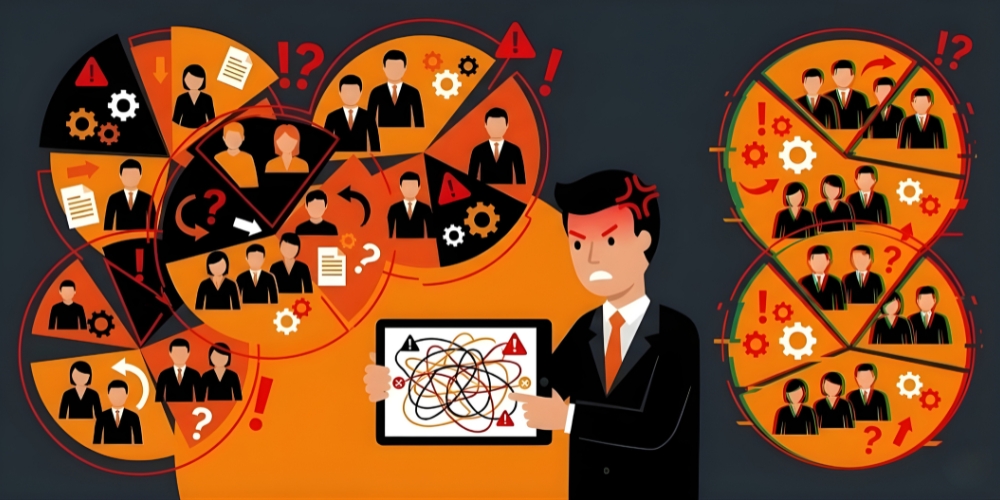
Five traps that quietly damage segmentation.
Too many segments
Cluttered segmentation becomes unworkable. Managers can't act on it.
Relying on job titles alone
Titles mislead. Sort by actual capability, not labels.
Ignoring future skills
Segments based only on current work miss what's coming. Strong segmentation looks ahead 1–3 years.
Not connecting to decisions
If segments don't guide hiring, training, or assignment, the work was wasted.
Stale data
Outdated information destroys segmentation value. Clean data keeps workforce planning + analytics reliable.
The Bottom Line
Good segmentation helps leaders make sense of teams — who's doing what, what needs attention, what the company will need next. Cuts planning confusion. Used in daily decisions, segmentation pays back across every HR function — hiring, training, succession, retention. Done well, it's one of the highest-leverage HR investments organisations can make.
FAQs
What are the main segmentation methods in HR?
Skill-based, role-based, performance-based, business-impact. Each reveals different priorities and growth opportunities.
How does AI improve workforce segmentation?
AI analyses patterns faster and produces more accurate segments. Improves talent allocation precision and tracking over time.
Which tools support segmentation?
HR analytics software, skills inventories, HR systems, talent platforms. Keep data organised; give managers simple cross-team views.
How often should I review segments?
Quarterly minimum; semi-annually as a hard floor. Segments age fast in dynamic environments.
What's the highest-leverage starting move?
Build one segment based on skills and business impact for your top 50 employees. Patterns and priorities emerge immediately and guide subsequent investment.
Keep reading

Talent Management + Workforce Planning: The Retention Engine

Choosing a Workforce Planning Model: Five Approaches Compared
