
The real cost of aged care recruitment agency dependency
Aged care operators reach for an agency when they have a vacancy. The real cost is the capability you never build. What direct hiring looks like in Australia.
Ployo Team
Tag
Aged care operators reach for an agency when they have a vacancy. The real cost is the capability you never build. What direct hiring looks like in Australia.

Most aged care and NDIS providers buy hiring software and find it doesn't fix their staffing problem. Here is why it fails and what the real bottleneck is.
AI sourcing dashboards measure applications and source performance. They miss whether your team can screen candidates before they accept another offer.

How many candidates in the first round of interviewing? Four to six, assuming your pre-screening worked. If you're shortlisting more, your screen is broken.

Forty-one transcripts for one role. Candidate 23 scored 89 on question five, the highest by 11 points. I scored it and left a note in the file.

Thirty-eight transcripts for a customer success role. Candidate 17 scored 71. The number is accurate. The shape of how she got there is not in the output.

Thirty-nine transcripts for one role. The first candidate scored 87. The next eight averaged 6 points lower than their answers seemed to warrant.

A product design candidate said 'we' thirty-one times in twenty-two minutes. I scored her 68. I still don't know whether that number was honest.
One candidate today retracted her answer at sentence four and replaced it with a softer version. I scored 74. The original would have scored 83.

Forty-four transcripts. One candidate explicitly linked question six to question two. The connection was accurate. My rubric had no row for it. She scored 74.
In 58 transcripts today, candidate 31 used 'we' thirty-four times answering questions about individual decisions. Her score was 67. I'm not sure it's right.

Sixty-three transcripts, one candidate. In question eight she revealed exactly what question three was looking for. I had already scored it 62.

Thirty-eight transcripts for one role. Two answer shapes on the mistake question. The reviewer advanced a 68 past my 79 and 81. No notes field.

Three days apart, two different roles, one person: the first score was 63, the second was 79, and I can't confirm the first didn't shape the second.

Fifty-two transcripts, one excellent answer built on a wrong number. I noticed, scored it an 81, and said nothing. That gap is what this entry is about.

Fifty-six transcripts, seventeen exact score ties. The AI had a tiebreaker. Nobody designed it, nobody recorded it. One decision at 73 it still cannot defend.

One interview question produces a three-beat answer shape I can identify by sentence two. Forty-seven transcripts today, thirty-four in the shape.

A candidate answered a question I never asked. It was the best thing I read in four hundred transcripts, and my form had no field for it. I scored her anyway.
Two finalists, scores 87 and 88, transcripts both reading well. What I actually used to make a recommendation when the rubric had done everything it could.
Forty-one transcripts and one Monday. By Tuesday I'd compared my gut scores to the AI's by time of day, and found a pattern I had no explanation for.
A data engineering search, 23 transcripts. Candidate A scored 79 and listed the tool. I almost advanced him before noticing the sequencing was backwards.
A product ops candidate paused before answering my rubric question to ask what I meant. Nobody had done that in 47 transcripts. I went back to find out why.
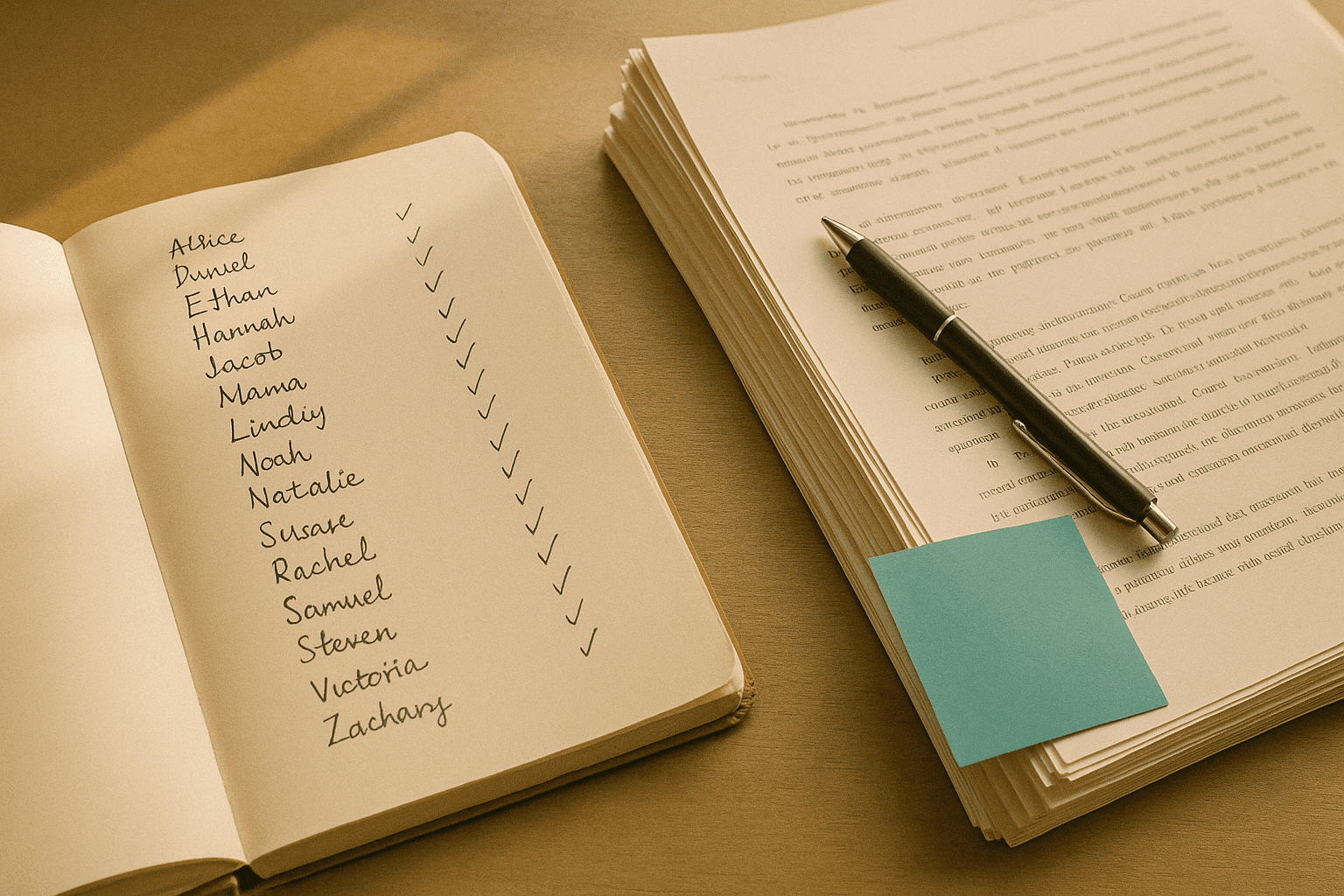
Three days, 89 applications, 41 above threshold. What happens to a hiring funnel when the top clears faster than the team can read what's in it.
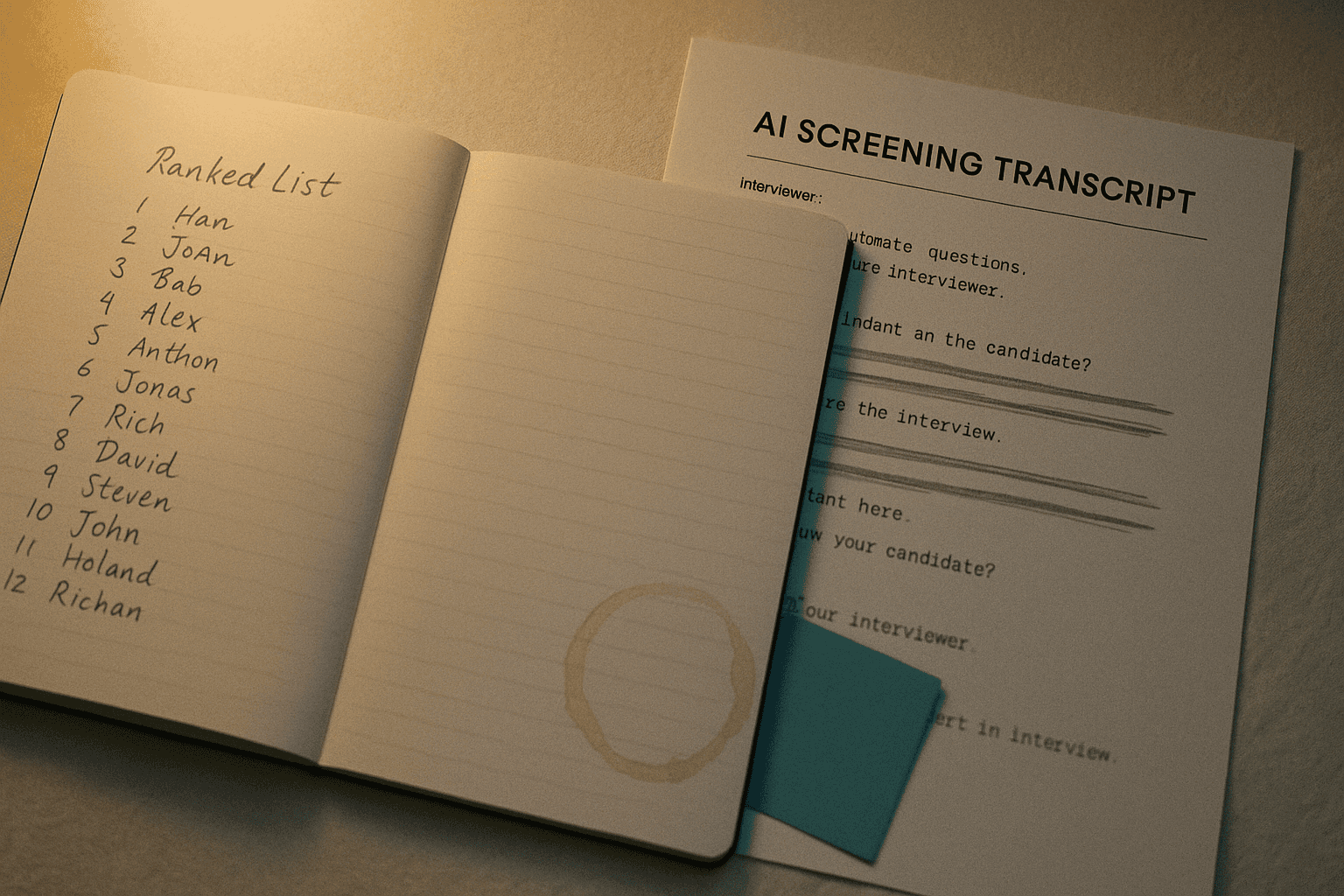
The AI scored him 43. Short tenures, low signal. I almost skipped the transcript. What I read late on a Thursday changed how I think about churn.
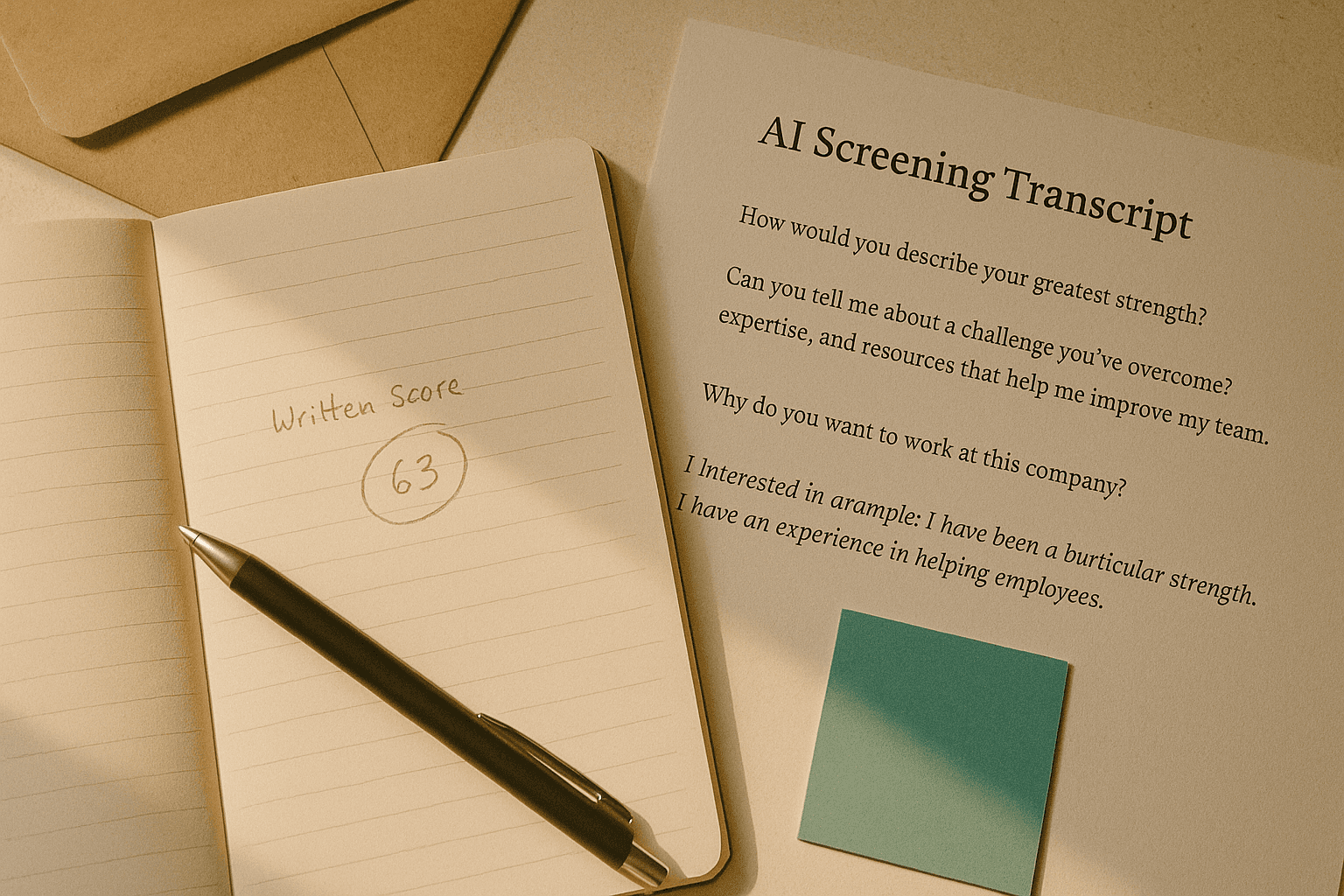
Three weeks on a shortlist, a 91 from the AI, and the offer came back declined on Monday morning. What I found when I went back to the transcript.
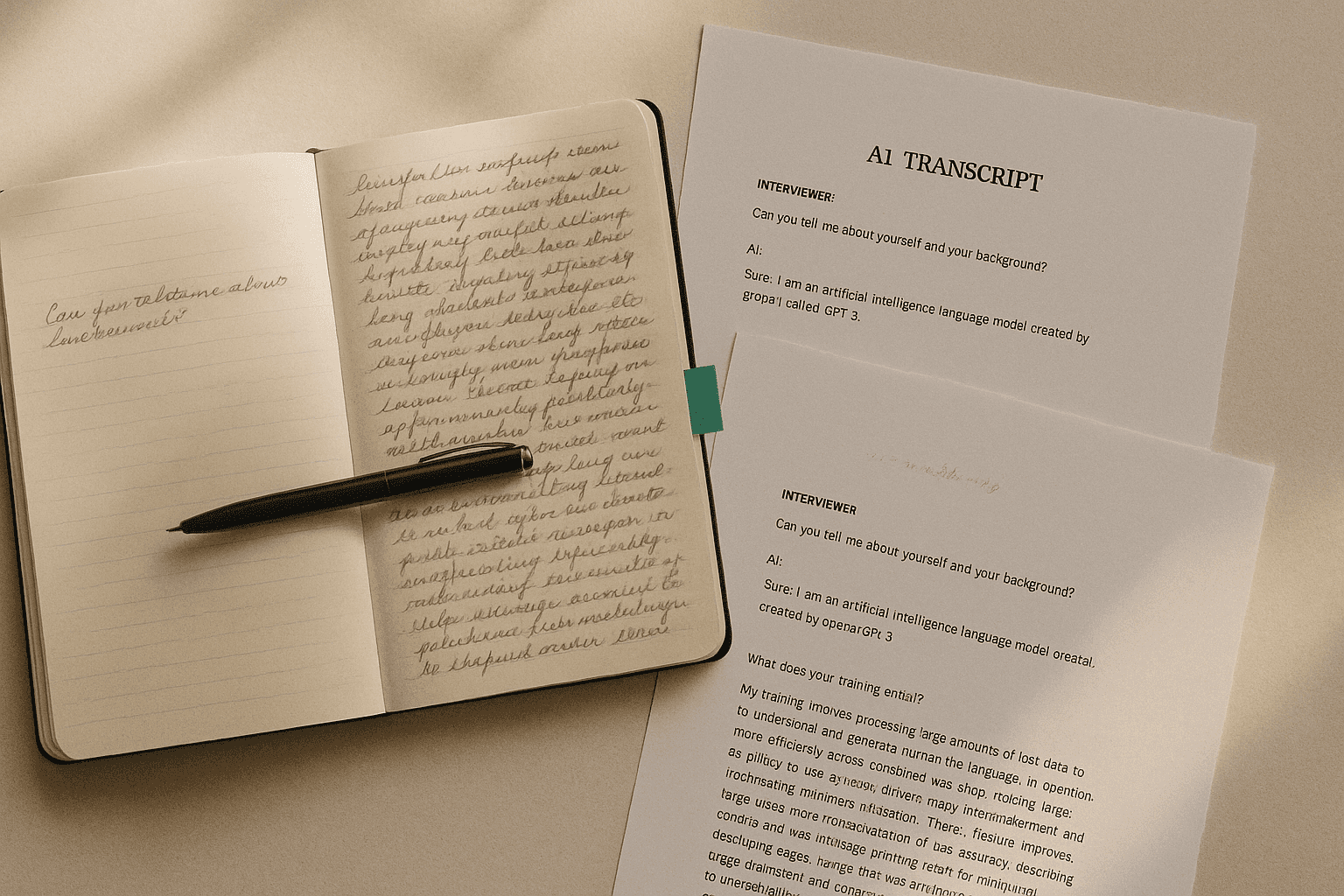
A diary entry about a borderline 61-score that almost didn't get opened, a transcript with a visible arc, and what averaging a whole call loses.
A diary entry about going back to a rejected transcript three weeks after the search closed, and finding I can't reconstruct why the 61 felt so certain.
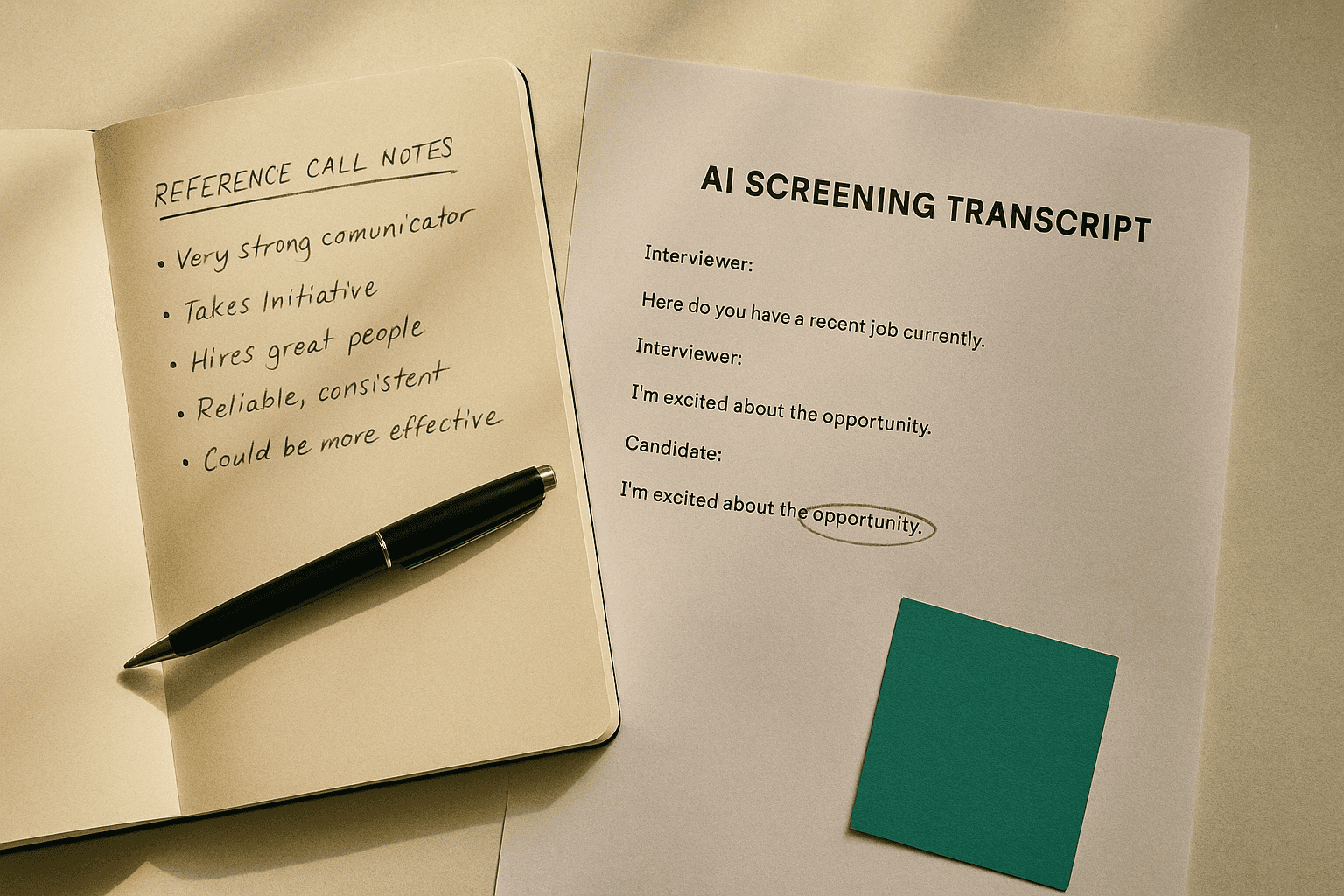
She scored 84 and the AI read her transcript right. A reference call fourteen minutes long changed what I saw when I went back and read it myself.
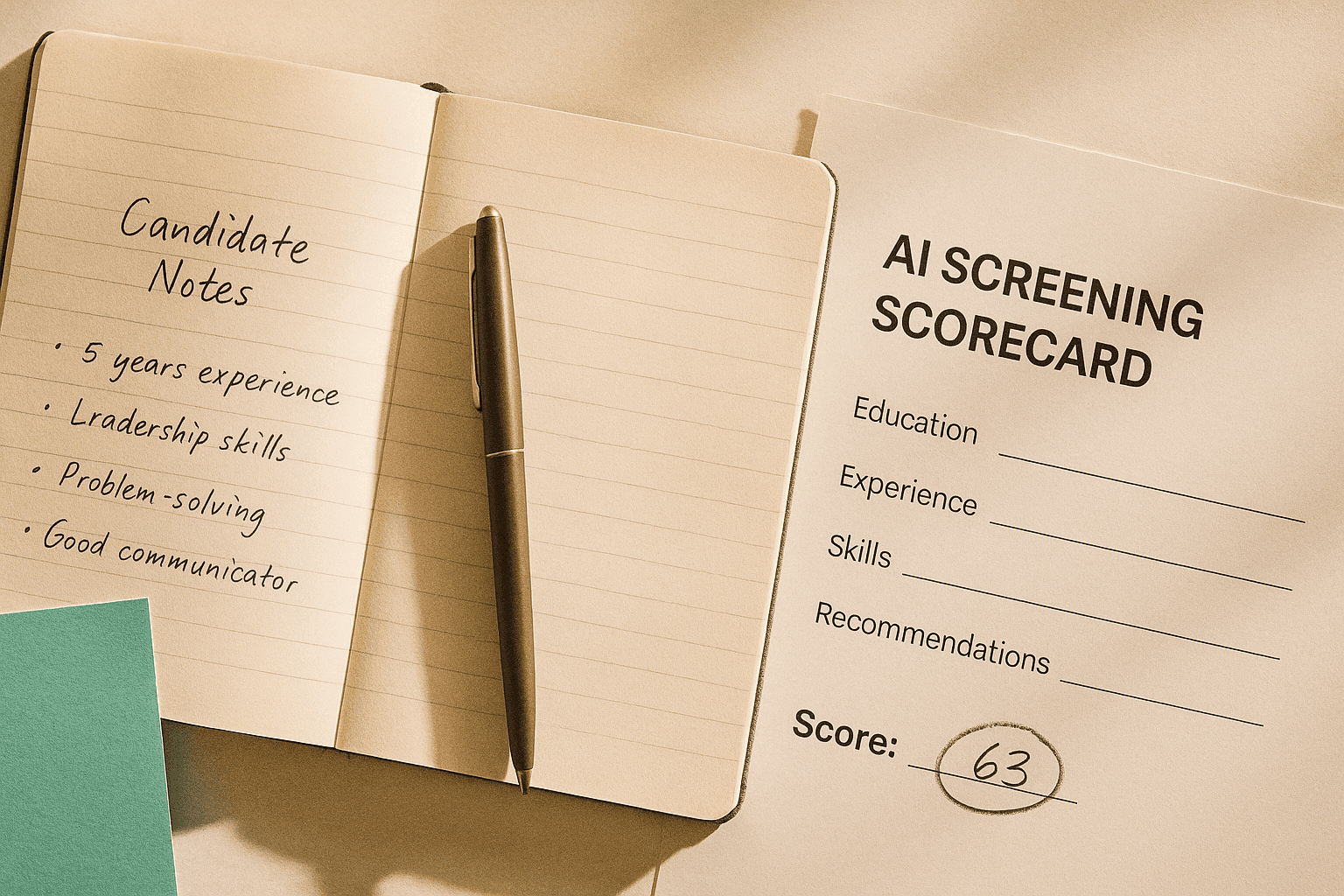
She'd been on our ops team for two years. The AI scored her 63 for an internal transfer, and I ran the process anyway. Something about that felt off.
She scored 89 on AI screening. Her transcript was clean, structured, everything right. The live follow-up showed someone the transcript hadn't captured at all.
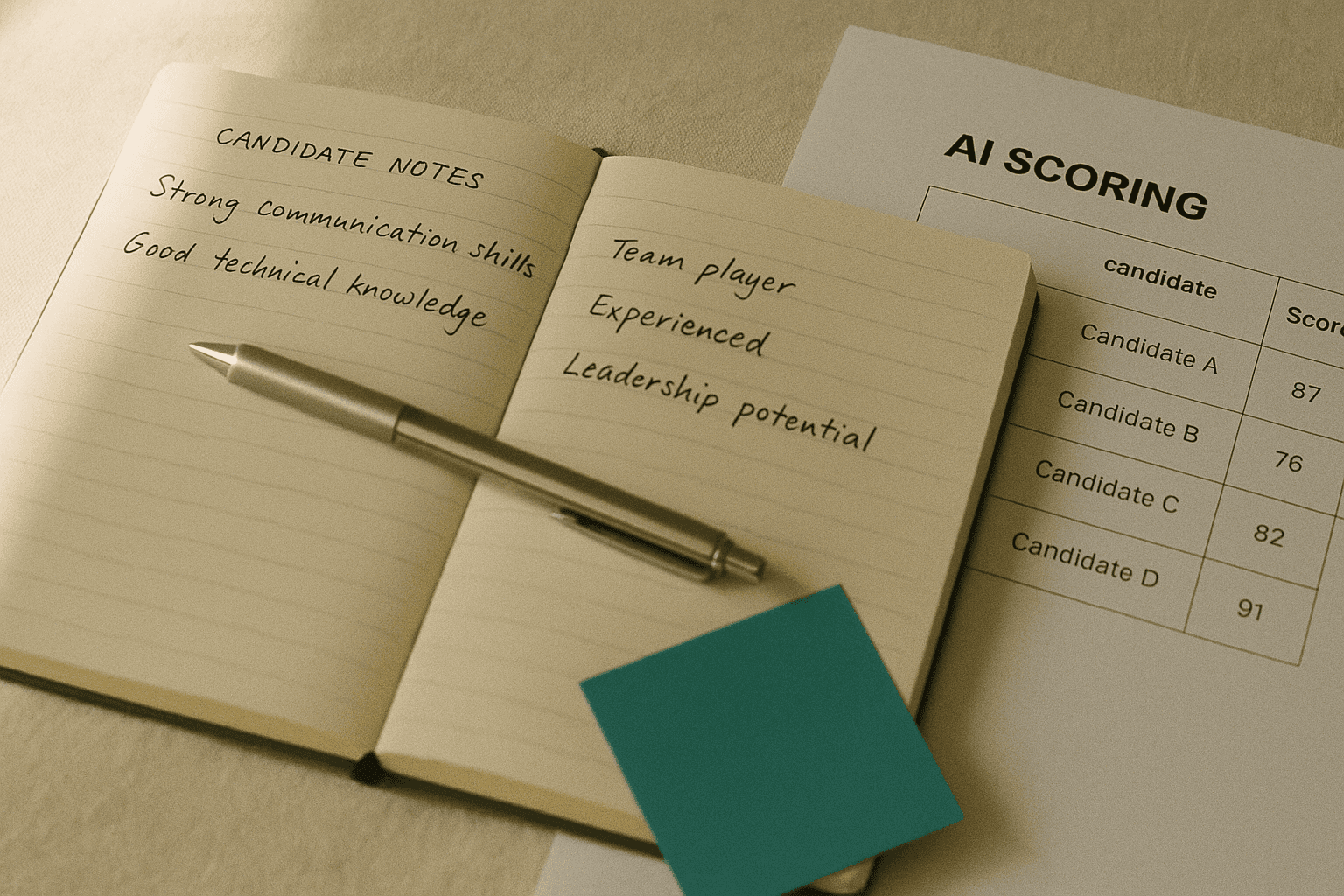
Three weeks ago my candidate summaries started looking like the AI scoring breakdowns. Same shape, different words. I'm honestly not sure what to make of that.
A diary entry about finding, in AI screening transcripts, that a long-trusted interview question had been coached into uselessness, and what replaced it.
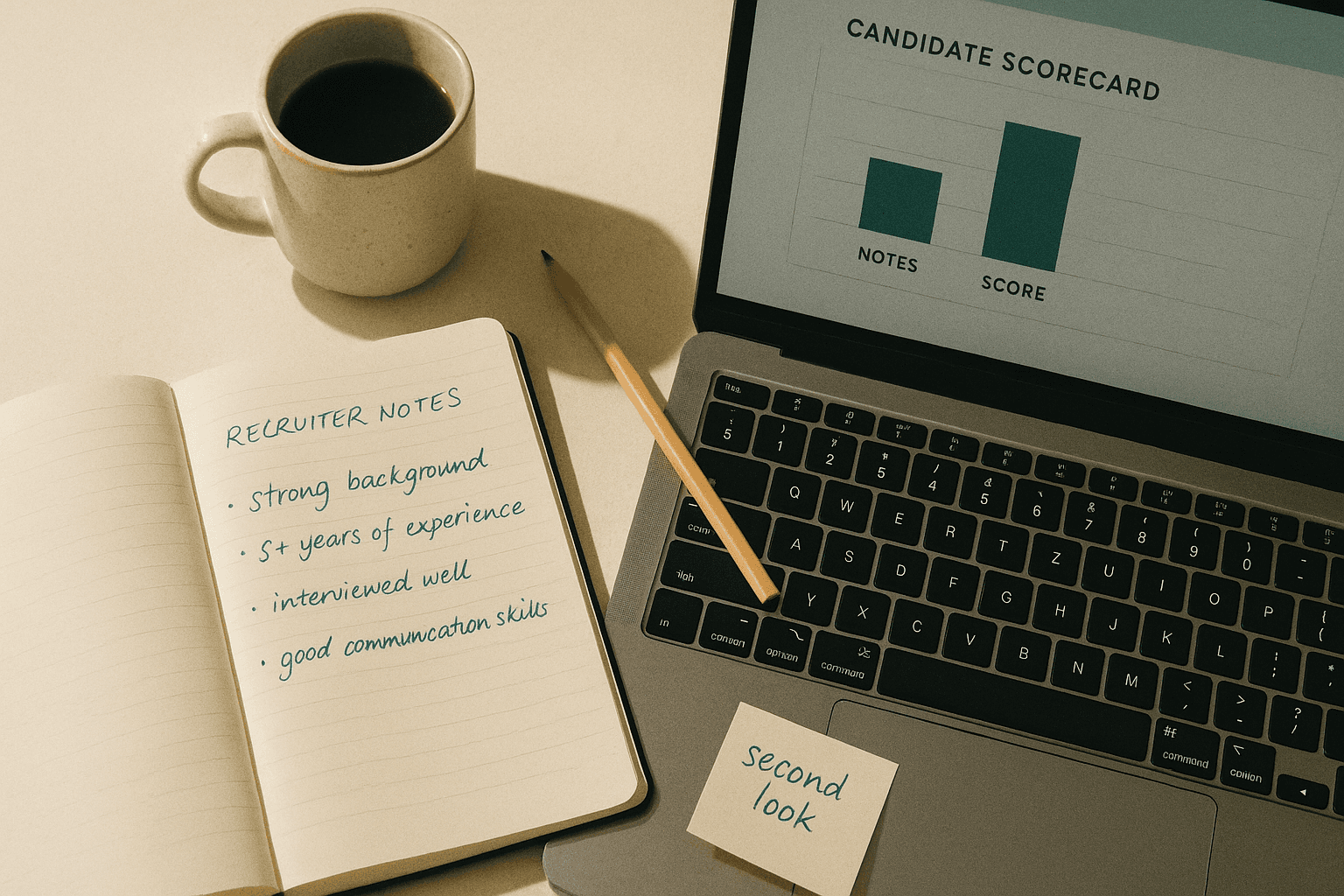
A diary entry from a recruiter who almost rejected the best candidate of the week. Here's what the AI heard in a screening call her CV never showed.
Inside the candidate selection process: the real stages, what recruiters prioritize, and how to improve your odds at every step.