

Stop Hiring for Cultural Fit: The Case for Culture Add
Hiring for cultural fit limits growth and amplifies bias. Why culture add produces stronger teams, the real costs, and how to make the shift.
Ployo Team
Ployo Editorial
TL;DR
- "Culture fit" hiring sounds safe but blocks fresh thinking.
- 74% of employers still hire on cultural fit (research on 42 firms).
- Diverse teams 36% more likely to outperform on profit (McKinsey).
- Cultural fit amplifies hidden bias; culture add reduces it.
- Shift = clear values + structured interviews + skill scoring.
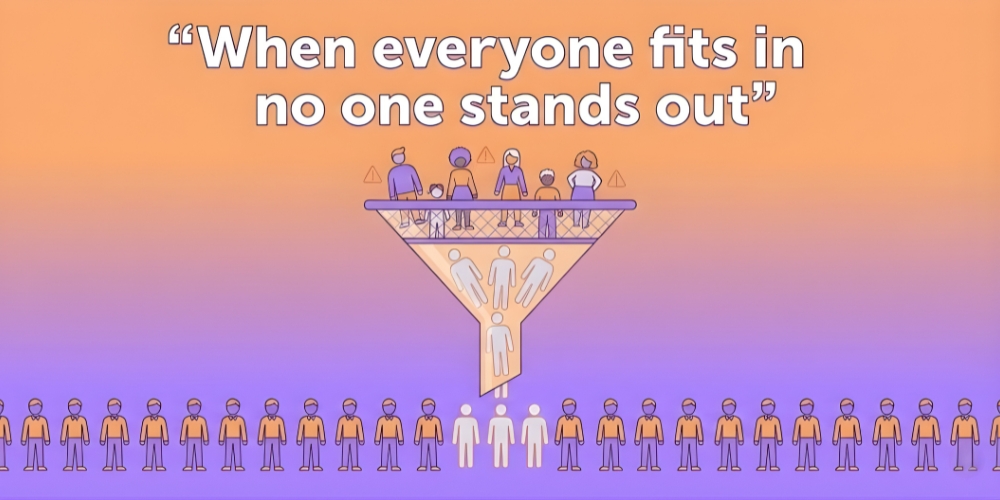
Hiring for culture sounds safe — pick people who feel right, who blend in. Over time it builds teams that look aligned but suffer blind spots, slow decisions, and groupthink. The fix isn't ignoring culture; it's shifting from culture fit to culture add. This guide explains why and how.
What Hiring for Culture Really Means
Ask 10 hiring managers what culture fit means and you'll get 10 different answers. For some, shared values. For others, personality. Often it just becomes comfort — someone feels familiar, so they feel right.
Per research on 42 firms, 74% of employers hire based on cultural fit. The research shows it often becomes a subjective filter where candidates are rejected for reasons unrelated to skill.
Why Hiring for Culture Is a Problem
Three structural issues.
Limits growth
Sameness produces fragile teams. Per McKinsey's Diversity Wins research, diverse companies are 36% more likely to outperform on profit.
"Organisational fit" gets misused
Without defined values, it becomes shared habits and preferences — blurring the line between alignment and exclusion.
Pop culture fit ≠ real culture
Jokes, music, social rituals aren't culture. They measure first-day comfort, not contribution or ethics.
How It Reinforces Bias
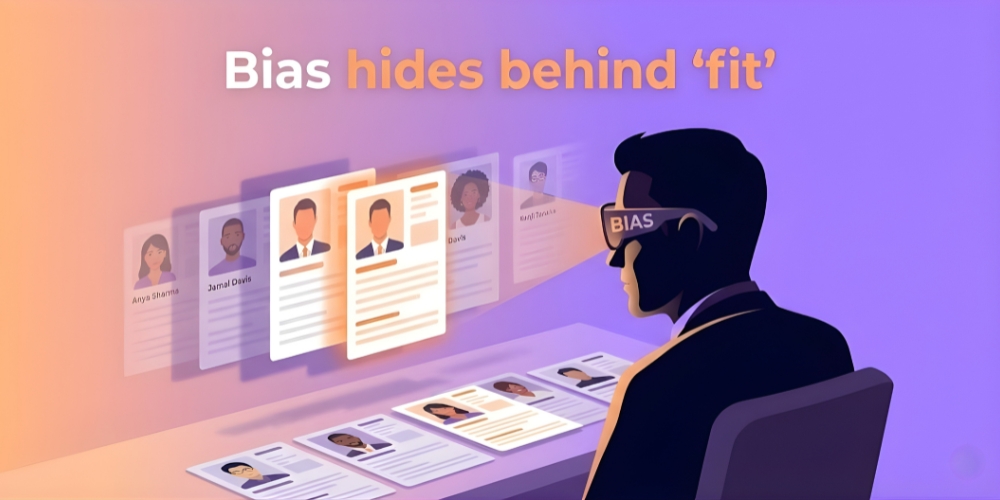
Three bias amplifiers.
Hides behind good intentions
"Not a fit" is hard to challenge because the standard is undefined.
Culture and talent separated
Comfort-first hiring filters out high-skilled candidates who think differently.
Tools scale the problem
AI culture-fit screening and AI cognitive testing trained on biased data scale past hiring patterns faster — without guardrails, they automate bias rather than reduce it.
The Real Cost

Per Deloitte's culture-of-belonging research, inclusive companies are more likely to hit financial goals and adapt better to change.
Where costs hide
- Missed ideas + slow growth
- Higher turnover when sameness gets stale
- Vacancies open longer when "fit" rejections shrink the pool
- Strong candidates accept competitor offers
- Hard-to-defend decisions create legal and compliance exposure
What to Hire For Instead: Culture Add
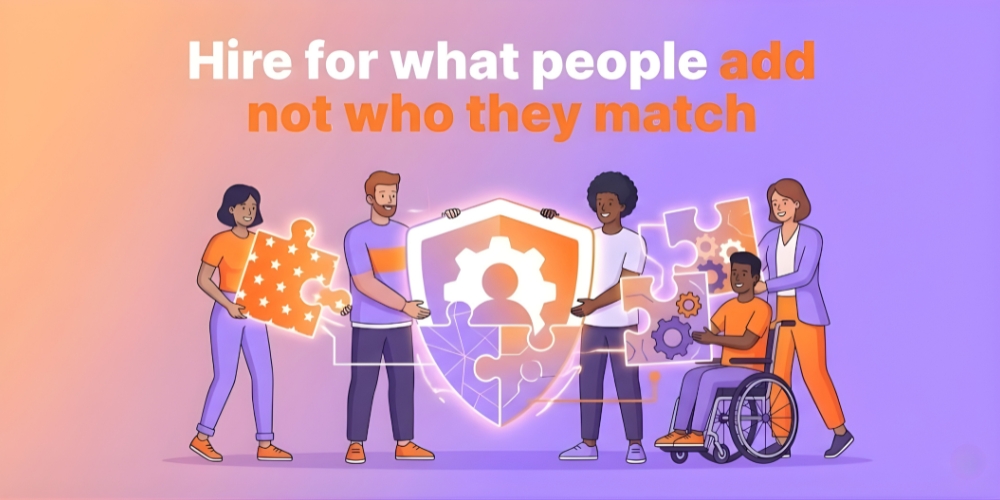
Ask what someone brings, not who they resemble. Culture add values people who strengthen shared values while adding new perspectives, skills, or experiences.
What stays non-negotiable
Respect, accountability, learning — core values that drive how work happens.
What becomes preference
Communication style, humour, background — not hiring criteria.
Teams hiring for culture add adapt faster because they already contain different viewpoints. Collaboration becomes stronger, not weaker.
How to Make the Shift
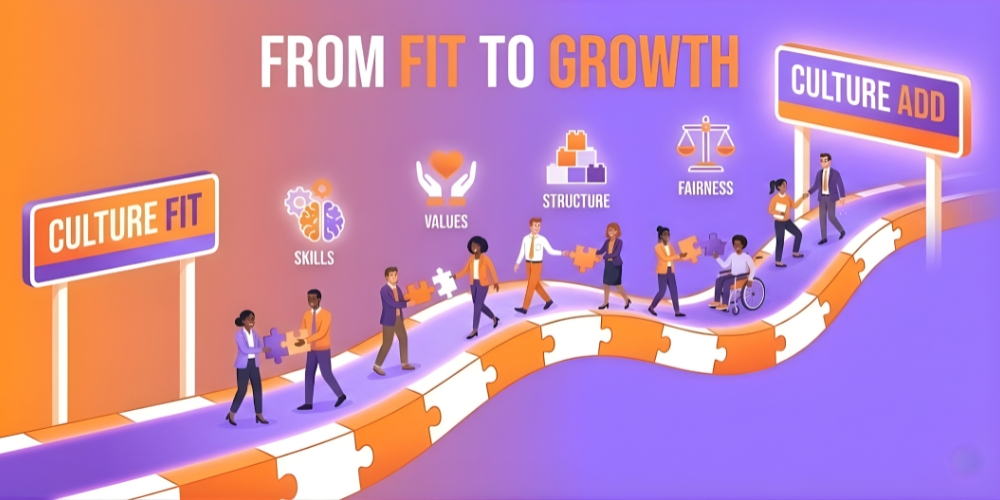
Four practical steps.
Define your real values
Skip slogans. Focus on observable behaviours you expect from everyone.
Update your interview questions
Replace "do they feel easy to work with?" with "how did they handle this scenario?"
Use structured scoring
Same criteria, same rubrics. Consistency reduces personal bias and supports defensible decisions.
Audit your tools
Assessments and screening tools should evaluate skills and values, not surface similarity. Technology should clarify decisions, not make them.
Common Objections — and Why They Don't Hold
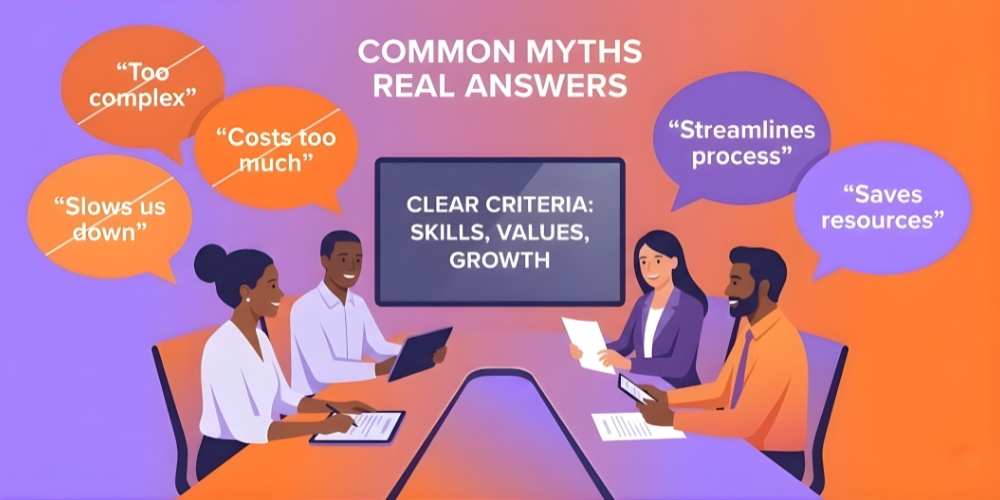
Four common pushbacks.
"We need people who get along"
Respect is a value, not a personality trait. Teams don't need clones to collaborate.
"Culture add will break team dynamic"
Strong cultures evolve. Teams that can't absorb differences are fragile, not stable.
"It's too hard to measure"
Only hard when values are unclear. Once defined, assessment becomes straightforward.
"Cultural fit keeps hiring fast"
Fast decisions producing turnover slow teams later. Speed without quality costs more long-term.
The Bottom Line
Cultural fit hiring feels comfortable, but comfort isn't a strategy. Teams that grow need clarity, courage, and structure. Move from vague fit decisions to real contribution focus — stronger teams, fairer hiring, more capable culture. The shift starts with one question: what will this person add?
FAQs
Why is hiring for cultural fit bad?
It relies on personal judgment rather than clear standards. Increases bias and reduces diversity of thought.
What is culture add in hiring?
Hiring people who share core values while bringing new skills, perspectives, or experiences to the team.
How can companies reduce bias in hiring?
Define values clearly, use structured interviews, evaluate candidates on consistent job-related criteria.
What if my team really needs alignment?
Alignment on values (respect, accountability) ≠ uniformity in style or background. The former produces high-functioning teams; the latter produces stagnant ones.
What's the highest-leverage starting move?
Write down 3–5 specific behaviours that represent your core values. If you can describe them, you can hire for them. Most teams discover their current "culture fit" has nothing to do with these behaviours once defined explicitly.


