

Talent Assessment Tools in 2026: A Practical Recruiter Buying Guide
Talent assessment tools cut through resume noise — what they measure, the trade-offs between platforms, and how to choose what fits your hiring.
Ployo Team
Ployo Editorial

TL;DR
- Companies using pre-hire assessments are ~36% more satisfied with new hires (Aberdeen).
- Assessments measure skill, cognitive ability, personality, and situational judgement.
- Different platforms suit different needs — leadership hiring, high-volume, technical, behavioural.
- Choose by relevance, validity, candidate experience, integration, and bias controls.
- The strongest hiring teams pair assessment with structured interviews — not either alone.
Resumes lie. Interviews flatter the smooth talker. Reference checks tell you what someone wanted you to hear. The gap between what candidates claim and what they can actually do is exactly where most bad hires originate. Talent assessment tools close the gap by measuring real capability — coding ability, cognitive reasoning, behavioural patterns, situational judgement — before the offer goes out. This guide walks through what assessment tools actually measure, what differentiates the strongest platforms, and how to choose the right one for your hiring.
What Talent Assessment Tools Are

Talent assessment tools are digital platforms that evaluate a candidate's skills, personality, cognitive ability, and predicted job performance before hire. They produce structured, comparable data — replacing gut-feel evaluation with evidence-based decision support.
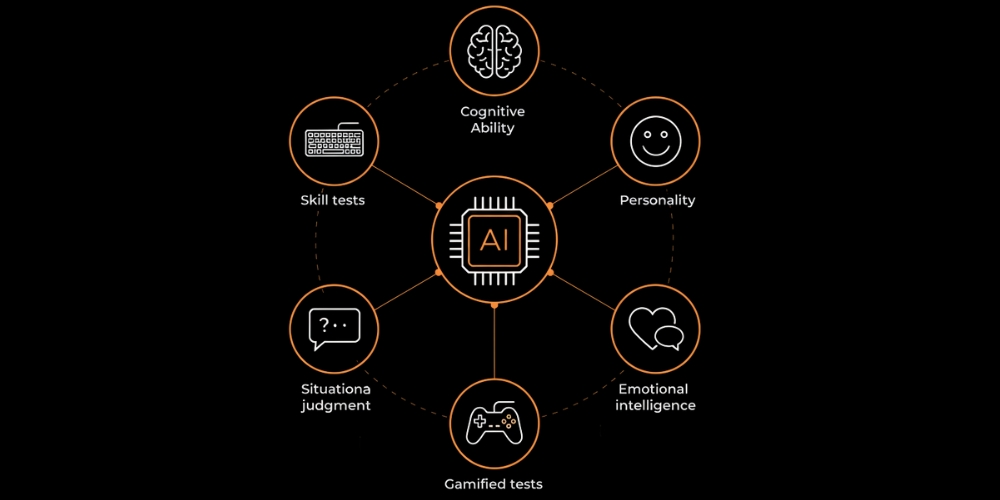
Modern platforms span:
- Hard-skill testing — coding, writing, design, role-specific tasks
- Cognitive assessment — reasoning, problem-solving, learning speed
- Personality and behavioural — work style, motivation, team fit
- Situational judgement — how candidates handle realistic work scenarios
- Emotional intelligence — empathy, communication, self-awareness
- Game-based assessment — engagement-friendly behavioural measurement
- AI predictive analytics — long-term performance forecasting
They don't replace interviews — they make interviews better by providing evidence the interview can probe deeper on.
Why Assessment Matters in 2026 Hiring

Three forces have made assessment a default rather than a differentiator.
Skill claims are increasingly unreliable
AI-polished resumes look excellent. Interview prep guides make candidates sound rehearsed. Reference networks have become quietly transactional. The signal that used to come from resumes and interviews has degraded — assessment fills the gap with direct evidence.
Hiring cost is high enough that errors hurt
SHRM research puts the cost of a single bad hire up to $240K when productivity, retention, and team impact are factored. Assessment costs a tiny fraction of that and meaningfully reduces the bad-hire rate.
Adverse impact monitoring is becoming regulatory
Structured assessment produces auditable hiring data. As bias regulation tightens — NYC, Illinois, Colorado, EU — being able to demonstrate fair, validated evaluation matters legally, not just ethically.
Benefits Worth Quantifying
| Benefit | Real impact |
|---|---|
| Better hiring decisions | Aberdeen Group shows ~36% higher new-hire satisfaction |
| Faster time-to-hire | Automated scoring compresses shortlist creation from days to hours |
| Higher quality of hire | Skill-validated hires show stronger 90-day and 1-year performance |
| Fairer evaluation | Consistent rubrics applied to every candidate reduce bias |
| Talent development insight | Skill gaps surface for targeted upskilling and succession planning |
| Reduced mis-hire cost | Detected mismatches before offer save 100x the assessment cost |
The benefits compound. Each better hire makes the team stronger; each avoided mis-hire saves substantial cost; each documented evaluation strengthens the company's defensibility on hiring fairness.
Types of Assessment Tools
Skill-based assessments
Direct measurement of role-relevant ability — coding challenges, writing samples, design tasks, sales simulations. The most predictive of role performance when the task closely mirrors the actual work.
Cognitive ability tests
Measure reasoning, problem-solving, and learning speed. Strong predictor of general performance, particularly in roles that require handling complexity and novel situations.
Personality and behavioural assessments
Surface how candidates work — collaborative style, risk tolerance, detail orientation, motivation patterns. Useful for cultural fit and team dynamics rather than pure capability.
Situational judgement tests (SJTs)
Present realistic work scenarios and ask how candidates would respond. Reveal judgement, priorities, and decision-making under ambiguity.
Emotional intelligence (EI) tests
Measure empathy, self-awareness, and interpersonal effectiveness. Especially relevant for leadership, customer-facing, and team-management roles.
Game-based assessments
Use interactive challenges to measure behavioural traits while keeping candidates engaged. Particularly effective for early-career and high-volume hiring where engagement matters.
AI-powered predictive analytics
Machine learning models combine multiple signals to predict future performance. Strong when the underlying data is clean and the model is regularly validated; weak when training data carries embedded bias.
Strong Assessment Platforms Worth Evaluating

Capability profiles for the platforms most commonly evaluated in 2026.
Ployo
AI-driven candidate evaluation combining structured screening, behavioural assessment, and predictive scoring. Suits companies wanting unified screening + assessment + interview management in one platform.
Best for: Companies seeking integrated AI recruiting platform with assessment built in.
Criteria Corp
Cognitive ability, personality, and skills testing combined. Strong scientific validation across assessments; clean reporting for fast-paced recruiting teams.
Best for: Well-rounded evaluation combining logic, personality, and reliability metrics.
Hogan Assessments
Pioneers in personality and behavioural assessment. Strong focus on leadership potential, derailers, and values alignment.
Best for: Leadership hiring, executive search, and culture-fit evaluation.
Pymetrics
Neuroscience-based games measuring cognitive and emotional traits. Engaging candidate experience with strong DEI focus.
Best for: Entry-to-mid-level hiring and companies prioritising candidate experience + DEI.
TestGorilla
Library of 300+ pre-employment tests across skills, personality, and cognitive areas. Anti-cheating features, async video, customizable test setups.
Best for: Growing companies and SMBs needing scalable pre-hire assessment without heavy admin.
ThriveMap
Realistic job preview assessments that simulate actual day-to-day work. Improves self-selection and reduces early attrition.
Best for: Operational and customer service roles where role clarity drives retention.
McQuaig
Personality, cognitive ability, and motivation assessments designed for role-fit matching and development planning.
Best for: Mid-sized companies focused on retention and long-term employee development.
Predictive Index
Behavioural and cognitive assessment focused on workplace motivation and team dynamics.
Best for: Strategic workforce planning, leadership hiring, team building.
Harver
High-volume recruitment platform combining behavioural, cognitive, and SJT assessment with strong ATS integration.
Best for: Enterprise companies running large-scale hiring with consistency requirements.
How to Choose the Right Platform
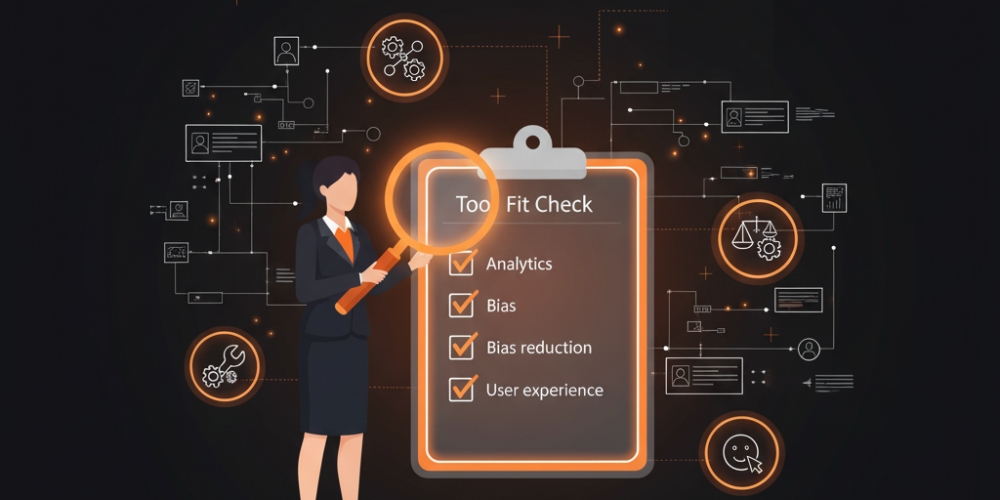
Seven criteria that consistently separate the right tool from the wrong one.
1. Assessment relevance
The test should match the actual job. Coding tests for engineers; communication and judgement assessments for sales and leadership; situational tests for customer-facing roles. Wrong-test errors produce false signal and waste candidate time.
2. Validity and reliability
The platform should publish scientific validation methodology. Tests that haven't been validated against real performance outcomes produce noise dressed as signal.
3. Candidate experience
If candidates abandon the assessment, the platform is failing. Mobile-friendly, modern UI, reasonable time commitment, clear instructions. Test the platform yourself before deploying.
4. Customisation depth
Out-of-the-box tests rarely match specific role needs perfectly. Strong platforms let you adjust difficulty, add custom prompts, and tailor scoring to your context.
5. Bias controls
Adverse impact reporting, anonymised review options, regular audit data. The platform should publish how it ensures fairness, not just claim it.
6. Integration with your stack
ATS, HRIS, scheduling tools — the assessment should flow into your existing systems automatically. Manual data transfer is where assessments quietly die.
7. Reporting depth
Score-only platforms give you part of the picture. Strong platforms provide benchmarks, skill gap analysis, role-fit predictions, and trends across the candidate pool.
How Modern Platforms Strengthen Lateral Hiring
Lateral hires are particularly hard because the candidate has done the role somewhere else — but doing it well in your context requires specific evidence the resume can't show. Modern assessment platforms add value here by:
- Validating actual capability vs claimed capability
- Surfacing leadership readiness signals
- Comparing candidates against successful past hires
- Identifying culture fit indicators
- Predicting ramp-up speed in the new context
Combined with structured interviews and reference checks, the result is lateral hiring with measurably lower mis-hire rates.
The Bottom Line
Talent assessment tools have moved from optional to default for any serious modern hiring program. The combination of degraded resume signal, rising mis-hire cost, and tightening fairness regulation makes structured assessment the rational choice for almost every consequential hire. The platforms differ in what they measure and who they suit best — leadership platforms suit executive hiring, skill platforms suit technical hiring, behavioural platforms suit team dynamics work. The strongest hiring teams combine the right assessment with structured interviews and clear decision rubrics. The teams still relying on resume-and-vibe screening will keep paying mis-hire costs that disciplined assessment users avoid.
FAQs
How do talent assessments improve hiring accuracy?
By replacing intuition with evidence. Structured tests measure real capability and behavioural patterns; consistent scoring reduces evaluator bias; comparable data across candidates supports defensible decisions. Aberdeen research shows ~36% higher new-hire satisfaction with structured assessment.
Can small businesses use talent assessment platforms?
Yes — platforms like TestGorilla, iMocha, and Ployo offer accessible pricing for startups and small teams. Cloud-based deployment means no technical setup; structured assessments help small companies compete on hiring quality regardless of recruiting team size.
How do assessment tools integrate with AI hiring solutions?
Modern AI hiring platforms typically include native assessment integration or API connections to leading assessment providers. Test results flow into candidate profiles automatically, and AI shortlisting incorporates assessment scores alongside other signal — producing a unified evaluation view rather than fragmented per-system data.
Are assessments biased?
They can be, if poorly designed or unaudited. Well-built modern platforms publish adverse impact methodology and validation studies. The bias profile is typically more controllable and auditable than the bias inherent in unstructured human evaluation.
What's the single highest-leverage assessment to deploy first?
For most companies: a skill-based test matched to actual job tasks for high-volume roles. The skill match is the strongest predictor of performance and the most defensible to candidates and regulators alike. Add cognitive, behavioural, and situational layers from there.
Keep reading

Conversational AI Recruiting Chatbots: Practical Use, Real Limits

Interview Schedule Templates and Tips: A Practical Recruiter Guide
