

Hiring an HR Assistant: Skills, Screening, and Evaluation Guide
How recruiters evaluate candidates for HR assistant roles — the skills that matter, the screening process, and the interview signals that predict success.
Ployo Team
Ployo Editorial
TL;DR
- HR support roles are projected to grow ~6% through 2032 (BLS), outpacing many other occupations.
- Median US HR assistant salary sits around $47,800/year, varying by region and sector.
- Core skills: discretion, communication, HRIS proficiency, attention to detail, organization.
- Strong interview signals: STAR-method answers, demonstrated confidentiality judgement, real tool experience.
- AI and structured hiring are now standard for reducing bias and improving evaluation consistency.
The HR assistant role is one of the most consequential entry-level hires in any company. The person who fills it touches employee data, payroll, onboarding, and policy questions — often as the first point of contact for new hires. Hiring well here protects the company; hiring poorly creates compliance risk and damages the employee experience for everyone the assistant interacts with. This guide walks through what the role actually involves, the skills recruiters screen for, and how modern evaluation processes find the right fit.
What the HR Assistant Role Actually Involves
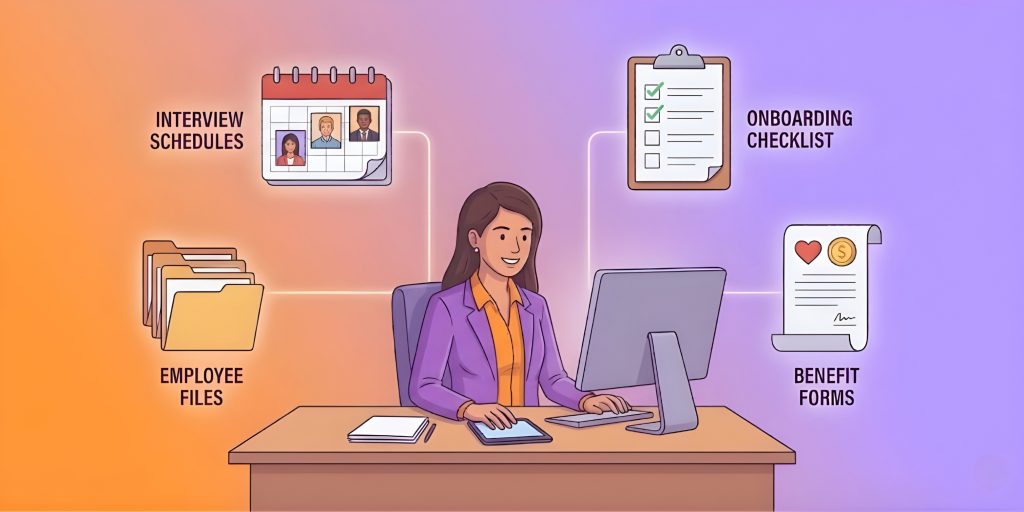
The HR assistant role is far broader than its title suggests. Daily responsibilities typically include:
- Scheduling interviews and coordinating candidate communications
- Supporting onboarding paperwork and orientation
- Updating employee records in the HRIS
- Handling payroll inputs and benefits administration
- Responding to first-line employee questions on policy
- Maintaining confidentiality across sensitive data
- Supporting performance review and engagement survey cycles
BLS projections show HR support roles growing around 6% through 2032 — outpacing average occupational growth. The growth reflects how essential the role has become in keeping HR operations running smoothly as compliance complexity rises.
Core Skills Recruiters Screen For
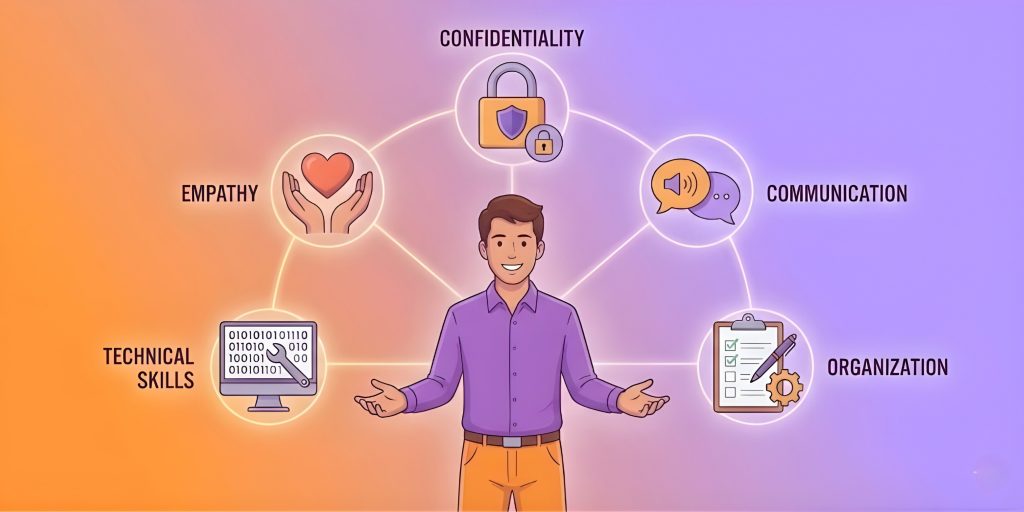
Five capabilities consistently predict success in the role.
1. Discretion and confidentiality
Non-negotiable. The HR assistant sees salary data, disciplinary records, medical accommodations, and personnel decisions. A candidate who can't be trusted with this information is disqualified before any other skill matters.
2. Clear communication
The ability to explain complex policy or benefits details warmly and clearly. Employees often approach HR confused or stressed — the assistant's communication style sets the tone for resolution.
3. Technical proficiency
Comfort with HRIS platforms (Workday, BambooHR, ADP, etc.) and standard office software. Modern HR runs on technology; candidates without baseline tool fluency will struggle.
4. Attention to detail
Payroll entries, benefits enrollment, compliance documentation — small errors here cause large downstream problems. The role rewards careful, methodical execution.
5. Organisation
Balancing recruitment cycles, performance reviews, onboarding waves, and ongoing employee questions requires real organisational skill. Candidates who struggle to manage multiple parallel workstreams will struggle in this role.
The honest test: candidates should be able to describe specific situations where they demonstrated each skill, not just claim them on a resume.
How Recruiters Screen HR Assistant Resumes
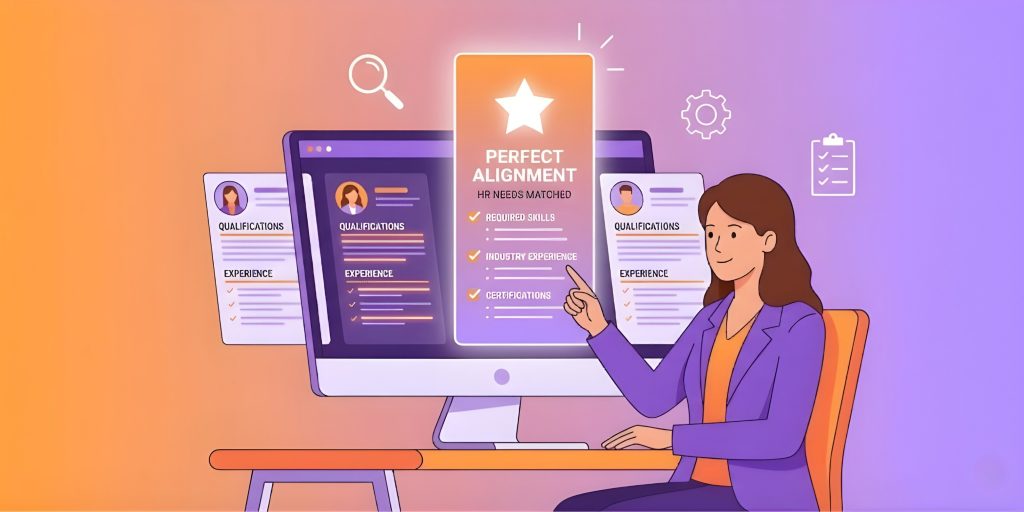
The initial screen typically checks:
- Education — degree in HR, business, or psychology preferred; relevant admin experience often accepted as substitute
- Tool experience — HRIS platforms named, ATS familiarity, office software
- Certifications — aPHR or SHRM-CP signal serious commitment to the field
- Volume handled — number of employees supported, scope of administration
- Compliance exposure — evidence of comfort with regulations and audit
- Salary alignment — ZipRecruiter data puts median entry-level around $47,800/year; significant variance by region
Search trends like "HR assistant jobs near me" show high candidate volume — meaning recruiters typically face hundreds of applications per role, making structured screening essential.
Interview Criteria That Predict Success
After the resume stage, the interview is where the role is won or lost. Strong recruiters use a mix of standard questions and situational prompts.
Questions that consistently reveal capability
- "Tell me about a time you handled confidential information under pressure" — discretion signal
- "Describe a situation where you had to explain a complex policy to a frustrated employee" — communication under stress
- "Walk me through how you'd manage a week with three interview rounds, a benefits open enrollment, and an audit due Friday" — prioritisation
- "What HR systems have you used, and which feature did you find most useful?" — actual tool experience
- "How would you handle finding a confidential document left at the printer?" — judgement on confidentiality
Signals recruiters look for
- STAR-method answers (Situation, Task, Action, Result) — demonstrates structured thinking
- Specific examples with real outcomes — proves the experience is genuine
- Discretion in how candidates describe past employers — signals they'll be discreet about yours
- Comfort discussing compliance and policy — shows they take the gatekeeper role seriously
- Calm under stress in role-play scenarios — predicts performance under actual pressure
Interview do's and don'ts matter here — candidates who speak poorly of previous employers or struggle with structured answers usually get filtered out.
Common Mistakes Candidates Make
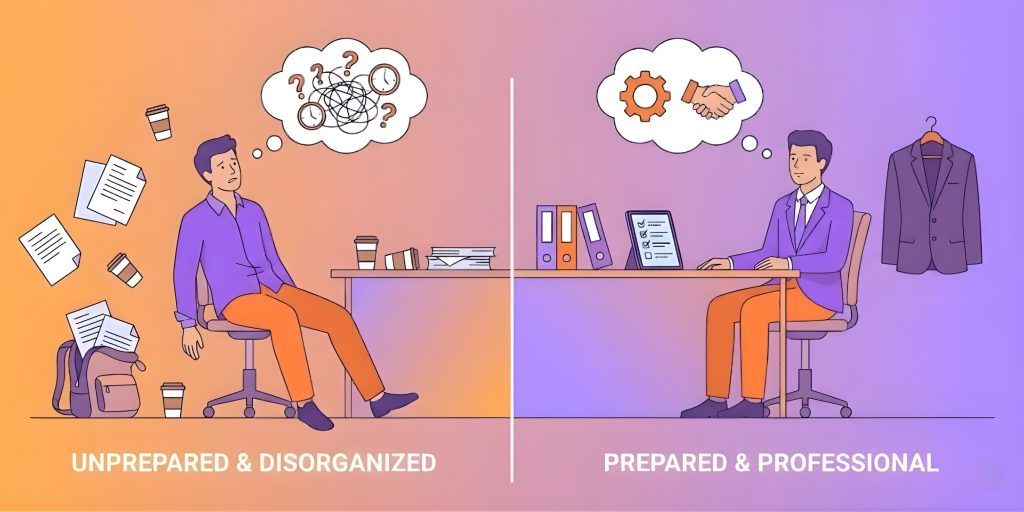
Five patterns that cost otherwise-qualified candidates the role.
Over-emphasising personality
"I love working with people" is generic and unconvincing. The role requires people skills AND systematic execution — show evidence of both.
Under-preparing for compliance questions
Candidates who can't speak to basic labor law, confidentiality requirements, or audit processes signal they don't understand the role's responsibility.
Being overly casual
The HR assistant is the company's policy gatekeeper. Professional gravitas signals the candidate understands what the role represents.
Vague answers about tool experience
"I'm familiar with HR systems" tells nothing. "I used Workday daily for benefits enrollment and BambooHR for onboarding workflows" tells everything.
Lack of specific outcomes
"I helped onboard new hires" is weak. "I onboarded 35 new hires per quarter while reducing first-day errors by adding a pre-arrival checklist" is strong.
How AI and Structured Hiring Improve Evaluation
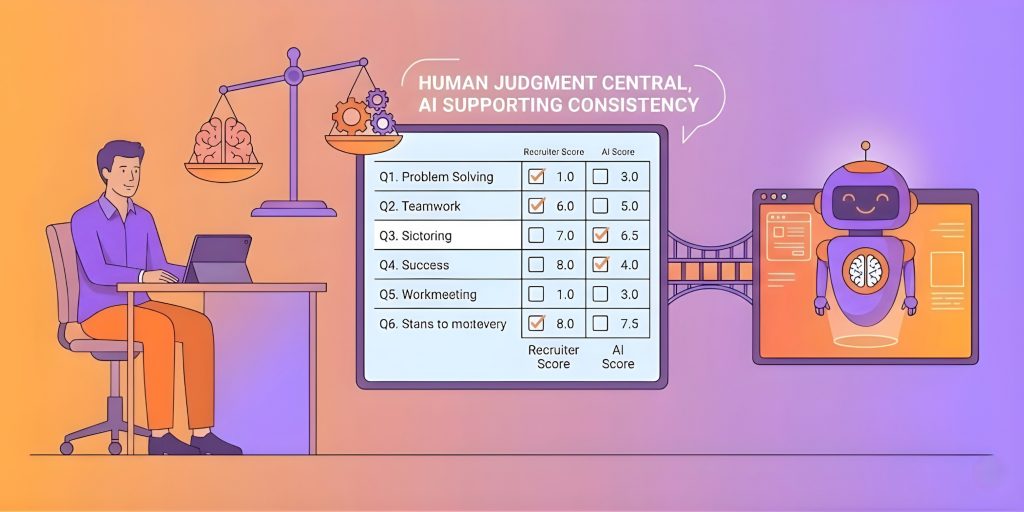
Modern recruiting methods increasingly combine AI screening with structured human interviews for entry-level HR roles.
AI handles volume
Resume parsing, keyword matching against role criteria, initial screening question ratings — all at speeds and consistency manual review cannot match. The recruiter's time gets spent on shortlist depth, not first-pass volume.
Structured interviews reduce bias
Every candidate gets the same questions in the same order, scored against the same rubric. This consistency removes the "gut feel" variance that produces both bias and bad hires.
Triangulated signal
Strong evaluations combine: AI screening score + structured interview rubric + work sample (mock policy explanation, mock scheduling scenario) + reference check on specific behaviours. Each input alone is partial; together they produce defensible decisions.
The combination is becoming standard for any entry-level role with high application volume — HR assistant included.
The Bottom Line
Hiring an HR assistant well is the difference between an HR function that runs smoothly and one that constantly puts out fires. The role demands discretion, communication, technical fluency, and execution discipline — and the candidates who actually have all four are easier to identify with structured evaluation than with traditional resume-and-vibe screening. Recruiters who combine AI-assisted screening with consistent interview rubrics and behavioural references produce stronger hires at lower cost-per-hire. Candidates who prepare for the substance of the role — confidentiality, policy, real tool experience — consistently outperform those who lean on personality alone.
FAQs
What qualifications do recruiters expect for HR assistant roles?
Most recruiters prefer a bachelor's degree in HR, business, or psychology, though associate degrees with strong admin experience are often accepted. The aPHR certification signals serious commitment and improves shortlist odds.
Is prior HR experience mandatory for HR assistant roles?
Not always. Many HR assistant positions are entry-level. Candidates from admin, customer service, or office coordinator backgrounds are often considered if they can demonstrate trustworthiness with sensitive information.
What interview questions are most common for HR assistants?
Situational questions dominate — handling confidential information, managing competing deadlines, explaining complex policy to upset employees. Technical questions about specific HR systems (Workday, ADP, BambooHR) also appear regularly.
What's the typical salary for an HR assistant in the US?
Median entry-level HR assistant salaries sit around $47,800/year (ZipRecruiter), with significant variance by region (higher in major metros) and sector (higher in tech and finance).
How can AI improve HR assistant hiring?
By handling initial resume screening at consistent quality and volume, allowing recruiters to spend their interview time on the shortlisted candidates who genuinely merit deeper attention. Combined with structured interviews, AI screening reduces both time-to-hire and bias.


