

Startup Hiring Practices: The Ultimate Founder's Guide
Smart startup hiring — challenges, framework, common mistakes, retention, and a 5-phase playbook that helps founders build strong teams fast.
Ployo Team
Ployo Editorial

TL;DR
- Bad startup hires cost up to 30% of first-year salary (GoHire).
- Replacing an employee can cost 50–200% of annual salary (SHRM).
- Early hires shape culture and DNA more than any later round.
- Five-phase framework: plan → attract → assess → decide → onboard.
- Avoid: hiring fast, vague roles, over-promising perks, gut-feel interviews.
Founders feel pressure to build the team fast — but every wrong hire eats money, time, and morale. This guide breaks down what makes startup hiring different, the framework that consistently works, the mistakes to avoid, and how to build a hiring process that creates strength rather than stress.
Why Startup Hiring Is Different

Five structural differences from big-company hiring.
Speed over polish
You need people fast. Slow processes lose candidates and momentum.
Role fluidity
One person wears multiple hats. Developer also does support; designer also runs social.
Resource constraints
Tight budgets, no big HR team, few tools. Each hire carries more weight.
Culture sets the tone
Early hires define what future hires expect. Bad cultural seeds are hard to fix later.
Uncertainty as default
Product pivots, market shifts, role changes. Your team must adapt.
Key Challenges Founders Face

Seven recurring hurdles.
Defining what you actually need
Without skill, scope, and culture clarity, roles attract mismatched candidates.
Brand limitation
Few people know you. Big competitors pull attention with bigger pay.
Compensation competition
Cash is tight. Equity helps but doesn't always close the gap.
Speed vs quality
Too fast = mis-hire. Too slow = lose candidates and momentum.
Soft skills + culture assessment
In small teams, one cultural mismatch damages morale fast.
Retention pressure
Startups change quickly. Instability drives churn.
Cost of mistakes
Per GoHire research, bad hires cost up to 30% of expected first-year compensation when recruitment, training, and productivity gaps are included.
The Five-Phase Hiring Framework
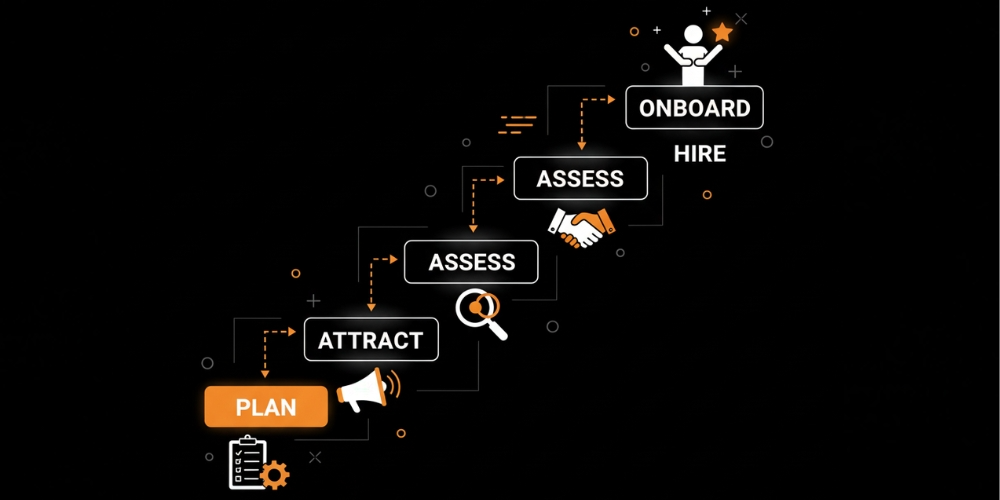
| Phase | What to Do | Practical Actions |
|---|---|---|
| 1. Plan | Define role, skills, responsibilities, culture | Write strong JD for startups with metrics + growth path |
| 2. Attract | Source candidates via networks + niche boards | Referrals, storytelling, AI staffing solutions |
| 3. Screen + assess | Review resumes, practical tasks, structured interviews | Score on skills + behaviour; consistent criteria |
| 4. Decide | Compare finalists, check references, craft offer | Transparent on salary, equity, expectations |
| 5. Onboard + retain | Train, 30/60/90 goals, feedback loops | Early wins, mentors, weekly reviews |
Build the process once; reuse it. Each hire teaches you what to improve next time.
Mistakes to Avoid

Five mistakes that consistently cost founders the most.
Hiring too fast
Pressure to scale pushes founders to grab "good enough" candidates. Early hires shape DNA — wrong choices slow growth for years.
Ignoring role clarity
"We'll figure it out as we go" repels candidates who thrive on structure. Build the role before you hire.
Skills over fit
Talented candidates who clash with the team damage morale. Culture fit weighs heavier in small teams.
Gut-feel interviews
Unstructured interviews magnify bias. Structured questions + practical tasks beat instinct every time.
Over-promising the dream
Selling growth or equity you can't deliver kills trust fast. Be transparent on runway, role evolution, and realistic upside.
Per SHRM data, replacing one employee can cost 50–200% of their salary depending on role specialisation. Avoidance pays.
Benefits of Smart Hiring

Four compounding advantages.
Team agility
Flexible, motivated hires help you pivot without losing momentum.
Lower turnover
Clear roles + aligned hires → people stay longer.
Faster scaling
Strong hires build systems that free founders to focus on vision and product.
Cost savings
Every avoided mis-hire saves recruitment, training, and lost-productivity cost.
Pairs well with a deliberate recruitment process and AI tools for screening, scheduling, and matching candidates beyond keyword scanning.
The Bottom Line
Smart hiring isn't filling seats — it's building the foundation everything else rests on. Startups treating hiring as strategic rather than reactive avoid costly mistakes and scale faster. Clear framework, common pitfalls avoided, deliberate tooling. The compounding effect across the first 10–20 hires defines what the company becomes.
FAQs
When should a startup make its first hire?
When workload consistently blocks founders from core growth tasks. First hire should solve a repeating, clear pain point.
Generalists or specialists first?
Generalists in the very early stage — they wear multiple hats well. Specialists add depth as functions mature.
How can startups compete with large companies for talent?
Sell vision, autonomy, impact, and growth speed — not salary. Big firms pay more, but startups offer ownership and pace.
What's the biggest hiring mistake startups make?
Panic hiring. Rushing to plug gaps overlooks long-term needs; cost shows up later as turnover and stalled growth.
What's the highest-leverage starting move?
Write one excellent job description for your most urgent role. Clarity at the entry point fixes more downstream problems than any other single investment.


