

Candidate Screening Guide: A Practical Playbook for 2026 Hiring
A structured candidate screening process saves time, reduces bias, and finds real fits — the steps, tools, and pitfalls that matter most.
Ployo Team
Ployo Editorial

TL;DR
- Structured screening replaces guesswork with consistent evidence-based filtering.
- Blind audition research shows anonymised screening raised women's advancement by ~11 percentage points.
- The strongest screening processes combine resume filters, skill tests, brief calls, work samples, and scorecards.
- AI handles volume; humans handle judgement — neither alone produces the best outcomes.
- Common failure modes: rushing under time pressure, inconsistent reviewer criteria, weak signal in early filters.
Candidate screening is the most leveraged step in the entire hiring funnel. Get it right and the rest of the process becomes easier — interviews happen with serious candidates, offers go to the right people, and hiring quality improves. Get it wrong and every downstream step compounds the cost: interviewers waste hours on poor fits, recruiters burn out, and the eventual hire is often the wrong person. This guide walks through what screening actually is, the step-by-step process that consistently works, the tools that matter, and the pitfalls that derail otherwise capable hiring teams.
What Candidate Screening Actually Is
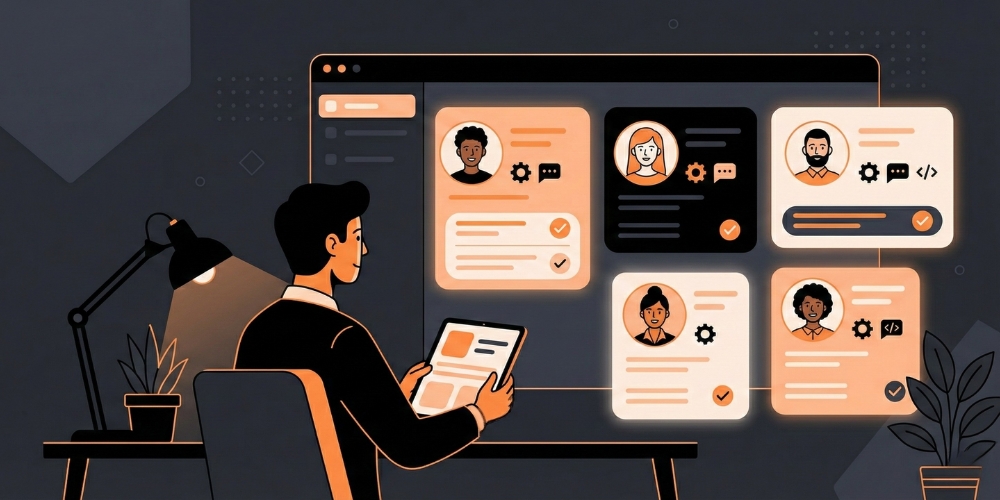
Candidate screening is the filtering step between application receipt and interview. Its job is simple: answer "who should move forward?" with confidence backed by consistent criteria rather than reviewer gut feel.
Screening typically includes:
- Reviewing resumes against role criteria
- Light skill or knowledge assessment
- Verifying basic eligibility (work authorisation, geography, salary expectations)
- Short phone or video conversations
- Comparing candidates against a shared rubric
The classic Harvard blind audition research showed how powerful structured anonymised screening can be — anonymisation increased women's advancement chances by ~11 percentage points and accounts for roughly a quarter of the increase in women hired into symphonies. The principle generalises: structured criteria, consistently applied, produce fairer and better outcomes than unstructured "judgement."
Screening is not the same as selection — it's about narrowing the pool to the candidates who genuinely merit deeper evaluation.
Why Strong Screening Matters
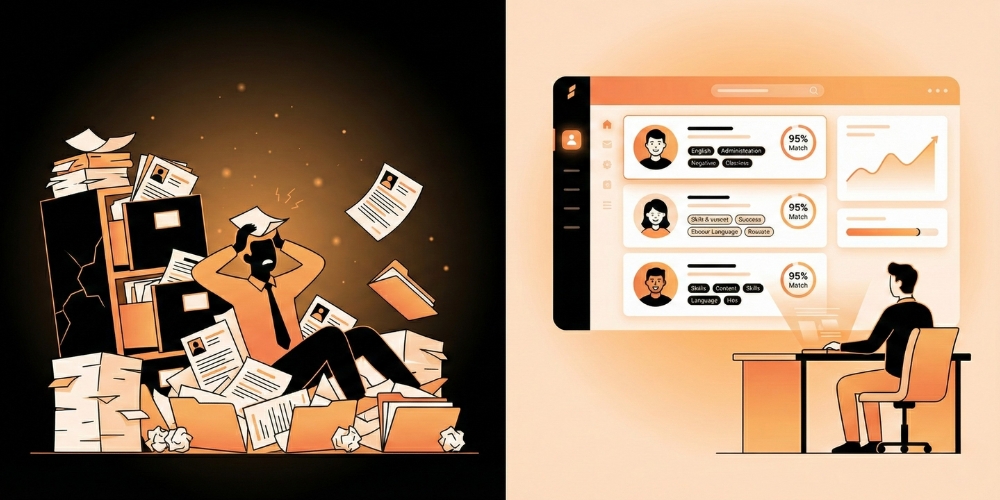
Three structural reasons to invest in screening quality.
Wasted interview time is the largest hidden hiring cost
Every interviewer hour spent on a candidate who shouldn't have passed screening is hour stolen from candidates who deserve attention. Strong screening multiplies the team's effective interviewing capacity.
Bias compounds at every funnel stage
Bias introduced in screening doesn't just stay there — it shapes the slate that reaches interviews, then offers. Structured screening contains the bias risk at the earliest stage.
Fast strong candidates take competing offers quickly
Slow, weak screening loses top candidates to faster competitors. Screening discipline keeps the funnel moving.
The Step-by-Step Screening Process
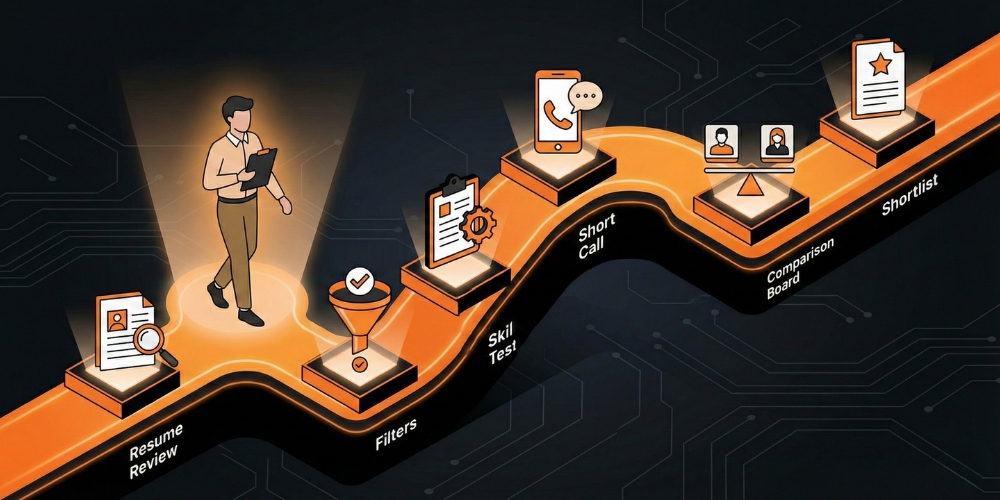
Seven stages that consistently produce strong shortlists.
1. Define role criteria explicitly
Write down skills, experience minimums, must-haves vs nice-to-haves. Vague criteria produce vague screening; explicit criteria produce consistent screening.
2. Sort applicants by basic eligibility
Work authorisation, geographic fit, salary alignment, hard credential minimums. Eliminating non-eligible applicants early frees attention for genuine candidates.
3. Review resumes with discipline
Focus on skills, real outcomes, role fit — not pedigree or formatting polish. Blind resume screening helps the most at this stage.
4. Apply assessment tools
Skills tests, knowledge checks, short structured assessments. These replace guesswork with evidence and dramatically improve downstream interview quality.
5. Conduct short phone or video screens
15-20 minute conversations to confirm communication, salary expectations, motivation, and basic role fit. Use a consistent question set across candidates.
6. Compare with scorecards
Same criteria, same scale, same scoring discipline across all candidates. Scorecards are how you remove "I had a good feeling about her" from the funnel.
7. Build the shortlist
Top-scoring candidates against the rubric move to formal interviews. Document why each shortlisted candidate advanced — defensibility matters.
Tools and Techniques Used in Modern Screening
Five technique categories that consistently produce strong screening.
Resume and application filters
Basic ATS filters for credentials, location, experience minimums. Most useful for removing clearly non-eligible applicants without burning recruiter attention.
Skill and knowledge tests
Direct measurement of role-relevant capability. Far more predictive of performance than resume claims alone.
Phone and video screens
Short, structured conversations confirming communication, expectations, and interest. Async one-way video options scale well for high-volume hiring.
Work samples
Small role-relevant tasks (write a sample brief, debug a snippet, run a mock scenario). Strong predictor of actual performance.
Behavioural questions
"Tell me about a time…" structured questions that reveal how candidates handled real situations. Use the STAR framework for scoring consistency.
Common Screening Challenges
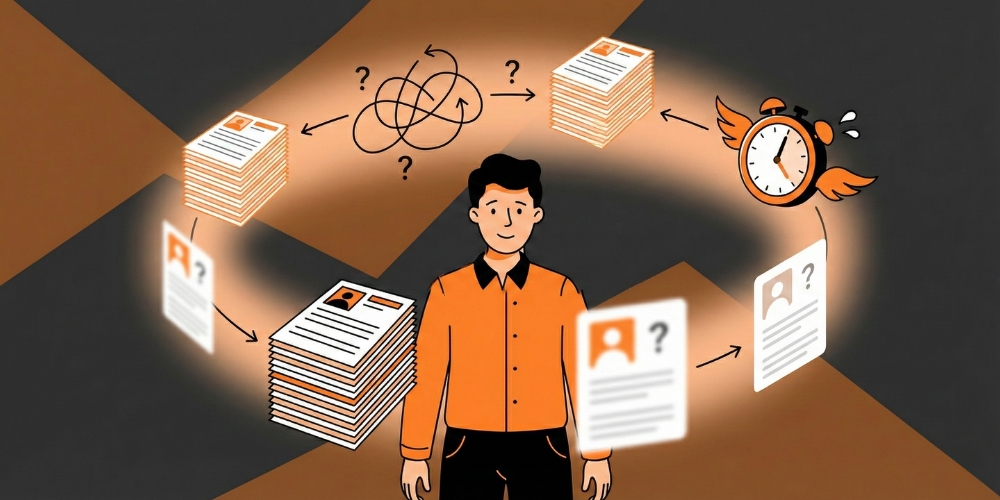
Five recurring problems that derail screening — and how to fix each.
1. Application volume overwhelms the team
Fix: AI-driven first-pass filtering on clear criteria; structured screening questions in the application itself.
2. Bias in early decisions
Fix: Anonymised review for first-pass; written rubrics; consistent reviewer training.
3. Mixed or incomplete information
Fix: Standardised application questions; clear required fields; consistent CV format request.
4. Time pressure forces rushed decisions
Fix: Better upstream sourcing so the pool is stronger; AI-assisted filtering to compress review time.
5. Inconsistent team feedback
Fix: Shared scorecards; calibration meetings before screening waves; documented criteria.
How AI Improves Candidate Screening
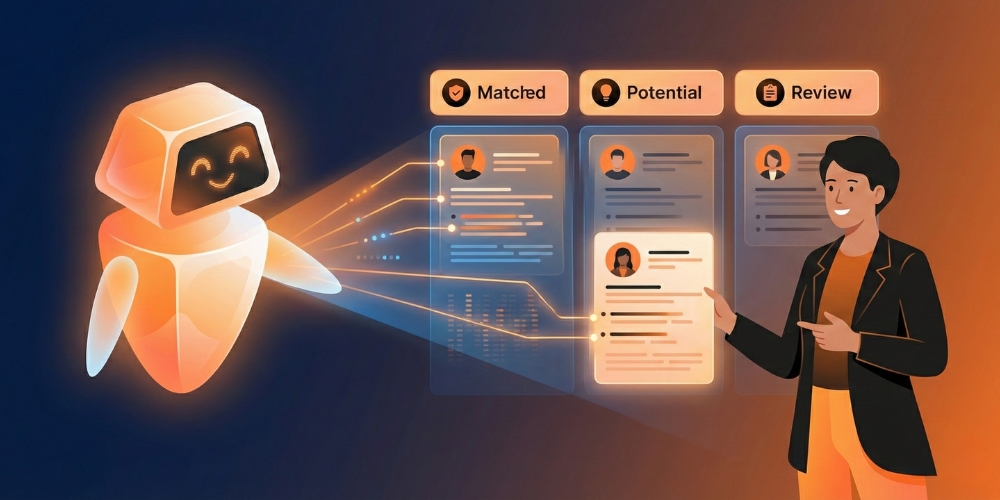
Four specific contributions modern AI tools make.
Faster volume sorting
AI can review thousands of resumes against role criteria in minutes. The recruiter's first-pass time gets reclaimed for shortlist depth.
Better signal detection
Modern tools look at career progression, skill relationships, and contextual fit — not just keyword presence. They surface candidates whose resumes are less polished but whose substance is stronger.
Reduced bias (when well-designed)
Research published in the AI journal shows AI models, when trained on clean data and audited regularly, can outperform unstructured human screening on consistency metrics. The key is the audit discipline — without it, AI encodes whatever bias was in training data.
Culture fit indicators
Some tools analyse communication patterns to flag potential culture fit signals. These are inputs to human judgement, not replacements for it.
Best Practices for Recruiters
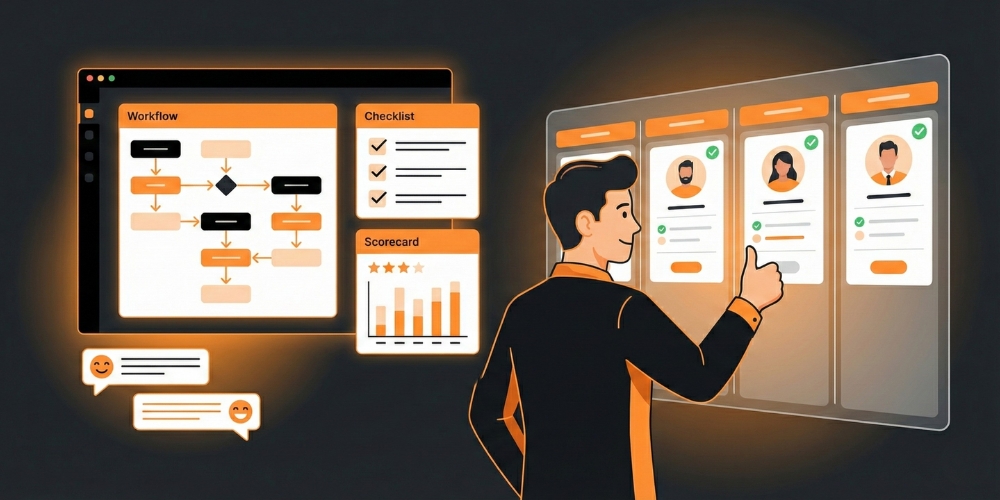
Six habits that consistently distinguish strong screening from weak.
Use written criteria
Explicit must-haves and nice-to-haves, visible to the whole hiring team. Verbal criteria drift; written ones don't.
Keep assessments short
Long tests reduce completion rates and skew toward candidates with too much spare time. Short, role-relevant tasks work better.
Compare with scorecards
Shared rubric, consistent scoring, documented results. Removes "vibes-based" decision-making at the most leveraged stage.
Communicate timelines early
Tell candidates what to expect. Even rejected candidates remember good communication and become brand advocates.
Balance AI tools and human judgement
AI handles volume and consistency; humans handle context and nuance. The combination outperforms either alone.
Review and refine the process
Quarterly retrospective on what worked, what didn't, what to change. The hiring needs of the company shift; screening discipline must keep up.
The Bottom Line
Candidate screening is the highest-leverage process in modern hiring — the place where small investments in structure produce outsized returns in hiring quality, speed, and fairness. The teams that screen well combine AI-driven first-pass filtering with disciplined human judgement, written criteria with consistent scorecards, and continuous process refinement with respect for the candidate experience. The teams that don't keep paying mis-hire costs and complain that "good candidates are hard to find" — usually because their screening filtered out the good candidates without anyone noticing.
FAQs
How long should the candidate screening process take?
Initial screening should typically complete within 5-10 business days of application. Longer cycles lose top candidates to competitors. Shorter cycles indicate insufficient diligence.
How do AI screening tools evaluate candidates?
By parsing resumes for role-relevant skills, comparing experience patterns against role criteria, and ranking candidates by fit. Strong tools also flag adverse impact patterns and provide explainable scoring.
Can AI screening make hiring fairer?
Yes, when designed and audited deliberately. Consistent criteria applied to every candidate removes the variable-attention bias of human screening. AI can also encode bias from training data — ongoing audits matter.
What's the most common screening mistake?
Inconsistent criteria across reviewers. Without a shared rubric, every reviewer evaluates against their own implicit standard, producing chaotic shortlists and embedded bias.
Should small businesses bother with structured screening?
Yes — often more so than large companies. Small teams can't absorb mis-hires the way larger companies can. Structured screening produces disproportionate value when each hire matters more.
Keep reading


