

Recruiter Burnout: How Manual Screening Wrecks Your Team
Recruiter burnout from manual screening costs more than time — how to spot it, the hidden business costs, and how automation breaks the cycle.
Ployo Team
Ployo Editorial

TL;DR
- 81% of recruiters reported feeling burned out in 2024 (Testlify).
- 51% report significantly increased workload over the past 2–3 years (RTÉ).
- Recruiters spend 30–90 seconds per resume; 200 applicants = 5–15 hours per role.
- 58% of candidates have turned down offers due to poor candidate experience (CareerPlug).
- Automation can cut resume review time 75–80% — and free recruiters for strategic work.
Recruiter burnout is a quiet business crisis. The repetitive grind of manual screening, scheduling, and email coordination drains recruiter capacity for the strategic work that actually moves hiring outcomes. The cost compounds: slower hires, worse candidate experience, higher recruiter turnover. This guide walks through what causes burnout, the hidden business costs, and how automation breaks the loop.
What Recruiter Burnout Is
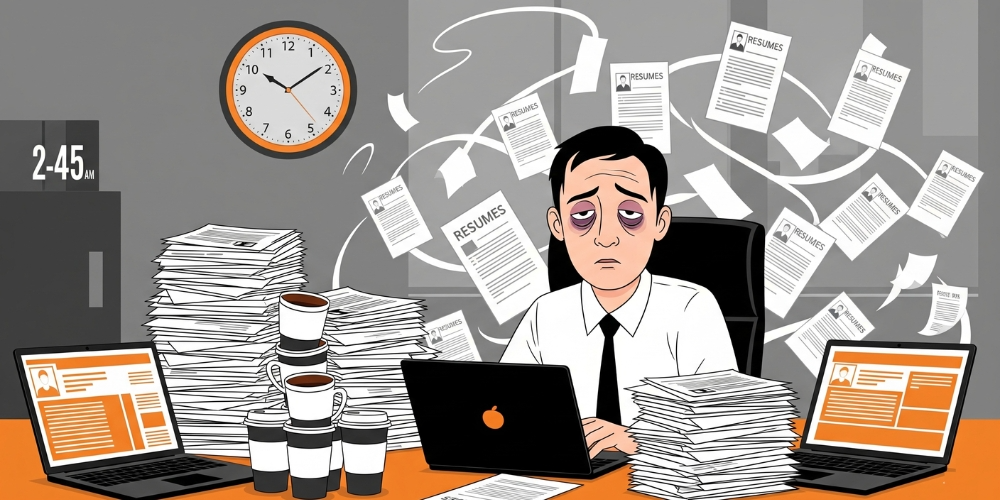
Recruiter burnout is physical, mental, and emotional exhaustion from doing too much low-leverage work. The dominant cause: endless email handling, resume reading, rescheduling, and rejection sending instead of high-impact recruiting work.
Common signs:
- Feeling drained before work begins
- Low motivation to reach out to candidates
- Declining quality in candidate communication
- Mental fog when reviewing resumes
Testlify's 2024 data shows ~81% of recruiters report feeling burned out. RTÉ's research finds 51% of recruiters report significantly increased workload over the past 2–3 years.
How Manual Screening Drives Burnout
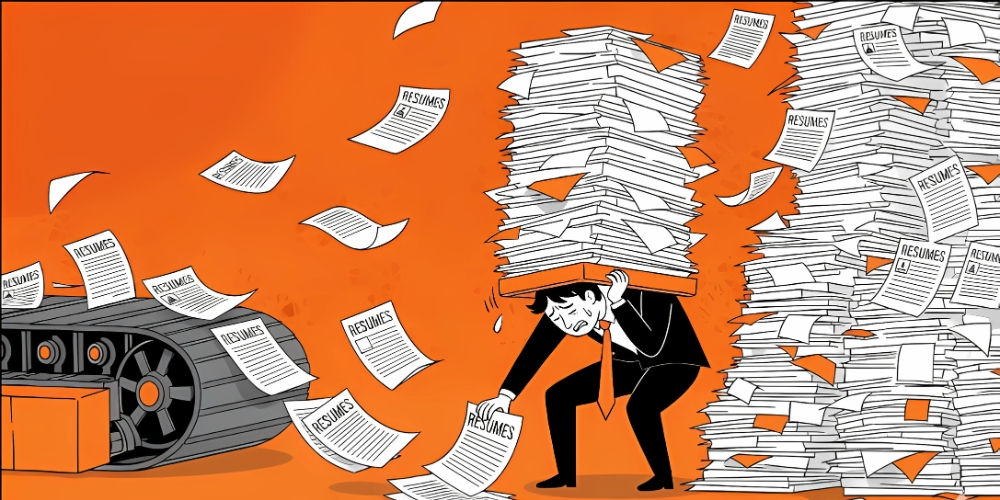
Four direct mechanisms.
Time drain
Per Shortlistd's data, recruiters spend 30–90 seconds per resume during initial review. A role with 200 applicants consumes 5–15 hours just on screening.
Repetitive low-reward work
Reviewing resumes, sending generic emails, juggling interview times, maintaining spreadsheets. High effort, low creative reward, fast burnout.
Decision fatigue
Hundreds of small yes/no filtering decisions wear down judgment. Bias and errors creep in as decision quality drops through the day.
Misallocated priorities
When screening dominates the day, strategic work (relationship-building, candidate experience design, brand investment) gets neglected entirely.
Hidden Costs for Employers

Five business costs that compound quickly.
Slow time-to-hire
Hours per role spent on screening plus scheduling delays add up to weeks-longer open roles. Each open role costs lost productivity.
Worse candidate experience
CareerPlug data shows 58% of candidates have turned down offers due to poor candidate experience. Slow, impersonal screening signals you don't value candidates.
Recruiter turnover
Burnout drives recruiter resignations. Replacing them costs more hiring effort and onboarding time — a vicious cycle.
Lost strategic work
Time spent on manual screening means time not spent improving hiring strategy, employer branding, or refining screening interview questions.
Budget pressure
Compono's data shows ~46% of HR leaders expect flat or decreased recruiting budgets. Manual screening is expensive in person-hours; teams are forced to do more with less.
How Automation Breaks the Cycle

Four concrete benefits.
Speed
Automated resume screening cuts review time 75–80%. Days become hours.
Consistency
Machines don't get tired or biased after their 150th resume. Same criteria, same evaluation, every time.
Focus on value work
Recruiters spend reclaimed time on relationships, strategy, and candidate experience — the work that actually drives hire quality.
Better candidate experience
Faster replies, smoother scheduling, less ghosting. Candidates feel valued; brand strengthens.
Transitioning Away From Manual Screening

Five steps that consistently produce smooth transitions.
1. Start with one high-volume role
Pilot automation on entry-level or customer-facing positions. Prove value before scaling.
2. Map your workflow
Identify which pre-screening steps consume the most time — resume filtering, email, scheduling — and automate there first.
3. Blend automation with human review
Automated shortlisting, human validation. Efficiency plus judgment.
4. Train the team
Resistance to change drives burnout almost as much as workload. Train recruiters on new tools and explicitly show how their work becomes easier.
5. Track progress
Measure time-to-hire, candidate drop-off, recruiter workload. Share data with leadership to secure further investment. The hidden cost of screening is real; the savings from automation are measurable.
The Bottom Line
Recruiter burnout is a business problem, not just an HR problem. Manual screening drains hours that should produce strategic value, damages candidate experience, and drives recruiter turnover. Automation breaks the loop — when implemented thoughtfully with human review preserved at decision points, it produces faster hires, better experiences, and healthier teams. The companies that automate well retain their best recruiters; the ones that don't keep replacing them while wondering why hiring outcomes lag.
FAQs
How much time do recruiters lose to manual screening?
Hours per role at minimum, sometimes most of the workweek. With hundreds of applicants per role, manual screening can consume the entire recruiter capacity for high-volume positions.
Can automation replace human judgment?
No. Automation handles repetitive work and removes some bias; humans still own strategy, culture fit, and final hiring decisions. Treat AI as partner, not replacement.
How does manual screening hurt candidate experience?
Slow responses, missed follow-ups, ghosting. Candidates notice immediately and disengage. Faster automated processes consistently improve experience metrics.
What's the highest-leverage first step?
Automate resume screening for one high-volume role. Prove ROI in 60 days; expand from there. Trying to automate everything at once is the most common reason transitions stall.
How long does it take to see ROI from automation?
Most teams see measurable time savings within 30–60 days. The compounding benefits on recruiter retention and candidate quality appear over 6–12 months.
Keep reading


