

Blind Resume Screening: How It Actually Reduces Hiring Bias
Blind resume screening removes identity signals from early review — what it does well, what it doesn't fix alone, and how to implement it effectively.
Ployo Team
Ployo Editorial

TL;DR
- Blind resume screening removes name, photo, age, school, and other identity signals from early-stage review.
- Identical resumes with white-sounding names receive ~30% more interview calls than African-American-sounding names (NBER).
- ~46% of employers report struggling to select diverse candidates — up from 18% the prior year.
- Blind screening is necessary but not sufficient — it reduces early-stage bias but doesn't solve later-stage interviewing or culture issues.
- Implementation works with software or a structured manual process if budget is constrained.
Recruiters reviewing hundreds of resumes form impressions in seconds based on names, schools, photos, and other identity signals — often before they consciously read the experience section. Decades of audit-study research show these signals systematically advantage some candidates and disadvantage others. Blind resume screening removes the signals at the early-review stage and forces evaluation on substance instead. This guide walks through what blind screening actually does, what the research shows about its effects, and how to implement it without expensive tooling.
What Blind Resume Screening Is
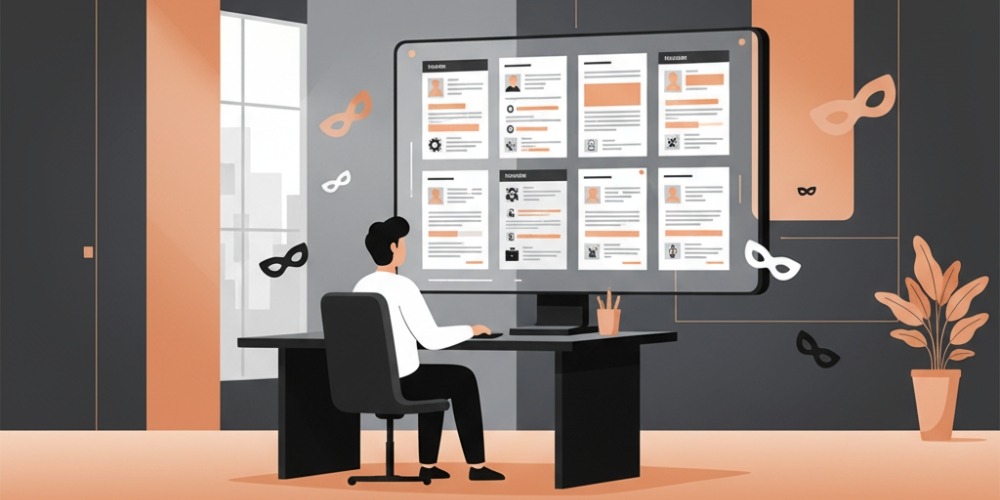
Blind resume screening — also called blind hiring or anonymised review — removes or hides identifying information from the resume before it reaches the reviewer. The information typically removed:
- Name (especially first names that signal gender or ethnicity)
- Photo
- Age and date of birth
- Graduation dates (which imply age)
- University names (which carry prestige signal)
- Address (which can signal socioeconomic background)
- Extracurriculars that imply gender, religion, or culture
The reviewer evaluates skills, experience, and outcomes — not who the candidate appears to be. Once shortlisting is done on substance, identities can be revealed for later stages where they become relevant (scheduling, references, culture conversations).
The approach is increasingly part of formal DEI programs because it neutralises bias at the funnel stage where it does the most damage: the initial filter.
Why Bias Persists Even Without Bad Intent
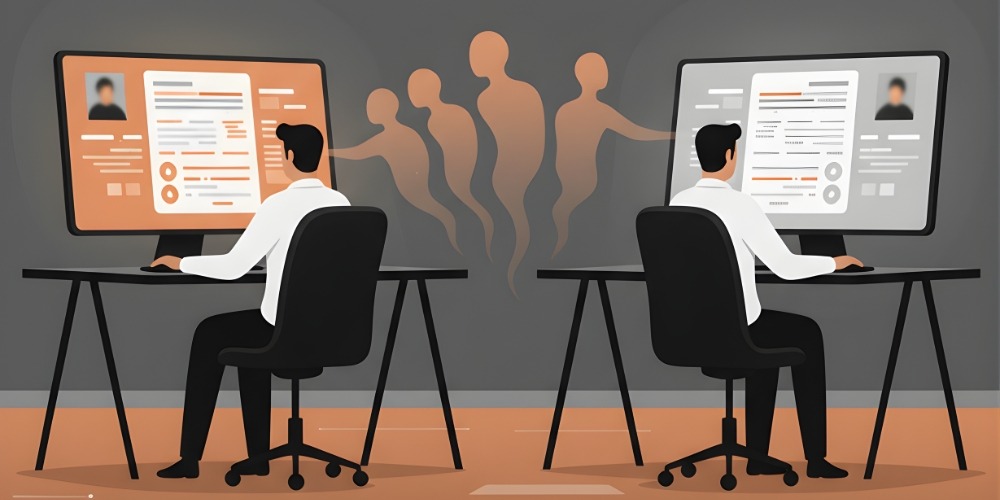
The data on persistent hiring bias is consistent across multiple independent studies.
- Clara research on 2025 hiring bias shows racial bias in entry-level hiring has reduced but remains across industries.
- SelectSoftware Reviews data shows ~46% of employers report struggling to select diverse candidates, up from 18% the previous year.
- Diversity.com's 2025 DEI report shows 55% of employers were unsure whether AI was helping or hurting diversity outcomes.
- University of Washington research found some AI screening tools favoured white-sounding names ~85% of the time.
Why the bias persists:
- Unconscious pattern-matching — reviewers compare candidates to prior successful hires; if those hires were homogeneous, the pattern entrenches
- First-impression dominance — names and photos are processed faster than experience; first-impression bias colours everything that follows
- Pipeline differentials — underrepresented groups have less access to "safe" signals (top schools, big-name employers), getting filtered out before experience matters
- Speed compounds bias — 6-second resume scans amplify whatever heuristic signals are most salient
- Lack of accountability — without transparency or audit, the pattern persists invisibly
The cumulative effect: well-intentioned recruiters produce homogeneous shortlists without realising it, then puzzle over the "diversity problem" downstream.
How Blind Screening Reduces Bias
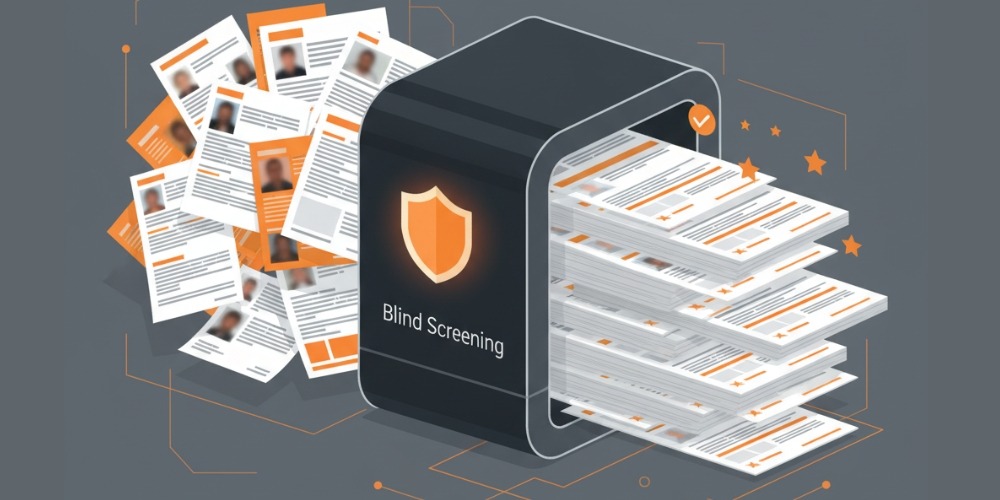
The mechanism is straightforward: remove the signal that triggers bias, and evaluation shifts to the signal that actually predicts performance.
The classic NBER audit study found resumes with white-sounding names received ~30% more interview callbacks than identical resumes with African-American-sounding names. When names are removed, the differential disappears — same resume content, fairer evaluation.
Three specific mechanisms by which blind screening helps:
1. Suppresses identity-based first-impression bias
Reviewers can't react to a name or photo if they can't see them. The substance of the resume gets attention it otherwise would not.
2. Re-anchors evaluation on substance
When identity is hidden, what's left to evaluate is skills, achievements, and outcomes. Reviewers naturally focus on these because they have nothing else to use.
3. Supports fairer pre-screening process
Combined with structured rubrics, blind screening makes the pre-screening stage less arbitrary — and arbitrary screening is where most bias enters the funnel.
The honest qualification: blind screening fixes early-stage bias but doesn't fix interview bias, panel bias, or culture-fit ambiguity later in the funnel. It's necessary but not sufficient.
How to Implement Blind Resume Screening
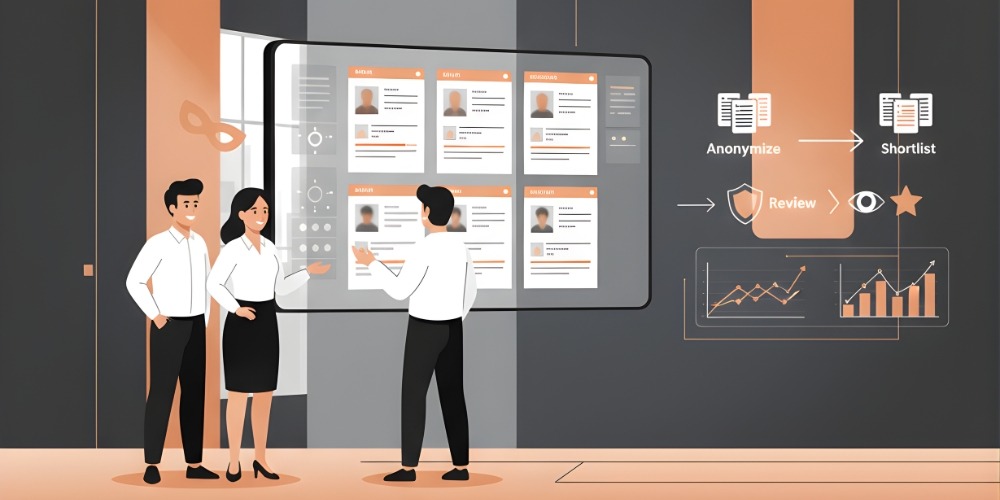
Seven concrete steps for implementation.
1. Define what to blind out
Names, photos, addresses, graduation dates, university names, and extracurriculars that imply identity. Keep skills, experience, achievements, and role-relevant content visible.
2. Choose the right tooling
With budget: Use ATS features or dedicated tools (Applied, Pinpoint, GreenJobInterview) that anonymise applications automatically.
Without budget: Set up a structured manual process. One person strips identifying details and hands anonymised versions to reviewers. The manual screening cost is real but manageable for moderate volume.
3. Revise job descriptions
Job ads that emphasize prestige cues ("Ivy League preferred", "FAANG experience required") narrow the candidate pool before blind screening even starts. Rewrite for substance — what the role actually requires.
4. Design a structured scoring rubric
Reviewers should score against specific criteria — skills, evidence of impact, trajectory — rather than overall gut feel. Structured scoring multiplies the benefit of removing identity signals.
5. Train the hiring team
Reviewers need to understand why the resume is anonymised and how to focus on substance. Without training, some will work hard to reverse-engineer identity from the remaining clues.
6. Monitor and measure outcomes
Track shortlist diversity, interview conversion rates by demographic group, and quality of hire. The metrics confirm whether the process is producing the expected effect.
7. Reveal identity at the right stage
Once shortlisting is complete, lift the blind for scheduling, references, and later-stage evaluation. The blind protects the early funnel where bias is most damaging; full identity becomes appropriate as the process matures.
Bonus: Communicate to candidates
Letting applicants know blind screening is used builds trust and strengthens the employer brand, particularly for diverse candidates evaluating whether to engage.
What Blind Screening Doesn't Fix
Honest limitations worth respecting.
- Interview bias — once names and faces are visible in interviews, bias can reappear. Structured interviews are the complement.
- Panel composition — homogeneous panels can produce homogeneous "fit" assessments even with diverse candidate slates.
- Culture-fit ambiguity — "culture fit" is a common cover for unstructured bias; it needs structured definition.
- Sourcing pipeline — if the candidate pool itself isn't diverse, blind screening alone won't produce diverse hires.
- Retention — hiring diverse candidates without inclusive culture produces churn, not progress.
Blind screening is one of several components of fair hiring — not a stand-alone solution.
The Bottom Line
Blind resume screening is one of the most evidence-backed interventions available for reducing early-stage hiring bias. It works because it removes the signal that triggers the bias rather than asking reviewers to suppress reactions they often don't consciously have. The implementation is straightforward — software helps but isn't required — and the results are measurable. The companies that pair blind screening with structured interviews, inclusive job descriptions, and intentional culture work produce measurably fairer hiring outcomes. The companies that treat blind screening as a one-time DEI checkbox without the rest of the funnel discipline see modest gains at best. The intervention is necessary, valuable, and not sufficient on its own.
FAQs
How do you blind resumes without expensive software?
Assign a coordinator to manually strip names, photos, dates, university names, and other identifiers before passing resumes to reviewers. It adds time per CV but works at moderate volume. For higher volume, even basic ATS features include anonymisation.
Is blind resume screening legal everywhere?
Generally yes — removing identifying information to reduce bias is legal in most jurisdictions and increasingly encouraged. Specific data-protection rules (GDPR, etc.) and anti-discrimination laws vary by region; check local requirements for global rollout.
How do you measure the success of blind resume screening?
Track shortlist diversity vs candidate pool diversity, interview conversion rates by demographic group, source-of-hire data, and quality-of-hire metrics post-hire. Compare to baseline before blind screening was introduced.
Does blind screening guarantee a more diverse hire?
No. It improves fairness in early screening but later stages — interviews, panel composition, culture-fit assessment — can reintroduce bias. Blind screening is one piece of the puzzle, not the entire solution.
Should I keep skills, achievements, and dates of employment visible?
Yes. Hide identity signals (name, photo, school, addresses, graduation dates) but keep the substance of experience visible. The point is to evaluate skills and outcomes, not to make the resume unreadable.
Keep reading

Pink Collar Jobs Explained: Definition, Examples, Salaries

