

Pink Collar Jobs Explained: Definition, Examples, Salaries
Pink collar jobs explained — care, service, teaching roles — examples, growth trends, salary outlook, and how they differ from blue and white collar.
Ployo Team
Ployo Editorial

TL;DR
- Pink collar = care, service, teaching, hospitality roles.
- Term coined 1970s by Louise Kapp Howe; now gender-neutral.
- One of fastest-growing sectors due to ageing population + service demand.
- Soft skills (empathy, communication) the core requirement.
- Salaries range widely from entry retail to high-paying nursing or therapy.
Most people have a clear picture for "blue collar" or "white collar". Pink collar sits in between — service, care, teaching, hospitality. This guide explains what pink collar work actually is, where it shows up, where it's growing, and what employers and candidates need to know about this expanding sector.
What Pink Collar Means
The term emerged in the 1970s from social critic Louise Kapp Howe, originally describing roles dominated by women — secretaries, nurses, elementary teachers.
What it means today
People-centric work. Delivering service or caring for others rather than producing goods or managing data. The "women's jobs" stigma is fading fast as the role becomes recognised as essential.
As automation handles manufacturing and AI handles data processing, human-centric skills — empathy, patience, emotional intelligence — become the most valuable assets in the workforce.
Pink Collar Examples

Five major sectors.
Healthcare and therapy
Registered nurses, dental hygienists, physical therapists, home health aides. Per US BLS data, healthcare occupations grow much faster than average through 2032 — driven by ageing demographics.
Education and childcare
Teachers, special education assistants, daycare providers. K–12 educators almost entirely pink collar.
Hospitality and service
Waitstaff, flight attendants, housekeepers, concierges. High social stamina required.
Administrative support
Receptionists, admin assistants. Tech-augmented but still human-coordination work.
Beauty and wellness
Hairdressers, makeup artists, massage therapists. Technical training + intense customer interaction.
Salary Trends and Growth

The "low-paying" stereotype is misleading.
Specialised roles command premiums
Nurse anesthetists and specialised speech pathologists earn comparable to or higher than white-collar management. Nurse practitioner demand pushes median salaries well over six figures.
Entry-level lag
Home health aides, childcare workers face wage stagnation despite essential roles. Driving unionisation push across the service sector.
For employers: knowing market rates is mandatory. Competitive pay is the only way to secure top talent in a candidate-short market.
How Pink Collar Is Changing
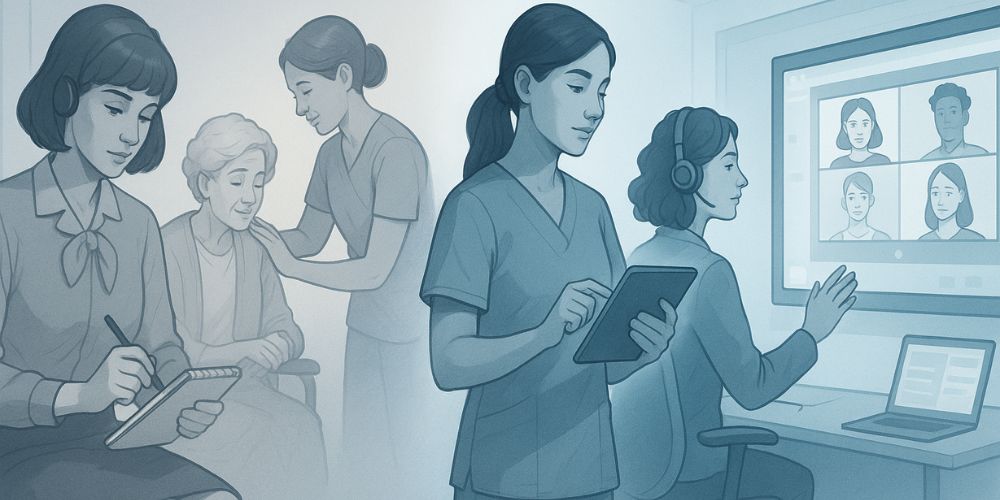
Three forces driving evolution.
Gender shift
More men entering nursing, teaching, flight attendant roles. Manufacturing decline drives workers into service. Reduces stigma; stabilises the sector.
Technology integration
Waiters use complex POS systems. Nurses manage digital records + sophisticated monitoring. Pink collar workers now blend high EQ with digital literacy — a hybrid skill set employers actively screen for. Pairs with modern hiring practices.
The Care Economy
Per World Economic Forum analysis on AI upskilling, human-interaction jobs will be the safest from automation. Pink collar rises from "support work" to "essential work".
Pink vs Blue vs White Collar

| Feature | White | Blue | Pink |
|---|---|---|---|
| Primary focus | Strategy, management, admin | Manual labour, trades | Service, care, teaching |
| Work setting | Office/remote | Construction, factory, outdoors | Hospital, school, store, salon |
| Education | Typically bachelor's+ | Apprenticeship, HS+ | Varies — certification to PhD |
| Key skills | Analysis, strategy | Physical, technical | Empathy, communication, patience |
| Examples | Accountant, architect | Electrician, welder | Nurse, teacher, therapist |
Pink collar occupies a unique space: often requires the education of white collar but the physical/active work patterns of blue collar.
For hiring teams, skills-based hiring approaches cut through the categorisation confusion.
Why This Matters for Employers
Pink collar workers are motivated differently. Burnout is a structural risk because of emotional labour intensity.
Per McKinsey's healthcare research, nursing turnover remains critical for healthcare systems globally.
Retention practices that work
- Mental health support
- Flexible scheduling
- Recognition for emotional labour
- Career growth pathways
Sustainability matters as much as the paycheck.
Skill gap reality
Soft skills are hard to evaluate on a resume. Interview techniques and reference checks become especially important. Pairs with stronger interview practices.
The Bottom Line
Pink collar work is the modern economy's backbone. The roles keep society healthy, educated, and comfortable — and they're increasingly resilient to automation precisely because they require what machines can't do. Whether you're hiring or job-seeking, paying attention to this sector matters more than ever.
FAQs
Why are they called pink collar jobs?
Coined in the 1970s by Louise Kapp Howe to describe roles dominated by women — nursing, teaching, secretarial. Term has expanded to include any gender-neutral service work.
Are pink collar jobs high-paying?
Varies. Entry roles often minimum wage; specialised positions (nursing, speech therapy, school admin) can earn six figures plus.
Are pink collar jobs declining?
No — many growing rapidly. Healthcare, personal care, and service sectors expand as populations age and consumer spending shifts toward experiences.
What skills matter most?
Soft skills: communication, empathy, patience, active listening, emotional intelligence. Plus role-specific technical knowledge (medical, curricular, etc.).
What's the highest-leverage hiring move?
Build structured interviews that surface soft skills with real examples. Most resumes hide what matters most in pink collar work — interviews bring it out if designed well.
Keep reading

Employee Lifecycle Stages: A Practical Guide for HR Leaders

Stopping Candidate Cheating: Ethical Solutions for Modern Hiring
