

Sourcing vs Recruiting: What HR Software Should Connect, Not Conflate
Sourcing vs recruiting — what each stage actually does, where they hand off, and the HR software that keeps the funnel from breaking between them.
Ployo Team
Ployo Editorial
TL;DR
- Sourcing is the discovery stage — finding people who could be a fit.
- Recruiting is the evaluation stage — figuring out which of those people is the fit.
- Most hiring breakdowns happen at the handoff between the two, not inside either stage.
- HR software earns its keep by keeping the handoff seamless: shared candidate records, structured scoring, and clear ownership.
- Agile teams blur the line and run both in parallel — but they still need the same disciplined data flow underneath.
A surprising amount of hiring confusion comes down to one question: where does sourcing end and recruiting begin? Smaller teams blur the two together, larger teams split them into separate roles, and HR software either bridges the two stages or quietly creates the cracks people fall through. This guide separates the work each stage actually does, where they hand off cleanly, and what to look for in software that keeps the funnel intact.
What a Sourcing Recruiter Actually Does
A sourcing recruiter works the discovery end of the funnel. Their job is to find people who could plausibly fit an open role — long before any formal evaluation begins. Most of their day is in talent pools, LinkedIn searches, job boards, past-applicant databases, and outbound outreach to passive candidates.
The work breaks down into a fairly standard set of moves:
- Searching internal databases and external talent pools
- High-level resume review to gauge basic fit
- Building lists of plausible candidates per open role
- Outreach to spark initial interest
- Capturing early candidate data in a structured form for handoff
Sourcing carries more weight than it gets credit for. As Centred Excellence's recruitment research found, teams that run structured sourcing sessions consistently reduce time-to-fill on the roles those sessions feed. The funnel below sourcing is only as strong as the inputs sourcing delivers.
Where Recruiting Picks Up the Funnel
Recruiting begins where evaluation begins. Once a sourced or applied candidate clears the initial fit check, the recruiter takes over: deeper resume review, screening calls, skills tests, interviews, scorecards, and the conversations with hiring managers that lead to an offer.
The recruiting side runs a longer set of steps:
- Resume review against the must-have requirements
- Skill or work-sample assessments where the role warrants them
- Interview scheduling and structured screening
- Scorecard review with the hiring manager
- Reference checks
- Offer construction and negotiation
The SHRM research on structured recruiting consistently finds that structure at this stage — same questions, same rubric, same evaluation framework across candidates — produces better hiring accuracy and reduces the decision fatigue that creeps in on a large slate. Recruiting needs the structure that sourcing does not.
Why Talent Assessment Platforms Sit Across Both Stages
The cleanest way to think about modern HR software is as a layer that connects the two stages. Talent assessment platforms in particular touch both: they give sourcing a way to filter the early pool with a short skills check, and they give recruiting a structured scorecard for deeper evaluation.
The features that matter at this layer:
- Skills tests that map to specific roles
- Asynchronous video or written prompts the candidate can complete on their own time
- Structured, comparable scoring across candidates
- Automated handoff from "sourced" to "in evaluation" without re-entering data
- Bias controls — blind screening, structured rubrics, consistent prompts
SHRM's analysis of structured assessment tools shows that uniform scoring measurably reduces hiring bias compared with freeform review. The same study finds that consistent prompts and equal instructions across candidates strengthen evaluation accuracy. Both effects compound the most when the assessment data flows cleanly from sourcing to recruiting in the same system.
How Agile Teams Run Sourcing and Recruiting in Parallel
Many modern teams have abandoned the strict sourcing-then-recruiting handoff. In an agile model, the team begins evaluating promising candidates within a day or two of discovery, rather than waiting for the sourcer to build a finished list. The benefit is speed; the risk is that, without good software, parallel work creates parallel data — two records, two scorecards, two conversations.
Agile hiring usually looks like:
- Daily sourcing micro-cycles instead of weekly batches
- Lightweight skills checks at the moment of discovery
- Continuous communication with hiring managers rather than weekly syncs
- Immediate resume review on inbound applicants
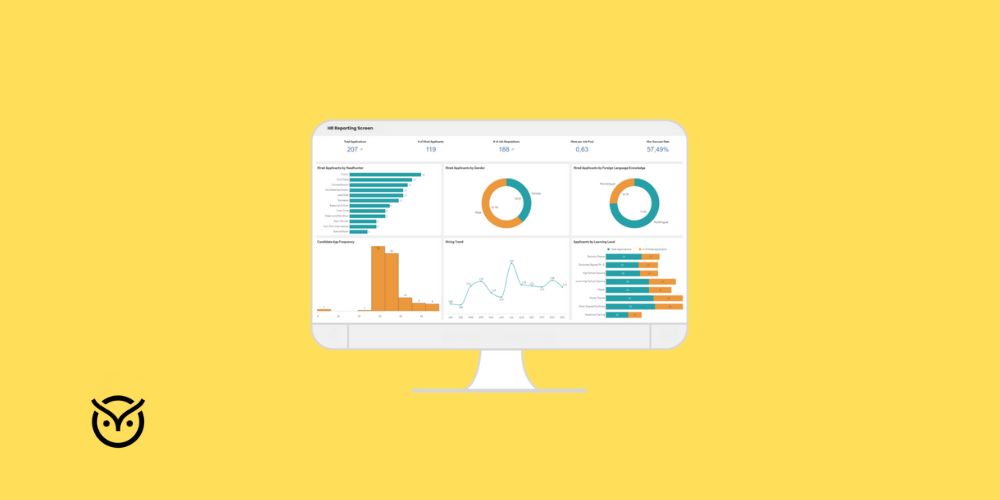
The discipline that keeps this from collapsing is shared infrastructure: one candidate record, one source of truth for status, one place where scoring lives. Teams that run agile hiring well also lean on AI-powered recruitment dashboards to watch the funnel as a single system rather than two stitched-together ones.
The Bottom Line
Sourcing finds people. Recruiting decides which of them is right. The work is genuinely different, and pretending it is one thing is what produces messy funnels, duplicate outreach, and lost candidates between stages. The right HR software does not erase the distinction — it makes the handoff so clean that the distinction stops being a problem. Pick tools that share a single candidate record across both stages, support structured scoring, and let agile teams blur the order without losing the data.
FAQs
Do all companies need a separate sourcing recruiter?
No. Smaller teams typically have one person doing both jobs. The split into separate sourcing and recruiting roles starts to make sense once hiring volume passes a few dozen roles a year — before that, the overhead of the handoff is usually larger than the benefit of specialisation.
Can AI handle sourcing on its own?
It can do the search and surface plausible matches faster than a human, but a human still owns the outreach and the qualitative read on whether a passive candidate is worth pursuing. AI shrinks the manual work; it does not eliminate the role.
Where does sourcing fit in the broader recruiting cycle?
Sourcing usually sits at the very start of the cycle, feeding the candidate pool that everything else operates on. If you map a 360-degree recruiting cycle, sourcing is the first step and the source of much of the data the later stages rely on.
Is sourcing more important than recruiting?
Neither is more important — they are different jobs at different stages of the same problem. Strong sourcing with weak recruiting produces a good pool of candidates and bad hires. Strong recruiting with weak sourcing produces fair hiring decisions over a thin pool. You need both.
What is the single most common software gap between sourcing and recruiting?
A clean data handoff. Sourced candidate records that do not carry their context into the recruiting stage force the recruiter to re-read profiles, re-confirm interest, and start over. Closing that gap is the highest-leverage software fix most teams can make.
Keep reading

Pink Collar Jobs Explained: Definition, Examples, Salaries

Employee Lifecycle Stages: A Practical Guide for HR Leaders
