

Stopping Candidate Cheating: Ethical Solutions for Modern Hiring
Remote hiring made cheating easier — what dishonest candidates do, why old screening misses it, and how to design assessments cheating can't game.
Ployo Team
Ployo Editorial

TL;DR
- ~22% of job seekers admit cheating on online assessments (ResumeTemplates survey).
- AI tools that write resumes and answer interview questions are widely available.
- Common tactics: real-time outside help, AI-generated responses, shared question banks.
- Traditional resume + single-test screening misses most modern cheating patterns.
- Effective defence: real-task assessments, behavioural interviewing, AI integrity checks, structured oversight.
Remote assessments and AI tools have made candidate cheating easier than ever. The result: hires that pass screening, struggle in the role, and quietly cost the company months of productivity before the mismatch becomes obvious. The defence isn't more tests or harsher monitoring — it's redesigning assessment so genuine capability shows through and outside help loses its advantage. This guide walks through what modern candidate cheating looks like, why traditional screening misses it, and the ethical strategies that consistently work.
What Candidate Cheating Looks Like in 2026
Cheating in hiring is intentional misrepresentation of capability during evaluation. It now spans multiple tactics:
- Real-time outside help — second screens, chat apps, live helpers during online tests
- AI-generated responses — polished but shallow answers produced by ChatGPT and similar tools
- Shared question banks — popular assessment questions with answer walkthroughs circulating online
- Identity substitution — someone else taking the assessment in the candidate's place
- Fabricated experience — invented projects, fake references, embellished tenure
- Rehearsed scripted answers — memorised responses delivered as if spontaneous
The common thread: the candidate's score doesn't reflect their actual capability. When the role starts, the gap appears — and the cost of the mis-hire compounds quickly.
Why Cheating Is Rising

Three structural factors drive the increase.
Remote hiring removed in-person oversight
When candidates take assessments at home unsupervised, the friction to seek outside help is dramatically lower than in a proctored testing environment. ResumeTemplates research shows ~22% of job seekers admit to cheating on online assessments — a number likely underreported by candidates' admission discomfort.
AI tools democratised polished answers
Tools that write resumes, draft cover letters, generate interview answers, and solve logic puzzles are now free and ubiquitous. The same tools serve legitimate prep and outright fraud — the difference is intent and disclosure.
Question banks circulate online
Popular employer assessments leak. Step-by-step walkthroughs proliferate on forums and study sites. Candidates memorise answers without learning the underlying skills.
Common Tactics Employers Are Seeing
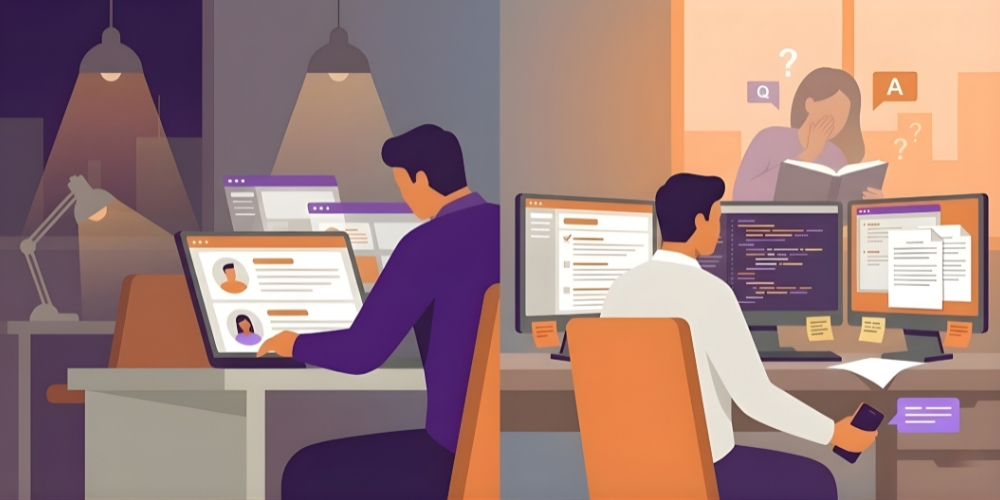
Five patterns recur consistently.
Real-time assistance
Second screens displaying answers, chat groups providing live help, voice helpers feeding responses. Hard to detect from output alone.
AI-written responses
Smooth, confident written answers that fall apart under follow-up probing. The wording was generated; the understanding wasn't.
Question bank memorisation
Standardised assessment questions appear online with answer keys. Candidates pass without learning.
Identity verification gaps
Without verification, the person hired isn't always the person who took the assessment.
Rehearsed interview scripts
Memorised responses to common behavioural questions delivered as if they're original reflection. Probing follow-ups reveal the script.
Why Traditional Screening Misses Modern Cheating
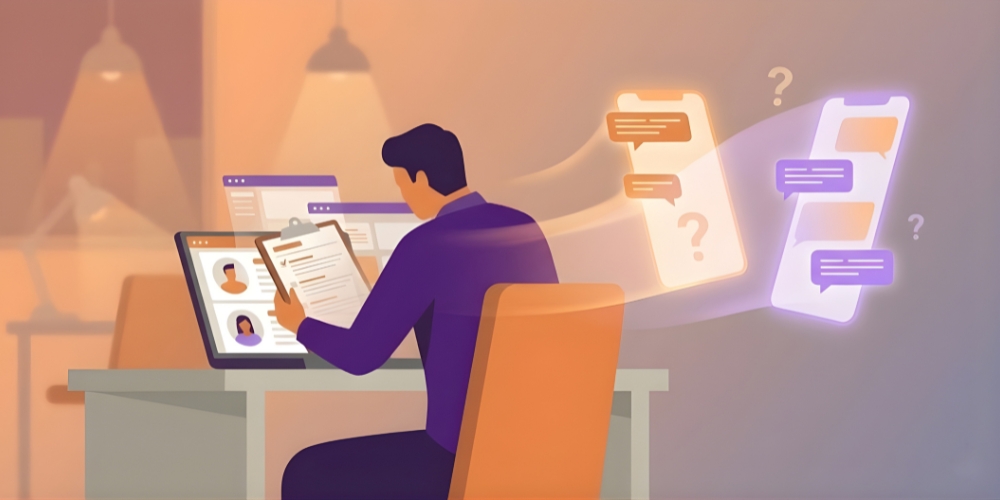
Traditional resume + standardised test + single-interview screening is built on the assumption that candidates play fair. That assumption is becoming less reliable.
Specific weaknesses in legacy screening:
- Final-score focus — measures output but not how it was produced
- Predictable question patterns — easy to share, easy to memorise
- Surface-level interviewing — single passes without behavioural depth
- Resume-trust default — assumes claims are accurate without verification
- No identity verification — assumes the candidate is the one being assessed
When the screening process is predictable, the cheater learns the pattern and beats it. The honest candidate looks worse by comparison.
Ethical Solutions That Actually Work
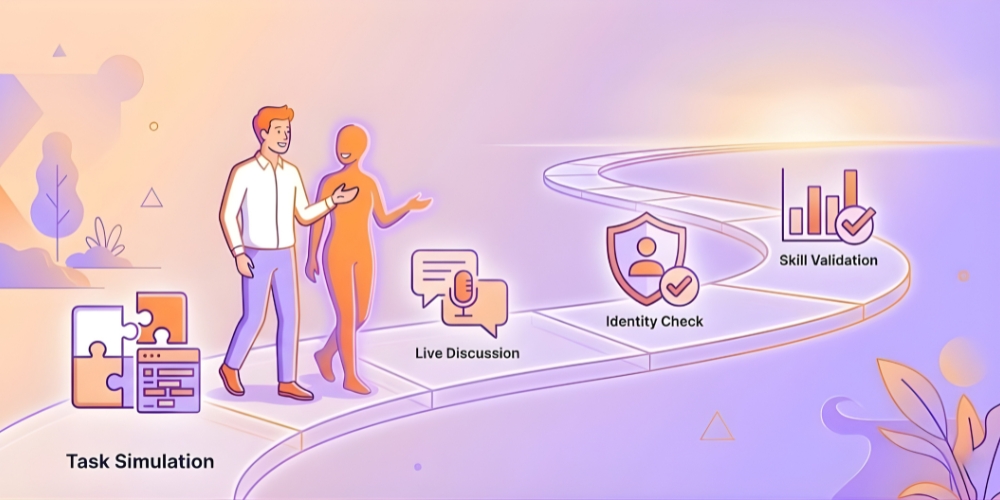
Five practices that consistently distinguish robust hiring from gameable hiring.
1. Redesign assessments around real work
Generic logic puzzles and memorisable trivia are easy to game. Role-specific work samples that mirror actual job tasks are dramatically harder. Ask candidates to do something that resembles what they'll do on the job.
2. Use multi-step evaluation
A single test produces a single score; multiple touchpoints produce inconsistencies that reveal misrepresentation. Combine work sample + structured interview + reference check + scenario discussion.
3. Run identity checks lightly
ID verification at the start of remote assessments, video on for proctored sessions, and consistent face/voice across stages. Light-touch verification prevents identity substitution without making the experience adversarial.
4. Interview for reasoning, not memorised answers
"Walk me through how you reached that conclusion" reveals understanding. Memorised scripts can't survive deep probing. The interviewer's job is to follow up until the answer is genuine.
5. Use AI to detect patterns humans miss
Modern tools flag suspicious timing (too fast for the question complexity), language patterns (AI-generated style), and behavioural anomalies (mouse movements, copy/paste patterns). These tools support human judgement, not replace it.
What Not to Do

Five anti-patterns that consistently backfire.
Making tests longer
Honest candidates burn out and drop. Cheaters keep cheating. Length doesn't fix cheating; it just adds friction for fair candidates.
Reusing the same questions
Once a question set leaks (and it will), it becomes unreliable. Rotate question banks regularly; favour open-ended tasks over fixed answer keys.
Accusing candidates without proof
False accusations damage the employer brand and create legal exposure. Build the process so the system catches cheating; don't rely on confrontation.
Relying only on resumes
CV claims are increasingly unreliable. Verify through work samples, structured interviews, and reference checks — not resume content alone.
Heavy-handed surveillance
Aggressive monitoring (constant webcam, screen recording, behavioural surveillance) drives honest candidates away. Cheaters adjust. The damage to your hiring funnel is asymmetric and not in your favour.
How AI Helps Prevent Hiring Fraud
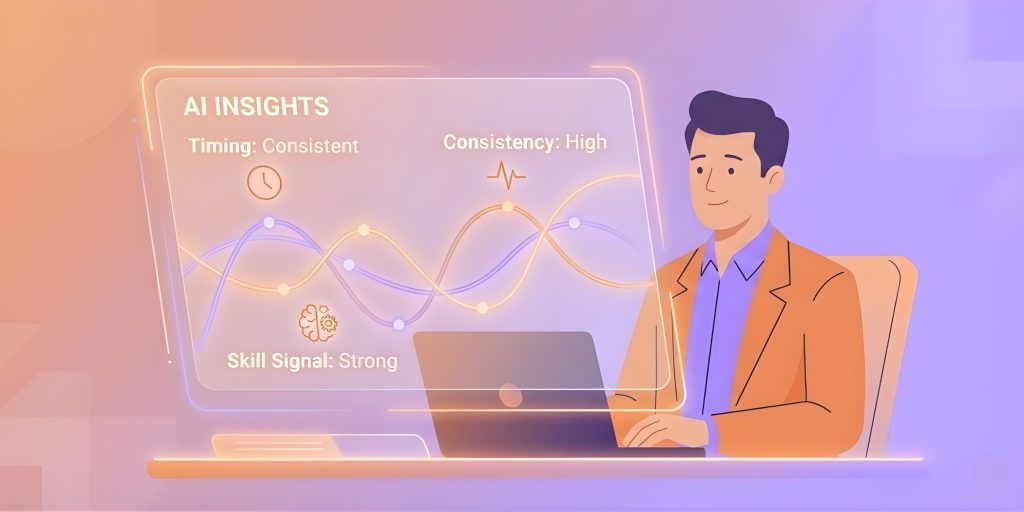
AI tools support detection in ways human review cannot match at scale.
Behavioural pattern detection
Unusual timing, copy/paste detection, answer-edit patterns, and tab-switching during assessments are all surfaceable signals. Combined, they produce a reliable cheating-likelihood read.
Language style analysis
AI-generated content has detectable patterns. While not 100% reliable, AI-detection tools provide useful input to human review.
Cross-stage consistency
If a candidate's written assessment shows polished depth but their interview shows shallow understanding, the gap is a meaningful signal. AI tools can flag this systematically.
Resume-skill validation
Cross-checking resume claims against work-sample performance reveals candidates whose claimed skills don't match demonstrated ability.
The key: AI surfaces patterns; humans make decisions. Pure algorithmic rejection without review creates false-positive risk and candidate-experience damage.
Legal and Ethical Considerations
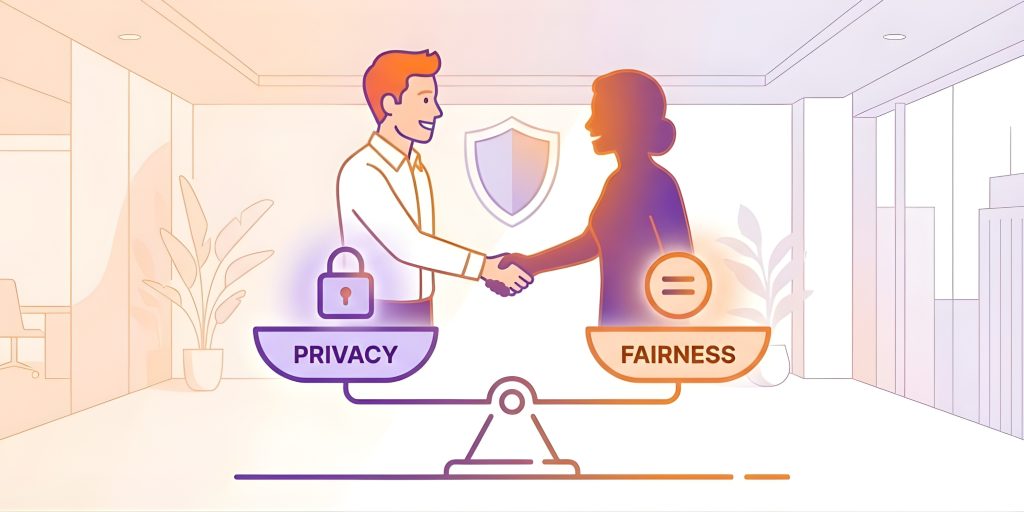
Five considerations that distinguish defensible monitoring from problematic surveillance.
- Transparency — candidates should know what's being collected and why
- Proportionality — monitoring should match the role's risk profile, not exceed it
- Data protection — GDPR, CCPA, and similar frameworks govern what can be collected and stored
- Equal application — monitoring should apply consistently across candidates, not selectively
- Storage and deletion — data should be retained only as long as legitimately needed
Done well, anti-cheating measures protect both employers and honest candidates. Done badly, they create legal exposure and damage candidate trust.
The Bottom Line
Candidate cheating has become a real and growing problem in remote-first hiring, but the answer isn't more invasive monitoring or longer tests. The defence is structural: design assessments that measure real capability rather than memorisable patterns, combine multiple evaluation touchpoints to surface inconsistencies, interview for reasoning rather than rehearsed answers, and use AI tools to flag patterns humans miss. The companies that build this discipline produce reliable hires and trust the screening signal again. The companies that double down on stricter testing without structural redesign just push cheaters to better techniques while losing honest candidates to friction. The system that catches cheating quietly is the system that wins long-term hiring quality.
FAQs
How common is cheating in remote hiring?
More common than employers typically realise. ResumeTemplates survey data shows ~22% of job seekers admit to it; actual rates may be higher given the social-desirability bias in self-reporting. Remote-first hiring has structurally lowered the friction.
Can recruiters reliably detect AI-generated resumes?
Increasingly yes, when tools are paired with skill-validation steps. AI-detection software flags likely AI-generated content; cross-checking resume claims against work samples surfaces gaps. Neither alone is sufficient; combined they're effective.
Are online interviews more vulnerable to cheating?
Yes, when the setup is weak. Structured live problem-solving and behavioural depth reduce the risk substantially. Generic Q&A interviews via video are easy to game with rehearsed scripts.
Can AI prevent hiring fraud ethically?
When used transparently and as support to human judgement. AI surfaces patterns and inconsistencies; humans evaluate and decide. The combination is more accurate than either alone and avoids the legitimacy issues of fully algorithmic rejection.
What's the single highest-leverage anti-cheating measure?
Replacing memorisable knowledge tests with role-relevant work samples. When the task closely mirrors the actual job, cheating becomes much harder and screening becomes much more predictive of real performance.
Keep reading

Pink Collar Jobs Explained: Definition, Examples, Salaries

Employee Lifecycle Stages: A Practical Guide for HR Leaders
