

The Real Cost of Manual Recruitment Screening (And How to Reduce It)
Manual recruitment screening's true cost spans recruiter time, mis-hire risk, and brand damage — the hidden expenses and how automation reduces them.
Ployo Team
Ployo Editorial

TL;DR
- Manual screening averages ~23 hours per opening on resume review and admin alone.
- 58% of candidates decline offers due to poor candidate experience (CareerPlug).
- 53% of recruiters report burnout in the past year (Joveo).
- Bad-hire cost runs 1.5-2x annual salary when reworked.
- AI screening can compress costs 25-40% while improving consistency.
Manual screening looks cheap because the labour cost is hidden — recruiters do it as part of their existing role. The actual cost is large and multifaceted: recruiter hours, mis-hire risk, candidate-experience damage, slower time-to-hire, lost productivity from open roles, and recruiter burnout. Modern automation tools dramatically reduce these costs while improving outcomes. This guide walks through what manual screening genuinely costs and where automation produces the largest gains.
What Manual Recruitment Screening Is
Human review of every resume, cover letter, and application by recruiters or hiring managers. The process typically includes:
- Reading each resume
- Sorting candidates into shortlists
- Scheduling interviews manually
- Responding to candidate queries
- Updating spreadsheets or basic ATS records
At low volume (under 50 applications per role), manual screening is sustainable. At higher volumes, the costs compound rapidly and rarely show up in obvious budget lines.
Direct Costs of Manual Screening

Four cost categories that are measurable.
Recruiter and staff hours
Shortlistd research shows recruiters average 30-90 seconds per resume in initial scans. Steps Consulting analysis estimates ~23 hours per opening on screening and related admin. Multiply across active roles for the real time investment.
Tools and infrastructure
Even "manual" screening uses ATS, job boards, email systems, scheduling tools, and spreadsheets. Licenses, training, and maintenance all carry cost.
Communication overhead
Every candidate email, follow-up, status update, scheduling exchange has a per-touch cost. At scale, communication alone can become a significant cost line.
Opportunity cost
Recruiter time spent on screening is time not spent on strategic sourcing, candidate relationship building, employer brand work, or process improvement. The lost potential is real.
The Hidden Costs Most Companies Miss
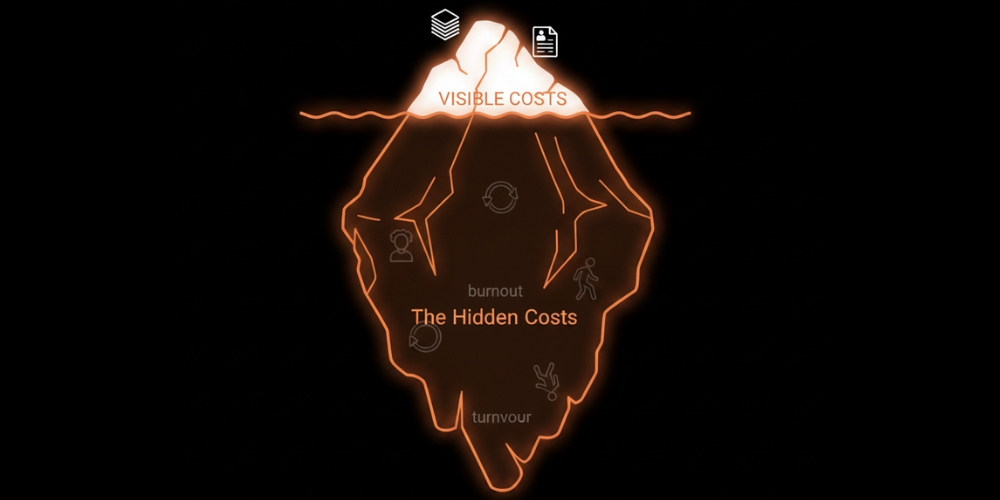
Six cost categories that rarely appear in budgets but compound substantially.
Longer time-to-hire and lost productivity
Each day a role stays open carries productivity cost. Slower screening extends the open-role window; lost output from understaffed teams compounds.
Candidate drop-off and brand damage
CareerPlug candidate experience research shows 58% of candidates decline offers due to poor candidate experience. Slow manual screening is a primary contributor.
Recruiter burnout
Joveo's recruiter burnout study shows 53% of recruiters experienced burnout in the past year. Burnout produces turnover, which produces rehiring costs, which compounds.
Bad hires and rework
Bad-hire cost typically runs 1.5-2x the employee's annual salary when training, lost productivity, team disruption, and rehiring are included. Manual screening's inconsistency contributes to bad-hire rates.
Decision delays and misalignment
Without structured evaluation criteria, reviewers disagree and decision cycles extend. Small delays at multiple stages compound into significant cost.
Lack of analytics
Manual processes produce limited usable data. Bottlenecks stay invisible; comparison across hiring sources becomes impossible; improvement opportunities go unidentified.
Why Manual Screening Doesn't Scale in 2026

Three structural pressures make manual screening increasingly untenable.
Application volume keeps rising
Modern job postings can attract hundreds of applications within hours. Manual review can't process this volume reliably; quality suffers as recruiters speed up.
Time-to-hire pressure intensifies
Top candidates have multiple offers within days. Slow manual screening loses them to faster competitors regardless of how rigorous the eventual evaluation is.
Hybrid and remote work multiply candidate pools
Geographic boundaries to recruiting have collapsed for many roles. The candidate pool that used to be local is now global — exponentially larger than manual processes can handle.
How Automation and AI Reduce Screening Costs

Four specific cost reductions modern tools deliver.
Speed at scale
AI screens thousands of resumes in minutes. Recruiter time shifts from sorting to evaluating, conversation, and judgement work.
Consistency improves quality
Same criteria applied to every candidate reduces evaluator variance. Better consistency typically improves hiring quality and reduces bad-hire rates.
Bias reduction (when audited)
Properly audited AI screening reduces the variability of human reviewer fatigue and unconscious bias patterns. The reduction is meaningful when audit discipline exists.
Time-to-hire compression
Faster screening means faster shortlists, faster interviews, faster offers. The total time-to-hire reduction compounds productivity gains across the organisation.
Quantified impact
Across many hiring teams, modern AI-assisted screening reduces total screening cost by 25-40% while improving quality-of-hire metrics. The compounding gain across many hires is substantial.
Manual vs Automated Cost Comparison
A practical comparison for a team hiring 50 roles annually.
| Cost component | Manual screening | AI-assisted screening |
|---|---|---|
| Recruiter time per role | 23 hours | 6-8 hours |
| Cost per role (assuming $50/hr recruiter cost) | ~$1,150 | ~$350 |
| Time-to-hire average | 35-49 days | 18-25 days |
| Annual screening cost (50 hires) | ~$57,500 | ~$17,500 + tooling |
| Tooling cost annually | Minimal | $5K-$30K |
| Net annual cost | ~$57,500 | ~$22,500-$47,500 |
The math typically favours automation at 30+ hires annually, with the gap widening at higher volumes.
How Modern Tools Help Recruiters
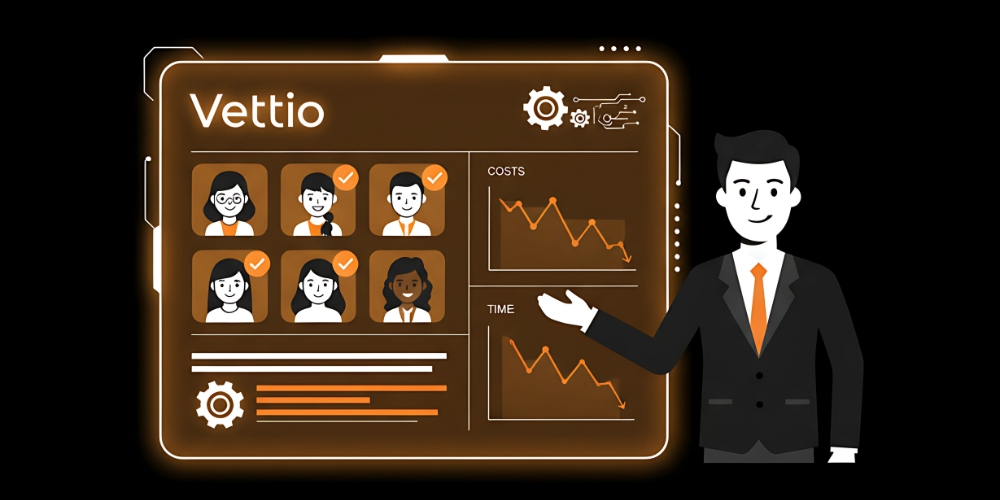
Strong AI-assisted screening platforms typically include:
- Smart resume parsing with semantic understanding
- Customisable criteria matching specific role requirements
- Automated candidate communications that preserve experience quality
- Adverse-impact monitoring for bias detection
- Integration with ATS for unified workflow
- Analytics dashboards for continuous improvement
The combination reduces both financial cost and recruiter emotional cost — fewer burnout-driving repetitive tasks while improving hiring outcomes.
What Doesn't Work
Three patterns that consistently fail at cost reduction.
Pure cost-cutting without process redesign
Cheap tools deployed onto broken processes produce faster broken processes. Process design must precede tool selection.
Eliminating human judgement
Pure-AI screening without human review produces legal exposure and quality regression. Hybrid models outperform pure-automation models.
Underinvesting in audit
Tools that screen at scale without bias auditing produce scaled bias. Audit discipline isn't optional.
The Bottom Line
Manual recruitment screening's true cost extends far beyond visible recruiter time — it includes opportunity cost, bad-hire risk, candidate-experience damage, recruiter burnout, and slow time-to-hire. Modern AI-assisted screening reduces these costs substantially (25-40% typically) while improving consistency, fairness, and outcomes. The investment in modern tooling pays back rapidly at any meaningful hiring volume. Companies still operating pure manual screening at 30+ hires annually are leaving substantial value on the table — measurable in dollars, quality, and the wellbeing of recruiting teams.
FAQs
How much time do recruiters spend on manual screening?
Research suggests recruiters average 30-90 seconds per resume in initial scans, but accumulated screening time per role often reaches 20+ hours including admin, scheduling, and communication overhead.
How does AI reduce screening costs?
By automating the highest-volume repetitive work (initial resume review, ranking, scheduling), reducing time-to-hire (which compounds productivity gains), and improving consistency (which reduces bad-hire rates).
Can automation improve candidate experience?
Yes, significantly. Automated status updates, faster response times, and consistent communication all improve candidate perception of the hiring process. Pure manual hiring often produces longer silences that damage experience.
When is manual screening still appropriate?
For very low hiring volume (under 20 hires annually), or for highly specialised executive roles where each hire warrants individual deep review. Most other scenarios favour automation.
What's the highest-leverage automation to start with?
Resume parsing and initial ranking. The volume reduction frees the most recruiter time and improves the most downstream metrics. Scheduling automation is a strong second priority.
Keep reading

Data-Driven Hiring: Why It Outperforms Keyword-Based Screening

How AI Reshapes Resume Screening: Speed, Quality, and Honest Limits
