

Data-Driven Hiring: Why It Outperforms Keyword-Based Screening
Data-driven hiring uses analytics, predictive models, and structured signal — why it consistently outperforms keyword matching for both candidates and teams.
Ployo Team
Ployo Editorial

TL;DR
- Traditional keyword filtering rejects 75%+ of resumes before any human review.
- Data-driven hiring uses analytics across sourcing, assessment, and performance data.
- Predictive hiring models show 24% better quality-of-hire and 70% faster fills in benchmark studies.
- Data-driven decisions reduce bias when paired with audit discipline.
- Candidates win too — they're judged on substance rather than keyword matching.
Keyword-based hiring was always crude — match the words in the job description against the words in the resume and call it screening. The result: high false-negative rates, candidates who learned to game keyword stuffing, and recruiters drowning in noise. Data-driven hiring replaces this with structured analytics — sourcing performance by channel, assessment scoring, predictive modelling, retention by source. The teams using it produce measurably better hires faster; the candidates evaluated by it get assessed on substance instead of keyword luck. This guide walks through why keyword filtering failed, what data-driven hiring actually means, and how it benefits both sides.
Why Keyword Filtering No Longer Works
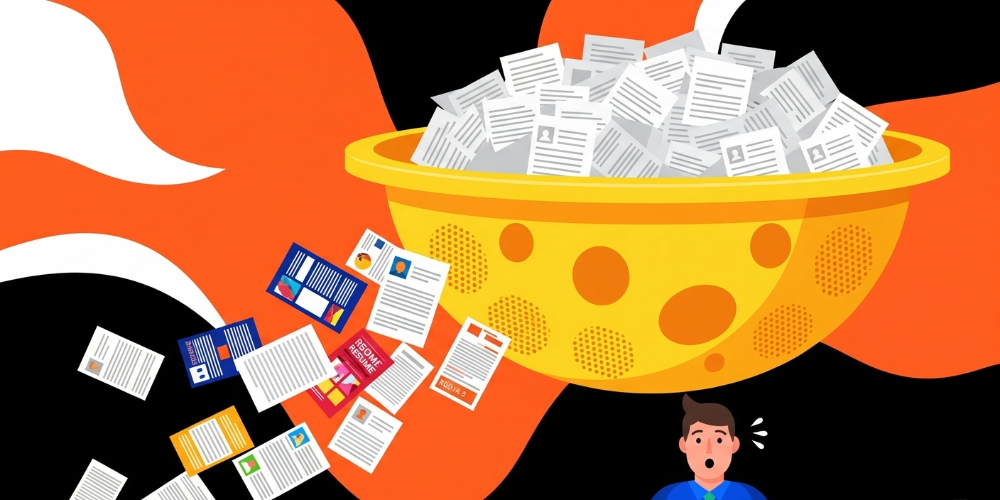
Four reasons traditional keyword filtering produces worse outcomes than the alternative.
Massive false-negative rates
The Bridge Chronicle research shows 75%+ of resumes are never read by humans due to formatting issues or missing keywords. Strong candidates filtered out before they had a chance.
Encourages gaming over substance
Candidates learned to stuff keywords. Recruiters got resumes optimised for the filter but empty of substance. The signal-to-noise ratio collapsed.
Misses what actually matters
Keywords measure presence of terms, not capability. A candidate who learned the right keywords without the underlying skills passes; a candidate with real skills and slightly different phrasing fails.
Slows the funnel
When the filter is unreliable, recruiters compensate by reviewing more candidates manually, interviewing weaker matches, and reposting roles that didn't produce viable shortlists. The cost compounds.
The result: high cost-per-hire, slow time-to-fill, mediocre quality-of-hire.
What Data-Driven Hiring Actually Is

Data-driven hiring uses analytics, structured measurement, and evidence — not intuition or keyword matching. The data spans:
- Sourcing analytics — which channels produce which candidate quality
- Funnel metrics — drop-off rates by stage, conversion rates by source
- Assessment data — skills tests, structured interview scores, work samples
- Performance correlation — what predicted success in past hires
- Retention by source — which channels produce long-term performers
- Cost-per-hire by channel — efficient vs wasteful spend
IgniteHCM's predictive hiring research shows organisations using predictive analytics report ~24% better quality-of-hire and ~70% faster time-to-fill versus traditional approaches.
The approach overlaps with HR automation, data-driven recruitment, and predictive talent acquisition. The common thread: replacing intuition with measurement.
How Data-Driven Hiring Improves Outcomes

Six concrete improvements over keyword-based hiring.
1. Better candidate matching
Rather than keyword presence, evaluation matches candidate data to profiles of high-performing employees. False positives (keyword-stuffed but unfit) and false negatives (real skills but wrong phrasing) both drop.
2. Faster and more efficient
Source-to-hire analytics reveal which channels produce the best candidates. Budget shifts to the channels that actually work; time-to-fill compresses.
3. Reduced bias
Data reveals where bias enters (interview scoring patterns, drop-off rates by demographic group). Awareness enables correction.
4. Continuous improvement
Every hire generates feedback. Job descriptions improve, interview questions sharpen, assessment tools recalibrate. The system gets better over time rather than stagnating.
5. Higher quality-of-hire and retention
Predictive models identify candidates more likely to perform well and stay long-term. The bad-hire rate drops meaningfully.
6. Defensible budget decisions
Data-driven financial modelling shows what to invest and where. Recruitment spending becomes evidence-based rather than habit-based.
Benefits for Recruiters and Employers
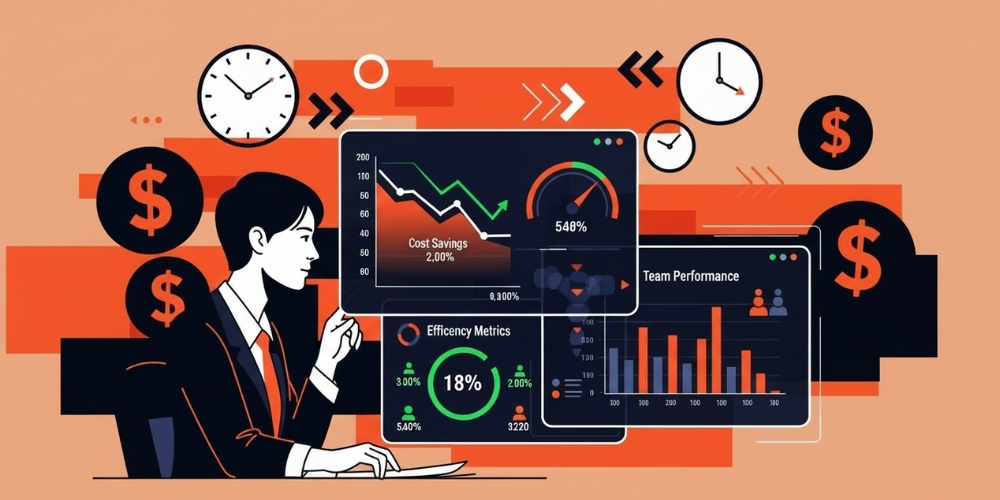
Five measurable wins.
Efficiency
Automation handles repetitive screening; recruiters spend time on conversations that close hires. Total recruiter-hours per hire drops while quality rises.
Cost savings
Source-to-hire analytics show which channels deserve budget. Ineffective job board spend gets cut; high-performing channels get amplified.
Better team fit
Beyond skills, data-driven hiring evaluates pattern fit — communication style, collaboration patterns, role-fit indicators that predict long-term success.
Stronger pipelines
Knowing which channels produce long-term performers (not just short-term hires) shapes pipeline strategy. The talent pipeline strengthens cumulatively.
Defensible ROI
HR can finally prove recruiting impact to leadership using performance, retention, and diversity outcomes — not just cost-per-hire vanity metrics.
What Data-Driven Hiring Means for Candidates

Candidates win meaningfully when companies move to data-driven approaches.
Fairer evaluation
Decisions reference structured criteria applied consistently rather than the gut feeling of whichever recruiter sees your resume that morning.
Soft skills get recognised
Data-driven assessment can connect work-sample performance to behavioural patterns. Strong collaborators and learners — historically undervalued in keyword screening — get visible credit.
Process transparency
Structured interviews, clear scoring criteria, defined timelines. Candidates know what they're being evaluated on.
Career growth signals
Continuous learning, adaptability, and skill development get weighted in modern data models. The system rewards demonstrated growth, not just credentials.
Best Practices for Moving to Data-Driven Hiring

A practical sequence for teams making the shift.
1. Start with measurable KPIs
Begin with simple metrics — cost-per-hire, time-to-fill, source-of-hire. Add complexity as the foundation stabilises.
2. Invest in integrated tooling
ATS + assessment platforms + analytics that share data. Disconnected tools produce disconnected insight.
3. Train hiring managers
Data is only useful if decision-makers know how to read and apply it. Quarterly training and calibration sessions multiply the value of the tooling.
4. Balance data with judgement
Algorithms surface signal; humans make consequential decisions. Pure data-driven decisions without human override produce bias risks and miss context.
5. Maintain ethical guardrails
Adverse impact audits, GDPR / regional data compliance, transparency to candidates about AI use. Data-driven recruitment needs ethical infrastructure, not just analytics.
6. Treat every cycle as learning
Build dashboards, run A/B tests on sourcing strategies, recalibrate models quarterly. The competitive advantage compounds with discipline.
What Doesn't Work
Three anti-patterns worth naming.
Vanity metrics without quality measurement
Time-to-fill alone is misleading if quality-of-hire is worsening. Measure both, not just speed.
Data without action
Dashboards that nobody reads produce no value. The discipline is in the operating cadence, not the tooling.
Algorithmic absolutism
Letting the model decide without human review produces bias risks and quality regression. Data informs; humans decide.
The Bottom Line
Data-driven hiring is not a buzzword — it's the structural answer to the false-negative problem of keyword-based hiring and the cost-overrun problem of intuition-based hiring. The teams using it well produce faster, fairer, higher-quality hires while spending less. The candidates evaluated by it get assessed on substance rather than keyword luck. The transition requires deliberate investment in tooling, training, and operating discipline — but the payback compounds across every hire over multiple years. Companies still operating on keyword-stuffing-and-vibes screening are quietly losing both the candidates and the cost-per-hire battle to those who've moved on.
FAQs
How is data-driven hiring different from keyword-based hiring?
Keyword hiring matches words; data-driven hiring matches patterns of capability, performance, and fit. The latter uses sourcing analytics, assessment data, predictive modelling, and outcome correlation — all of which keyword matching ignores.
Does data-driven hiring reduce bias?
Yes, when implemented with ethical guardrails. Data reveals where bias exists in the funnel and supports systematic correction. Without audit discipline, AI systems can encode their training data's bias — so the audit is non-optional.
Do candidates still need keywords in their resumes?
Some, naturally — to help the resume be parsed and surface in searches. But heavy keyword stuffing now hurts more than it helps. Data-driven hiring weighs substance (measurable outcomes, real skills) over keyword presence.
What's the highest-leverage data-driven improvement to start with?
Source-of-hire analytics. Knowing which channels produce strong long-term performers — not just initial hires — lets you reallocate budget and improve quality immediately.
Can small companies implement data-driven hiring?
Yes — and often more easily than large companies because the data is smaller and easier to manage. Start with cost-per-hire, time-to-fill, and quality-of-hire by source. Expand from there.
Keep reading


How AI Reshapes Resume Screening: Speed, Quality, and Honest Limits
