

Data-Driven Recruitment: How to Hire Smarter in 2026
Data-driven recruitment uses funnel metrics, talent intelligence, and AI — the data that matters, the tools that collect it, and how to put it into action.
Ployo Team
Ployo Editorial

TL;DR
- LinkedIn research shows data-driven recruiters are 3x more likely to improve hiring efficiency and quality.
- Five key data categories: internal workforce, candidate data, competitor insights, funnel analytics, diversity metrics.
- Talent intelligence platforms + ATS together give the strongest data foundation.
- Track time-to-hire, quality-of-hire, cost-per-hire, retention by source as the foundational KPIs.
- AI augments without replacing — humans still make consequential decisions.
Modern recruiting has moved from instinct to insight. The teams that win don't guess which candidate will work out — they use evidence from past hires, funnel data, and assessment outcomes to make decisions that compound. The data is already in your systems; the discipline is in collecting, analysing, and acting on it. This guide walks through what data-driven recruitment actually means, what data matters most, the tools that surface it, and how to put it into practice without overengineering.
What Data-Driven Recruitment Actually Is
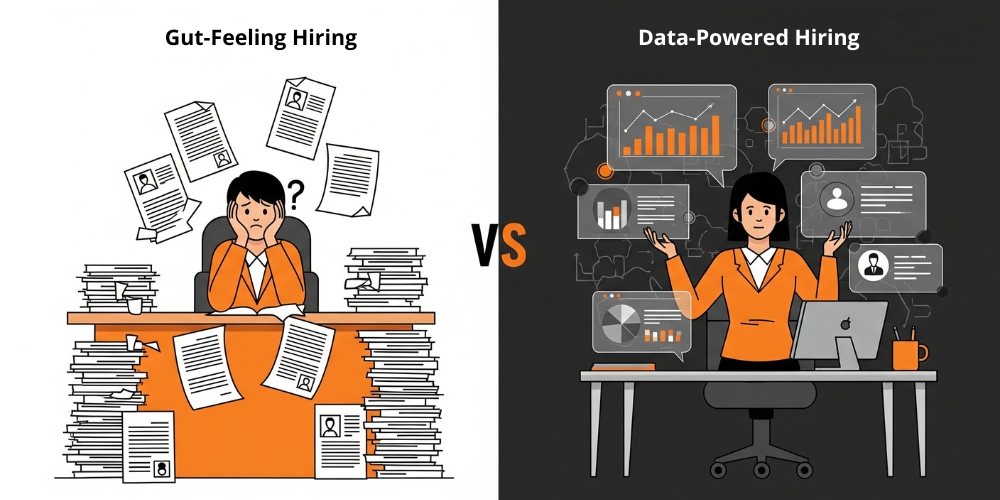
Data-driven recruitment uses structured measurement and evidence — not intuition or pattern-matching against past hires — to inform every stage of the hiring funnel. Sourcing, screening, interviewing, decision-making, and onboarding all generate data that feeds back into better future decisions.
Modern recruiting stacks make this practical at scale:
- ATS captures funnel data automatically
- Assessment platforms produce structured scoring
- Talent intelligence tools surface market intel
- Analytics dashboards visualise patterns
- AI tools surface patterns humans miss
LinkedIn's Global Talent Trends research shows companies using data-driven recruitment are roughly 3x more likely to improve hiring efficiency and quality versus competitors operating on intuition.
Five Data Categories That Matter Most
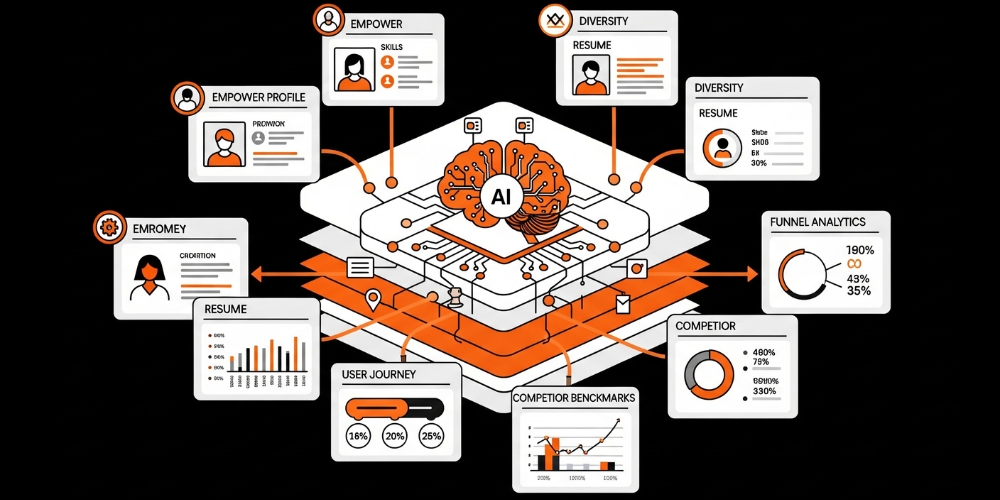
1. Internal workforce data
Existing employee skills, career trajectories, internal mobility patterns. The strongest next hire often comes from within — but only if the data shows who's ready.
2. Candidate data
Skills, certifications, work history, behavioural patterns, structured assessment scores. The foundation for both shortlisting and long-term hiring strategy.
3. Competitor insights
Where competitors are hiring, what skill profiles they're paying for, where they're investing. Useful for both defensive (don't lose your best to them) and offensive (target where they're vulnerable) moves.
4. Funnel analytics
- Time-to-hire by stage and source
- Velocity through each funnel stage
- Conversion rates at each transition
- Drop-off points where candidates leave
Knowing these lets you fix bottlenecks rather than guessing where they live.
5. Diversity and equity metrics
Sourcing pipeline diversity, screening pass rates by demographic group, interview-to-offer conversion patterns, retention by demographic. Without this data, DEI efforts run on hope rather than evidence.
Where the Data Lives
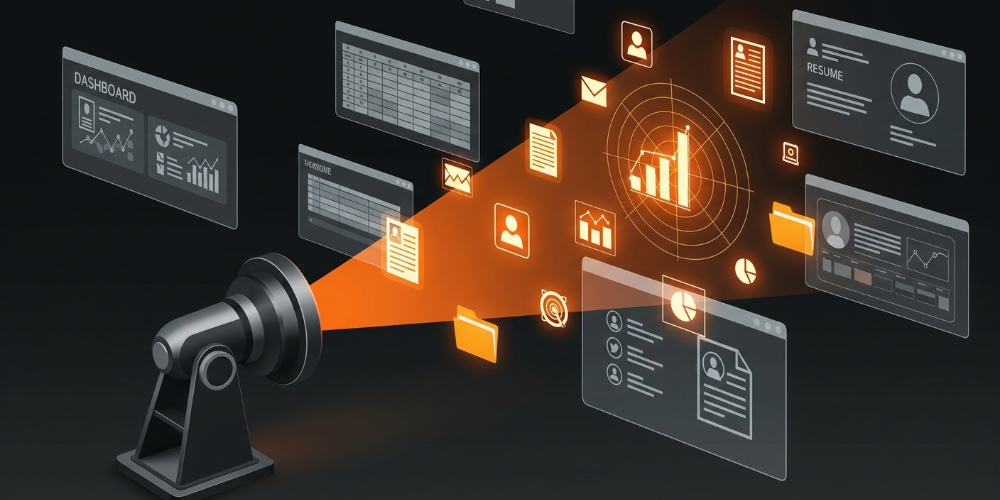
Two primary sources cover most needs.
Applicant Tracking System (ATS)
Captures funnel data — every stage transition, source attribution, time stamps, screening scores. The single most important data source for hiring analytics.
Talent intelligence platforms
Tools like LinkedIn Talent Insights, Gem, hireEZ, and similar bring market context — competitor activity, talent pool size by geography, salary benchmarks, skill availability. Without this layer, internal data lacks the external comparison that makes it strategically useful.
Supplementary sources include HRIS (workforce data), assessment platforms (structured candidate evaluation), engagement platforms (candidate communications), and LMS (internal skill development).
How Data-Driven Recruitment Elevates Talent Strategy

Six concrete improvements over intuition-based recruiting.
1. Smarter hiring strategy
Knowing where talent actually lives (not where you imagined it lives) shapes office locations, sourcing channels, and outreach focus. Strategy follows data, not assumption.
2. Stronger partnerships with hiring managers
When the recruiter brings real market data — "this skill combination exists in roughly 2% of candidates; here's a more realistic profile" — the relationship shifts from order-taking to advisory partnership.
3. Higher quality candidates
Data-driven matching surfaces candidates whose substantive profiles fit, even when their resumes don't use the conventional keywords. The shortlist quality improves measurably.
4. Process improvement
Where do candidates drop off? Where do interviews take too long? Where do offers fail? Data reveals each bottleneck so you can fix it rather than complaining about it.
5. Time and productivity savings
Past-applicant rediscovery, predictive matching, automated nurture sequences. The recruiter doesn't start from zero every time.
6. Demonstrable business impact
Tying recruiting outcomes to performance and retention data makes the value visible to leadership. Recruiting becomes a strategic function rather than a cost centre.
How to Put Data-Driven Recruitment Into Action
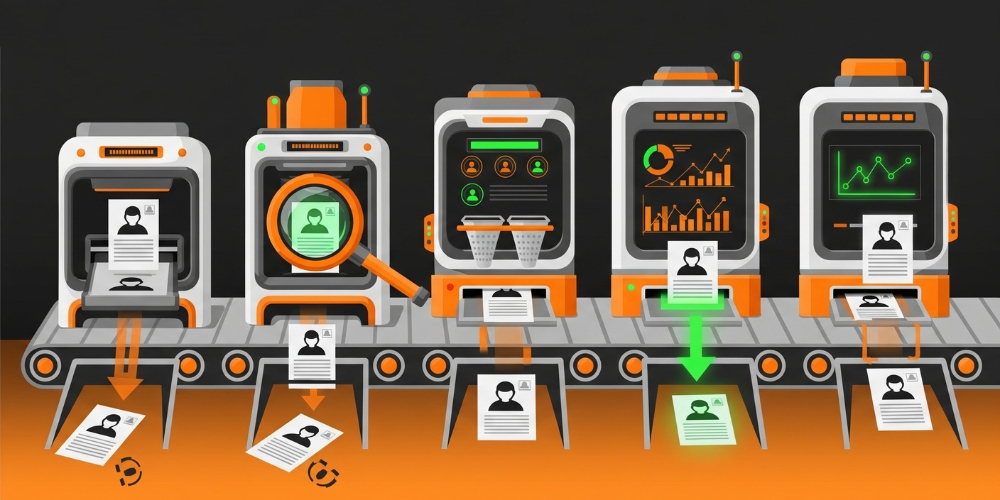
A practical seven-step implementation.
1. Define goals and KPIs
What does success look like? Faster hiring? Higher quality? Better diversity? Lower cost? Pick the priorities; pick the metrics that measure them.
- Time-to-hire
- Quality-of-hire (90-day and 1-year)
- Cost-per-hire by channel
- Retention by source
2. Invest in tooling
Modern ATS, assessment platforms, talent intelligence. Choose tools that integrate cleanly — disconnected tools produce disconnected insight.
3. Collect data systematically
Every stage transition, source attribution, screening score, interview feedback, offer outcome. The discipline matters — incomplete data leads to incomplete insight.
4. Analyse for patterns
Top-performing sourcing channels, drop-off hotspots, cost drivers, retention drivers. Use the patterns to inform decisions, not just to report.
5. Incorporate AI carefully
Resume screening, predictive matching, workforce planning. AI augments but doesn't replace human judgement on consequential decisions.
6. Standardise processes
Structured interviews, written rubrics, consistent scoring. Standardisation enables comparison; comparison enables improvement.
7. Continuous improvement
Monthly KPI tracking, quarterly retrospectives, annual strategic review. Treat each hiring cycle as data for the next one.
Common Mistakes to Avoid
Four anti-patterns worth naming.
Vanity metrics
Time-to-fill alone is misleading. A 5-day fill of a wrong hire is worse than a 30-day fill of a strong one. Pair speed with quality.
Data without action
Beautiful dashboards nobody reads produce no value. Operating discipline matters more than tooling.
Algorithmic absolutism
AI scores treated as final decisions rather than as inputs to human judgement. Produces bias risks and brittleness.
Skipping the audit
Bias monitoring, adverse impact analysis, vendor compliance review. Without audit, the system encodes whatever bias exists in past data.
The Bottom Line
Data-driven recruitment is the structural answer to nearly every modern hiring challenge — speed, quality, cost, diversity, retention. The teams that implement it deliberately produce measurably better outcomes across all dimensions. The tools are mature, the data is accessible, and the operational disciplines are well-documented. The companies still operating on intuition + ATS keyword matching are leaving substantial value on the table — quality hires they didn't make, cost overruns they didn't see, bottlenecks they didn't fix. The investment in data-driven recruiting pays back across years of compounding hiring quality. The companies that commit to it now will be hard to catch later.
FAQs
What's the difference between data-driven recruitment and traditional recruitment?
Traditional recruitment relies on intuition and pattern-matching against past hires. Data-driven recruitment uses structured measurement, predictive modelling, and outcome correlation to inform decisions. The difference compounds across many hires over time.
Which KPIs should I start tracking first?
Time-to-hire, quality-of-hire (measured at 90 days and 1 year), cost-per-hire by channel, and retention by source. These four metrics together reveal most of what matters.
Do I need an ATS to implement data-driven recruitment?
Practically yes. The ATS is the foundational data layer. Trying to manage hiring analytics without one requires spreadsheet discipline most teams can't sustain.
How does AI fit into data-driven recruitment?
AI augments specific tasks — resume parsing, predictive matching, workforce planning. It doesn't replace human judgement on consequential decisions. The combination outperforms either alone.
Is data-driven recruitment biased?
It can be, if the underlying data is biased or the models are unaudited. Properly governed, it's typically less biased than unstructured human screening because consistency replaces variable attention. Bias audit is non-optional.


