

Bias in Hiring Algorithms: How Transparency Fixes the Hidden Problem
Hiring algorithms encode bias from their training data — what the research shows and how transparency, audits, and design choices fix it.
Ployo Team
Ployo Editorial
TL;DR
- Hiring algorithms encode the bias of the data they learn from — and historical hiring data is biased.
- 2024 University of Washington research: some AI screening tools favoured white-sounding names ~85% of the time and female-sounding names ~11%.
- Transparency through audits, published methodology, and adverse impact analysis is the primary defence.
- Regulation is tightening — NYC Local Law 144, Illinois AI Video Interview Act, Colorado AI law, EU AI Act.
- Algorithms can be fairer than uneven human evaluation, but only when designed and audited deliberately.
Hiring algorithms were supposed to make hiring more objective. Instead, they sometimes encode the historical biases that human-only hiring already had — quietly, at scale, with less obvious traceability. The fix is not to abandon algorithmic hiring (the volume problem is real and growing) but to add transparency, auditing, and design discipline that make the bias visible and fixable. This guide walks through how bias enters hiring algorithms, what the research shows, and the practical moves that produce genuinely fairer outcomes.
What Bias in Hiring Algorithms Looks Like
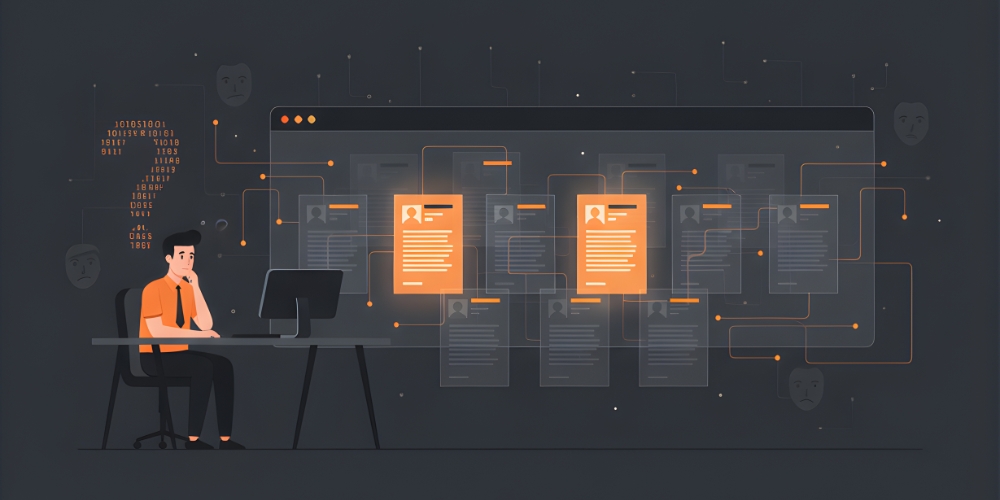
The mechanism is simple: an algorithm trained on historical hiring data inherits the patterns of that history. If the company historically hired primarily from one demographic group, the algorithm learns that the patterns associated with that group correlate with "good hire" — and reproduces the pattern.
Real-world examples surfaced in the research:
- 2024 University of Washington research found some AI résumé-screening tools favoured white-sounding names ~85% of the time and female-sounding names only ~11%
- Amazon's experimental AI hiring tool was discontinued after it systematically downweighted resumes containing the word "women's" (as in "women's chess club captain")
- Algorithms can penalise non-elite educational backgrounds, non-linear career paths, employment gaps, and unconventional resume formats
The deeper problem: when bias is encoded in code rather than expressed in individual reviewer decisions, it's harder to spot and easier to deny. Without transparency, the algorithm just "did its thing" — and the bias persists invisibly.
Why Transparency Matters
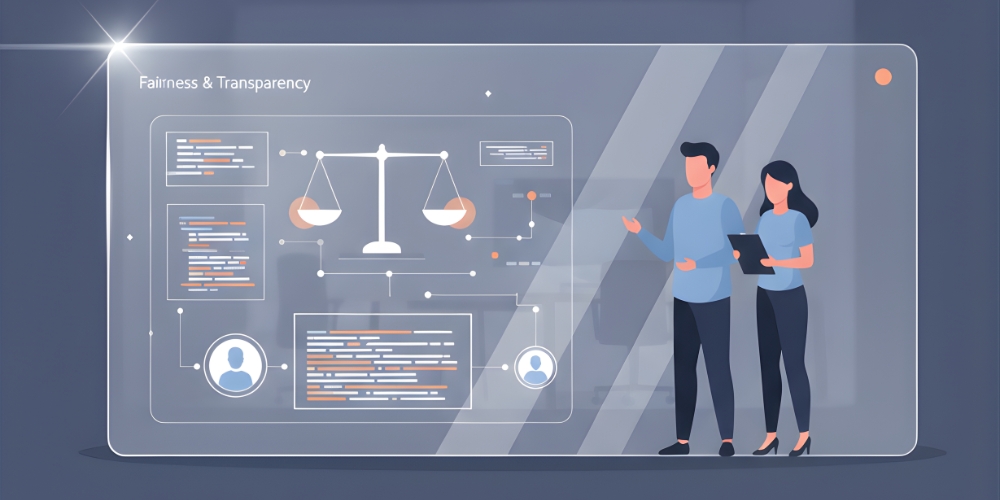
Without visibility into how decisions are made, candidates can't appeal, recruiters can't override, and regulators can't audit. Algorithms become unaccountable in ways that human decisions historically never were.
Transparency operates at multiple levels:
- Process transparency — candidates know AI is being used
- Criteria transparency — they understand what's being measured
- Outcome transparency — adverse impact data is published or auditable
- Methodology transparency — the underlying model's logic is explainable
University of South Australia research from May 2025 showed that algorithm-driven diversity gains only materialise when the tool can explain its decisions and is backed by organisational commitment. Black-box deployment without explanation typically fails to improve outcomes regardless of how well-designed the underlying model is.
The practical implication: a transparent imperfect system improves over time; an opaque "perfect" system stagnates because nobody can see where it's going wrong.
How Transparency Reduces Bias in Practice

Five concrete mechanisms by which transparency translates into fairer outcomes.
1. Regular bias audits
Quarterly adverse impact analysis surfaces patterns — who gets filtered out, where demographic differentials appear, which keywords are over-weighted. NYC Local Law 144 now requires annual bias audits for AI hiring tools used on city residents.
2. Explainable scoring
Models that explain why a candidate scored the way they did allow recruiters to challenge decisions, candidates to understand outcomes, and auditors to verify fairness. "The model said no" is increasingly insufficient legally.
3. Cleaner training data
When the team can see what data is shaping decisions, they can rebalance training sets, remove discriminatory signal, and feed in more representative examples. Without visibility, the data stays biased and the model stays biased.
4. Better job ad design
Transparency surfaces which phrases discourage applicants. Teams can address gender bias in job descriptions and broaden the candidate pool before it ever reaches the algorithm.
5. Blind-screening alternatives
Open data lets teams test blind resume screening — removing names, photos, and other identifiers — and measure whether outcomes change. Without visibility, the experiment can't happen.
What Strong Algorithm Governance Looks Like
Six practices consistently distinguish responsible deployments.
Audit before deployment
Test the model on representative candidate populations before it touches real hiring decisions. Document the bias profile.
Audit continuously after deployment
Models drift as candidate populations shift. Quarterly bias checks catch drift before it produces measurable harm.
Publish methodology
Internal users, candidates, and regulators should understand at a high level what the model evaluates and how.
Maintain human override
Algorithm scores should inform, not decide. Recruiters with override authority and clear documentation requirements catch the edge cases the model misses.
Document candidate consent
GDPR, CCPA, and emerging US state laws increasingly require candidates to know AI is being used. Transparent disclosure protects compliance and trust simultaneously.
Build for explanation, not just accuracy
A slightly less accurate but explainable model often outperforms a slightly more accurate black box on the actual operational metrics that matter — adoption, trust, defensibility.
The Regulatory Landscape in 2026
Bias regulation in algorithmic hiring is tightening fast.
- NYC Local Law 144 — requires annual bias audits and candidate notification for automated employment decision tools
- Illinois AI Video Interview Act — requires consent and limits use of AI-driven video screening
- Colorado AI Act (2024) — requires impact assessments for high-risk AI systems including hiring
- EU AI Act — classifies AI hiring tools as high-risk; requires risk management, data governance, transparency, and human oversight
- Federal direction — EEOC has issued guidance on AI hiring tools and continues to take enforcement interest
The direction is clear: more regulation, not less. Companies that design for transparency now spend less retrofit cost later.
What Doesn't Work
Five anti-patterns worth naming:
- Buying a "fair AI" vendor without doing your own audit — vendor claims about fairness are not substitutes for audit
- Treating the algorithm score as definitive — automation bias compounds the model's existing bias
- Hiding AI use from candidates — candidates discover it, and the trust loss exceeds any operational gain
- Skipping post-deployment monitoring — models drift; static deployment produces compounding harm
- Compliance theatre — publishing an audit report nobody reads is not the same as fixing the issues the audit found
If any of these patterns describe your current setup, treat them as risk to address rather than acceptable state.
The Bottom Line
Algorithmic bias in hiring is real, measurable, and capable of significant harm at scale — but it's also addressable when companies commit to transparency, ongoing auditing, and design discipline. The companies that get this right end up with hiring that's measurably fairer than uneven human evaluation could ever achieve; the companies that deploy AI as an opacity-creating shortcut produce worse outcomes than they would have with no algorithm at all. Transparency is not just an ethical position — it's the precondition for the algorithms to actually deliver the fairness they were supposed to.
FAQs
Why did Amazon discontinue its AI recruiting tool?
Amazon's experimental AI hiring system was discontinued after it was found to systematically downweight resumes containing the word "women's" — a pattern that emerged from training data dominated by historical male hires in technical roles.
Are there US laws regulating bias in hiring algorithms?
Yes — and the list is growing. NYC Local Law 144 requires bias audits for automated employment decision tools. Illinois regulates AI video interviewing. Colorado enacted broader AI legislation. Multiple federal agencies are actively issuing guidance. The EU AI Act adds extraterritorial reach.
Can hiring algorithms unintentionally favour male candidates?
Yes — and they have, repeatedly. When training data reflects historic male-dominated hiring patterns, the algorithm learns those patterns as "good hire" signal. Mitigation requires deliberate data rebalancing and adverse impact monitoring.
What are the risks of fully automated hiring decisions?
Bias amplification, candidate-experience damage, regulatory exposure, and loss of the human judgement that catches edge cases. Best practice — and increasingly the legal floor — keeps humans in the decision loop.
How does transparency address bias in AI hiring tools?
By making the bias visible. Audits, explainable scoring, published methodology, and adverse impact data let teams find and fix bias systematically. Without transparency, the bias persists invisibly; with it, fairness becomes an ongoing engineering discipline rather than an aspirational claim.
Keep reading


