

The 6-Second Resume Scan: Why It Fails Modern Recruiting
Recruiters average just 6-8 seconds on first-pass resume scans — what that misses, why it hurts hiring quality, and how to fix the funnel.
Ployo Team
Ployo Editorial

TL;DR
- Eye-tracking research shows recruiters spend 6-8 seconds on first-pass resume scans.
- That window catches headers, titles, and dates — but misses skills, growth, and potential.
- Volume drives the speed: 300-500 resumes per role is now routine for many openings.
- AI-driven first-pass filtering plus deeper human review of shortlisted candidates outperforms either alone.
- Quality of hire improves when recruiters slow down on the top 10-15% and use structured rubrics.
A recruiter's eyes spend on average 6-8 seconds on each resume in the first-pass review. In that window, they're catching headers, job titles, dates, and overall formatting — and almost nothing else. Skill depth, career progression, transferable strengths, and culture fit all live in the parts of the resume the eye never reaches. This guide unpacks why the 6-second scan has become the modern recruiting default, what it consistently misses, and how the smartest teams are fixing the funnel without simply demanding recruiters work longer.
How Long Recruiters Actually Spend on Resumes

Multiple independent studies converge on the same answer.
- The Ladders' 2018 eye-tracking study measured an average first-pass scan time of 7.4 seconds — up from 6 seconds in their 2012 baseline.
- TealHQ research puts the typical initial scan at 7-9 seconds.
- ResumeGo's survey research shows many hiring professionals admit to spending less than a minute even on the deeper review.
The pattern is clear: a few seconds at first pass, then a slightly longer look only at resumes that pass the initial filter.
The volume context explains why. Tufts Career Center research shows that a typical job posting now generates 300-500 applications. Even five seconds per resume across 400 applications is 33 minutes of pure pattern-matching for a single role.
Why a 6-Second Scan Fails Modern Hiring
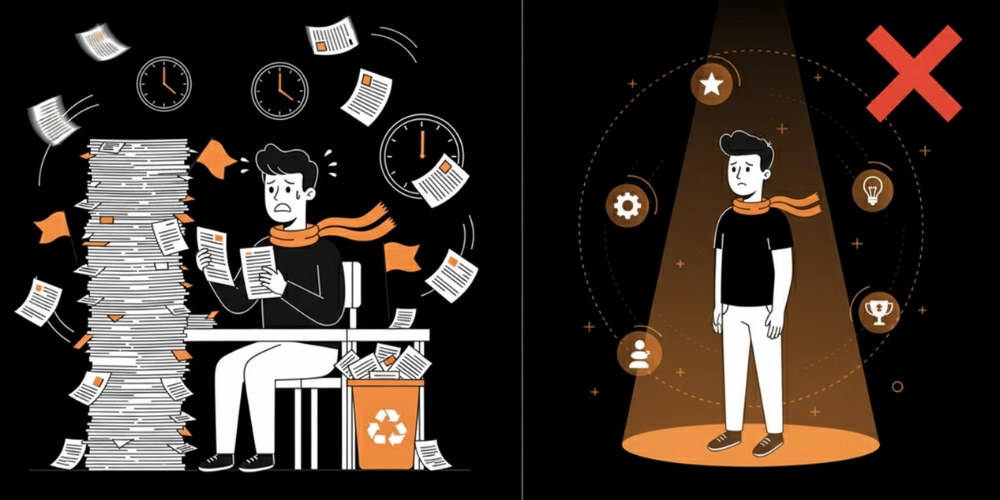
Five specific failures consistently appear when first-pass screening is the only screen.
1. Surface-level signals dominate
In 6-8 seconds, the eye captures formatting, headers, recognisable employer names, and job titles. It does not capture project context, scope of impact, transferable skills, or progression patterns. The signal-to-noise ratio of the data the eye captures is poor.
2. Non-traditional candidates get filtered out
Career switchers, candidates with non-linear paths, people returning from caregiving, and those from non-elite schools are systematically disadvantaged by speed scanning. Their strongest signal often requires context that the 6-second window doesn't allow.
3. Bias amplifies under time pressure
Confirmation bias, anchoring, name bias, and school bias all worsen when decision time shrinks. The faster the decision, the more it relies on heuristic pattern-matching against past hires — which entrenches whatever bias the past hiring history contained.
4. Decision fatigue compounds across volume
A recruiter who's already scanned 200 resumes that morning makes meaningfully worse decisions on the next 100 than the first 100. Manual screening at high volume is expensive in time, accuracy, and recruiter burnout.
5. Soft-signal evidence is lost
Culture fit, communication style, growth trajectory, mission alignment — all live in the parts of the resume that 6 seconds doesn't reach. Yet these often predict success better than the formal credentials that do get noticed.
What the 6-Second Scan Misses (Concrete Examples)
Five real candidate profiles that look weak in a quick scan and strong on closer reading:
- The Career Switcher — irrelevant job title, but scaled a side project to 50K users while volunteering full-time
- The Gap-Year Candidate — visible employment break, but completed three cloud certifications and ran a freelance analytics business
- The Cluttered Resume — dense formatting, but contains specific measurable wins (38% error reduction, redesigned onboarding flow improving trial-to-paid conversion)
- The Generic Job Title — "Operations Analyst" tells you nothing, but the candidate built the SQL audit tool that became standard across three teams
- The Underestimated School — non-elite university, but top of class, published research, technical depth that elite-school graduates often lack
All five get filtered out by 6-second scans. All five are exactly the candidates teams later complain they "couldn't find."
How AI and Automation Fix the First Pass
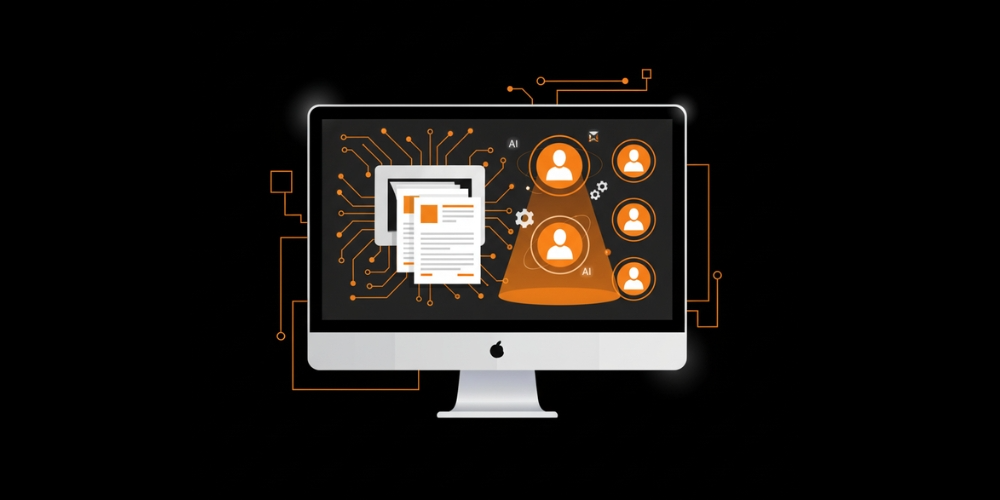
The honest case for AI in resume screening: it's not better than a human at deep evaluation — but it's far better than a human at first-pass filtering at volume.
Scale with consistency
Automated CV screening systems can process thousands of resumes in minutes with identical evaluation criteria applied to every candidate. The consistency removes the worst feature of human first-pass screening — variable attention quality based on fatigue, time of day, and how many resumes have been scanned already.
Beyond keyword matching
Modern AI screening tools evaluate context, career progression, skill relationships, and transferable strengths — not just keyword presence. The systems that still rely purely on keyword filtering are the older generation; the newer ones reason about meaning.
Bias reduction (when done right)
Applied consistently, AI evaluates every resume against the same criteria. This removes the variable-attention bias of human screening. Bias still exists in AI — it lives in training data — but ongoing audits and bias monitoring let teams address it more systematically than they can address human-recruiter unconscious bias.
Honest limitations
- Keyword over-optimization can fool weaker systems
- Unusual but valuable backgrounds may get filtered out
- Without human oversight, some candidates never get human review at all
- Bias in training data can produce discriminatory filtering at scale
The strongest implementations use AI for first-pass filtering then route a deliberately broad slice — not just the top 5% — to human review.
Best Practices for Improving Resume Review Accuracy
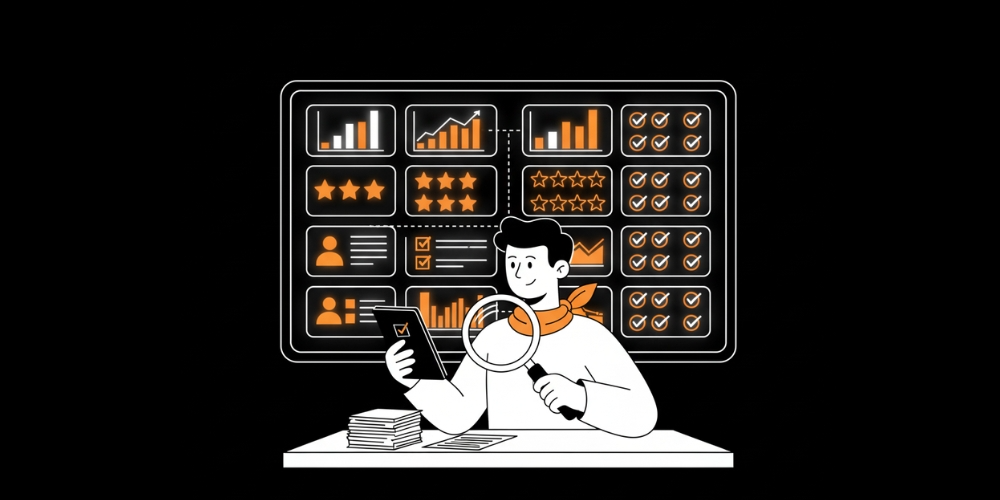
Combine AI first-pass with human deeper review
Let AI handle the 300-400 resume initial filter. Let humans spend real time — 5-10 minutes per resume — on the top 30-50. This split preserves accuracy without demanding superhuman scan speeds.
Slow down on the shortlist
Once a candidate is shortlisted, invest the time the 6-second scan didn't allow. Read project descriptions in detail. Note progression patterns. Flag specific questions to ask in the screen call.
Train against bias
Structured review checklists reduce reliance on heuristic shortcuts. Reviewers who use a written rubric show meaningfully better consistency than those who go on instinct, especially across many decisions.
Use structured scoring
A simple rubric — skills (1-5), evidence of impact (1-5), trajectory (1-5), fit (1-5) — produces dramatically more consistent decisions than gut-feel evaluation. Sum the scores and shortlist from the top.
Audit AI tooling regularly
AI screening tools drift. Audit the outputs quarterly for fairness, accuracy against actual hire outcomes, and adverse impact across demographic groups.
Respect candidate experience
Even if the answer is no, candidates remember how the process treated them. Timely communication, clear next steps, and human dignity in the rejection email all build the employer brand even from candidates who didn't get the role.
Benefits of Better Resume Review

Five outcomes that consistently appear when the funnel is fixed.
Better quality of hire
Strong candidates with non-traditional backgrounds make it through the funnel rather than getting filtered out at the 6-second scan stage.
Stronger employer brand
Candidates whose resumes were taken seriously talk about the experience even when they weren't selected. The reputation effect compounds over time.
Efficiency without sacrificing accuracy
AI first-pass + human deep review takes less recruiter time than pure manual screening would, while producing better quality. The trade-off is asymmetric in the right direction.
Reduced hiring costs
SHRM-cited cost-of-bad-hire research puts the cost of a single mis-hire up to $240K when productivity, retention impact, and replacement costs are factored in. Better screening pays for itself many times over.
Diversity improvements
Less reliance on heuristic pattern-matching against past hires opens the funnel to non-traditional candidates. Diverse hiring becomes a structural outcome rather than a separate initiative.
The Bottom Line
The 6-second resume scan exists because volume forced it on recruiters who can't manually deep-read 400 applications per role. The answer is not to demand longer scans — it's to redesign the funnel so AI handles the initial filtering and humans focus their attention on the shortlist. Done right, the combination produces faster screening, fairer outcomes, and better quality of hire than either AI or humans alone. The teams that resist this restructuring stay stuck with 6-second scans that quietly filter out exactly the candidates they later complain they can't find.
FAQs
How long do recruiters actually spend on resumes?
Eye-tracking research consistently shows 6-8 seconds on first-pass scans, then longer (1-2 minutes typical) on resumes that survive the first filter. The first pass is pattern-matching against headers and titles, not reading.
Why is 6 seconds not enough for reviewing resumes?
Six seconds catches formatting and surface signals but misses skill depth, project context, career progression, and transferable strengths. It systematically disadvantages candidates with non-traditional paths or non-obvious credentials.
How can recruiters avoid missing good candidates?
Combine AI first-pass filtering at volume with structured human deeper review on the shortlist. Use written rubrics. Audit AI tools for fairness. Invest more time on the top 10-15% rather than spreading attention thinly across 400 applications.
Can AI tools fully replace human resume screening?
No. AI excels at consistent first-pass filtering at scale; humans remain essential for evaluating nuance, growth potential, and cultural fit. The strongest results come from pairing the two appropriately rather than choosing one.
What's the single highest-leverage improvement?
Stop treating every resume the same. Use AI to filter the bottom 70-80% based on clear minimums; then spend real recruiter time on the top 20-30%. The shift from uniform-shallow attention to triaged-deep attention produces the biggest quality gains.
Keep reading

How AI Reshapes Resume Screening: Speed, Quality, and Honest Limits

ATS Integration Gaps: The Real Reason Hiring Stalls in 2026
