

SEO for Job Postings: How to Rank on Google Jobs
Rank job postings on Google Jobs with clear titles, location data, schema, salary, fresh content, mobile-ready pages, and AI-driven optimisation.
Ployo Team
Ployo Editorial

TL;DR
- Google Jobs is a search feature, not a job board — it indexes from your pages.
- 9.3% Google Jobs response-to-interview rate (Huntr Q2 2025).
- 73% of seekers more likely to apply when salary is shown (Indeed).
- ~66% of applications happen on mobile (Appcast).
- Clear titles + location + structured data + freshness rank best.
Strong roles fail to fill because nobody sees the post. Google Jobs surfaces listings ranked on relevance, clarity, and structured data — fixable in hours, not months. This guide walks through what SEO for job postings actually means, what Google ranks on, and the on-page checklist that consistently lifts visibility.
What SEO for Job Postings Is
Writing and structuring a job listing so search engines and people both understand it clearly. The aim isn't gaming Google — it's making roles findable.
Three concrete benefits
- More qualified applicants reaching the role
- Lower spend on paid job ads
- Faster time-to-fill
Use words seekers actually type into Google — titles, locations, work type, seniority. Don't confuse job descriptions with job postings: descriptions are internal; postings are external marketing. SEO only works when you write for the seeker.
How Google Jobs Actually Works
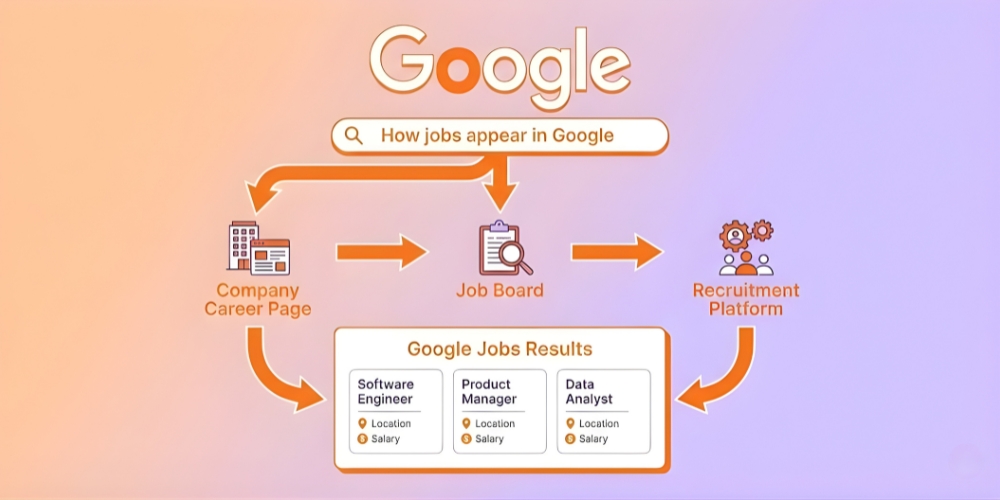
A search feature, not a board. Google scans thousands of pages and pulls listings matching the query.
What Google evaluates
- Job title clarity
- Location details (mandatory, even for remote)
- Salary information
- Structured data (JobPosting schema)
- Page quality and freshness
Per Huntr's Q2 2025 dataset, Google Jobs had a 9.3% response-to-interview rate — outperforming many traditional sources. Google doesn't host your job; it indexes from your site or a job board. Clean structure and precise data decide whether you rank.
Top SEO Tips for Job Postings
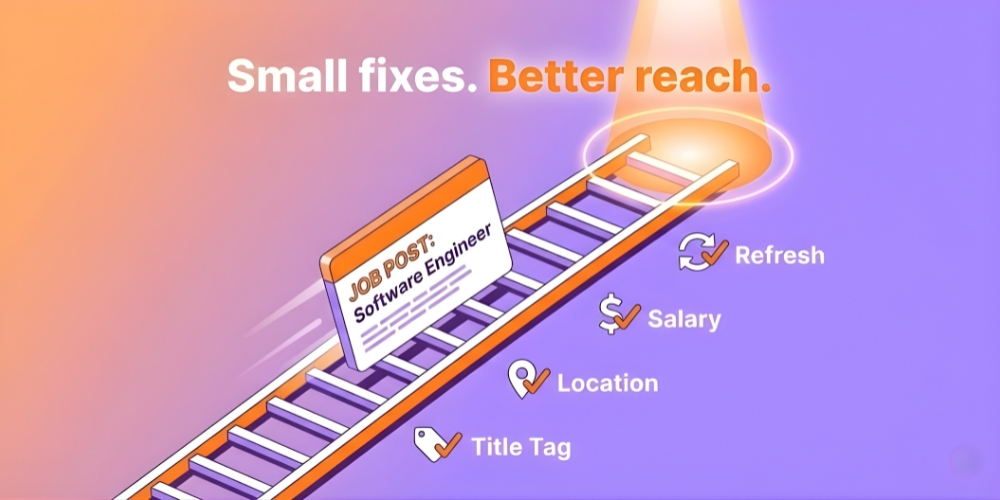
Ten practices that consistently lift rank.
1. Use search-friendly titles
"Senior Software Engineer" beats "Code Ninja" every time. Stick to language people actually search.
2. Always include location
Even for remote — list "Remote", city, region. Blank fields hide you from half your candidates.
3. Include salary when possible
Per Indeed research, 73% of seekers are more likely to apply when salary appears upfront.
4. Keep pages indexable
No noindex tags. Avoid PDFs. Use clean URLs.
5. Match content to search intent
Optimise via job description SEO best practices — bullet points, candidate-first language, no walls of text.
6. Understand the hiring workflow
Don't confuse requisitions with postings. Requisitions are internal; only postings need SEO.
7. Think like a candidate
Ask: would a real person search for this phrase? If not, rewrite.
8. Refresh regularly
Google favours recent listings. Even minor edits help roles resurface.
9. Use AI as a support tool
Flags missing keywords, weak titles, layout issues before publishing.
10. Track what works
Monitor traffic and apply rates per role. Double down on what converts. SEO for recruitment becomes a repeatable system, not guesswork.
On-Page SEO Checklist
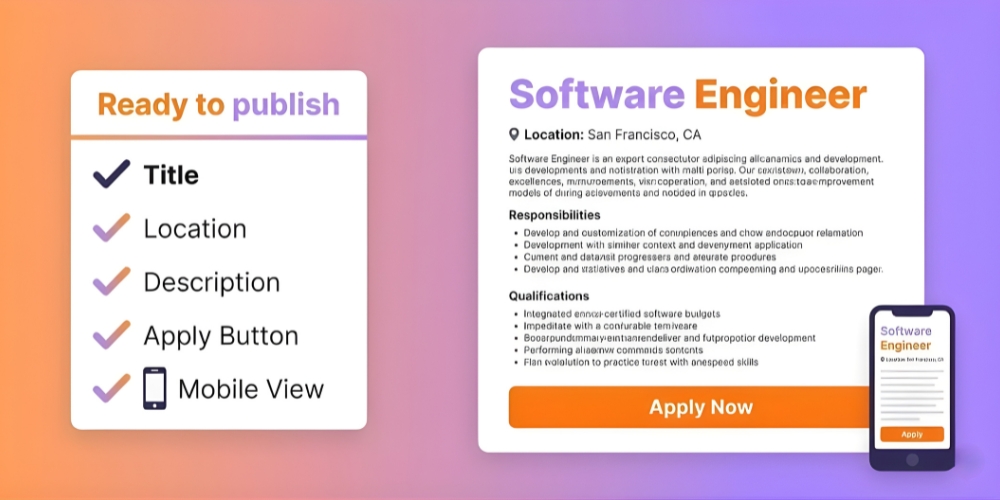
Run through before every publish.
| Element | Requirement |
|---|---|
| Title | Common search term, no internal jargon |
| Opening summary | 2–3 sentence plain-language role description |
| Location | City, country, remote status all visible |
| Responsibilities | Short bullets, not paragraphs |
| Qualifications | Must-have separated from nice-to-have |
| URL | One clean URL per role, no duplicates |
| Page speed | Fast load, mobile-optimised |
| Application path | Minimum clicks; reduce drop-offs |
Per Appcast, ~66% of job applications are made on mobile. A page that's slow or clunky on phones costs you applications directly.
Common SEO Mistakes
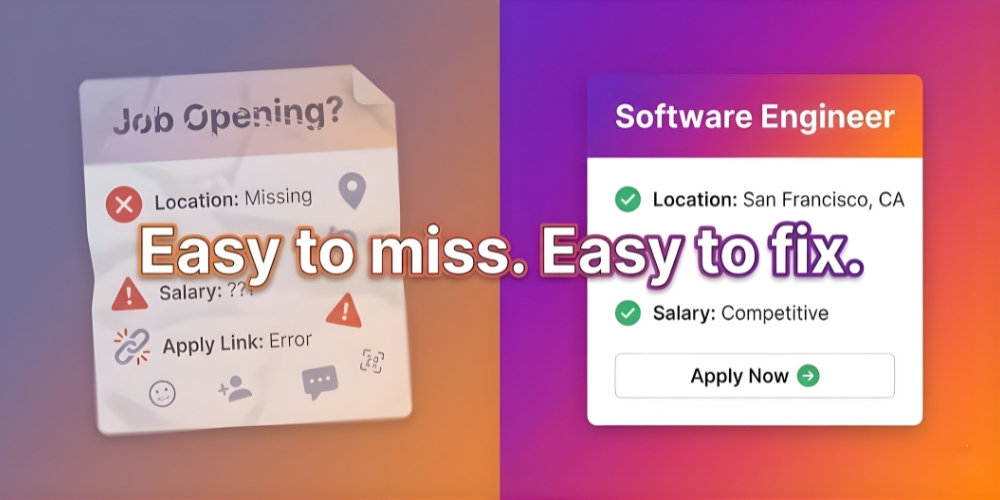
Seven mistakes that quietly kill visibility.
Vague titles
"Growth Star", "Team Hero" don't match real search queries. Google can't fill in the blanks.
Missing locations
Even remote roles need a location tag. Without it, you don't appear.
Buzzword overload
Candidates skim; Google prefers simple language. Buzzwords hurt both.
Blocked pages
Noindex tags or paywalls prevent Google from seeing the job.
PDF postings
Google Jobs works best with standard web pages, not downloads.
Stale postings
Expired roles still live damage trust and signal poor page quality.
Duplicate URLs
One well-written page beats five thin copies. Multiple URLs split ranking signals.
How AI Improves Job Posting SEO
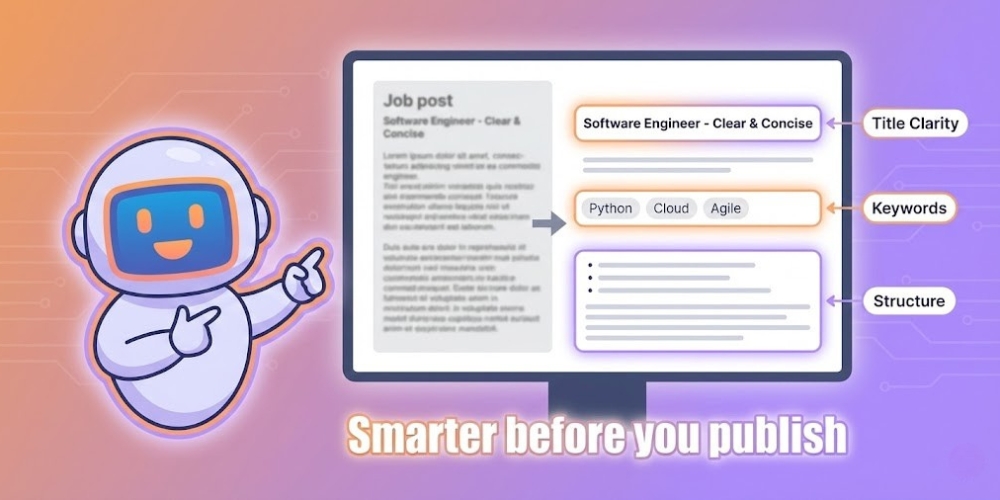
Five concrete contributions.
Pre-publish review
Flags unclear titles, missing locations, weak opening lines before posting.
Search-pattern alignment
Nudges wording toward phrases candidates actually use, not internal jargon.
A/B title testing
Tests titles and snippets quietly, surfacing which combinations attract better applicants — not just higher traffic.
Bias detection
Catches language that may discourage qualified candidates. Protects reach and brand.
Consistency
Keeps listings clean and on-brand across hundreds of roles, even with many recruiters publishing.
The Bottom Line
Ranking on Google Jobs isn't clever tactics — it's clarity, completeness, and freshness. Start with a real search-friendly title, fill all required fields, write for the candidate not the internal team, and keep the page fast and mobile-ready. Small edits compound; weeks later, the right roles are showing up to the right people.
FAQs
How do I rank on Google Jobs?
Clear titles, full location data, readable content, indexable pages. Plus schema markup. Make it easy for Google and easy for candidates.
Does Google Jobs require schema markup?
Recommended, not mandatory. JobPosting schema helps Google parse details faster; clean page structure matters most regardless.
Should I include salary for SEO?
Yes when possible. Builds trust, lifts apply rates significantly, and helps Google match the role to qualified searchers.
How often should I refresh postings?
Every 14–30 days at minimum. Even minor edits signal freshness and can resurface roles.
What's the highest-leverage starting move?
Audit your three highest-priority roles for clarity, location, salary, and mobile experience. Fixing these four basics typically lifts visibility meaningfully within a hiring cycle.


