

Integrated Recruitment Ecosystems: CRM + ATS + Sourcing Unified
Connected recruitment ecosystems beat fragmented tooling — components, integration challenges, performance gains, and a phased adoption path.
Ployo Team
Ployo Editorial

TL;DR
- Global recruiting market projected to hit ~$642B in 2025 with 7.56% CAGR through 2030 (Mordor Intelligence).
- 70% of large companies use an ATS; 75% of recruiters say it improved outcomes (SelectSoftwareReviews).
- Integrated HR tech stacks produce up to 30% faster hiring, 25% lower CPH, 20% better retention (Index.dev).
- Core components: CRM, ATS, sourcing tools, analytics, workflow automation, candidate engagement.
- Common challenges: data silos, change management, security, cost, inconsistent metrics.
Recruiting tools that don't talk to each other waste enormous amounts of effort. Recruiters re-enter data, lose context between systems, and miss patterns that would be obvious in a unified view. Integrated recruitment ecosystems — where CRM, ATS, and sourcing tools share data and workflows — produce measurable advantages in speed, cost, and quality. This guide walks through what's in an ecosystem and how to build one.
What a Recruitment Ecosystem Is
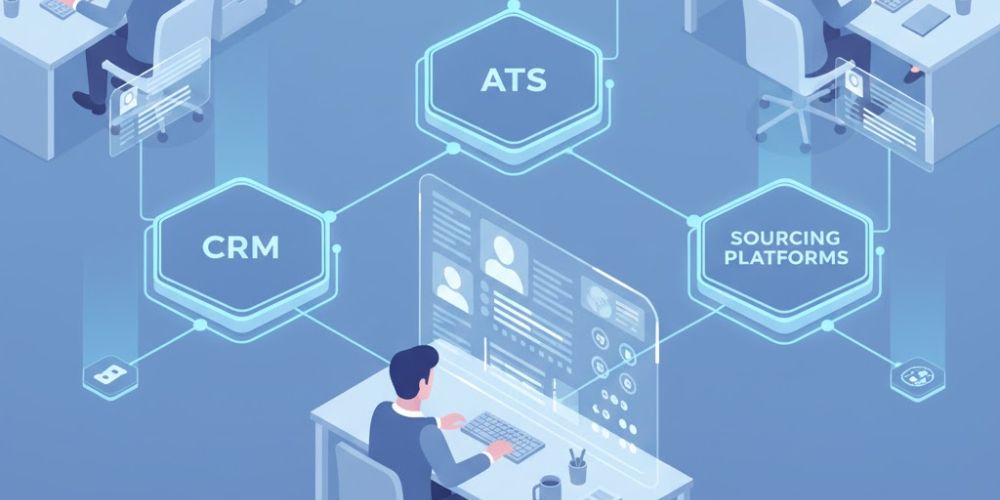
A recruitment ecosystem is an interconnected system of tools and workflows supporting every talent acquisition stage — sourcing, screening, engagement, hiring, onboarding.
Three core pillars.
CRM (Candidate Relationship Management)
Engages and nurtures talent before they apply. Builds talent pools that activate when roles open.
ATS (Applicant Tracking System)
Manages active applications, interview scheduling, and hires. Tracks candidate progress through the funnel.
Sourcing tools and channels
Extends reach beyond job boards — social media, internal mobility, university hiring, passive candidate sourcing.
In an integrated ecosystem, these exchange data and produce a unified candidate view. Sourcing builds pools, recruiting progresses them, and the ecosystem makes the handoffs invisible.
Why Integration Matters Now

Five drivers.
Market scale
Mordor Intelligence projects the global recruiting market at ~$642B in 2025, growing at 7.56% CAGR through 2030. Scaling without integration is unsustainable.
Tech adoption depth
SelectSoftwareReviews shows 70% of large companies use an ATS, and 75% of recruiters say ATS improved hiring outcomes. CRM + sourcing integration is the next frontier.
Performance gains
Index.dev research shows properly integrated HR tech stacks produce up to 30% faster hiring, 25% lower cost-per-hire, and 20% better retention.
Sourcing sophistication
Modern sourcing requires seamless data flow across social listening, AI-powered search, and candidate engagement.
Competitive edge
Teams running integrated ecosystems move faster and smarter than teams running fragmented tooling. The gap compounds.
Core Components

Six modules that together produce a functioning ecosystem.
1. CRM
Builds talent pools, nurtures passive candidates, keeps leads warm. Segment by skills, interests, ambitions; send tailored content rather than blasts.
2. ATS
Tracks candidates through application, screening, hiring, and onboarding. Per RecruitCRM, 93% of recruitment professionals use an ATS. Integration with CRM and sourcing makes this data dramatically more useful.
3. Sourcing tools
Beyond job boards — social media, internal mobility, university hiring, AI-powered search. Sourced leads feed CRM for engagement.
4. Analytics and reporting
Surfaces channel quality, time-to-hire, cost-per-hire, and diversity metrics. Cross-system data integration is what makes this analysis trustworthy.
5. Workflow automation
Connects systems so there's no manual handoff. Sourced lead → CRM engagement → ATS application → scheduling → assessments → analytics all run automatically.
6. Candidate experience tools
Personalised updates, automated communication, transparent process status. Integrated systems support consistent experience across sourced and inbound candidates.
Benefits

Seven concrete wins from integration.
Unified data, smarter decisions
Every candidate interaction in one place. Recruiters see channel quality clearly, not by guess.
Faster hiring, lower costs
Glassdoor data puts average time-to-hire at 23.8 days. Integrated ecosystems consistently compress this by eliminating manual data transfers.
Stronger candidate relationships
CRM–ATS workflows enable continuous nurturing through email campaigns, personalised outreach, automated follow-ups.
Better collaboration
Hiring managers, recruiters, HR teams see real-time candidate progress. Alignment improves; cycles shorten.
Improved diversity
Cross-platform analytics surface demographic balance and unconscious bias patterns. Easier to act on than fragmented data.
Scalable global hiring
Multi-region, multi-language, multi-time-zone hiring runs from one system. Cross-border expansion accelerates.
Higher quality of hire
Combining CRM engagement, sourcing intelligence, and assessment data produces better-informed hiring decisions and stronger onboarded talent.
Common Integration Challenges

Five hurdles worth planning for.
Data silos and compatibility
Different systems store data differently. APIs and middleware close the gap, but selection matters — pick open APIs and pre-built connectors.
Change management resistance
Recruiters familiar with old workflows resist new systems. Pilot teams, focused training, and outcome-based metrics drive adoption.
Security and compliance
More tools means more access points. Encrypted storage, SOC 2 compliance, regular audits, and explicit GDPR handling are mandatory for production-grade ecosystems.
Cost and complexity
Custom ecosystems are expensive. Modular adoption — start with CRM + ATS, add sourcing tools later — keeps costs manageable.
Inconsistent metrics
Different tools measure performance differently. Standardise KPIs (time-to-hire, cost-per-hire, source quality, candidate satisfaction) across the stack.
The Bottom Line
Recruitment ecosystems shift hiring from reactive role-filling to proactive, data-driven talent acquisition. The teams running integrated CRM + ATS + sourcing stacks consistently hire faster, cheaper, and better than teams running fragmented tooling. The investment pays back within months and compounds for years. Start with the two most-painful systems to integrate, prove the ROI, and expand from there — the alternative is watching competitors widen their lead one quarter at a time.
FAQs
How does an ecosystem improve candidate experience?
Centralised communication produces consistent updates, smoother application tracking, and personalised journeys from sourcing through offer.
How do ecosystems support changing workforce needs?
Data-driven agility — quick adaptation to hybrid work, remote hiring, and emerging roles through flexible workflows and integrated insights.
What are the biggest integration challenges?
Data silos, integration costs, change resistance, and ensuring privacy across multiple systems. None are insurmountable, but all require explicit planning.
Can SMBs benefit from ecosystem approaches?
Yes — modular adoption lets smaller companies access enterprise-grade efficiency without enterprise-grade budgets. Start small, scale gradually.
What's the highest-leverage integration to start with?
CRM + ATS. Together they give you both passive and active candidate visibility, which produces the biggest immediate quality and speed improvements. Sourcing integration follows naturally once those two are working.


