

Why a Strong Job Description Matters for Recruitment
A sharp job description is the single highest-leverage document in hiring — see how it shapes applications, retention, performance, and legal protection.
Ployo Team
Ployo Editorial

TL;DR
- A strong job description pulls in the right applicants and quietly filters out the wrong ones.
- It locks in shared expectations between the hiring manager, the recruiter, and the new hire.
- It becomes the anchor for performance reviews, promotions, and onboarding plans.
- Role clarity is one of the most reliable predictors of employee retention.
- A documented description is your defence if a hiring or termination decision is ever challenged.
- It is the foundation for training, succession planning, and internal mobility.
The most expensive mistakes in hiring usually trace back to the document everyone treats as filler: the job description. A weak one floods the funnel with mismatched applicants, confuses new hires in their first week, and leaves managers guessing during reviews. A sharp one does the opposite — it pre-aligns every downstream stage of the employee lifecycle. This piece breaks down why the job description is the single highest-leverage artifact in recruitment, and what a good one earns you across hiring, performance, retention, and risk.
If you also want a tactical guide to writing one, our companion piece on job descriptions that actually attract great candidates is the place to go.
Why the Description of Duties Drives Everything Else
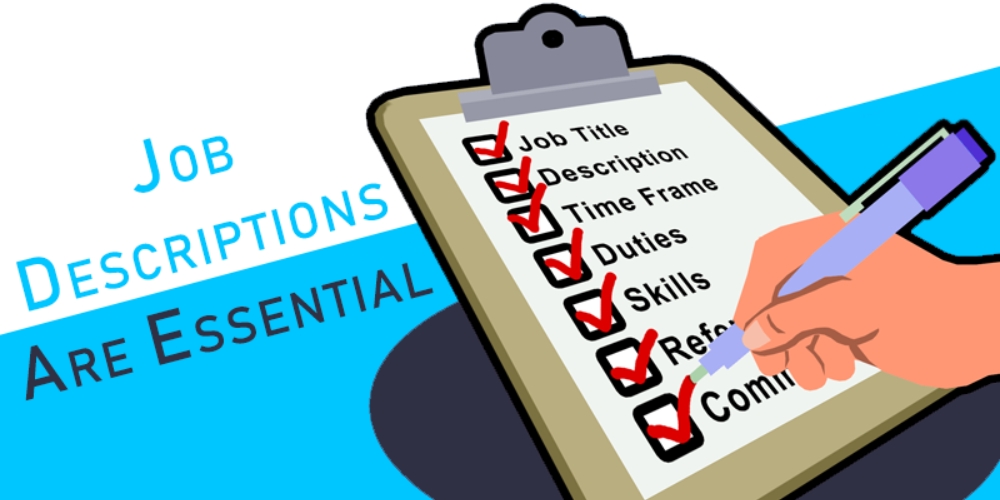
The list of duties on a job posting is not boilerplate; it is the contract between the role and everyone who interacts with it. When the duties are specific and honest, the right candidates self-select in, onboarding stops feeling like a series of surprises, and managers have a real baseline to grade performance against.
When the duties are vague, the inverse plays out at every stage: noisy applicant pools, frustrated new hires, ambiguous reviews, and bad hires that take months to wash out of the team. The cost of writing the description well is an afternoon; the cost of writing it badly is paid for a year.
Are Job Descriptions Actually Important for Recruitment?

Yes — and the candidate-side data is unambiguous:
- WorkWolf's 2024 hiring statistics found that 52% of job seekers rate description quality as "very" or "extremely" important when deciding whether to apply at all.
- MoshJD's hiring research reports that inclusive, well-structured language lifts applications by roughly 42% in like-for-like comparisons.
The job description is the first sales document the company shows a candidate. If it reads like an HR checklist, the strongest applicants quietly move on. If it reads like a clear picture of what the work is and why it matters, those same applicants picture themselves doing the job — and apply. That swing alone justifies treating the description as a real piece of writing rather than a copy-and-paste exercise.
What a Strong Job Description Earns You

The benefits compound across the organisation, not just inside recruiting.
1. Better applicants, less noise
When responsibilities, must-haves, and success metrics are stated clearly, the funnel narrows on its own. People who do not fit see it immediately and move on. People who do fit see themselves in the description and apply with confidence.
2. Shared expectations on day one
Every stakeholder — recruiter, hiring manager, new hire, the rest of the team — works from the same document. There is no "I thought I was hiring for this" gap between offer and 30-day check-in.
3. Performance reviews with a real baseline
Vague duties produce vague feedback. A description that lists actual outcomes and responsibilities is the rubric a manager can grade against in a one-on-one, in a quarterly review, and in a promotion case.
4. Higher retention through role clarity
Role confusion is one of the quiet drivers of voluntary attrition. Research summarised by Effectory's HR analytics group found that employees who clearly understand their role are roughly 84% more likely to stay with their employer. A clear job description is the cheapest retention investment most teams will ever make.
5. Legal protection when something goes wrong
If a promotion, termination, or pay-equity decision is ever challenged, the documented description is the artifact that demonstrates the decision was based on the role's real requirements. Companies that skip this often discover its value at the worst possible moment.
6. A foundation for training and growth
Once skills, tools, and competencies are written down, the same document feeds onboarding plans, training paths, internal moves, and succession planning. See our overview of recruitment methods for how this artifact ties into the wider hiring system.
The Bottom Line
A job description is not paperwork. It is the document that decides who applies, who succeeds, who stays, and how performance is measured for the entire life of a role. Treat it as a real piece of writing — specific, honest, kept up to date — and every downstream hiring decision gets easier. Treat it as filler, and the rest of the funnel will be more expensive than it needs to be.
FAQs
How long should a job description be?
Long enough to be specific and short enough to be read. For most roles, 400-700 words covers responsibilities, must-haves, nice-to-haves, scope, and what success looks like in the first 90 days. Anything longer usually means the description is doing the work of an internal scoping document.
How often should we update a job description?
Whenever the scope of the role changes meaningfully, a person leaves and the next hire has a different mandate, or applications from the current version are weak. Otherwise, a yearly review keeps it honest.
Who should write the job description?
The hiring manager owns the substance; the recruiter pressure-tests it for clarity and market fit. The best descriptions are drafted by the manager, sharpened by the recruiter, and reviewed by one person who will actually be working alongside the new hire.
Does the job description need to match the internal job specification?
The two documents should align but not duplicate. The job description is the external pitch and scope; the job specification is the internal screening rubric. Keep them consistent and use the description publicly, the specification internally.
Can a job description be too detailed?
Yes. A description that lists every possible task ends up reading like a wishlist and discourages qualified applicants who do not tick all the boxes. Anchor on the responsibilities and outcomes that actually define the role, and let the rest emerge in the interview.
Keep reading

Writing Job Descriptions for Startups: Templates and Common Mistakes

