

Writing Job Descriptions for Startups: Templates and Common Mistakes
Startup JDs need to signal ambiguity tolerance and growth — what to include, templates by stage, mistakes to avoid, and how to make them findable.
Ployo Team
Ployo Editorial

TL;DR
- 52% of job seekers say JD quality directly affects whether they apply (Indeed).
- Candidates scan requirements in ~14 seconds (LinkedIn).
- Startups need to signal multi-hat work, ambiguity tolerance, and growth potential.
- Avoid corporate boilerplate, clichés ("rockstar"), excessive requirements, and missing salary context.
- Optimize for search: clear titles, primary keywords in first 100 words, mobile-friendly format.
Hiring at a startup is different. The right people thrive in ambiguity, jump across functions, and treat the work as theirs. The wrong people — even highly skilled ones — flame out fast in roles where rules and processes are still forming. A great startup JD signals this difference clearly so the right people self-select in and the wrong people self-select out. This guide walks through how.
Why JDs Matter More for Startups

Every hire shapes a startup disproportionately. The wrong fit slows progress, drains energy, and breaks team rhythm.
Indeed research shows 52% of job seekers say JD clarity influences whether they apply. For startups, clarity is even more important — without it, you attract candidates seeking structured corporate roles when you need agile builders.
Strong effective JD principles apply with extra emphasis: clarity, specificity, and honest framing about what the role actually is.
What Makes Startup JDs Different
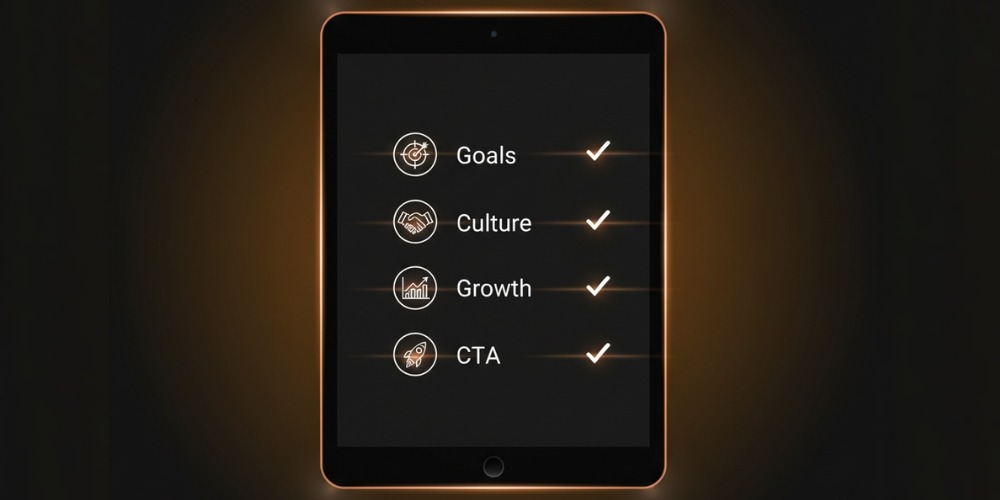
Five differences worth signalling.
Ambiguity is normal
"You'll help define how we grow" beats "you'll work in marketing following established procedures."
Multiple hats
Someone might do product, marketing, and ops in one week. Signal this clearly so candidates can self-assess.
Growth mindset over fixed role
Hire for potential and trajectory, not just past credentials. Roles evolve fast at early-stage companies.
Culture + mission emphasis
Startup talent often joins for meaning. Use the JD to convey purpose, team, and product story.
Faster pace, higher stakes
Reflect urgency honestly without sounding chaotic. Strong candidates can read between the lines.
Core Components
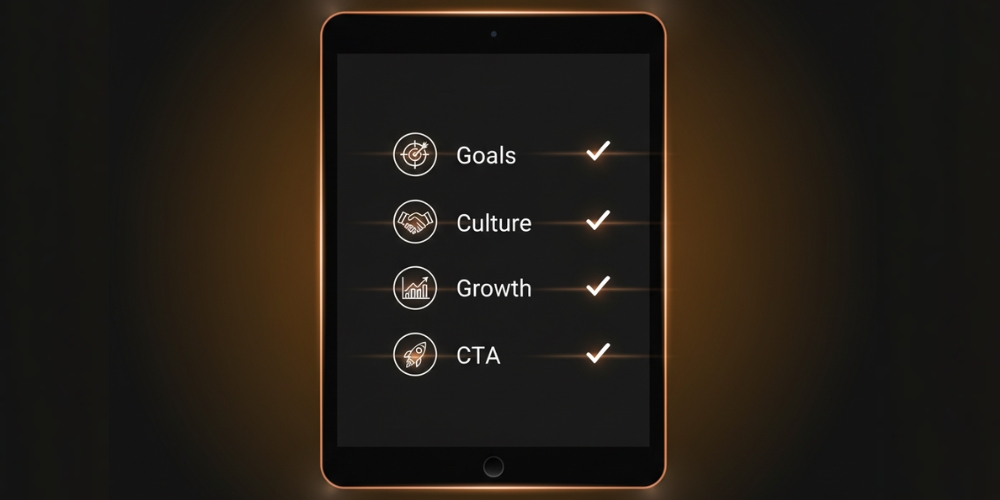
Eight sections that consistently make startup JDs work.
The hook
First 1–2 lines. "You love turning ideas into action and don't wait for permission" beats "we're hiring a Marketing Manager."
Role purpose and outcomes
What problem will this person solve? What does success look like in 3, 6, 12 months?
Responsibilities (loose, not rigid)
Bulleted list. Per LinkedIn's data, candidates scan requirements in ~14 seconds — make every bullet count.
Skills and growth potential
Must-have vs nice-to-have separation. Prioritise mindset and learning over years in a specific box. Signal which skills can grow on the job.
Culture and mission
One sentence on why you exist; one anecdote on how you work or what you've built. Avoid generic culture statements.
Success metrics
"By month six, you'll own user onboarding and increase conversion by 30%" — concrete, measurable, role-shaping.
Honest "what this is not"
If you prefer structured hierarchy, this isn't for you. Transparency builds trust and saves both sides time.
Call-to-action
"Send your resume + a short note about a side project you built." Human and specific beats "Apply now."
Stage-Specific Templates
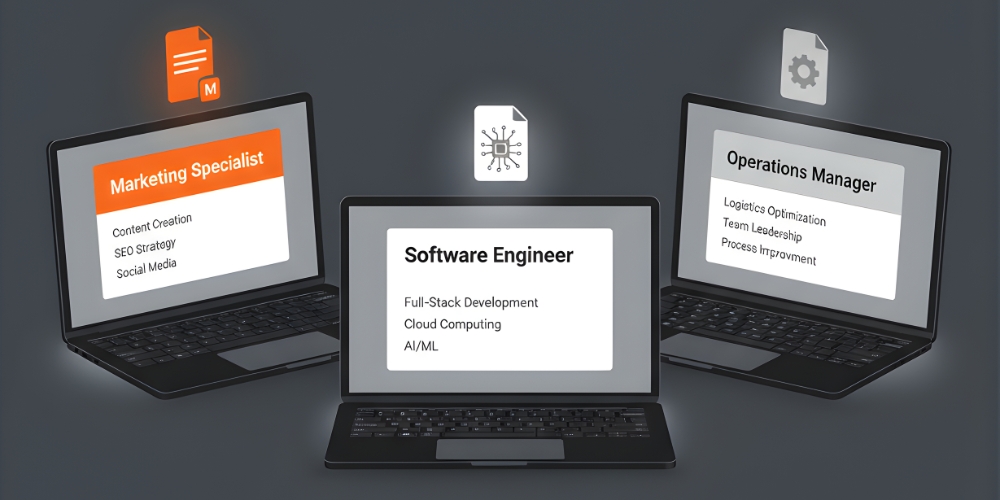
Three templates as starting points.
Early-stage generalist
Title: Operations & Growth Associate Hook: You bring order to chaos and solve problems faster than most teams can schedule a meeting. Outcomes (6 months): Streamline vendor management and cut monthly expenses by 15%. What success looks like: Build internal processes, support product launches, collaborate across the team.
Technical founder hire
Title: Founding Engineer Hook: We're building something people will use every day, and you'll decide how it works. Outcomes (90 days): Ship MVP modules, set coding standards, drive critical bug count down. Why join: Direct collaboration with founders on long-term tech roadmap.
Marketing-first hire
Title: Growth Marketer Hook: You test faster than most companies can schedule a sync. Outcomes (90 days): Launch 6 A/B tests, set up analytics, find a first repeatable channel. Why join: Help define the story from the ground up.
Common Mistakes

Five patterns that consistently weaken startup JDs.
Copy-pasted corporate templates
Boilerplate from Fortune 500 templates feels lifeless. Rewrite for actual startup reality.
Buzzwords and clichés
"Rockstar," "ninja," "self-starter" are words to avoid in JDs. They signal nothing and repel strong candidates.
Overstuffed requirements
Per HBR, women apply only when meeting 100% of listed criteria. Keep must-haves to genuine essentials.
No salary or growth context
Modern candidates value transparency. Even a range helps set expectations.
Unclear outcomes
Without measurable goals, accountability fades and mis-hires multiply. Specific success metrics force clarity on what the role really needs.
Optimising for Search

Eight practical SEO moves.
- Clear, conventional job titles — "Digital Marketing Manager" not "Growth Hacker."
- Primary keyword in first 100 words and naturally throughout.
- 155-character meta description that reads naturally.
- H2/H3 headings for scannability.
- Active voice and concrete numbers.
- Internal links to relevant company pages.
- Mobile-friendly format — 67% of job seekers apply via mobile (AIHR).
- Regular updates — outdated listings lose ranking and credibility.
The Bottom Line
Strong startup JDs do the unglamorous work of self-selection at scale — pulling in the candidates who'll thrive in ambiguity and filtering out the ones who'd burn out. Skip the corporate boilerplate, write like you're speaking to a future teammate, signal the realities honestly, and make the document findable. The compound effect across hiring rounds is significant: better candidates, faster decisions, fewer mis-hires.
FAQs
How long should a startup JD be?
600–800 words. Long enough for expectations and outcomes; short enough to stay readable.
Should startups list salaries?
Yes whenever possible. Even a clear range builds trust and reduces wasted screening on misaligned compensation expectations.
How can AI improve startup JD writing?
AI flags unclear or biased language, suggests stronger verbs, and benchmarks tone. Human review is still essential for voice and accuracy.
What tone works best?
Conversational and professional. Write like you're speaking to a future teammate who shares the mission.
What's the highest-leverage section?
The hook plus role purpose. If those first 80 words don't grab the right candidates, the rest of the JD never gets read.


