

AI Hiring Bias: How It Happens and How to Reduce It
AI hiring bias quietly filters out qualified candidates — how bias enters algorithms, the impact on diversity and trust, and the steps that prevent it.
Ployo Team
Ployo Editorial
TL;DR
- 35–45% of companies already use AI in hiring (SHRM).
- Fewer than 20% of executives strongly agree their AI ethics practices match stated values (IBM).
- Bias typically enters via uneven training data, biased job ad language, or unsupervised pattern copying.
- Impact: reduced diversity, weaker talent pipeline, legal and reputational risk.
- Fix: clean data, human review, neutral job descriptions, regular bias testing.
AI in hiring is powerful and risky. The same algorithms that can reduce evaluation variance can also automate discrimination at scale when trained on biased data. The companies using AI well aren't avoiding it — they're using it with deliberate guardrails. This guide walks through where bias comes from, what damage it causes, and the specific steps that reduce it.
What AI Hiring Bias Is
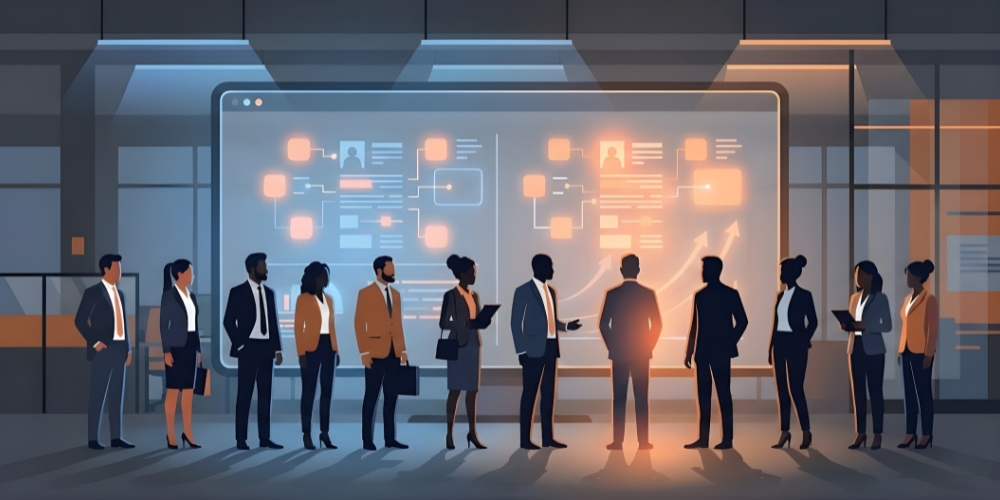
AI hiring bias appears when an algorithm makes decisions that systematically disadvantage some candidates. The system learns from historical data, and that data often carries old patterns the company would now reject explicitly.
SHRM data shows 35–45% of companies have already added AI to parts of their hiring process. At that scale, any embedded bias affects a large number of candidates.
A common example: a resume-ranking model trained on past engineering hires (where men were over-represented) may score applicants from women's colleges lower — not because the model "knows" gender, but because it learns the proxy patterns associated with the underlying imbalance. The model isn't malicious; it's pattern-matching faithfully to biased history.
How Bias Enters
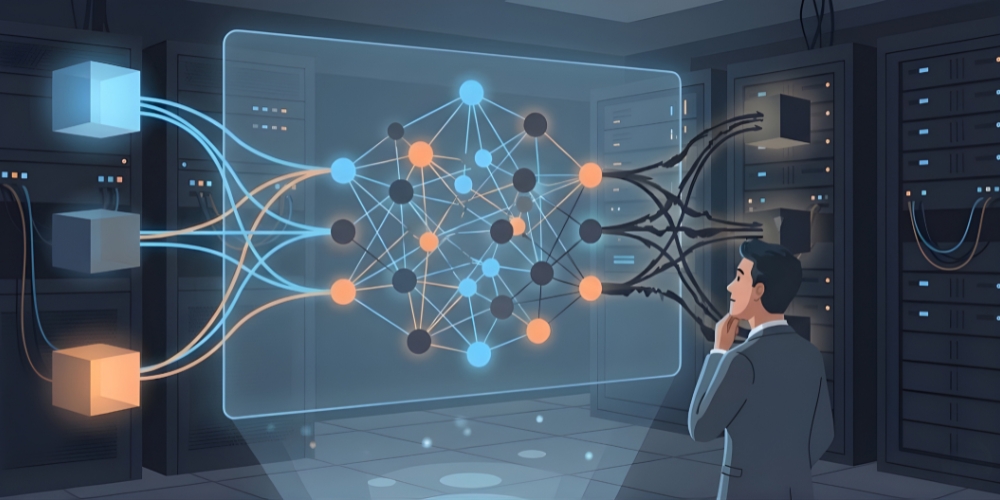
Four common entry points.
Uneven training data
Historical hiring records often skew by school, geography, or demographic. The model learns "successful hires look like X" — and rejects candidates not matching that pattern. See hidden bias in hiring algorithms for the deeper mechanism.
Biased language in job ads
When job descriptions contain subtle signals about who "fits," the system learns them. This is one form of unconscious hiring bias — passing through algorithms and amplifying at scale.
Pattern overfitting
Models can copy old recruiter habits too closely. If last year's hires came from three universities, this year's model may over-weight those institutions.
Lack of oversight
IBM's research shows fewer than 20% of executives strongly agree that their AI ethics practices match their stated principles. Without human review, biased models compound their mistakes.
The Real Impact
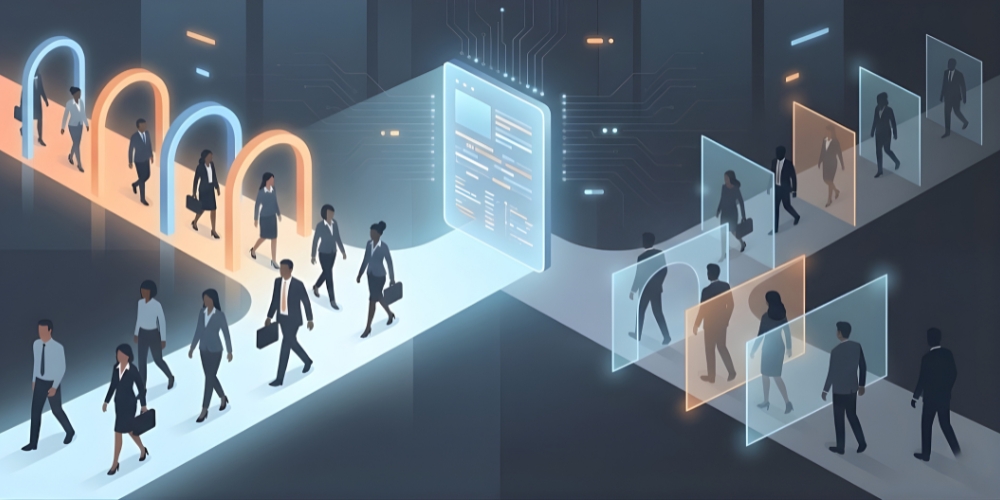
Four downstream consequences.
Fairness damage
Qualified candidates get filtered out based on proxies (zip codes, school names, gap years) rather than capability. The harm to individuals is real and often invisible to the company.
Diversity erosion
Teams converge to look like the historical pattern. Creativity drops; problem-solving narrows. Long-term performance suffers.
Business risk
Legal complaints, reputation damage, and candidate trust loss all follow biased systems. As candidates become more aware of AI in hiring, fairness perception affects application volume.
Pipeline degradation
Strong applicants get downranked for the wrong reasons. Recruiters never see them, miss them, and don't realise the funnel quality is being suppressed.
How to Reduce Bias
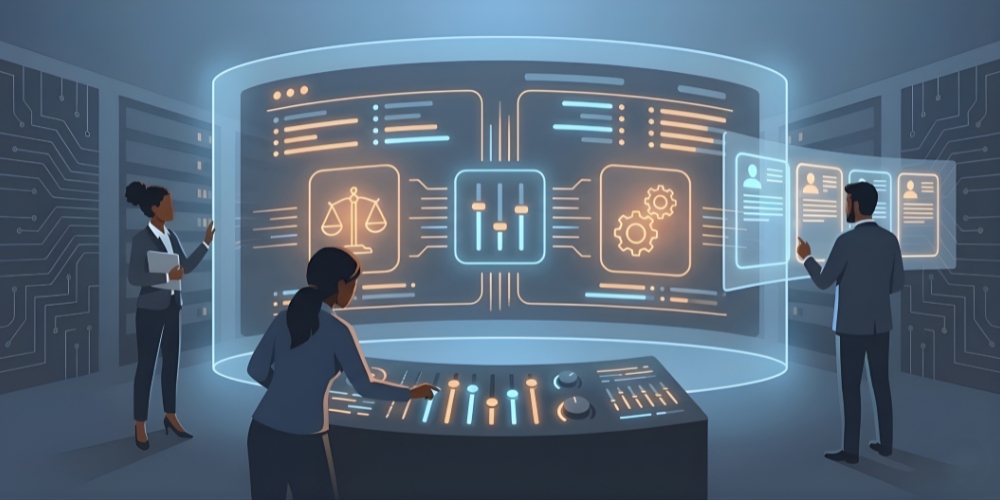
Six practical steps that consistently reduce bias.
1. Clean the training data
Audit historical hiring records before training. Balance datasets or apply weighting to compensate for historical skew. Documentation matters as much as the cleaning itself.
2. Add human review at key steps
Let AI handle early sorting; let humans review shortlists. Catch errors before they affect decisions.
3. Use neutral job descriptions
Gender-neutral language, role-specific requirements, no culture-coded "fit" signals. Apply techniques to avoid gender bias in job descriptions so the algorithm doesn't learn the wrong patterns.
4. Test regularly
Run synthetic resumes with controlled differences (gender, school, location) through the system to surface unfair patterns. Even simple tests reveal embedded bias.
5. Document decisions
Clear rules and decision logic let auditors and reviewers understand what the model was meant to do. Opacity hides bias; documentation surfaces it.
6. Keep humans accountable
AI suggests; humans decide. This single boundary prevents the worst outcomes from biased models — and produces better hiring decisions overall.
The Bottom Line
AI hiring bias is solvable but not inevitable to eliminate. Companies that use AI responsibly clean their training data, document their models, test for bias regularly, and keep humans in the loop on final decisions. Companies that deploy AI without these guardrails systematically disadvantage qualified candidates and expose themselves to legal and reputational risk. The technology isn't the problem; how it's deployed is. Treat AI like a powerful partner that needs guidance, not an autonomous decision-maker.
FAQs
How does AI bias affect recruitment outcomes?
It shapes who gets shortlisted, who advances, and who gets hired. Subtle proxy patterns (location, school, gap years) can systematically disadvantage candidates with skills equal to those who advance.
Can AI ever be fully unbiased?
No model is completely bias-free — all systems learn from human-generated data. The goal is to minimise unfair patterns through deliberate oversight, balanced training data, and explicit fairness checks.
What's the most common bias source?
Uneven training data. Historical hiring records overwhelmingly carry biased patterns; without active correction, models will learn and amplify them.
How can candidates protect themselves?
They can't fully — but understanding that AI screens many applications means optimising resumes for both human and machine reading (clean keywords, standard formatting, role-relevant language).
What's the single highest-leverage anti-bias step?
Regular bias testing with synthetic data. Most companies never test their models for bias post-deployment. Quarterly testing surfaces problems early enough to fix before they cause real harm.
Keep reading


How AI Tools Reduce Candidate Stress in Hiring (and Improve Outcomes)
