

Using AI Chatbots for Your Job Search: A Practical Guide
Chatbots like ChatGPT and Claude can transform job hunting — how to use them for resume optimisation, interview prep, and finding the right roles faster.
Ployo Team
Ployo Editorial

TL;DR
- 79% of employers use AI or automation in recruitment (SHRM 2022).
- 81% of candidates want continuous status updates during hiring (CareerBuilder).
- 66% of Americans wouldn't apply if AI made the final hiring decision (Pew).
- Best use cases: resume tailoring, interview prep, ChatGPT prompt-based research.
- Worst pitfall: copy-pasting unedited AI cover letters that recruiters spot instantly.
The modern job market is loud. Refreshing tabs, sending applications into black holes, getting ghosted. AI chatbots — used well — can compress this exhausting process into a structured operation. Used poorly, they produce robotic cover letters and missed nuance. This guide walks through specific tactics that work and the common mistakes that don't.
What Job Search Chatbots Are
Two categories worth distinguishing.
External assistants
ChatGPT, Claude, Gemini, and similar tools. Useful for drafting, research, interview prep, and personalised job-search planning.
Embedded recruitment bots
Live chat assistants on company career pages, AI screening tools, and conversational application interfaces. Increasingly part of the AI talent assessment ecosystem.
SHRM's data shows ~79% of employers already use AI or automation in recruiting. Understanding how these tools work is now a competitive baseline, not optional.
How to Use Chatbots Step-by-Step

Five high-leverage uses.
1. Define your search parameters
Ask the chatbot to analyse your target industry and identify the top 10 in-demand skills currently. Use these to refine keyword choices on job boards.
2. Resume optimisation per role
Paste a job description and your CV. Ask the chatbot to identify missing keywords, weak skill mentions, and quantification gaps. Edit before applying — gap-specific improvements significantly improve ATS pass rates.
3. Master prompt structure for interview prep
Specific prompts produce useful output:
"Act as a hiring manager for a Senior Marketing role. Conduct a mock interview with me based on this job description: [paste]. Push back on weak answers."
4. Organise research with NotebookLM or equivalent
Upload all the job descriptions you're targeting plus your research notes. Query the knowledge base for specific details across multiple applications. Saves significant re-research time.
5. Evaluate sources
Use AI to summarise company cultures, comparing across your top targets. Useful for prioritising where to apply first.
What Chatbots Do Well — And What They Don't
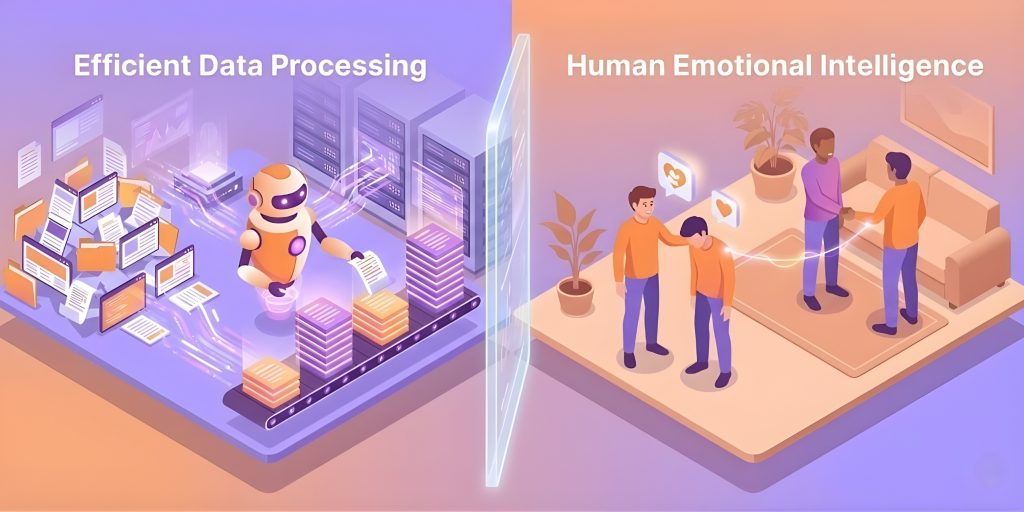
Strengths
- Bulk data processing — scraping postings, comparing requirements
- Resume tailoring against specific JDs
- Pattern recognition (e.g., the difference between job description and job posting and how to navigate each)
- Drafting cover letters quickly
- Surfacing skills the market is hiring for
Limits
- Cultural intuition about whether a team will be right for you
- Detecting subtle tone in recruiter messaging
- Identifying fake or misleading job posts
- Judgment about whether a specific role fits your career arc
Pew research shows 66% of Americans wouldn't apply if AI made the final hiring decision. AI as research and prep assistant works; AI as decision-maker doesn't.
Common Mistakes
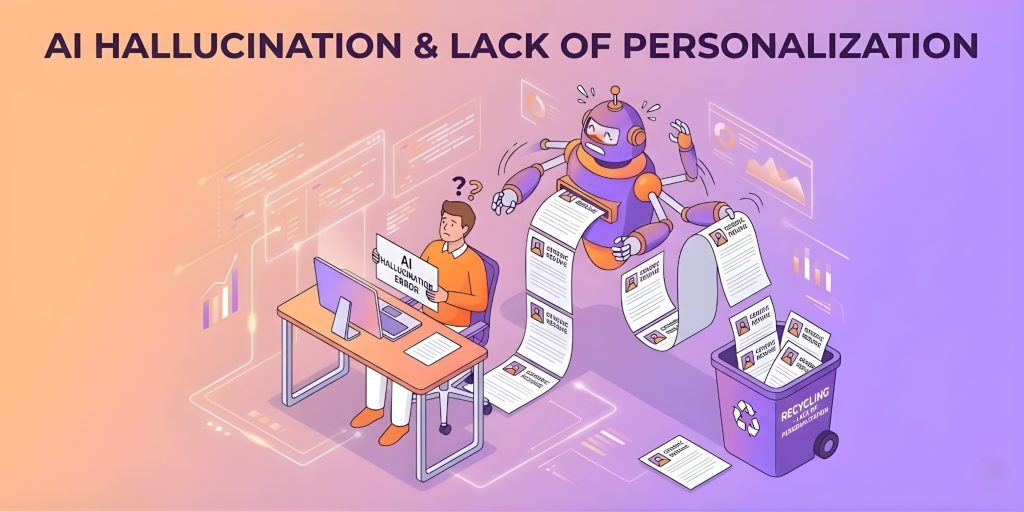
Three patterns that consistently weaken job-search outcomes.
Copy-pasting unedited AI output
Stiff, recycled cover letters are spotted immediately. Use AI for draft skeletons, then add specific, personal detail.
Ignoring recruitment-method nuance
Not every role is on broad job boards. Some employers use niche communities, referrals, or internal recommendations. Generic AI-driven search misses these channels — see recruitment methods for context.
Trusting board filters blindly
A "perfect match" on a board may be wrong for your location, team culture, or pay range. AI evaluates surface match; you evaluate fit.
Better Candidate Experience Via AI

AI has significantly improved status communication. Where ghosting used to be the norm, chatbots now provide instant application status updates — a meaningful improvement for both candidates and employer brand.
Per CareerBuilder research, 81% of candidates say continuous status updates would significantly improve their experience. AI is one of the few practical ways to deliver that at scale.
Privacy and Fairness

Two considerations when sharing data with AI tools.
Privacy
Read the data policies of tools you use. Avoid sharing highly sensitive information (SSN, bank details) with chatbots. Professional history and contact information is generally safe to share with reputable platforms.
Algorithmic bias
AI talent assessment tools are increasingly developed with explicit bias mitigation — ignoring gender, age, ethnicity signals during evaluation. Bias isn't eliminated but is meaningfully reduced when tools are configured well.
The Bottom Line
AI chatbots can transform a chaotic job search into a structured operation — but they work best as research and prep assistants, not as drafters of your final application or arbiters of your career decisions. Use them to tailor resumes, prepare for interviews, summarise company cultures, and surface in-demand skills. Add your specific voice and judgment on top. The compounding effect across an active job search is significant, but only when human judgment stays in the loop.
FAQs
Are job search chatbots safe to use?
Generally yes when using reputable platforms. Avoid sharing highly sensitive personal information (SSN, banking details). Professional history is safe to share with mainstream tools.
Can a chatbot's answer affect a hiring decision?
Yes when the chatbot is part of a company's screening flow. Stay clear, direct, and consistent across answers. Knockout criteria (specific credentials or experience requirements) may auto-eliminate candidates regardless of overall fit.
Can chatbots reject candidates automatically?
In many automated screening systems, yes. Missing required credentials or experience thresholds can produce automatic rejections. This is one reason matching your application precisely to stated requirements matters.
What's the worst way to use a chatbot in a job search?
Copy-pasting an unedited cover letter for every role. Recruiters spot generic AI output immediately, and the perception damage outweighs the time saved.
What's the single highest-leverage chatbot use?
Resume tailoring against specific JDs. The 10-minute edit cycle per role consistently produces meaningfully better ATS pass rates and interviewer engagement than generic resumes ever do.
Keep reading


