

Optimizing Recruitment Funnels: Stage-by-Stage Playbook
Find leaks and tighten every stage of your recruitment funnel — awareness, application, screening, interview, offer — with the metrics that prove it.
Ployo Team
Ployo Editorial
TL;DR
- Average 2025 time-to-fill: 36–42 days (Recruitability) with 30–50% candidate drop-off.
- Only ~8.4% of applicants make it to the interview stage (Jobvite benchmarks).
- Employee referrals convert at 1 in 10 hires vs 50–60 applicants per hire from job boards (SHRM).
- Optimisation = fix friction at each stage, measure relentlessly, treat feedback as fuel.
- Send offers within 24–48 hours of the final interview to maximise acceptance rates.
Hiring funnels leak quietly. Strong candidates disappear between application and screen, between screen and interview, between offer and acceptance — and most companies never quite figure out where. The teams that hire well aren't running magic processes; they're measuring each stage, tightening the obvious leaks, and removing friction wherever they find it. This guide walks through how to do that systematically.
Why Funnel Optimisation Matters
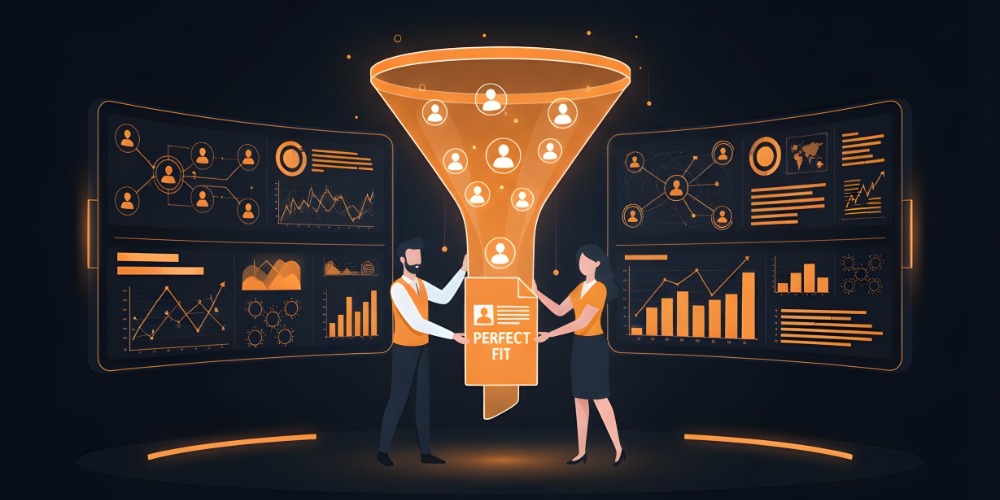
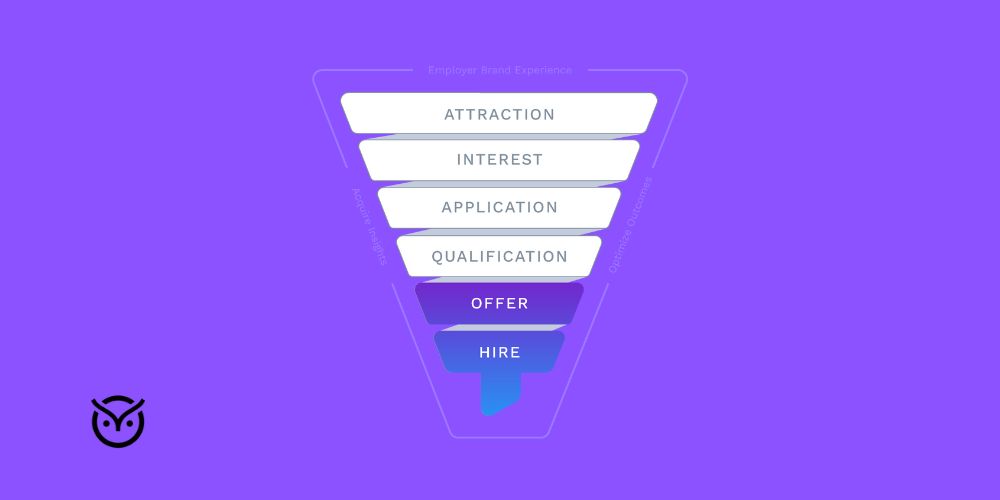
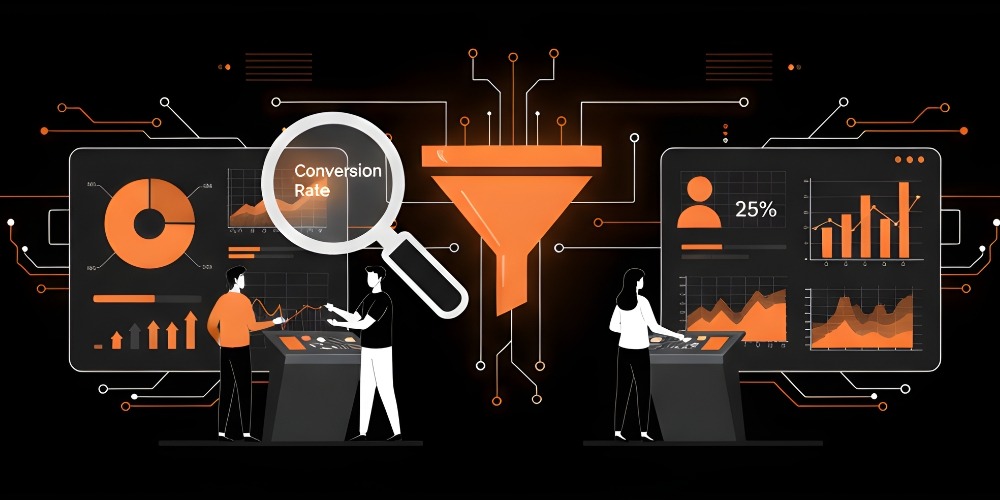
The recruitment funnel is the path from awareness of your employer brand through to a signed offer. Friction at any point causes drop-off, raises costs, and frustrates hiring managers.
The market data is striking. The 2025 hiring funnel benchmark shows average time-to-fill running 36–42 days with candidate drop-off rates of 30–50% across many organisations.
Optimisation produces three direct benefits.
Lower friction → better candidates retained
Removing pointless steps keeps strong candidates in the process longer. Faster movement to interview directly improves win rate against competing offers.
Lower cost-per-hire
Reduced wasted spend on candidates who abandon mid-process. Better candidate quality compounds with lower volume needed.
Data-driven improvement
Tracking funnel metrics surfaces where leaks actually are — not where you assume they are. Most "common sense" funnel diagnoses turn out to be wrong once measured.
Common Bottlenecks
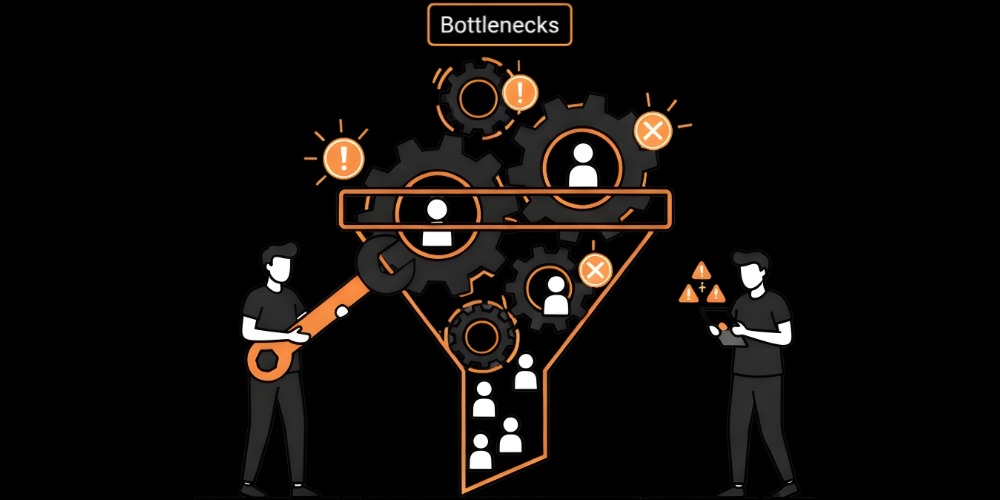
Seven trouble spots that show up repeatedly.
Weak top-of-funnel sourcing
If your proactive talent sourcing doesn't attract enough of the right candidates, downstream optimisation can't save the funnel. SHRM data shows referrals convert at roughly 1 in 10 versus 50–60 applicants needed per hire from broad job boards.
Application drop-off
Long or confusing forms kill momentum. Jobvite benchmarks show only about 8.4% of applicants make it to interview — much of the loss is unforced.
Slow or inconsistent screening
When screening lags or criteria shift between recruiters, top candidates drift to competitors with faster processes.
Interview-stage leakage
Poor coordination, uncalibrated interviewers, and gaps between rounds erode conversion from interview to offer.
Offer friction
Slow negotiations, unclear terms, and weak candidate experience lose candidates even at the final stage.
Lack of inclusive flow
Without conscious effort to source diverse candidates, the funnel can quietly exclude talent and signal a non-inclusive culture — both hurting both conversion and brand.
Insufficient data
Research on IT services hiring shows analytics consistently surfaces weak sources and stages that gut-feel diagnoses miss.
How to Optimise Each Stage
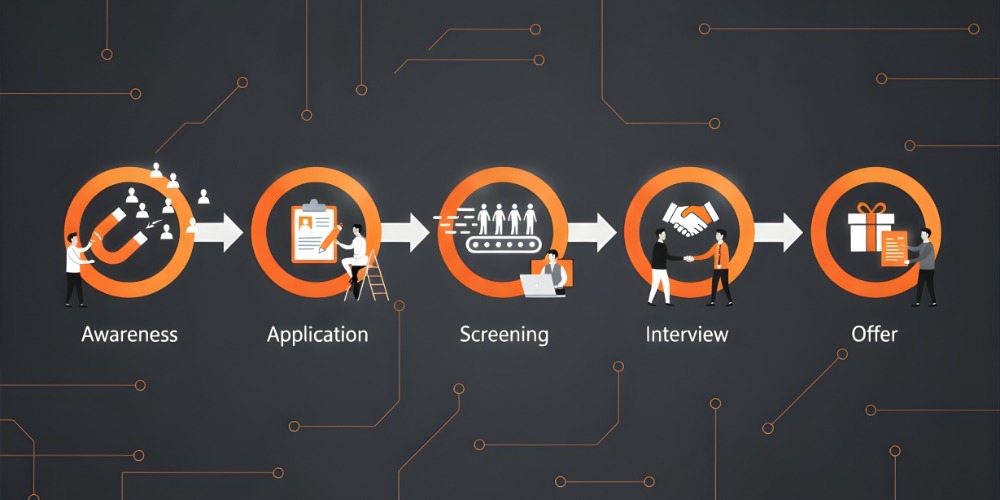
Six concrete moves per stage.
Awareness — build visibility and brand trust
Content highlighting culture, employee stories, and social proof. Target where your audience actually spends time — niche communities like GitHub, Stack Overflow, and discipline-specific forums for technical roles often outperform broad job boards.
Attraction — simplify the application
Short forms, mobile-first design, under 5 minutes to complete. Resume parsing and autofill remove friction. The single highest-leverage optimisation for many companies is just cutting application length in half.
Screening — blend automation with human judgment
AI handles repetitive parsing and shortlisting. Humans review borderline cases and conduct relationship-building conversations. Train recruiters to recognise when screening criteria are filtering out qualified candidates too aggressively.
Interview — structure plus speed
Calibrated interviewers, shared scorecards, transparent communication between rounds. Silence between stages is one of the strongest signals candidates use to disengage.
Offer — send within 24–48 hours
Speed at the offer stage materially affects acceptance rates. Personal touches (handwritten note, early onboarding materials) increase acceptance further.
Continuous feedback loop
Survey candidates and hiring managers after each round. Use the feedback to refine the next cycle rather than archiving it.
Metrics That Matter
| Stage | Metric | Why it matters |
|---|---|---|
| Awareness | Source of hire, cost per applicant | Reveals which channels deliver quality |
| Attraction | Application completion rate, CTR | Measures form and ad engagement |
| Screening | Time to shortlist, applicant-to-interview ratio | Shows screening efficiency |
| Interview | Interview-to-offer ratio, candidate feedback | Surfaces interviewer consistency |
| Offer | Offer acceptance rate, time to offer | Indicates competitiveness and speed |
| Overall | Time-to-hire, quality-of-hire, cost-per-hire | Full-funnel ROI picture |
The dashboards that work track all six rows simultaneously and update weekly.
The Bottom Line
Optimising the recruitment funnel turns hiring from reactive scramble into measurable system. The teams hiring best aren't running magical processes; they're tracking each stage carefully, fixing the obvious friction first, removing pointless steps, and following the data on what actually moves conversion. Start with one stage where drop-off is worst, measure before and after a single change, and iterate. Across a year, the compounded effect of small improvements outperforms any single big-bang reorg every time.
FAQs
How does AI improve recruitment funnels?
By handling repetitive work (resume parsing, candidate ranking, interview scheduling) at scale and surfacing patterns humans miss. AI reduces bias when wired correctly and frees recruiter time for relationship work.
What is a recruitment funnel?
A structured model of the candidate journey from awareness to onboarding. It lets recruiters track conversion at each stage, identify leaks, and manage the hiring process systematically.
How do I build my own funnel?
Define the stages (awareness, attraction, screening, interview, offer, onboarding), pick tools that match your scale, automate routine work, keep candidate communication personal, and track conversion at every stage. Iterate based on the data.
Where is drop-off usually worst?
Application stage (long forms killing momentum) and offer stage (delays and weak experience losing candidates already close to "yes"). These two together account for most preventable losses.
What's the single highest-leverage optimisation?
Cutting offer turnaround to under 48 hours. Candidates close to "yes" disengage quickly if the process feels slow at the end. Fast, clean offers consistently improve acceptance rates more than any single earlier-stage fix.
Keep reading

Pink Collar Jobs Explained: Definition, Examples, Salaries

Employee Lifecycle Stages: A Practical Guide for HR Leaders
