

Spotting Agile Mindset in Employees: Signals and Assessment Tools
Agile mindset is what keeps teams steady under change — how to spot it in candidates, assess it reliably, and avoid the most common assessment mistakes.
Ployo Team
Ployo Editorial
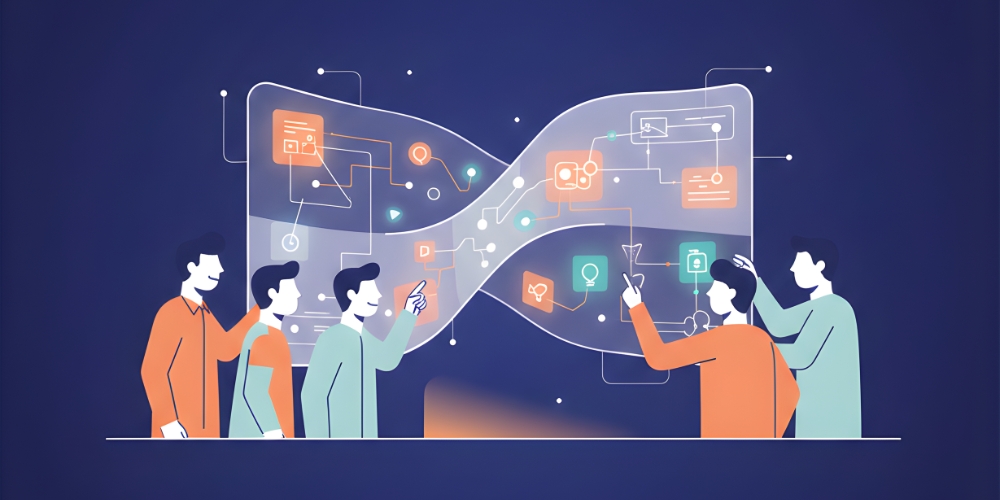
TL;DR
- Agile mindset = curiosity, adaptability, ownership under uncertainty.
- McKinsey reports agile organisations improve operational performance by up to 30%.
- Spot it through behaviour, not personality tests — look at past responses to change.
- Combine interviews with simulations and group tasks for reliable assessment.
- Avoid the speed trap — moving fast isn't the same as adapting well.
Modern workplaces change faster than processes can keep up. The employees who thrive aren't the ones with the best original plan; they're the ones who adjust as plans break. Identifying agile mindset reliably — in hiring and across existing teams — is what separates organisations that absorb change well from those that stall under it. This guide walks through what to look for and how to test it.
What an Agile Mindset Actually Is
An agile mindset is how people think, learn, and act when facing change. Rather than waiting for perfect plans, agile workers adjust as they go — test ideas, learn from mistakes, improve step by step.
McKinsey's research on operational agility shows agile organisations improve performance by up to 30%. That's not noise — it's a structural advantage that comes from the cumulative effect of people who can move with the work rather than against it.
Why It Matters in 2026 Workforces
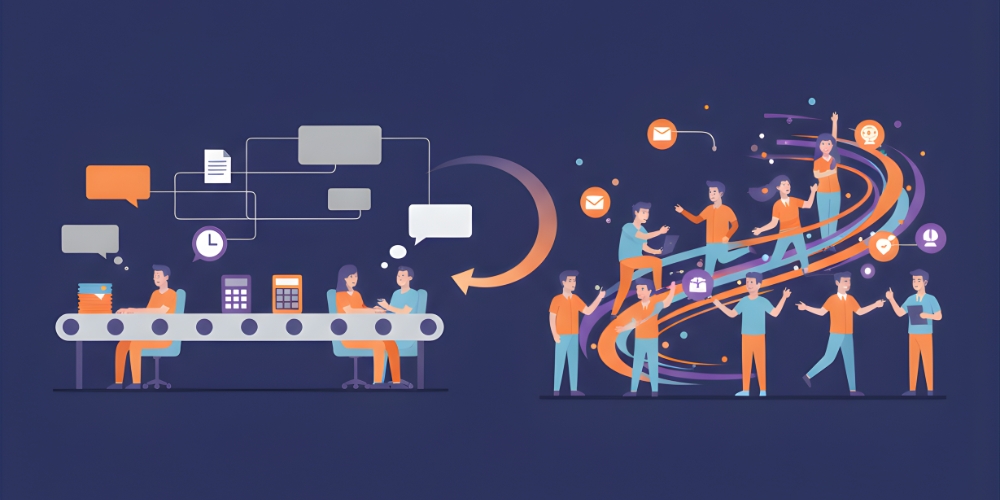
Three workplace shifts make agile mindset critical.
Shifting priorities
Remote work, automation, and global competition all push timelines and scope around constantly. Teams that handle re-prioritisation gracefully outperform teams that don't.
Shared ownership over instruction-following
Agile teams move on shared ownership; traditional teams wait for instructions. As more work crosses functional boundaries, the shared-ownership model scales while command-and-control stalls.
Hiring focus shift
More companies build their playbooks around agile recruitment, screening for learning agility rather than just task completion patterns.
How to Identify It
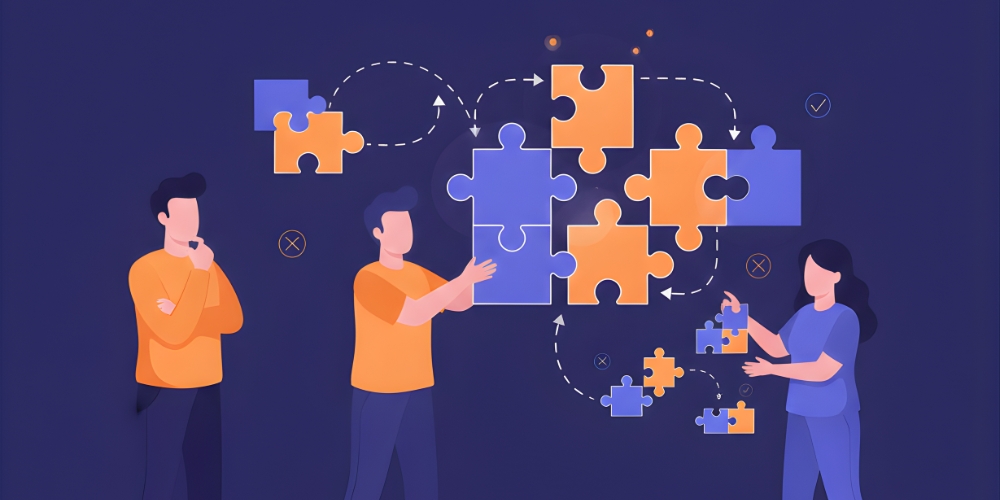
Five reliable behavioural signals.
Steady under broken plans
Agile employees don't panic when timelines shift. They reorient, communicate the new path, and keep moving.
Early voicing of issues
Speaking up early — rather than waiting for problems to compound — is a hallmark. Agile people surface risks while they're still cheap to fix.
Self-direction under ambiguity
They don't freeze waiting for permission. They make reasonable calls within their scope and check in afterward.
Learning orientation in past stories
In interviews, watch how candidates describe past challenges. Agile candidates talk about lessons learned; non-agile candidates focus on tasks completed.
Collaboration through feedback loops
Short cycles, clear communication, helping others understand risks. Combined with sourcing vs recruiting principles, these signals help separate flexible thinkers from rigid ones.
Behavioural Traits to Watch
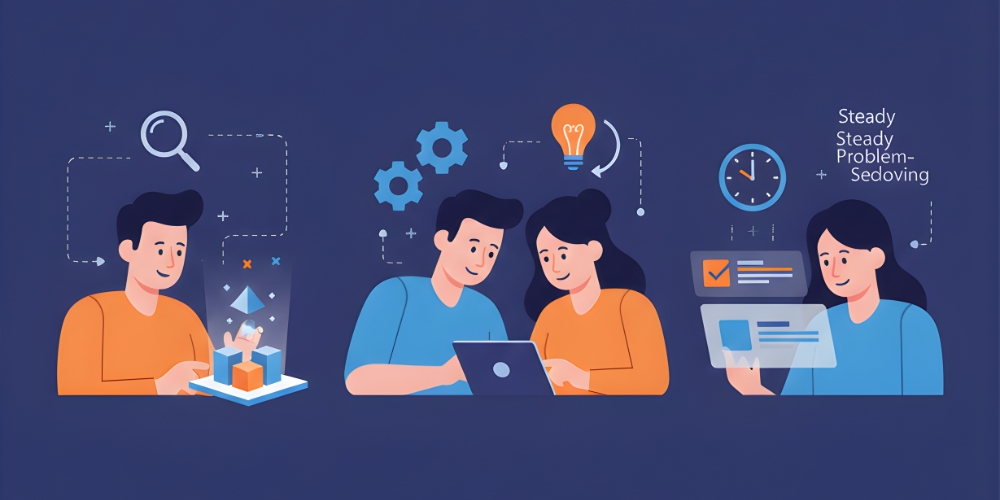
Five traits that show up consistently.
Adaptability
Changes approach mid-project when feedback reveals a better path.
Curiosity
Asks simple questions to understand new areas. Doesn't pretend to know what they don't.
Collaboration
Pulls teammates in early to solve shared blockers. Treats problems as group challenges.
Ownership
Takes responsibility for errors and fixes the impact quickly. Doesn't deflect.
Continuous improvement
Suggests small, regular tweaks to processes. Doesn't wait for an annual review to surface inefficiencies.
These traits show up in daily work, not in resumes.
Assessment Tools
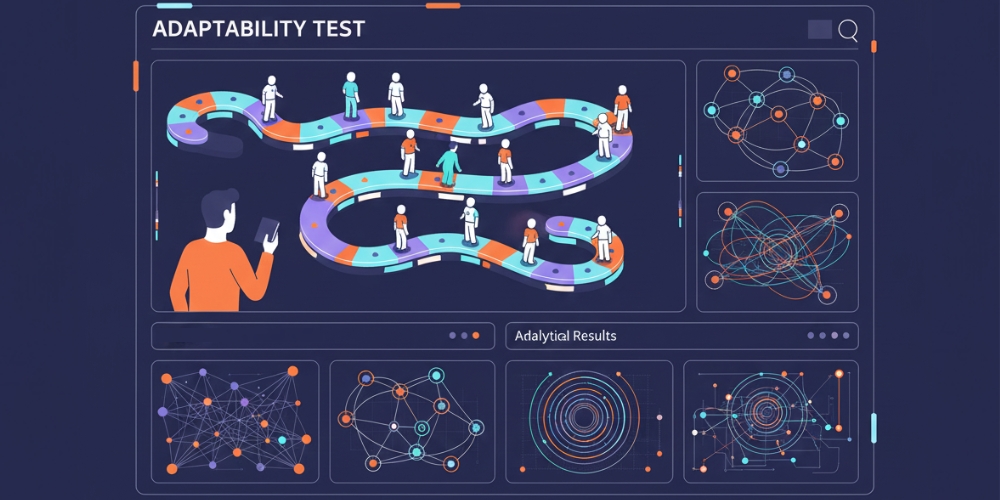
Four approaches, used together.
Behavioural simulations
Short scenarios where candidates respond to changing inputs. Reveals real adaptation rather than rehearsed answers.
Role-play exercises
Pair candidates with interviewers playing out conflict or ambiguous-scope situations. Watch how they navigate.
Sprint-style group tasks
Small problem-solving exercises in groups. Surfaces collaboration patterns, learning velocity, and pressure response.
Digital adaptability assessments
Tools that measure response time to new information, task-switching efficiency, and openness to corrective feedback. Useful for screening at scale.
No single tool is sufficient. Combinations produce the most reliable signal.
Common Mistakes
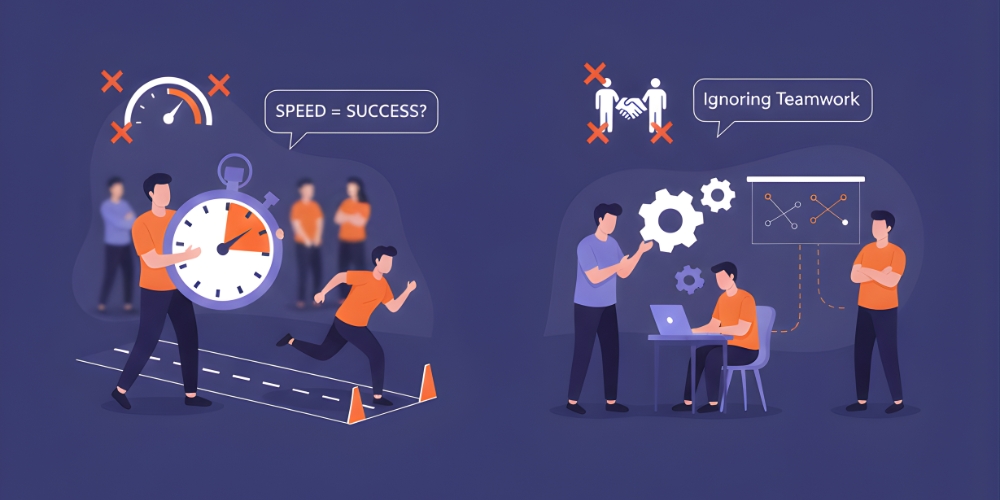
Four traps that consistently distort assessment.
Confusing speed with agility
Working quickly isn't the same as adapting well. Fast task-completers can still resist feedback and freeze under change.
Relying only on interviews
Candidates rehearse answers that sound right. Real behaviour shows up in tasks, simulations, and observed work — not just verbal responses.
Ignoring collaboration habits
Individual output ratings miss the team-energy signals. Agile is a shared property; assessment that only looks at individuals misses half the picture.
Testing in unrealistic conditions
Assessments that don't reflect real work conditions don't reveal real agility. Match the test to the actual job context.
The Bottom Line
Agile mindset has shifted from "nice to have" to a foundational hiring criterion. The teams that adapt fastest to change aren't necessarily the most technically skilled; they're the ones full of people who learn quickly, communicate clearly, and stay productive under shifting plans. Identifying that pattern reliably — through behaviour-based assessment, well-designed simulations, and careful interview attention to past stories — is one of the highest-leverage moves a hiring team can make in 2026.
FAQs
How can HR identify agile employees?
Watch behaviour during change: how candidates and employees respond to new tasks, seek feedback, and adjust plans. Short group exercises and scenario-based tasks reveal more than interviews alone.
What tools measure adaptability?
Scenario tasks, behaviour-based tests, group exercises, and digital platforms that monitor learning patterns. Combinations produce more reliable signal than any single tool.
How does AI help assess agility at scale?
AI surfaces patterns in answers, actions, and task results that suggest flexibility and learning velocity. Useful for screening large applicant pools and ensuring consistent evaluation.
Can agile mindset be learned?
Yes — through environments that reward learning, tolerate small failures, and provide regular feedback. Culture shapes the trait significantly over time.
What's the single highest-leverage signal to watch for?
How candidates describe past projects that broke plans. Agile candidates focus on what they learned and how they adjusted. Non-agile candidates focus on what went wrong and whose fault it was.


