

The Hiring Manager Role in Modern Talent Assessment Platforms
How hiring managers actually use talent assessment platforms — the workflow, the wins over guesswork, and how technology sharpens (not replaces) judgement.
Ployo Team
Ployo Editorial
TL;DR
- Hiring managers using assessment platforms move from gut-feel hiring to evidence-based hiring.
- The role expands: hiring managers now help define role requirements, review structured assessments, and own the final call grounded in real signal.
- Platforms reduce bias by applying the same rubric to every candidate.
- Assessment-supported hiring can compress time-to-hire by up to 53% and interview time by 75%.
- The future hiring manager blends AI-supported insight with the human judgement that decides team fit.
A hiring manager facing a stack of resumes has always been one of the harder seats in modern business. The information is shallow, similar candidates blur together, and the decision still carries real consequences for the team. Talent assessment platforms turn that situation around — they convert a paper-evaluation process into a structured, evidence-grounded one. This guide walks through what hiring managers actually do inside these platforms, how the workflow changes, the wins over the old guesswork-driven approach, and where the role is heading next.
What the Hiring Manager Role Actually Is
A hiring manager is the person making the final call on who joins their team. They know the role, the team's working environment, and what success looks like in the first 90 days. Their evaluation goes beyond resumes — it covers how the candidate will collaborate, learn, problem-solve, and stay motivated over time.
In most companies, the hiring manager is the team lead or department head who will work directly with the new hire. HR supports the process; the hiring manager guides it from definition to offer.
What the Hiring Manager Does Across the Recruitment Process
A typical hiring manager's involvement spans every stage of the funnel:
- Define the role. Working with HR on the job description, must-haves, and what success at 30 / 60 / 90 days looks like.
- Review structured assessment results. Not raw resumes — scored, comparable evidence of capability across candidates.
- Run substantive interviews. Asking about past projects, work style, and role-specific judgement. Probing the assessment results for context.
- Make the final call. Selecting the candidate whose evidence and conversation together fit the role best.
When candidates ask "what does hiring-manager review mean?", the answer is exactly this — the hiring manager is checking the candidate's profile and assessment data against the role's real requirements before moving forward.
How Talent Assessment Platforms Change the Workflow
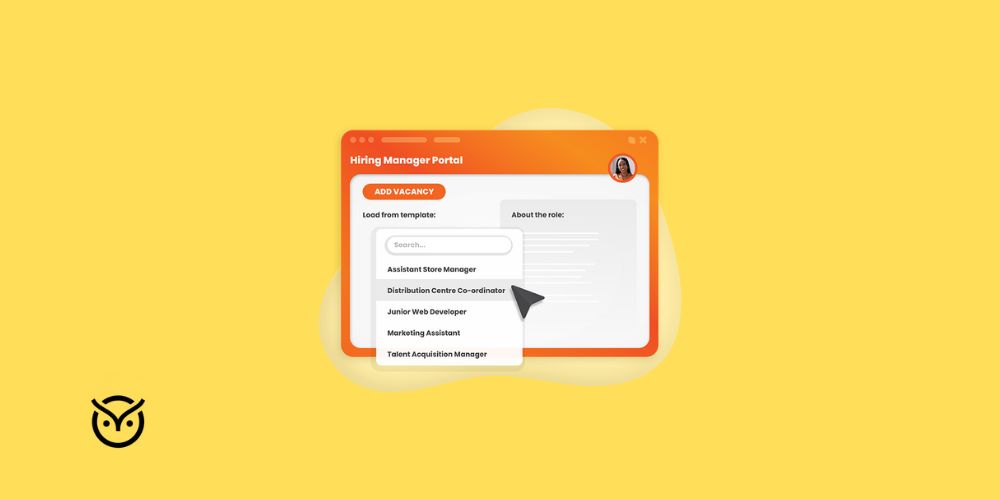
Talent assessment platforms shift the hiring manager from interpretation-based work to evidence-based work. Instead of guessing whether a candidate can do the job, the platform gives the manager structured proof: scores on relevant tasks, communication patterns from recorded answers, problem-solving signals from scenario tests.
The platform's role is to:
- Run consistent, role-relevant skills tests across candidates
- Score behavioural patterns from recorded responses
- Surface logical reasoning, communication, and job-specific signals
- Compare candidates against the same rubric, not the recruiter's variable mood
This pairs naturally with modern AI talent assessment tools that translate qualitative signals into comparable scores. The hiring manager's job stops being "read these 60 resumes and figure out who looks promising" and becomes "review the structured signals on the top 10 candidates the system has surfaced."
How Platforms Specifically Empower Hiring Managers
The Hiring Manager Role in Talent Assessment Platforms is fundamentally about clarity. The benefits show up in four places.
Clearer comparison
Every candidate scored against the same criteria. The result: faster shortlists, fairer outcomes, and dramatically less time spent re-reading similar resumes.
Better job fit
Behaviour and skills tested in realistic scenarios. The hiring manager sees how the candidate actually works, not just how they describe themselves on paper.
Real-time analytics
Modern platforms include real-time hiring analytics so hiring managers can track which candidates are progressing, where the funnel is leaking, and how their own evaluation patterns are evolving.
Measurable time savings
Criteria Corp's research on assessment-driven hiring found that companies using structured assessments cut time-to-hire by up to 53% overall, and interview-stage time by up to 75%. The same study reported higher hire quality alongside the speed gains — these are not trade-offs.
SHRM's research on skills-based hiring confirms the broader pattern: hiring is moving toward structured, skill-grounded evaluation faster every year.
The Real Challenges Hiring Managers Face (and How Platforms Help)
Too many resumes, all similar
The volume problem is real. A high-profile role attracts hundreds of applications and resumes increasingly resemble each other — same skills, same phrasings, same boilerplate. Talent assessment platforms filter on demonstrated skill rather than resume styling, which transforms the problem from impossible to manageable.
Interview signal is variable
Confident speakers may not be the strongest performers. Quiet candidates may be exactly the kind of careful thinker the role needs. Pure interview evaluation creates uneven outcomes; assessment data anchors decisions in something more concrete.
Pressure to hire fast
Open roles are a real cost — slow processes burn productivity and stress teams. Hiring managers feel that pressure directly. Platforms compress the screening stage dramatically without sacrificing decision quality.
How the technology actually helps
- Time. Automated sorting removes hours of resume review.
- Bias. Structured scoring rubrics applied uniformly to every candidate.
- Proof. Real work samples and skills demonstrations replace inference from a one-page document.
The whole approach also depends on strong upstream practice — see our talent sourcing guide for recruiters for the discipline at the top of the funnel.
Stronger confidence, better candidate experience
When decisions are anchored in clear evidence, hiring managers feel more confident in their choices. Candidates feel fairer treatment because the evaluation focuses on demonstrated capability rather than impressions. This pairs well with the broader insights surfaced by the best talent assessment tools, which reveal which evaluation methods correlate with which long-term outcomes.
Where the Hiring Manager Role Is Heading
The hiring manager of 2027 looks more like a talent analyst than a paper reviewer. AI will pre-screen resumes, predict job-performance signals, and recommend top candidates. Hiring managers still make the final call — but with much richer information at hand.
Human judgement remains essential. Technology can rank candidates by signal; it cannot replace empathy, sense of team dynamics, or the read on long-term cultural fit. The hiring managers who thrive in this environment are the ones who lean into the data while keeping the human reasoning that decides who actually joins the team.
The Bottom Line
The hiring manager role inside modern talent assessment platforms is more confident, more evidence-grounded, and more strategic than the resume-and-interview job it used to be. The decision is still human; the inputs to that decision are dramatically better. Companies that adopt this approach hire faster, reduce mis-hires, and build stronger teams. The hiring managers who lean in build a reputation for picking talent that consistently performs — which is, in the long run, the most valuable skill the role has.
FAQs
Who is the hiring manager in a typical company?
The team lead or department head who will directly supervise the new hire. They own the substantive evaluation; HR supports the process.
What does "hiring-manager review" mean in a hiring process?
It means the hiring manager is reviewing the candidate's profile and assessment results to decide whether to advance them. It is usually the gate between initial screening and the substantive interview.
What does a hiring manager actually do day to day?
Reviews assessment results, leads or co-leads substantive interviews, evaluates candidates against role requirements, and makes the final selection. They also collaborate with HR on role definition and onboarding.
How is a hiring manager different from HR?
HR owns process, policy, and coordination. The hiring manager owns the substantive evaluation and final call. The two roles are partners, not interchangeable.
Do assessment platforms replace the hiring manager's judgement?
No. They sharpen the inputs to that judgement. The platform surfaces structured signal; the hiring manager still decides who joins the team based on the full picture.


