

Predictive Hiring in 2030: What Smarter Recruiting Will Look Like
Predictive hiring uses data and AI to forecast candidate success — the technologies, benefits, and shifts that define recruiting by 2030.
Ployo Team
Ployo Editorial

TL;DR
- Predictive hiring forecasts candidate success from data, not intuition.
- Predictive analytics in hiring can reduce voluntary turnover by ~20%.
- Core enablers: ML algorithms, validated assessments, NLP on text, behavioural signal.
- By 2030, recruiters shift from CV screeners to data-driven talent forecasters.
- Bias control through fairness audits and human oversight becomes table stakes.
Recruiting today still runs on intuition more than data. Resume scanning, gut-feel interviews, and "hope it works out" hiring produce predictable consequences: bad hires, long vacancies, talent gaps. Predictive hiring uses statistical models and ongoing measurement to forecast which candidates will succeed before training begins. By 2030, the discipline will be standard rather than aspirational. This guide walks through what predictive hiring actually is, the technologies powering it, the benefits and trade-offs, and how the recruiter role evolves alongside the technology.
What Predictive Hiring Is
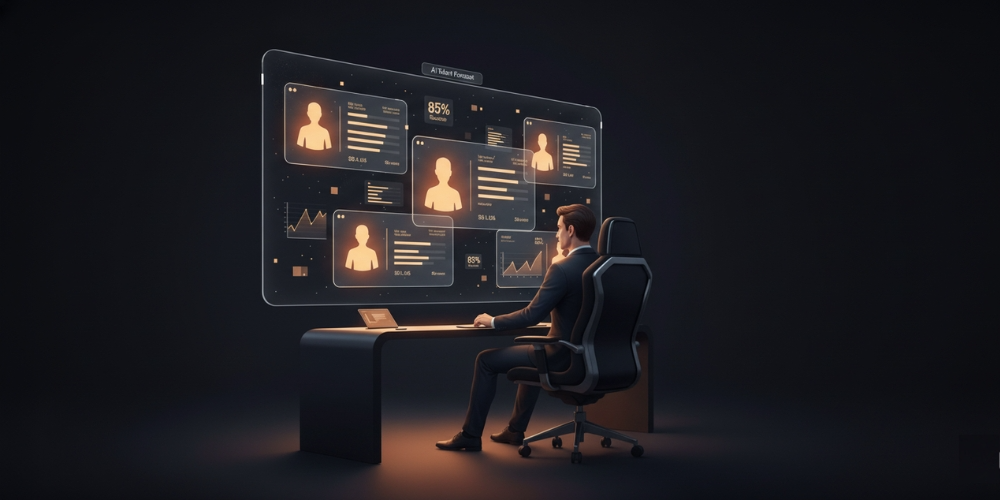
Predictive hiring uses statistical models and data analytics to forecast which candidates are likely to succeed in a specific role. It goes beyond resume matching by combining historic performance data, validated assessment scores, behavioural signals, and contextual data into composite predictions.
Core building blocks:
- Predictive hiring index — composite score weighting multiple factors (skills, assessments, behavioural patterns)
- Predictive assessments — validated pre-hire tests measuring cognition, personality, skills
- Outcome correlation — connecting prediction to actual hire performance
- Continuous learning — model recalibration as new outcome data arrives
The discipline is not "AI replacing recruiters." It's structured measurement informing better human decisions.
How Recruitment Evolves Toward 2030
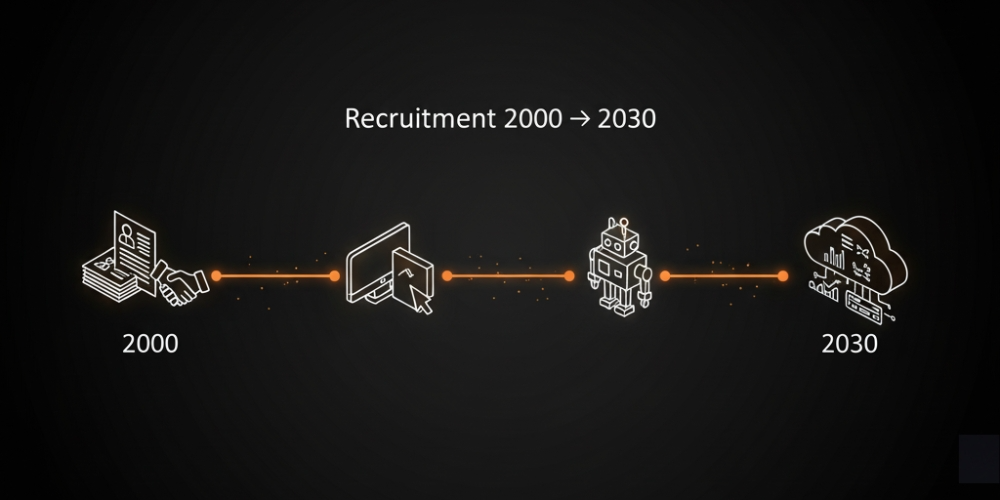
Five structural shifts will define the next five years.
From manual screening to AI-driven filtering
Resume reading → keyword matching → AI semantic understanding. By 2030, AI handles the volume; humans handle the judgement.
From reactive to proactive workforce planning
Instead of waiting for vacancies, organisations forecast hiring needs based on attrition patterns, growth projections, and skill-gap analysis. Workforce planning becomes predictive rather than reactive.
From standardised interviews to personalised pipelines
Predictive systems route candidates through tailored paths — cognitive tests for analytical roles, scenario tasks for leadership, role-specific simulations for technical positions.
From siloed hiring to integrated talent ecosystems
Recruitment data feeds learning, performance management, and retention systems. The same models that inform hiring inform career pathing and succession planning.
From bias risk to bias control
Predictive systems incorporate fairness audits, blind features, and continuous adverse-impact monitoring. The goal: use data to reduce bias rather than entrench it.
Key Technologies Powering Predictive Hiring
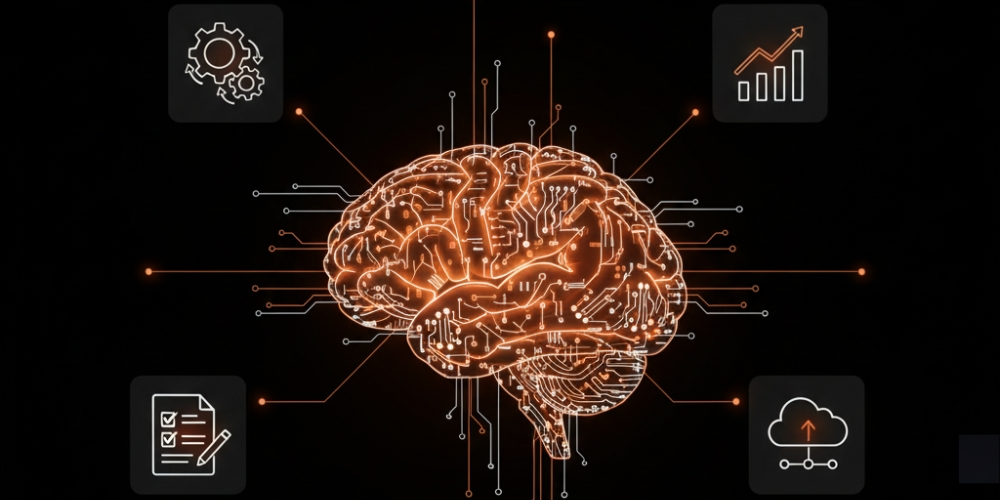
Six technology categories that combine to enable predictive hiring at scale.
Machine learning and statistical modelling
Regression, decision trees, neural networks, gradient boosting. Each algorithm family contributes specific strengths to prediction. Models learn from historic outcomes and improve with new data.
Validated pre-hire assessments
Cognitive ability tests, personality inventories, situational judgement tests, work simulations. Validated assessments produce far stronger predictive signal than gut-feel interviews alone.
Natural language processing
Extracting features from resumes, cover letters, interview transcripts. Modern NLP captures semantic meaning, not just keywords — making text analysis genuinely useful for prediction.
Behavioural and digital footprint analysis
How candidates navigate assessments, where they pause, what they revise. These signals correlate with traits that predict success but are hard to fake.
Integrated data ecosystems
Pulling data from HRIS, ATS, performance systems, learning platforms, and external labour market data. The integration provides context that single-source data cannot.
Continuous feedback loops
After hires join, performance and retention data feeds back into the model. The system gets better at prediction with each cycle.
Benefits for Recruiters
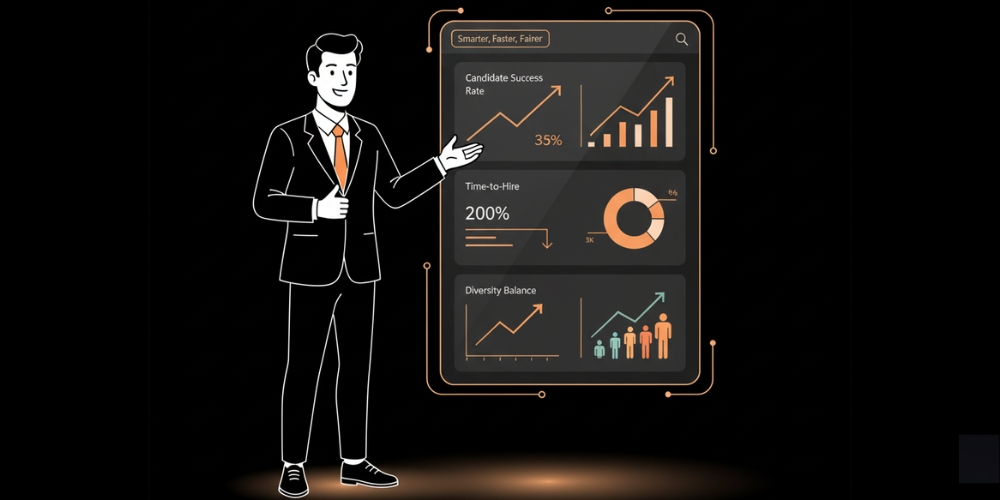
Five measurable gains over intuition-based hiring.
Higher prediction accuracy
HR analytics research shows organisations using predictive analytics reduce voluntary turnover by up to 20%. Better selection = stronger retention.
Faster hiring cycles
Automated screening compresses the funnel without sacrificing quality. Recruiter time shifts from sorting toward candidate engagement and judgement work.
Reduced bias (when designed well)
Algorithmic consistency reduces evaluator variance. Combined with fairness audits, predictive hiring can produce measurably fairer outcomes than unstructured human evaluation.
Better workforce forecasting
Predictive insights inform when to start hiring, where talent gaps will appear, and which roles are at highest attrition risk. Strategic capacity replaces tactical scrambling.
Tangible ROI
Faster hiring, lower per-hire cost, stronger retention, better quality of hire. The economic impact compounds across many hires.
How Predictive Hiring Changes the Recruiter Role
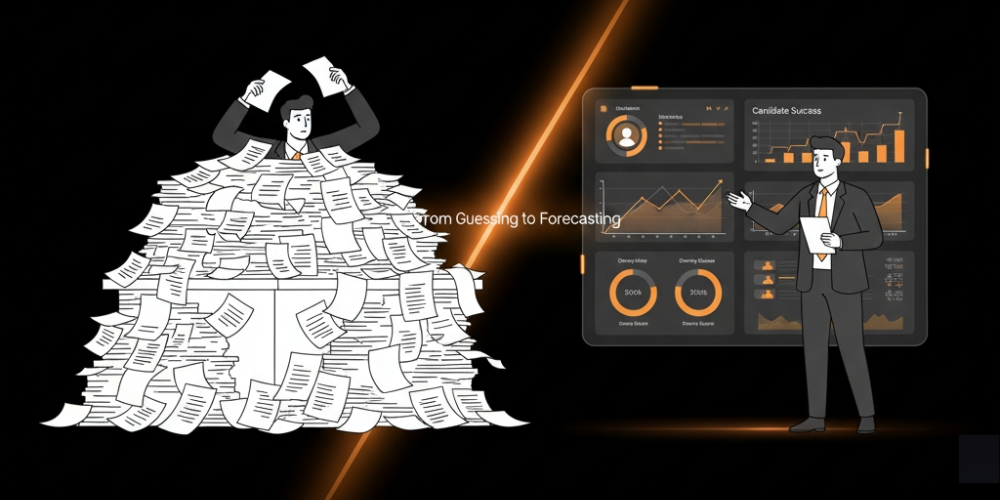
By 2030, the recruiter role evolves significantly.
From talent hunter to talent forecaster
Recruiters analyse data dashboards, project skill gaps, and lead workforce planning. The job shifts from filling vacancies to anticipating them.
From manual screener to data interpreter
Recruiters explain algorithmic predictions to hiring managers, validate the model's recommendations, and override when context warrants. Value shifts from volume to precision.
From process manager to experience designer
Automation handles scheduling, screening, and basic communication. Recruiters focus on the candidate touchpoints that require human empathy — meaningful conversations, tailored outreach, relationship-building.
From bias guard to fairness architect
Recruiters actively monitor predictive systems for bias drift, test for adverse impact, and recalibrate when models start producing unfair outcomes. The role becomes more analytical and more accountable.
What Doesn't Change
Four elements remain irreducibly human even in 2030.
Final hiring decisions
AI scores inform; humans decide. The accountability and judgement that consequential decisions require stays with humans.
Relationship-building with strong candidates
Top candidates have options. Closing them requires human warmth, authentic engagement, and trust-building that AI cannot fake.
Hiring manager partnership
Understanding what the manager actually needs (beyond what they say they need) requires conversation, intuition, and follow-up that AI augments but doesn't replace.
Strategic capacity planning
Connecting hiring strategy to business strategy involves judgement, context, and political navigation that lives outside any model.
Risks and Honest Limitations
Four challenges worth acknowledging.
Bias in training data
Predictive models trained on biased historical data reproduce the bias. Vigilant audit and continuous monitoring are non-negotiable.
Over-reliance on automation
Recruiters who treat AI scores as oracle rather than input miss context the model can't see. Human override authority must remain real.
Privacy and regulatory exposure
GDPR, CCPA, EU AI Act, and emerging state laws constrain what data can be collected and how it can be used. Compliance discipline matters.
Model drift
Models that worked in 2024 may not work in 2027. Continuous re-validation against actual outcomes is required.
The Bottom Line
Predictive hiring will be standard rather than exceptional by 2030. The technology is maturing rapidly; the discipline of using it well is the differentiator. Organisations that build predictive hiring capabilities now — with strong measurement, bias controls, and clear human oversight — will lead. Organisations that wait will spend the late 2020s catching up to competitors who started earlier. The recruiter role evolves dramatically, but doesn't disappear. The recruiters who develop data fluency alongside their core relationship and judgement skills will be more valuable than ever; the ones who don't will be displaced by colleagues who do.
FAQs
What's an example of predictive hiring?
Using past employee performance and turnover data to forecast which new candidates are likely to excel and stay. The model learns what predicted success in the past and applies the same patterns to new candidates.
What does "potentially hiring" mean in predictive contexts?
Identifying candidates whose data profile suggests strong potential — learning ability, adaptability, cultural alignment — even if they lack traditional qualifications for the specific role.
How does predictive hiring affect company culture?
Done well, it improves cultural consistency by selecting people whose values and working patterns align with the team. Done poorly (with biased training data), it can entrench whatever cultural patterns already exist, including problematic ones.
Can predictive hiring reduce bias?
Yes, when properly designed and audited. Predictive systems trained without protected-class data and tested regularly for adverse impact can produce fairer outcomes than uneven human evaluation. Without audit discipline, AI can encode bias.
What's the most important predictive hiring skill for recruiters to develop?
Data interpretation — being able to read model outputs critically, understand what they're predicting, and apply human judgement when context warrants override. Pure technical knowledge of models matters less than the ability to use them well.
Keep reading


