

Emotional Analytics in Hiring: Measuring How Candidates Actually Feel
Emotional analytics reveals candidate stress, engagement, and comfort during interviews — how it works, where it helps, and the ethical lines that matter.
Ployo Team
Ployo Editorial

TL;DR
- Emotional analytics uses AI to read candidate emotional signals — facial cues, voice tone, language patterns — during interviews.
- More than half of candidates publicly share negative recruiting experiences; emotional analytics helps catch the friction points that cause those.
- Used well, it reduces bias, lifts offer acceptance, and helps personalise candidate communication.
- Modern systems hit 85-90% accuracy with diverse datasets, but accuracy depends heavily on responsible model design.
- Ethical handling — privacy, consent, transparency — is non-negotiable; this is high-sensitivity data.
Resumes show what candidates have done; interviews show what they say; emotional analytics shows how they feel while saying it. The signals are real — confidence, stress, hesitation, genuine enthusiasm — and the technology to read them at scale has matured significantly. Used responsibly, emotional analytics improves both candidate experience and hiring accuracy. Used carelessly, it raises serious privacy and bias concerns. This guide walks through what the technology actually does, where it helps, and the ethical lines that need to hold.
What Emotional Analytics in Recruitment Actually Is
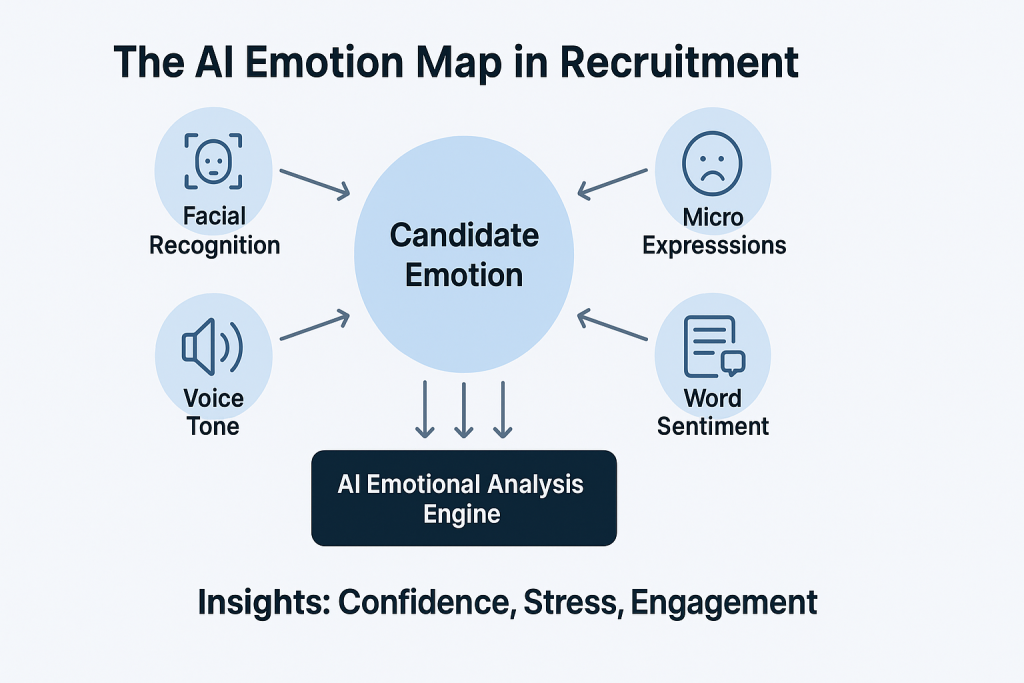
Emotional analytics is the use of AI to detect human emotional states from observable signals — facial micro-expressions, voice tone, pacing, language sentiment, body language. The technology adds an emotional dimension to hiring data, surfacing patterns recruiters might otherwise miss.
This is not mind-reading. It is pattern-recognition. The model identifies signals that correlate with hesitation, confidence, or genuine enthusiasm — and flags them for the recruiter's consideration.
Modern platforms like Ployo measure candidate experience through video and assessment interactions, surfacing emotional reactions that shape engagement quality. Learning how to evaluate these signals helps teams identify friction points that affect candidate comfort and willingness to advance.
Why Candidate Emotion Matters in Hiring
Talent Board's 2023 Candidate Experience Benchmark Research found that more than half of candidates publicly share negative recruiting experiences. Conversely, candidates who feel respected and understood are around 80% more likely to apply again or refer others.
The emotional ripple effect is real. A single poor experience can affect hundreds of future applicants through word-of-mouth and social media. Emotional analytics helps companies detect discomfort early — perhaps an interviewer's tone read as intimidating, or a question created visible stress — and adjust before damage compounds.
Beyond brand: emotional state affects performance. Candidates who feel anxious in cold or robotic interviews perform below their actual capability, which means the company ends up rejecting people who would have been strong hires. Measuring and addressing emotional signals creates fairer evaluation environments.
How AI Measures Candidate Emotion
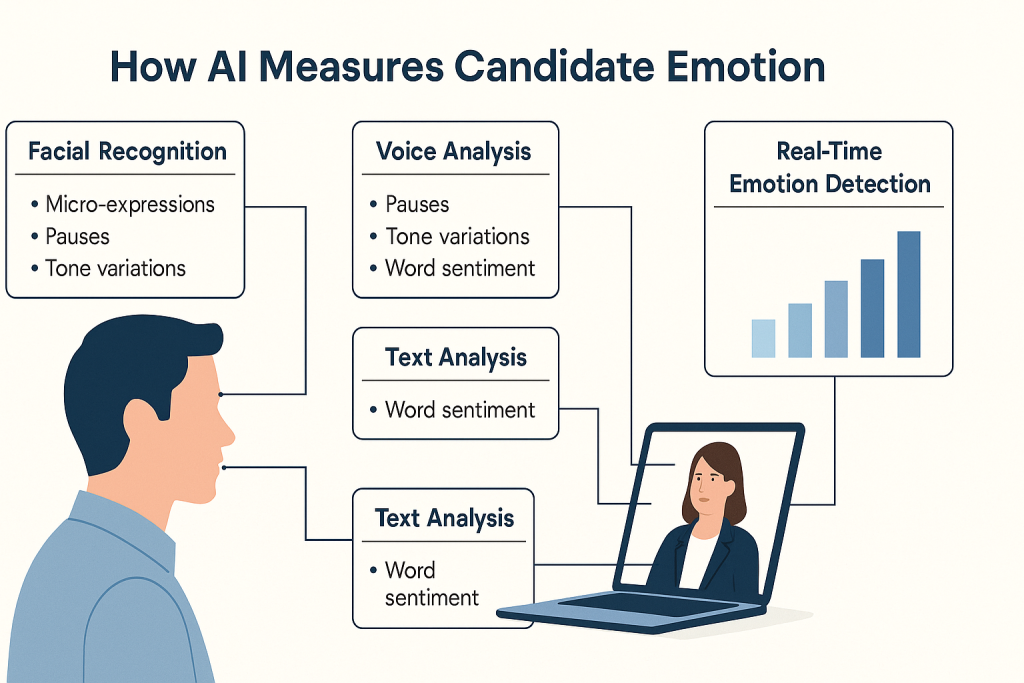
Emotional analytics combines several technical approaches:
- Facial recognition. Tracks micro-expressions associated with specific emotional states.
- Voice analysis. Detects tone variation, pacing, pause patterns, and prosody changes.
- Language sentiment. Identifies word choice patterns that correlate with confidence or hesitation.
- Cross-signal integration. Combines visual, audio, and textual signals into a holistic emotional read.
Platforms calibrated against diverse datasets minimise cultural bias and produce more reliable assessments. The best systems combine all three signal types — the multi-modal approach is consistently more accurate than any single channel.
Benefits of Emotional Analytics
Emotional analytics delivers value across five concrete dimensions.
1. Improved candidate experience
Recruiters spot stress signals and adjust in real time — softening tone, adding reassurance, or explaining process clearly. The small shift transforms tense interviews into productive conversations.
2. Bias-reduced hiring
Traditional interviews reward confidence over competence. Emotional analytics surfaces moments where interviewers may have unintentionally pressured candidates, supporting evaluations grounded in skill and substance rather than confidence performance.
3. Better hiring outcomes
IBM's HR Analytics Report found that organisations using emotion-based analytics saw roughly 23% improvement in candidate retention. The signal extends beyond hiring into onboarding and engagement planning.
4. Deeper interview insights
Pairing emotional analysis with structured interview questions reveals which questions create candidate discomfort and which surface genuine engagement. This becomes a feedback loop for improving the interview itself over time.
5. Cultural fit signal
Emotional patterns help indicate whether a candidate's working style suits the team's environment — steady-state collaboration for a consultative role, energetic expression for marketing or creative work. Used as one signal among several, not as a sole determinant.
Personalising Candidate Experience With Emotional Data
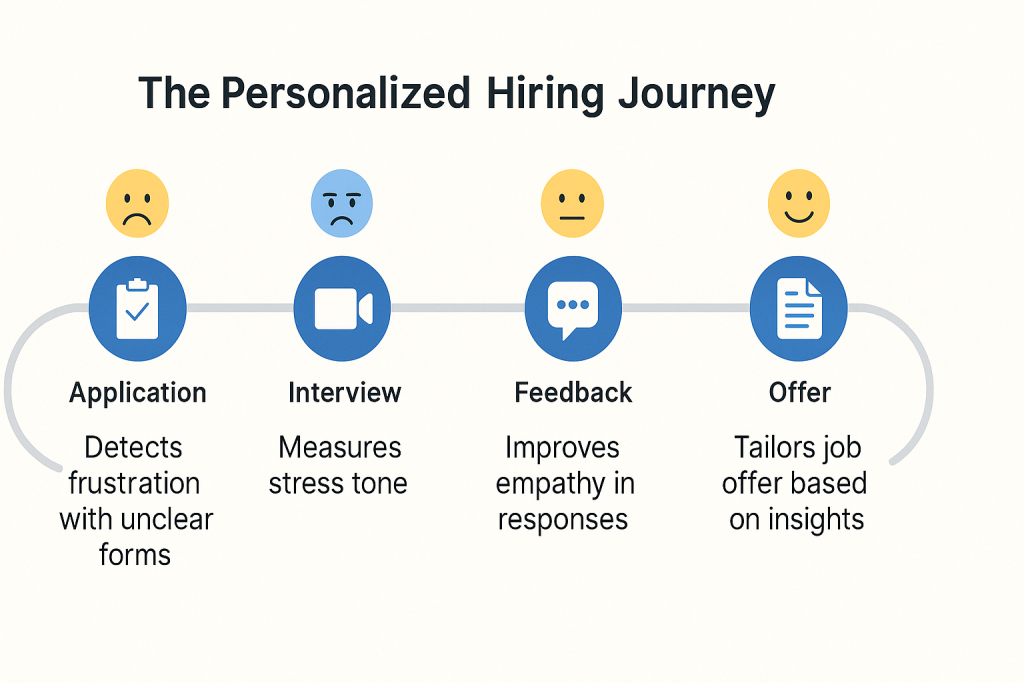
When emotional data integrates with the broader AI recruitment stack, every step of the candidate journey can be personalised. Follow-up communication tailored to emotional comfort levels. Interview tone adjusted when detected anxiety rises. Pacing slowed when stress signals spike.
For remote hiring, this matters disproportionately. Video interviews can feel impersonal at the best of times. When AI detects engagement drops or rising frustration, recruiters can intervene — adjusting questions, taking a brief break, or shifting topic. Strong ATS integration keeps these signals visible in one candidate view rather than scattered across tools.
The result: interviews become genuine conversations rather than scripted assessments. Trust builds; offer acceptance lifts; brand strengthens.
How Recruiters Use Emotional Data Effectively
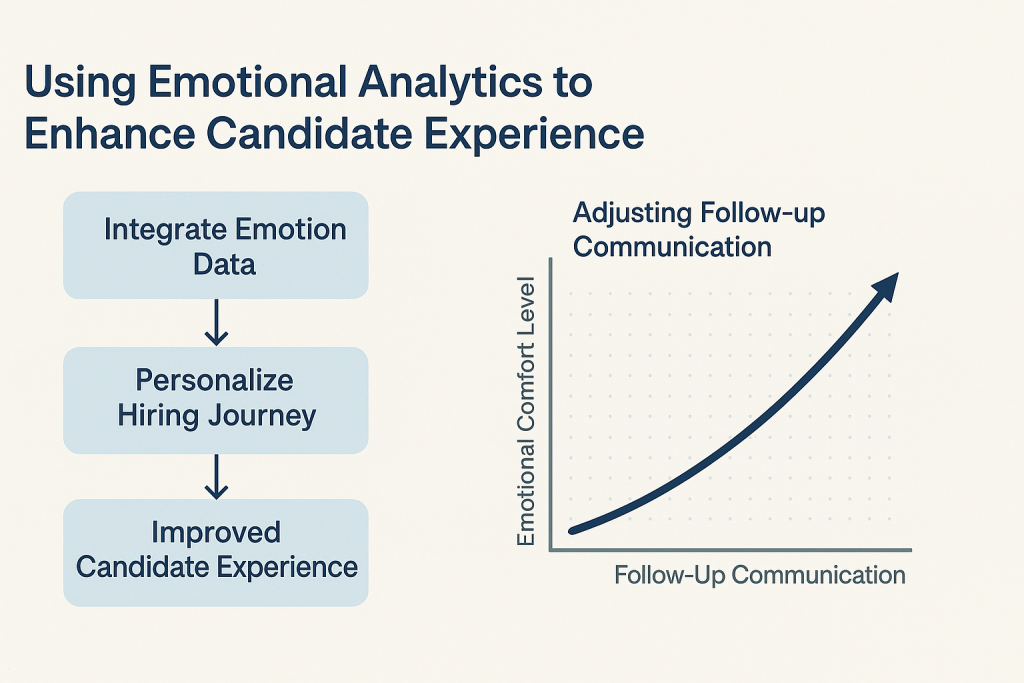
Emotional analytics is one input among many. The recruiters who use it well combine it with skill assessment, structured interviews, and reference checks.
Specifically, emotional data helps:
- Calibrate interview feedback so it is human-centered rather than mechanical
- Identify moments where the interviewer's approach may have hurt the candidate's performance
- Surface gaps between what a candidate said and how they appeared to feel about it
- Tailor follow-up questions based on observed comfort levels
The output is feedback that respects the candidate's experience rather than reducing them to a numerical score.
The Future of Emotional AI in Recruitment
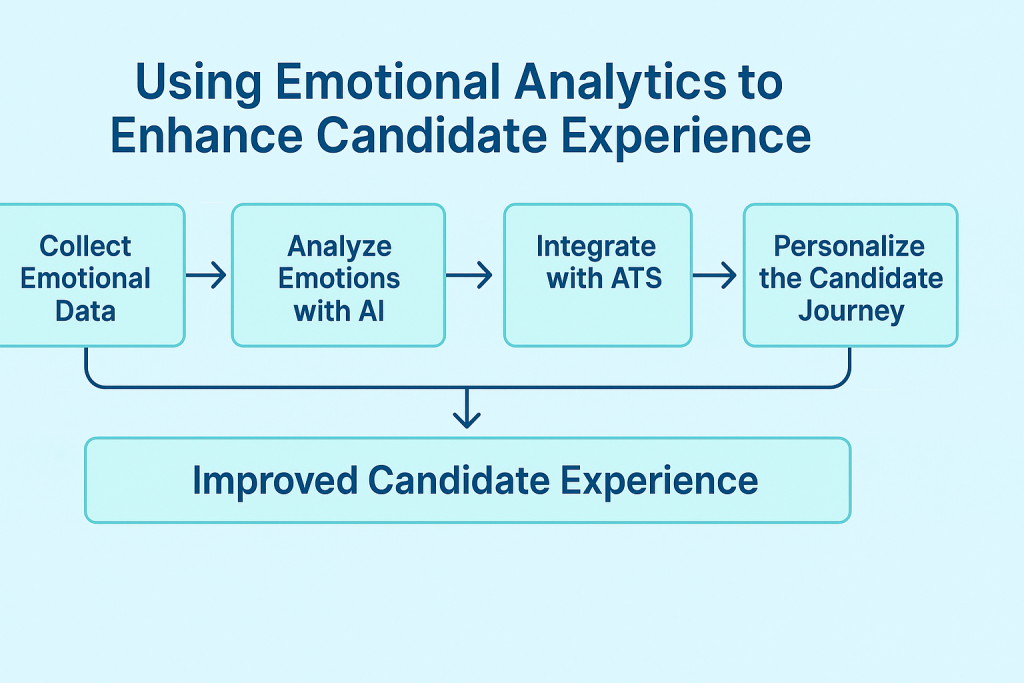
Emotional analytics represents a broader shift toward human-centered hiring. As AI improves, systems will understand not just what candidates say but the texture of how they say it — without sacrificing privacy or fairness.
Deloitte's 2024 Human Capital Trends Report found that 62% of recruiters expect emotional AI to become standard in recruitment by 2026. The shift is from screening resumes toward understanding people — building integrated recruitment ecosystems that are both data-rich and emotionally intelligent.
The Bottom Line
Hiring decisions are no longer just about who matches the job description on paper. The strongest decisions combine skill evaluation, behavioural assessment, structured interviews, and emotional context — the full picture of who someone is and how they would experience working at the company. Emotional analytics is the layer that has been missing for most of recruiting's history. Used responsibly, with strong privacy practices and clear human oversight, it makes hiring more humane and more accurate at the same time. The teams that adopt it thoughtfully build measurable advantage; the teams that ignore it keep relying on signals that decreasingly capture what actually predicts success.
FAQs
Can emotional analytics reduce bias in hiring decisions?
Yes — when paired with structured assessment and human review. It surfaces moments of unconscious bias in interview dynamics that would otherwise go uncaught.
What are the ethical concerns with analysing candidate emotions?
Privacy, consent, and data protection are central. Candidates need to know what data is collected, how it is used, and how long it is retained. The bar is the same as any other sensitive personal data.
How accurate are AI emotional analytics platforms?
Modern systems with diverse training data hit 85-90% accuracy on stress and engagement detection. Accuracy degrades for poorly calibrated models or culturally-narrow datasets.
Can emotional analytics predict cultural fit?
It surfaces signals that correlate with fit but should never be the sole determinant. The combined signal — emotional patterns plus skill evaluation plus structured interview — produces stronger predictions than any single dimension.
What data do emotional analytics tools actually collect?
Facial expressions, voice tone, speech pacing, eye movement, posture, and word patterns. The combined signal builds a picture of stress, confidence, calm, or hesitation.
How do candidates feel about being emotionally analysed?
It varies. Some are curious; others find it unsettling. Clear upfront communication about what is being analysed and how the data is used is the single biggest factor in candidate comfort.
How do companies ensure fairness when using emotional analytics?
By auditing outcomes across demographic groups, treating any single signal as one input rather than a verdict, and keeping a human reviewer in every consequential decision.
How do these tools work for remote and video interviews?
Largely the same as in-person — analysing facial and voice cues through the candidate's camera and microphone. Video formats often produce slightly cleaner signal than in-person observation because the data capture is more consistent.
Do emotional analytics platforms integrate with ATS systems?
Most modern platforms do, through API connections that surface emotional signals alongside the rest of the candidate record. Integration is what makes the data actionable.
How do these tools handle candidate privacy?
Storage in secured environments, access restricted to authorised recruiters, deletion timelines for raw data, and explicit consent flows. Strong implementations document each of these clearly.
Can emotional analytics reduce employee turnover?
Used in hiring decisions, yes — by helping match candidates to environments where their working style genuinely fits. The retention lift from better fit is one of the strongest payoffs of the technology.
What is the biggest risk of misusing emotional analytics?
Treating emotional readings as authoritative rather than as one signal among many. Hiring decisions made primarily on emotional data — without skill verification and structured interview support — produce poor outcomes and serious bias risk.
Keep reading


