

Active vs Passive Sourcing: When Each Wins and How to Blend Them
Active and passive sourcing are not rivals — when to lean on each, how to mix them deliberately, and the trade-offs that decide pipeline strength.
Ployo Team
Ployo Editorial
TL;DR
- Active sourcing means proactively reaching out to candidates — direct messages, search, targeted outreach.
- Passive sourcing means attracting talent who are not actively looking — through brand, content, and long-term relationship-building.
- About 70-73% of candidates are passive at any moment — relying only on active applicants misses most qualified talent.
- 77% of talent leaders consider active sourcing vital, but most hires still come from passive interest.
- The strongest teams blend both deliberately rather than choosing one.
Sourcing is one of those areas where most recruiting teams pick a default and stop thinking about it. They lean on inbound applicants (passive sourcing) and run out of qualified candidates, or they bang on direct outreach (active sourcing) and burn out. The teams that consistently fill roles use both deliberately — knowing when each approach wins, and mixing them according to the role and the market. This guide breaks down what each model actually is, the honest trade-offs, and how to combine them into a sourcing system that holds up across hiring cycles.
What Active Sourcing Is and How It Works

Active sourcing means reaching out directly to potential candidates rather than waiting for them to find your job posting. It is the difference between fishing where you know the fish are and waiting at the dock with a sign.
How active sourcing actually runs
The five-step pattern that consistently works:
- Define the ideal profile — skills, experience level, location, traits, must-haves vs nice-to-haves.
- Use the right channels and tools — LinkedIn search, GitHub for engineers, niche industry forums, resume databases, Boolean search strings.
- Reach out specifically — a personalised message referencing real work, not a generic "we have a job" email.
- Engage and qualify — ask questions, share role context, surface fit signals on both sides.
- Nurture even when timing is wrong — keep promising candidates in the loop for future roles.
The discipline puts the recruiter in control of who enters the funnel. Industry research from OnRec found that 77% of talent leaders rate active sourcing as vital — even though many of their hires still come from passive channels.
Active sourcing is the core of any strategic candidate sourcing practice, because it is the only model that lets you target precisely.
What Passive Sourcing Is and Why It Matters

Passive sourcing engages talent who are not actively job hunting. These people are content in their current roles but open to the right opportunity. Recruiting passive candidates is about generating interest over time, not responding to existing demand.
How passive sourcing differs structurally
- You build visibility; they come to you. Brand, content, community, and reputation do the work.
- It is long-game. Months of consistent presence often precede a single hire.
- Candidates who come this way are usually more stable. They are not desperate; they are deliberate.
- It scales through brand rather than effort. Once the engine is running, additional hires cost less marginal time.
The market size matters. HR Cloud's recruitment data consistently puts the passive-candidate share at roughly 70-73%. If you only chase active applicants, you are competing for 25-30% of the actual qualified pool.
Lloyd Staffing's research on passive candidates also finds that companies excelling at passive sourcing see roughly 40% lower turnover and 20% faster time-to-productive than companies that hire mostly active applicants. The quality difference is real.
How Recruiters Actually Blend the Two

Most recruiters blur the line without consciously deciding to. They post a job (passive), then immediately start LinkedIn outreach (active). The hybrid is not wrong — it's how good sourcing actually operates.
A few specific examples of intentional blending:
- Run targeted social media outreach (active) while content marketing keeps the brand visible (passive)
- Spot a strong profile during active search, send an initial message, and add them to a quarterly talent newsletter for ongoing nurture
- Use passive content efforts to keep your company top-of-mind among professionals who will be ready in six months
- Pair a structured sourcing campaign with an inclusive candidate attraction strategy to widen the pool
The point is to choose the mix consciously rather than drift between them.
The Honest Trade-offs Between Active and Passive
A useful side-by-side.
| Dimension | Active Sourcing | Passive Sourcing |
|---|---|---|
| Approach | Direct outreach, search, referral activation | Brand-driven attraction, content, community |
| Speed | Faster, especially for urgent or hard-to-fill roles | Slower; compounds over time |
| Candidate type | Active job-seekers or "open to offers" | Mostly not job-hunting; deliberative when they do consider |
| Cost | Recruiter time + specialised tools | Lower upfront; consistent content investment |
| Scalability | Through automation and AI sourcing tools | Through employer brand and pipeline depth |
| Conversion rate | Higher for urgent fills | Higher retention and long-term quality |
| Best channels | Job boards, GitHub, Stack Overflow, email outreach | Career page, alumni, social engagement, referrals |
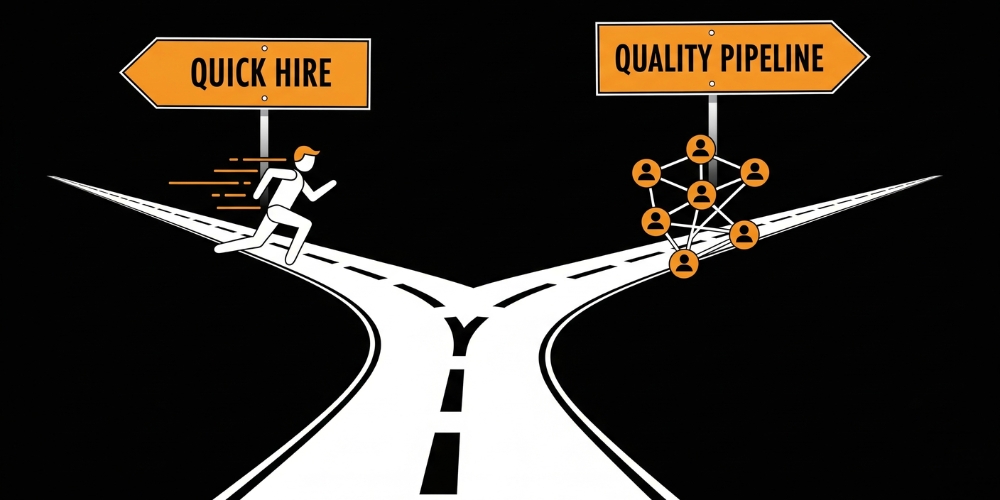
Both methods have a place. One fills roles quickly; the other builds a sustainable pipeline.
When to Choose One Over the Other
Lean active when
- You have urgent roles or specialised skill gaps
- You're hiring in competitive fields like data science, cybersecurity, or senior engineering
- You cannot wait for inbound to fill the pipeline
- The competitive market means qualified candidates rarely apply directly
Lean passive when
- You're building employer brand for the long haul
- You want to strengthen alumni, referral, and event-based sourcing
- The market is relatively stable and you can prioritise quality over speed
- The role rewards candidates who have been thinking about the company for a while
Strong recruiters balance the two by hiring stage, role type, and current pipeline pressure rather than picking one as a default.
How to Run an Effective Blend

Five habits that turn theory into operational practice.
1. Segment your weekly time
Split active outreach and passive nurture deliberately. Half the week on direct outreach, half on relationship-building, content, and pipeline cultivation. Avoid letting urgent outreach crowd out long-term work.
2. Automate intelligently
AI tools handle the mechanical work in active outreach — research, drafting, scheduling — freeing recruiter hours for the personal follow-ups that close offers.
3. Track real data
Open rates, response rates, conversion to interview, eventual hire quality. The data is what tells you whether the mix is working or whether you are pretending.
4. Use content as outreach fuel
Industry insights, behind-the-scenes content, and culture posts feed both passive sourcing (people see you) and active sourcing (you have something specific to reference when you reach out).
5. Build feedback loops
Review monthly: which channels produced the best hires, which messages got the highest response, which roles are easier to fill active vs passive. Adjust the mix accordingly.
The Bottom Line
Active and passive sourcing are not competing approaches — they are complementary tools for different parts of the same problem. Active is the sprint; passive is the long-distance training. The recruiting teams that consistently win use both deliberately: targeted outreach for urgency, brand-driven attraction for long-term pipeline strength. Track the data, segment your time, and let the mix shift as roles and market conditions change. The result is a sourcing system that holds up regardless of which type of role hits the pipeline next.
FAQs
Should startups rely more on active or passive sourcing?
Lean active early — startups need speed and direct reach to compete with established brands. As employer brand develops, layer in passive efforts to compound the long-term pipeline.
How do recruiters measure ROI on active vs passive sourcing?
Active: time-to-hire, cost-per-hire, response and conversion rates. Passive: brand engagement, referral quality, long-term retention. Track both to get the full picture of what is producing strong hires.
Can active sourcing scale without burning out recruiters?
Yes — when paired with automation. AI tools handle the mechanical work (research, drafting, scheduling) so recruiters spend time on the personal touchpoints that actually convert.
Is passive sourcing realistic for small teams?
Yes, with the right framing. Small teams cannot run full brand campaigns, but consistent personal content from founders and team members produces meaningful passive attraction at low cost.
What is the single most underrated sourcing move?
Re-engagement of silver-medal candidates from past searches. Almost every team has them; very few systematically reach back out when relevant roles open. The conversion rate consistently beats cold outreach.
Keep reading


