

Candidate Attraction on a Budget: Practical Low-Cost Strategies
Building a candidate attraction engine doesn't need a big budget — practical storytelling, referrals, and AI tactics that produce stronger pipelines cheaply.
Ployo Team
Ployo Editorial

TL;DR
- Candidate attraction is about quality match, not volume of applications.
- 65% of candidates report inconsistent communication during recruiting (JobScore) — a free fix that beats most paid ads.
- Storytelling, employee referrals, and inclusive job descriptions outperform paid job-board spend dollar-for-dollar.
- AI screening and scheduling free recruiter hours without big SaaS contracts.
- Authentic micro-branding on LinkedIn, X, and Threads beats glossy agency campaigns for small teams.
Most recruiting budgets get burned on broad-reach job board ads and agency fees, then produce a flood of unqualified resumes. The teams that consistently attract strong candidates on tight budgets do something different: they focus on signal over reach, treat employees as the primary recruiting channel, and run small experiments instead of big campaigns. This guide walks through the candidate attraction tactics that actually work when you can't outspend competitors.
What Candidate Attraction Really Means

Attraction is about pulling the right people into your pipeline — active job-seekers and passive candidates — and giving them enough reason to engage. The metric that matters isn't applications; it's qualified applications relative to spend.
Three reasons it deserves explicit strategy.
Quality beats quantity
A thousand irrelevant resumes is worse than fifty good ones. Sourcing for fit upfront cuts later screening costs dramatically.
Mid-funnel drop-off is expensive
JobScore's 2025 candidate experience data shows 65% of candidates report inconsistent communication during recruiting. Strong attraction breaks down if the candidate experience falls apart mid-process.
Long-term brand value
How you treat candidates determines whether they refer others or speak well of your company later. Attraction work and employer brand compound over years, not weeks.
Attraction sits at the top of your candidate selection process — fix it and the entire downstream funnel improves.
Where Recruiting Budgets Leak
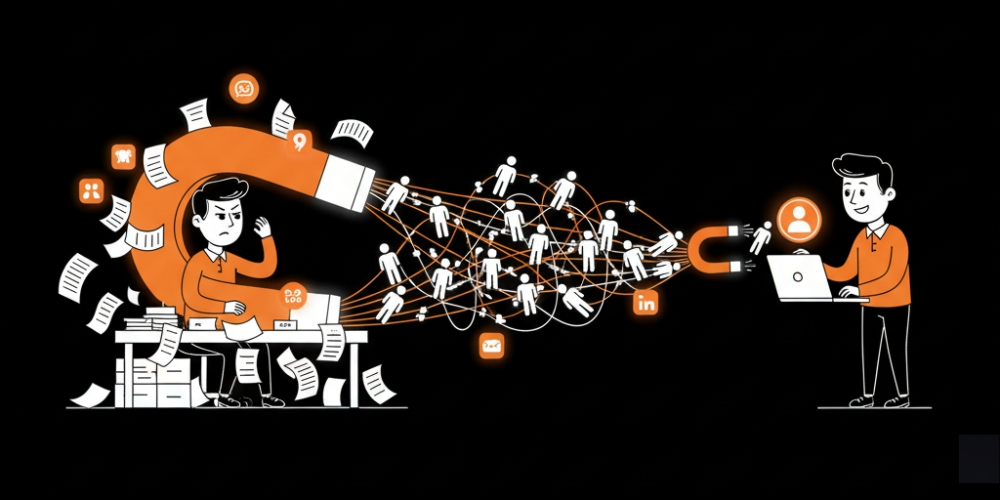
Five common spending patterns that consistently underperform.
Paying for broad reach
Generic job board postings or agency retainers maximise visibility, not qualification. Cost-per-hire stays high; conversion stays low.
Spray-and-pray channel diversification
Splitting small budgets across many channels fragments effort. One well-run channel typically outperforms five half-run ones.
Not measuring the basics
Cost-per-hire, source-of-hire, and time-to-fill aren't optional. Without them you can't identify which channels actually work.
Brand polish before substance
Expensive employer-branding campaigns can't paper over slow recruiter responses, broken interview loops, or generic job descriptions. Fix the basics first.
Chasing every shiny tool
AI screening, chatbots, and gamified assessments only deliver when the underlying process works. Tooling on top of a broken pipeline amplifies the mess.
Low-Cost Strategies That Actually Work

Seven tactics that consistently outperform their cost.
1. Tell real employee stories
Job seekers respond to authenticity over polish. Per Rhino Reviews / Glassdoor data, 86% of candidates say company transparency strongly influences their decision to apply.
Short videos, blog posts, or LinkedIn updates from real employees beat glossy campaigns. Show how people solve problems, not just what perks they get.
2. Engage passive candidates with content
Most strong candidates aren't actively job-hunting. Educational content (industry analysis, technical posts, AMAs) attracts them passively — and the cost is mostly time, not money.
LinkedIn comments, community engagement, and helpful Q&A sessions build reputation equity that outlasts any paid campaign.
3. Lean on employee referrals
Employee referrals consistently produce the lowest cost-per-hire and longest retention — referral hires stay roughly 70% longer. Make the program lightweight to participate in and recognise referrers publicly. Cash bonuses help; experiences and visibility often help more.
4. Use AI selectively
AI tooling for resume screening, scheduling, and sourcing can free real recruiter hours. The discipline: AI handles repetitive work; humans do the relationship-building. AI should accelerate your talent acquisition process, not replace it.
5. Build micro-employer branding on free channels
Employer brand doesn't require an agency. A hiring manager posting on LinkedIn or X about real team wins, a developer sharing what they built last week, a recruiter discussing the hiring process openly — all build trust at zero ad spend.
6. Make inclusion visible, not aspirational
Job descriptions stripped of biased language, careers pages with diverse imagery, and flexibility/training programs surfaced prominently — these specific signals attract diverse applicants. Generic "we value diversity" statements don't.
7. Run small creative experiments
Virtual coffee chats with potential applicants. Team-led Instagram takeovers showing real work. A short culture quiz on the careers page. Most of these cost almost nothing and produce more signal than another job board boost.
Tactic cost vs impact snapshot
| Tactic | Cost | Typical impact |
|---|---|---|
| Employee referral program | Low | High — best CPH and retention |
| Storytelling content | Low | High — quality signal |
| Inclusive JD rewriting | Free | Medium-high — broadens funnel |
| Passive sourcing via content | Low | High over 6–12 months |
| AI scheduling + screening | Low–Medium | Medium — saves recruiter time |
| Generic job board ads | High | Low–Medium per qualified hire |
| Glossy brand campaigns | Very high | Low without underlying substance |
The Bottom Line
Strong candidate attraction is built from compounding small actions, not one-off campaigns. The teams that consistently attract great people on tight budgets tell honest stories, lean on their own employees as the primary recruiting channel, use AI selectively for repetitive work, and measure what's actually producing qualified applications. The teams that overspend chase reach without measuring conversion, polish their brand before fixing process basics, and treat tooling as a substitute for substance. Connection outperforms clicks — every time, at every budget size.
FAQs
What are the cheapest ways to promote jobs online?
Niche communities (subreddits, Slack groups, Discord servers) for the role's specialty, free job board listings, university career centres, and employee-shared LinkedIn posts. Repurposing existing content beats producing new content for each role.
How can AI tools cut recruitment costs?
AI handles repetitive work well: initial resume screening, interview scheduling, candidate communications, basic sourcing. The savings come from recruiter hours redirected from admin to relationship-building, not from replacing human judgement.
Does employer branding really attract better candidates?
Yes, when it's authentic. Specific, honest signals (real employee stories, transparent process, visible inclusion) consistently outperform polished but generic campaigns. Budget alone doesn't determine effectiveness; alignment between brand and reality does.
How can small companies compete with big brands for talent?
By being faster, more direct, and more personal. Small teams offer mentorship visibility, real ownership of work, and flexibility that large brands struggle to match. Positioning around those strengths beats trying to compete on benefits alone.
What's the single highest-leverage low-cost move?
A well-run employee referral program. Lowest cost-per-hire, longest retention, and best cultural match — typically all three simultaneously. Most companies underinvest in making it easy and rewarding for employees to refer.
Keep reading

Pink Collar Jobs Explained: Definition, Examples, Salaries

Employee Lifecycle Stages: A Practical Guide for HR Leaders
