Words to Avoid in Job Descriptions (and What to Use Instead)
Words to avoid in job descriptions: biased phrases, what to replace them with, and how inclusive language attracts stronger, more diverse candidates.
Ployo Team
Ployo Editorial

TL;DR
- Subtle phrasing pushes qualified candidates away before they read the duties.
- Avoid age-coded, gender-coded, ability-coded, and language-coded terms.
- Replace buzzwords with clear job titles.
- Inclusive job descriptions widen the pool and improve compliance.
- Best practice: focus on essential responsibilities + skills, neutral language.
Writing a job post isn't just listing responsibilities — it's making the right people feel they belong. Most listings still include subtle outdated words that quietly turn candidates away. This guide breaks down the phrases to avoid, what to replace them with, and how inclusive language strengthens hiring outcomes.
Why Wording Matters
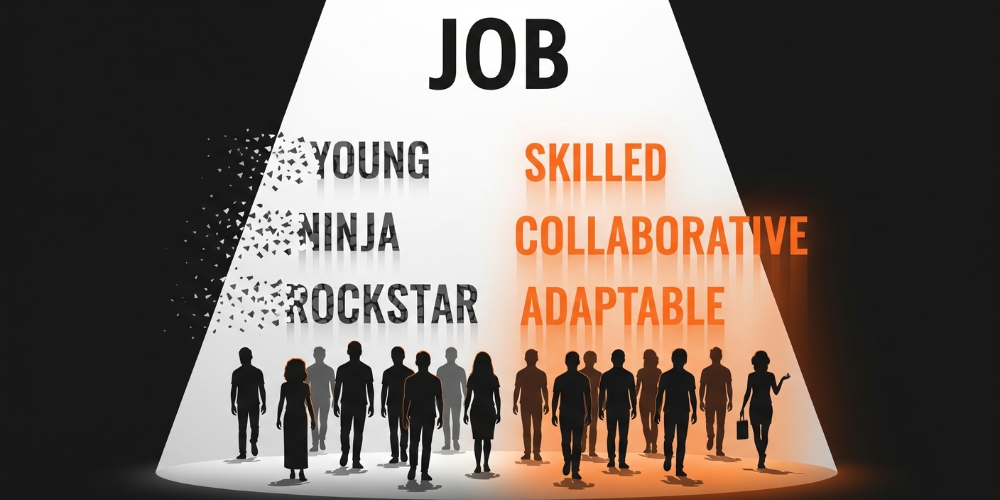
Words set the tone for who applies, who feels welcome, and who scrolls past. "Must be young and energetic" might seem harmless but subtly tells some candidates they don't belong. "Rockstar" or "guru" makes others wonder if you value hype over clarity.
Every phrase is either invitation or closed door. Clear inclusive language draws in the right people, reduces hidden bias, and signals that your workplace values talent over labels.
Words and Phrases to Avoid
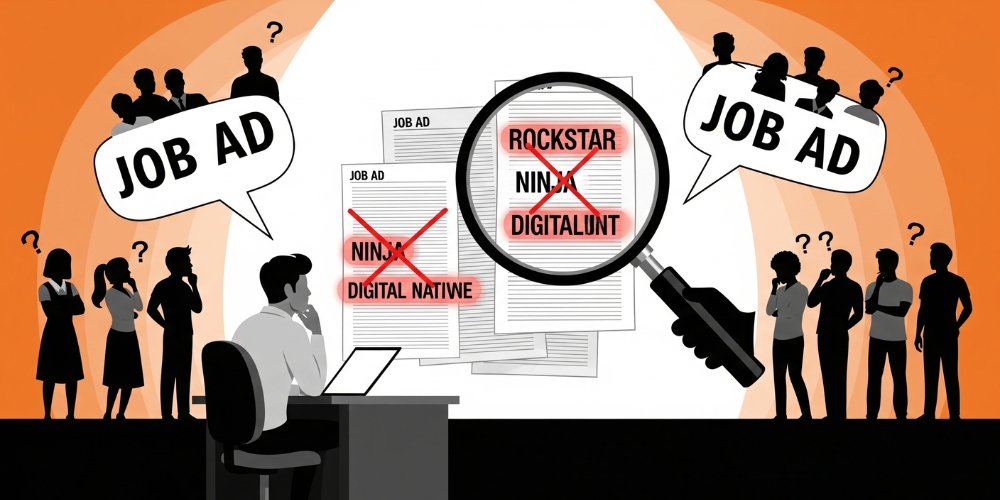
Five common categories.
1. "Digital native"
Implies preference for younger candidates — potentially violating Age Discrimination in Employment Act. Replace with "tech-savvy" or "comfortable with digital tools".
2. "Rockstar", "ninja", "wizard", "guru"
Playful but male-coded and confusing. Stick with standard titles like "Marketing Specialist" or "Software Engineer".
3. Physical requirements
"Able-bodied", "must lift 50 lbs", "physically strong" can violate ADA unless physical capability is essential to the role. Use precise, job-relevant phrasing: "Ability to lift up to 25 pounds, where job-relevant."
4. "English must be your first language"
Discriminatory in most contexts. Replace with: "Fluency in English required for written and verbal communication."
5. Gender-coded language
Per STEM Women research, masculine-coded job ads actively discourage women from applying. Replace with neutral, action-led language. Pairs with gender bias avoidance practices.
How to Create Inclusive JDs
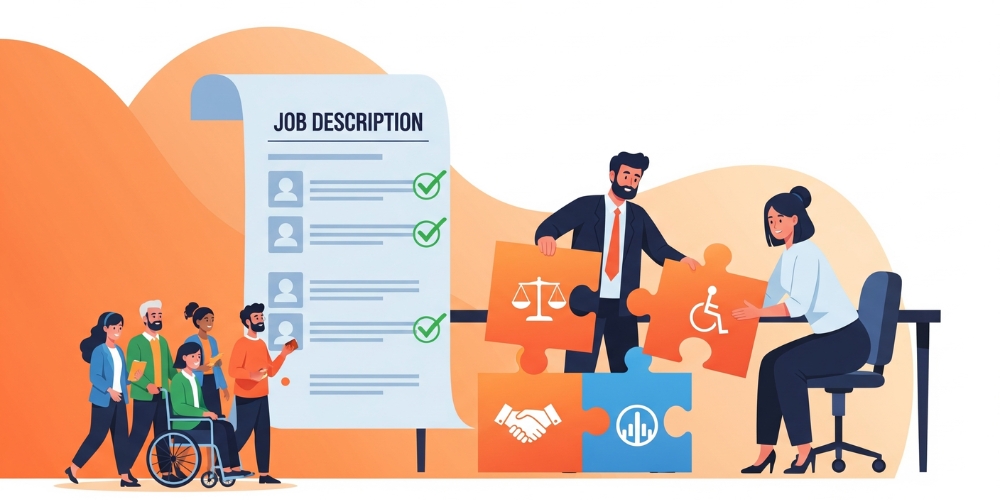
Four practices that consistently work. Pairs with diversity inclusive JD strategies.
Use clear, neutral language
Action-based: "develops solutions", "drives growth", "collaborates across teams". Avoid jargon and metaphors.
Prioritise essential responsibilities
Distinguish required vs preferred. Reduces the "confidence gap" — per HBR research, women often apply only when they meet 100% of criteria vs men at ~60%.
Be specific about accessibility
Brief accommodation statement: "We're committed to accessibility. If you require accommodations during hiring, let us know." Review physical requirements rigorously.
Watch for exclusionary terms
"Manpower", "native English speaker", "clean-cut professional" all signal exclusion. Replace with neutral skill-based language.
Impact of Exclusionary Language
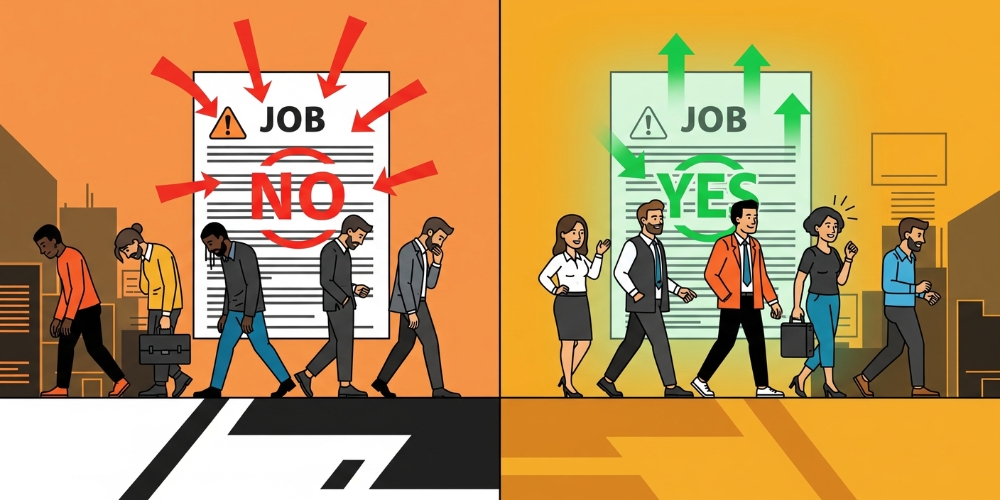
Three real costs.
Lost qualified candidates
Biased phrasing reduces applications dramatically — even subtle cues like "recent graduate" or "energetic team player" discourage experienced or disabled professionals.
Employer brand damage
Job seekers share experiences online. A biased ad becomes a screenshot or Glassdoor review fast. Long-term brand erosion makes top talent harder to attract.
Legal exposure
Biased language can violate EEOC guidelines, ADA, Title VII. Use specific inclusive language that leaves no room for misinterpretation.
The Bottom Line
Words in JDs aren't just about political correctness — they're about performance. Writing decides who applies, who feels seen, who gets left out. Ask: does this speak to everyone or a select few? Inclusive language isn't fluff — it's strategy. Better candidates, stronger brand, teams reflecting the real world. Starts with the words you choose.
FAQs
Why avoid "rockstar" or "ninja"?
Sounds flashy but confuses candidates and skews male. Standard titles like "Software Engineer" or "Marketing Specialist" help candidates instantly understand the role.
What's wrong with "fast-paced environment"?
Often reads as a burnout warning. Describe actual work rhythm: "managing multiple projects with tight deadlines."
How do JD words affect diversity hiring?
Language shapes who applies. Age-, gender-, or ability-coded words discourage qualified candidates. Inclusive wording widens the pool.
Should salary always be disclosed?
Transparency builds trust and saves time. Even where not legally required, including a range signals fairness and attracts stronger candidates.
What's the highest-leverage starting move?
Run your top three JDs through a bias-language checker. Fix what gets flagged. Most teams discover meaningful issues within the first 15 minutes.