Writing Job Descriptions That Actually Hire: The 2026 Guide
Strong job descriptions filter for the right people: core elements, ADA compliance, AI tooling, inclusive language, and mistakes to avoid.
Ployo Team
Ployo Editorial

TL;DR
- 72% of hiring managers think their job descriptions are clear; only 36% of candidates agree (HRDive).
- 44% of candidates are more likely to apply when a salary range is included (Recruitics).
- Inclusive language pulls 42% more applicants (ZipRecruiter).
- 52% of job seekers say JD quality directly influences whether they apply (Indeed).
- AI helps draft and de-bias JDs; human editing is still essential.
A job description is the first filter on every hire — and most are dragging hiring teams backwards. They're vague where they should be specific, long where they should be tight, and full of buzzwords where they should be clear. This guide walks through what to include, how to handle ADA compliance, where AI helps without taking over, and the mistakes that consistently make good descriptions go bad.
Why JD Quality Determines Hiring Quality
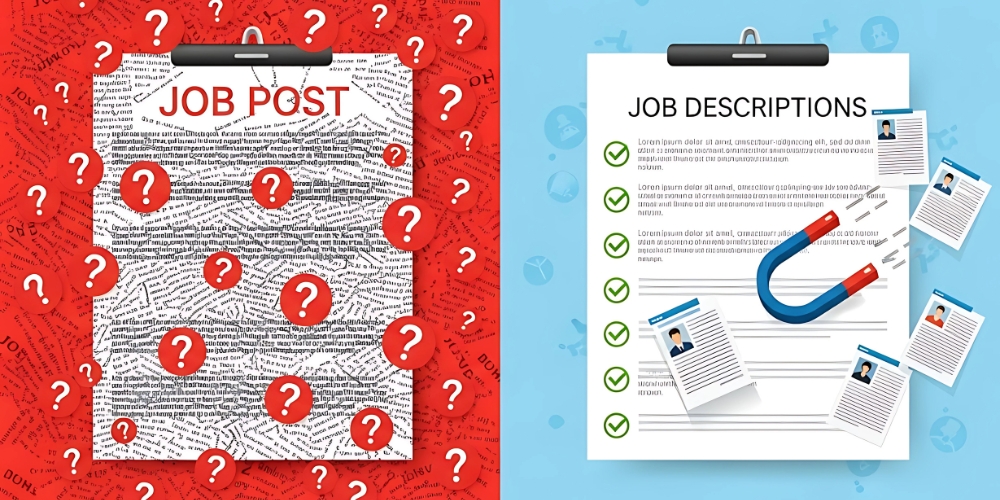
The job description sets the tone, signals what your company is about, and decides who self-selects in or out. Done well, it attracts the right people. Done badly, it produces confusing applications, bad hires, and post-hire mismatch.
There's also a perception gap to fix. HRDive's hiring manager survey reports 72% of hiring managers believe their JDs are clear — but only 36% of candidates agree. That delta is mostly bad JD writing.
Beyond hiring itself, JDs support recruiters finding the right fit, performance reviews, onboarding, internal alignment, and ADA/EEOC compliance. They're foundational across the entire employee lifecycle.
The Core Elements
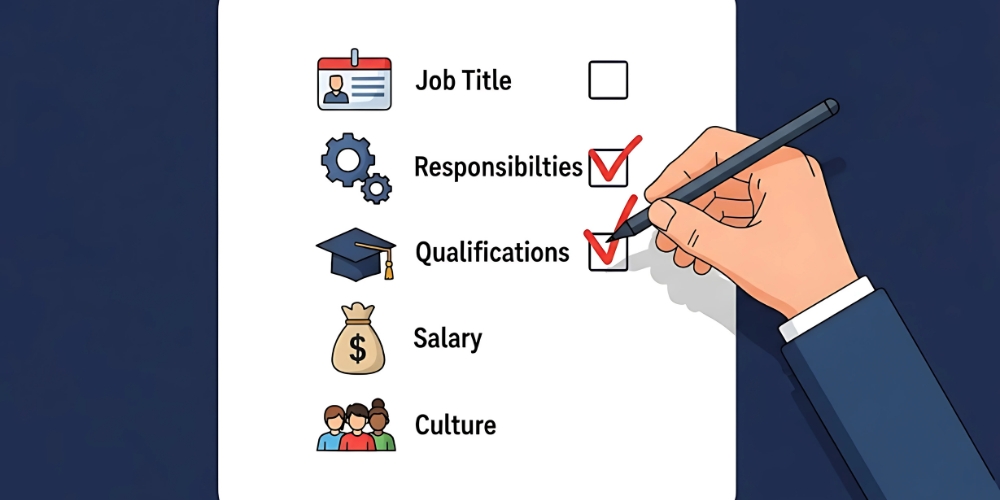
Seven non-negotiables for every JD.
1. Searchable job title
Candidates search "Digital Marketing Manager," not "Marketing Ninja." Cute titles tank discoverability and signal that the company prioritises voice over substance.
2. Tight job summary
Three sentences max. Cover what the role is, why it matters, and how it contributes. The summary is what 90% of candidates actually read before deciding whether to read further.
3. Bulleted responsibilities
Action verbs, concrete tasks, short bullets. Easier to scan, easier to match against a resume, faster to screen against.
4. Must-have vs. nice-to-have qualifications
Separate them clearly. Overloading "required" with ideal traits filters out qualified candidates — especially candidates who tend to self-eliminate from imperfect matches.
5. Location and schedule transparency
Gartner data shows 43% of candidates prioritise flexibility. State remote/hybrid/on-site, working hours, and employment type upfront.
6. Salary range when possible
Recruitics' 2023 study finds 44% of candidates are more likely to apply when a range appears. Even a ballpark signals professionalism and respect.
7. Culture and benefits
Mission, values, learning opportunities, benefits — give candidates real signal about life at your company, not generic phrases.
These job description best practices drive better top-of-funnel quality and post-hire retention.
ADA Compliance: What to Include
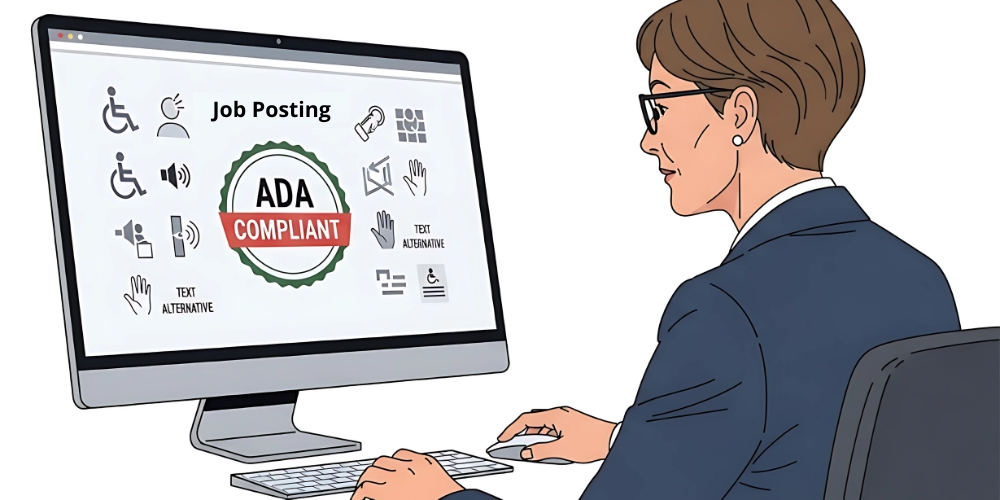
The ADA requires equal-opportunity hiring, and the JD is your first line of compliance evidence. Per EEOC guidance, clear ADA-aligned descriptions help protect against accommodation and discrimination disputes — and broaden the candidate pool meaningfully.
Four elements that belong in every ADA-compliant JD
| Element | What to write |
|---|---|
| Essential job functions | The core duties that must be performed, with or without accommodation |
| Physical / mental requirements | Specific and measurable — "lifts up to 25 lbs occasionally," not "must be strong" |
| Work environment | Noise levels, travel %, accessibility features, on-site vs remote |
| Reasonable accommodation statement | "We offer reasonable accommodations during hiring and on the job" |
Replace subjective traits ("energetic," "fast-paced") with concrete, task-based descriptions. Subjective language is both legally weaker and less informative.
Tools That Speed Up JD Writing
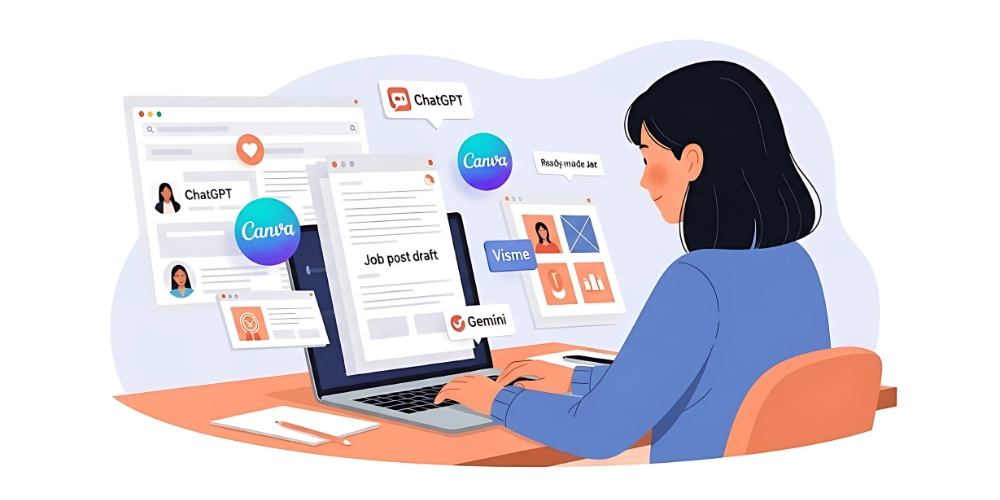
JD writing is repetitive enough that tools meaningfully accelerate it. Per Indeed's research, 52% of job seekers say JD quality directly affects whether they apply — getting it right is worth the tool investment.
| Tool | Best use |
|---|---|
| ChatGPT | First-draft generation, tone refinement, SEO optimisation |
| Gemini | Industry-specific drafts, inclusive-language flagging, DEI suggestions |
| Canva | Visual job-post design for social channels and careers pages |
| DALL·E | DEI-aligned imagery for hiring campaigns |
| Lumen5 | Short video versions for LinkedIn / Instagram |
| Visme | Branded job cards and recruiter-facing decks |
Use AI for drafting; never publish unedited. AI consistently produces "almost right" copy that needs human voice, company-specific detail, and bias review before going live.
Using AI for Inclusive JDs
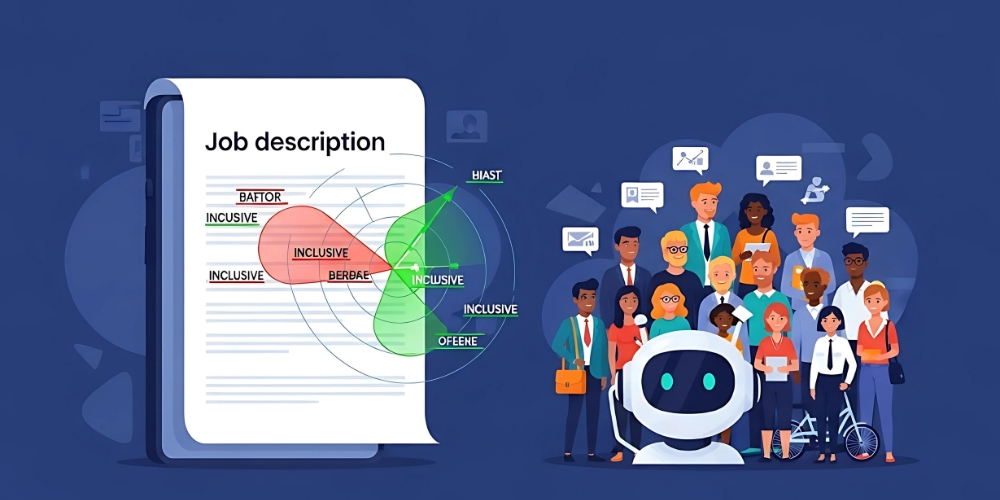
Inclusive language isn't just ethics — it's funnel volume. ZipRecruiter's data shows inclusive language pulls 42% more applicants.
Five-step process for using AI to produce inclusive JDs.
1. Define the role clearly
Specific responsibilities, success metrics, and skill requirements as input. Vague input produces vague output.
2. Use a DEI-aware tool
Pick a tool (Gemini, Textio, or a Claude/ChatGPT prompt with explicit DEI guardrails) that flags gendered, age-coded, or ableist language.
3. Write inclusive prompts
Example: "Draft a JD for a Front-End Developer with 3 years' experience. Use inclusive language. Avoid buzzwords, gendered language, and culture-coded requirements. Separate must-haves from nice-to-haves clearly."
4. Edit with a human eye
Read out loud. AI consistently misses subtle bias and tone issues; a human pass catches them.
5. Add an explicit DEI statement
A specific commitment beats a generic disclaimer: "We're committed to building a team that reflects the people we serve. Applicants from underrepresented backgrounds are encouraged to apply, and we accommodate disability needs throughout the hiring process."
Common Mistakes to Avoid

Six patterns that consistently weaken JDs.
Sounding like everyone else
"Fast-paced environment," "wear many hats," "self-starter" — generic phrases that signal nothing and blend into thousands of identical posts. Write specifics.
Writing in isolation
JDs drafted without input from the hiring manager or team end up disconnected from the actual day-to-day. Always co-write with the person closest to the role.
Ignoring the candidate perspective
If the post is all "what the company needs" and none of "what the candidate gets," candidates self-eliminate. Growth, flexibility, mission, learning opportunities all matter.
Overstuffing requirements
HBR's well-known finding: women tend to apply only when they meet 100% of listed qualifications, while men apply at 60%. Long "must-have" lists filter out qualified candidates — many of whom would be your best hire.
Same copy across all platforms
LinkedIn, Stack Overflow, and TikTok recruiting reach different audiences. Tailor format, tone, and length per platform.
Skipping the "why"
Candidates want context, not just a task list. Why does this role exist? What's the team solving? Connection comes from purpose, not perks.
Final Checklist
Before publishing, run through this list.
- Searchable, conventional job title
- Three-sentence summary covering what / why / how it matters
- Bulleted responsibilities with action verbs
- Must-have vs. nice-to-have separated cleanly
- Location, schedule, and employment type stated
- Salary range included where possible
- ADA-compliant physical/mental requirements (specific, measurable)
- Reasonable accommodation statement present
- Inclusive language checked by AI tool + human pass
- Culture, benefits, and mission described concretely
- Custom-tailored for the platform you're posting on
The Bottom Line
A strong job description does more than describe a role — it filters for the right candidates, signals your culture, demonstrates legal compliance, and starts the relationship on the right foot. The companies hiring well in 2026 treat the JD as a serious piece of communication, write it collaboratively, run it through AI for first drafts and bias checks, then edit it like the marketing copy it actually is. Skip any of those steps and you're paying for the cost downstream — in bad applicants, slow hiring, or worse fit. Get it right and the entire pipeline runs faster.
FAQs
How long should a job description be?
400–700 words is a sweet spot. Long enough for context and specifics; short enough to read in two minutes. Anything longer typically signals over-prescriptive requirements or unfocused writing.
Should I include salary in the job description?
Yes whenever possible. Even a range increases application rates by ~44% (Recruitics), signals respect for candidate time, and matches transparency laws in a growing list of jurisdictions.
Can AI fully write my job descriptions?
No. AI produces strong drafts, but the final voice, company specifics, and bias review need a human pass. AI as drafter + human as editor is the durable workflow.
What's the single biggest mistake in JDs?
Overstuffing requirements. Listing every desirable trait as "required" filters out qualified candidates — particularly those who self-eliminate from imperfect matches. Separate must-haves from nice-to-haves ruthlessly.
How often should I update job descriptions?
Whenever the role changes meaningfully, and at minimum annually. JDs drift from reality fast; an outdated JD damages both hiring and post-hire alignment.