

Video Screening Interviews: The Complete HR Guide
Video screening interviews — types, how to run them well, common mistakes, and how AI accelerates first-round hiring without sacrificing fairness.
Ployo Team
Ployo Editorial

TL;DR
- 82% of companies use virtual interviews in their hiring process (TestGorilla).
- One-way video screenings cut review time 60–80% vs phone screens.
- Companies using video screens shorten hiring timelines by ~8 days (HireTruffle).
- Structured questions + scoring rubrics keep evaluation fair.
- AI accelerates sorting, flags missing data, supports consistency.
Hiring moves fast. Phone screens clog up calendars and stretch cycles. Video screening interviews give teams quick, structured visibility into candidates before deep rounds. This guide breaks down what video screenings are, the formats that work, how to run them well, and where AI fits.
What a Video Screening Interview Is
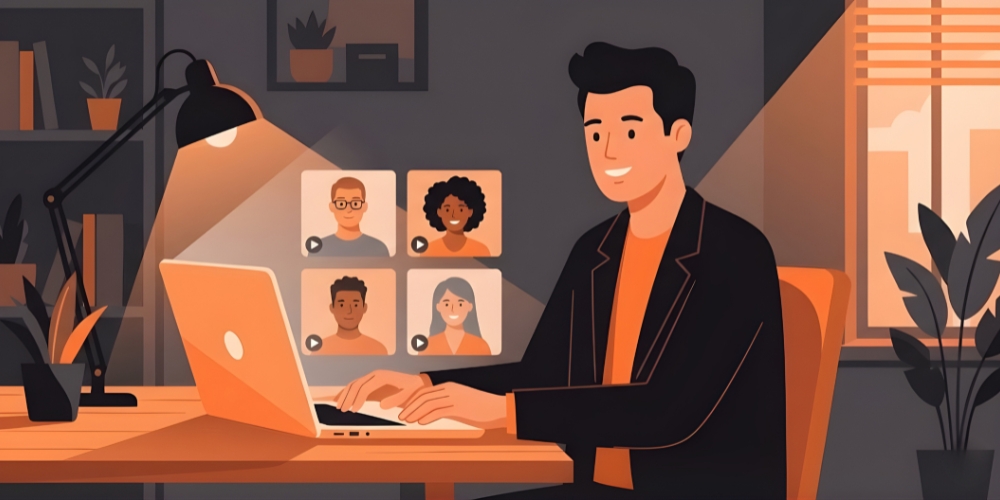
A short early-stage interview to check fit before deeper rounds. Reveals communication, personality, and motivation without scheduling a full call.
Per TestGorilla data, 82% of companies now use virtual interviews — making video screening firmly mainstream.
How it differs from a phone interview
Phone interviews are audio-only. Video screenings add visual context — body language, presentation, communication style. Both useful; video tells you more in less time.
Why HR Teams Use Them
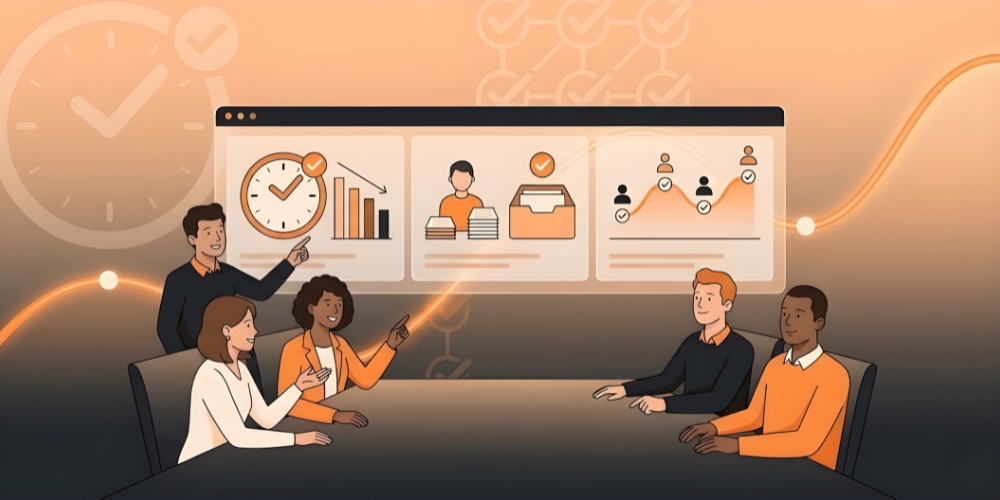
Three concrete benefits.
Time savings
Per HireTruffle's research, companies using video interviews shorten hiring by ~8 days vs traditional phone screens.
Richer signal than CVs
Communication patterns, confidence, role clarity emerge in minutes rather than across multiple rounds.
Fairer hiring
Standard questions + consistent rubrics reduce bias. Structured screening questions work for every applicant — decisions become defensible.
Types of Video Screenings
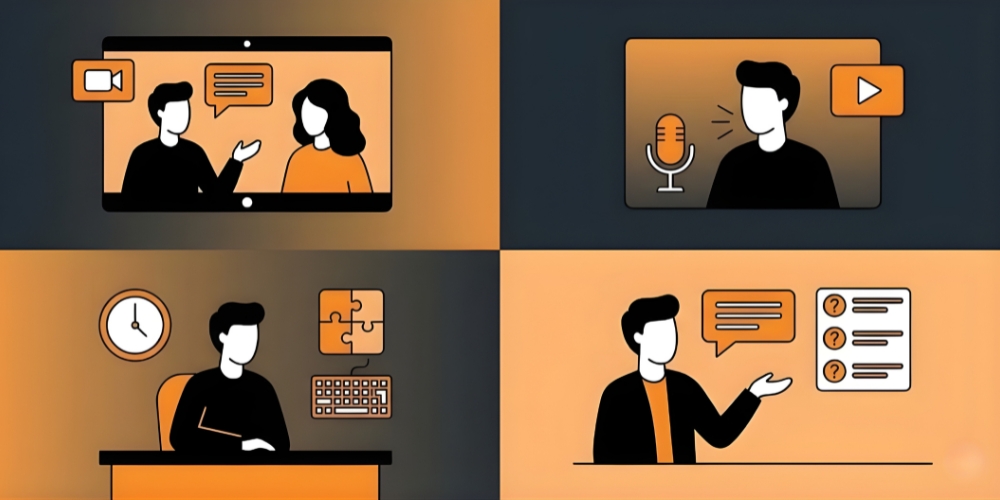
Five formats.
Live video screening
Real-time conversation, screen-shared. Useful for early talks where back-and-forth matters.
Recorded / on-demand
Candidates record answers in their own time; recruiters review when convenient. Per AsyncInterview research, one-way screenings cut active screening time 60–80% — from 30–45 min per candidate down to 5–15 min.
Skill or task-based
Video paired with practical tasks, case answers, or timed challenges. Validates core skills early.
Wedge interview
Fixed questions, in-tool answering, no interviewer present. Structured one-way style; common in high-volume hiring.
Industry-specific screens
Tailored formats for customer service, sales, or other public-facing roles where tone and clarity matter most.
How to Run Effective Screenings
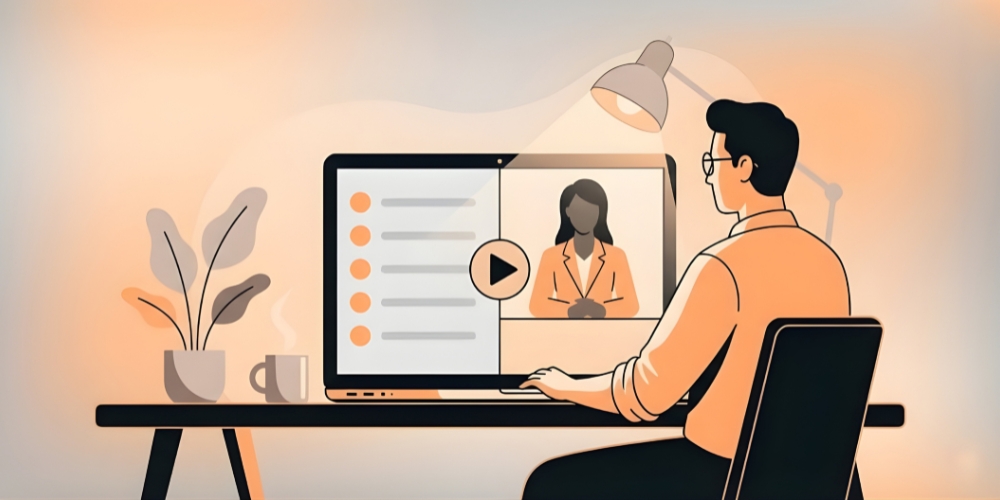
Five practices that compound into strong outcomes.
Set clear goals
What are you checking — communication, confidence, motivation, early problem-solving? Short checklist keeps you consistent.
Choose a reliable platform
Supports live + recorded, stable video quality, easy candidate comparison.
Use structured questions
Same set for every candidate. Fair comparison; easier defence of decisions.
Set clear candidate instructions
Time limits, question count, prep guidance. Reduces stress and produces honest answers.
Score with a simple rubric
Clarity, relevance, accuracy, role fit. Reduces gut-feel evaluation.
Common Mistakes
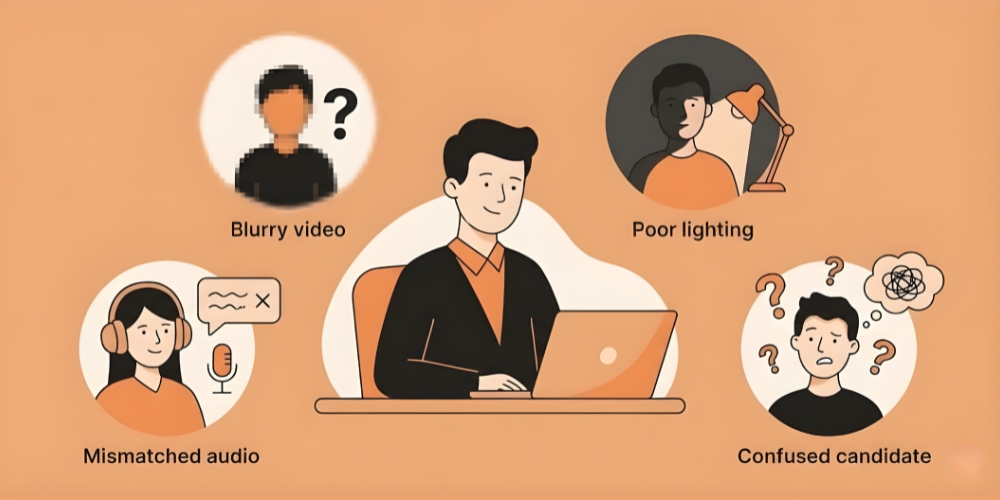
Five traps that quietly damage the process.
Unclear instructions
Candidates stress, give short or incomplete answers. Always brief them well in advance.
Too many questions
Early rounds should be quick. Pile on questions and candidates fatigue or skip detail.
Skipping your own tech test
Bad lighting, sound, or settings on your side produces unfair judgements of candidates.
Unstructured scoring
Without a rubric, irrelevant details (tone, camera angle) drive decisions. Use a clear scale.
Ignoring accessibility
Bandwidth, devices, quiet spaces vary. Offer alternative times or formats so good applicants don't drop out.
How AI Enhances Video Screening
Four contributions.
Speech and content analysis
Modern AI tools analyse clarity, relevance, and topic alignment. Supports human reviewers; doesn't replace them.
Consistent scoring
Same criteria across every candidate. Reduces variance from reviewer mood or fatigue.
Reduced manual review
Beyond cutting manual recruitment cost, AI helps sort responses faster, highlight strong matches, flag red flags.
Pattern detection
Detects whether candidates followed instructions, stayed within guidelines, and addressed the question. Insights that would take hours to compile manually.
The Bottom Line
Video screening works when you keep it focused — short, structured, scored consistently. A short clip reveals more than a CV in less time than a phone call. AI accelerates the sorting and consistency without replacing human judgment. With clear instructions, fair scoring, and the right tooling, video screenings become one of the strongest leverage points in modern hiring.
FAQs
How do recruiters evaluate video interviews?
Simple scorecard checking clarity, relevance, confidence, job fit. Content over presentation. Comparison across candidates on the same questions for fairness.
What benefits does AI add to video screening?
Highlights strong answers, detects patterns, supports consistent evaluation. Reduces manual review time by organising responses and surfacing top matches.
Is a phone interview the same as a video screening?
No. Phone is audio-only; video adds body language and presentation. Both have a place; video reveals more per minute.
How long should screening videos be?
5–15 minutes per candidate review, with 2–5 candidate response questions in the 30–90 second range.
What's the highest-leverage starting move?
Switch your top-volume role to one-way video screening with 3 standard questions and a clear scoring rubric. The time savings show up within the first batch.


