

How Sourcing Diverse Candidates Drives Retention
Diverse sourcing isn't just ethics — it boosts retention, engagement, and innovation. The strategy, channels, metrics, and what to fix to make it real.
Ployo Team
Ployo Editorial

TL;DR
- 75% of employees feel they must hide parts of themselves at non-inclusive workplaces (Newcleus).
- Replacement cost: 50–200% of annual salary (SHRM).
- Diverse teams reduce identity masking, raise engagement, lower turnover.
- Inclusive job descriptions + broad channels + authentic outreach drive results.
- Measure via retention-by-segment, engagement scores, exit feedback, source longevity.
Companies pour energy into hiring, then watch turnover climb months later. A common root cause: teams that look too similar. When employees can't see themselves in the culture, they leave. This guide explains why diverse sourcing measurably improves retention, what hidden costs come from skipping it, and how to build a retention-first sourcing strategy that actually works.
What Diverse Sourcing Actually Means

Intentionally widening reach so your candidate slate includes people from varied backgrounds, identities, experiences, and perspectives.
Concrete examples
- Posting roles on community networks and affinity groups
- Inclusive job descriptions (avoiding biased language)
- Blind or anonymised resume screening
- Partnerships with diversity organisations, bootcamps, community programs
- Targeted technical sourcing in underrepresented STEM groups
Not a checkbox. A structural commitment to where, how, and with what language you source.
Impact on Engagement

Four mechanisms.
Belonging drives effort
Employees who feel their background is respected speak up more, share ideas, and engage with hard problems.
Cross-perspective collaboration
Mixed teams challenge echo chambers and produce sharper thinking.
Reduced identity masking
Per Newcleus research, 75% of employees feel they must hide or downplay parts of themselves at non-inclusive workplaces. That drains energy and loyalty.
Mentorship + connection
A diverse team lets employees find mentors or peers who mirror or appreciate their identity, boosting retention.
How It Reduces Turnover

When sourcing diversity is a sustained priority, employees stay longer. Representation produces trust and belonging; one-dimensional teams produce isolation that compounds into exit.
A thoughtful sourcing strategy prevents that, ensuring every hire joins an environment where they feel included rather than tolerated.
Hidden Costs of Skipping This

Four cost categories that compound.
Turnover expenses
Per SHRM, replacing an employee can cost 50–200% of annual salary — and that excludes productivity loss and onboarding ramp.
Cultural stagnation
Teams that share blind spots produce fewer fresh ideas. Innovation and engagement scores both drop.
Brand reputation
Job seekers actively screen for diversity in employment and equity. Career pages that don't show variety see fewer applications and higher drop-offs.
Legal and compliance exposure
Public contract eligibility, investor scrutiny, and regulatory expectations all increasingly require demonstrable progress.
Building a Retention-First Sourcing Strategy
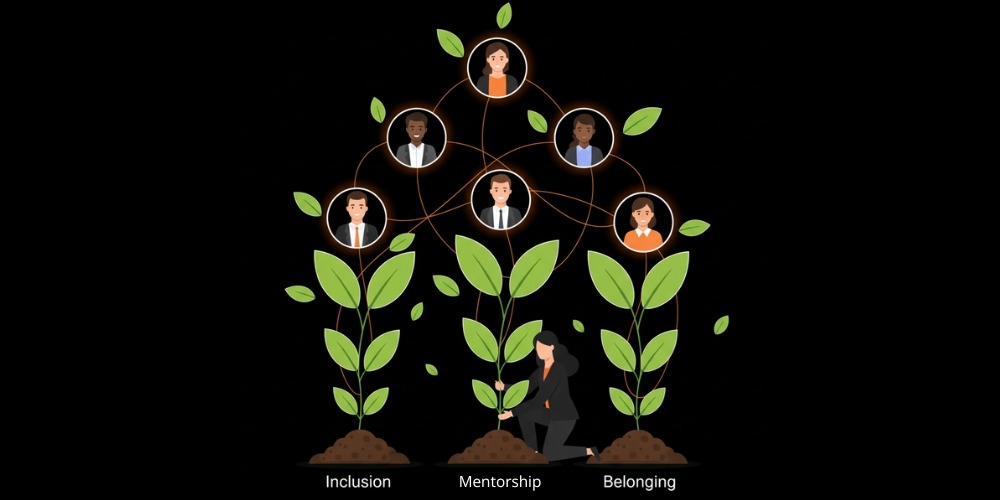
Five practices.
Rewrite the entry point
Use inclusive job descriptions that emphasise skills over pedigree. Drop gendered or coded language.
Broaden sourcing channels
Niche communities, alumni groups, social platforms where diverse professionals actually network.
Build authentic outreach
Personalised messages reflecting genuine interest. Generic templates kill response rates and signal lack of care.
Mentorship connections
Connect candidates with internal mentors before hiring so they can hear real stories about growth and belonging.
Data-driven inclusion
Monitor pipeline diversity ratios through HR analytics. Iterate sourcing channels and messaging on what's actually moving the needle.
For technical roles, invest in targeted sourcing — bootcamps, women-in-STEM communities, disability-in-tech networks. Uncovers strong talent mainstream pipelines miss.
Measuring Retention Impact

Five metrics that reveal real progress.
Retention by demographic segment
Track rates across gender, ethnicity, background. Segment exits often reveal what aggregate retention hides.
Engagement scores
Pulse surveys with inclusion-related questions reveal belonging quality among new hires.
Exit interview insights
Use standard diversity interview questions to surface whether departures link to bias, culture, or growth gaps.
Career mobility
Promotion and upskilling data. Diverse hires staying longer often advance faster when organisations invest equitably.
Hiring source longevity
Which channels produce hires who stay 2+ years? Refine sourcing toward those, not just volume.
The Bottom Line
Building a workforce that lasts means hiring with belonging in mind. Diverse sourcing fuels commitment, innovation, and longevity. The strongest retention strategies bridge the gap between hiring for skills and hiring for staying power. The investment isn't day-one — it's the moment you decide to widen your candidate pool and mean it.
FAQs
Can small businesses benefit as much as enterprises?
Absolutely. Smaller companies often move faster on inclusive practices. Community partnerships plus authentic outreach build loyal, diverse pools without big budgets.
Is sourcing or culture more important for retention?
Both. Sourcing shapes who joins; culture decides who stays. Inclusive sourcing builds the foundation for the culture that follows.
Do recruiters need different outreach for diverse candidates?
Personalisation matters more than templates. Authentic, values-led communication outperforms buzzword pitches on response and conversion.
What's the biggest mistake companies make?
Tokenism. Hiring for optics without changing culture, growth opportunity, or representation in leadership. Candidates spot it quickly and exit.
What's the highest-leverage starting move?
Audit your current job descriptions for biased language and your top three sourcing channels for demographic mix. Both diagnostics often reveal fixable structural issues within hours.


