

Where Your Recruitment Budget Really Goes — And How to Fix the Leaks
Recruitment budgets bleed through hidden channels — the true cost categories, the leaks teams miss, and the moves that genuinely reduce hiring spend.
Ployo Team
Ployo Editorial

TL;DR
- The headline recruitment cost is rarely the full cost — most teams underestimate by 20-50%.
- Average cost-per-hire in 2025 hovers around $4,700-$4,900, plus substantial hidden indirect costs.
- The biggest leaks: oversized agency fees, untracked internal time, manual screening, slow processes that lose strong candidates.
- A clear budget template, automation of repetitive tasks, and outcome-linked metrics close most leaks.
- A bad hire can cost 30-150% of annual salary in re-recruiting, training, and lost productivity.
The story most recruiting teams tell themselves about their budget is wrong. Headline costs — job ads, agency fees, tooling — are visible and tracked. The bigger costs are hidden: recruiter hours on manual screening, productivity lost while roles sit open, candidate drop-off from slow processes, and the compounding expense of bad hires that have to be replaced. This guide walks through where the recruitment budget really goes, the hidden cost categories teams consistently miss, and the operational moves that genuinely reduce hiring spend.
The True Cost of Recruitment

The headline number is direct cost — what you see on invoices. Job board fees, recruiter compensation, tooling subscriptions, assessment platforms. The full number is meaningfully higher.
Industry benchmarks for 2025:
- RecruitersLineup's hiring research puts average cost-per-hire around $4,900.
- Engagedly's cost-per-hire analysis lands at $4,700 across industries.
But cost-per-hire numbers like these usually omit:
Direct cost categories
- Job board fees and sponsorship
- Recruiter compensation
- Agency commissions
- Assessment platform subscriptions
- Background check fees
- Onboarding and equipment
Indirect cost categories
- Recruiter hours on resume review, scheduling, follow-up
- Hiring manager time across multiple rounds
- Productivity lost while the role sits open
- Training and ramp-up cost for the new hire
If a new hire takes eight weeks to reach full productivity, those eight weeks of partial output are real cost — usually unaccounted for in standard cost-per-hire models. Add them in honestly and most companies discover their actual cost-per-hire is 30-50% higher than reported.
Where Recruitment Budgets Leak Most
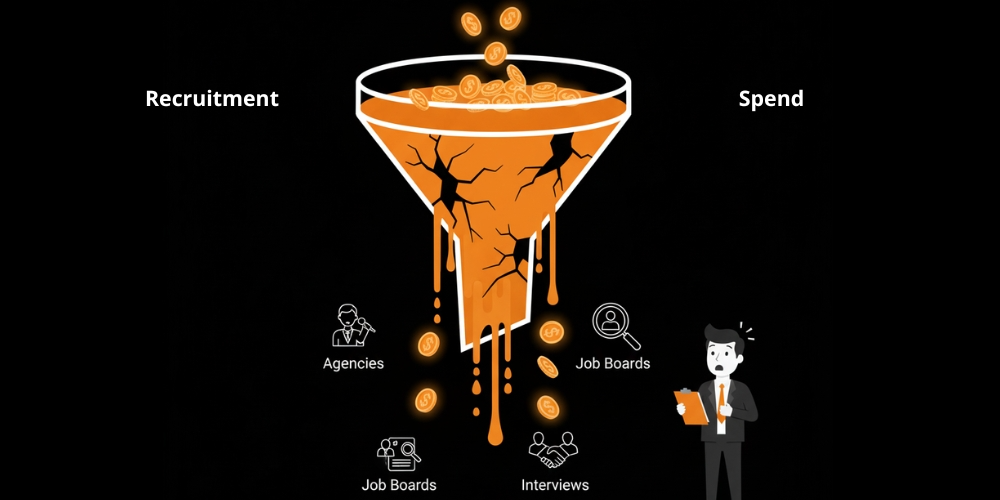
Even with a budget template in place, several categories consistently produce leaks.
Job boards, ads, and sponsorships
Premium job postings range from $100 to $500+ per posting on the larger boards. Across multiple roles and renewals, this compounds quickly. Most teams underspend their attention on whether the channels are actually delivering hires versus just clicks.
Agency and headhunter fees
Outsourcing is convenient and expensive. Agencies typically charge 15-25% of the first year's salary per placement. The fee is justified for hard-to-fill roles; for high-volume hiring, the same money in better tooling usually produces better outcomes.
Internal recruiter and HR time
Often the largest unmeasured cost. Resume reviews, scheduling coordination, candidate follow-ups, manager debriefs — none of it appears on an invoice, all of it consumes substantial team capacity.
Interview rounds
Each interview involves the interviewer's time, the candidate's logistics, evaluator review, and scheduling overhead. Multi-round panels multiply the cost quickly.
Onboarding and equipment
Programs, training materials, technology setup, workspace. These belong in the recruiting budget but often get buried in operational lines.
Hidden Costs Most Teams Miss Entirely
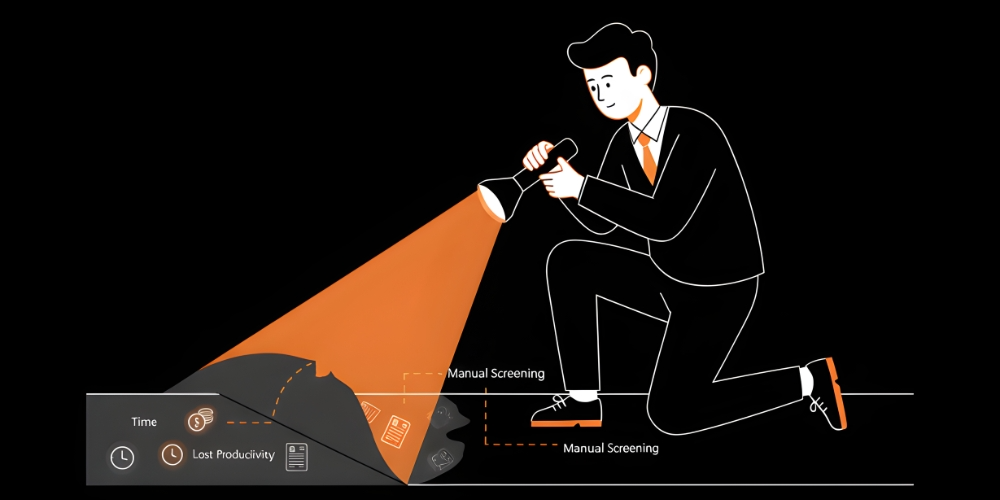
The visible costs are easier to track. The hidden ones are where the real budget bleeds out.
Lost productivity from vacant roles
Every day a role sits open costs the team in delayed work, overloaded teammates, or missed targets. Rarely budgeted; consistently substantial.
Time wasted on poor-fit candidates
Manual resume filtering means hours spent on applicants who never fit. This manual recruitment screening cost is large enough to dominate the time component of most recruiters' days.
Poor candidate experience driving drop-off
Slow replies, disorganised scheduling, no feedback — all push strong candidates to faster competitors. The downstream cost is more outreach and more agency reliance to fill the gap.
Rework and turnover from bad hires
A bad hire costs 30-150% of the role's annual salary once re-hiring, training, and productivity loss are included. The number scales with seniority.
Untracked admin tasks
Email follow-ups, scheduling coordination, data entry across multiple tools, status updates. Small in isolation, large in aggregate.
Decision delays from misalignment
When hiring stakeholders cannot agree, decisions stretch and strong candidates leave. The delay is rarely budgeted but reliably expensive.
How to Fix Recruitment Budget Leaks
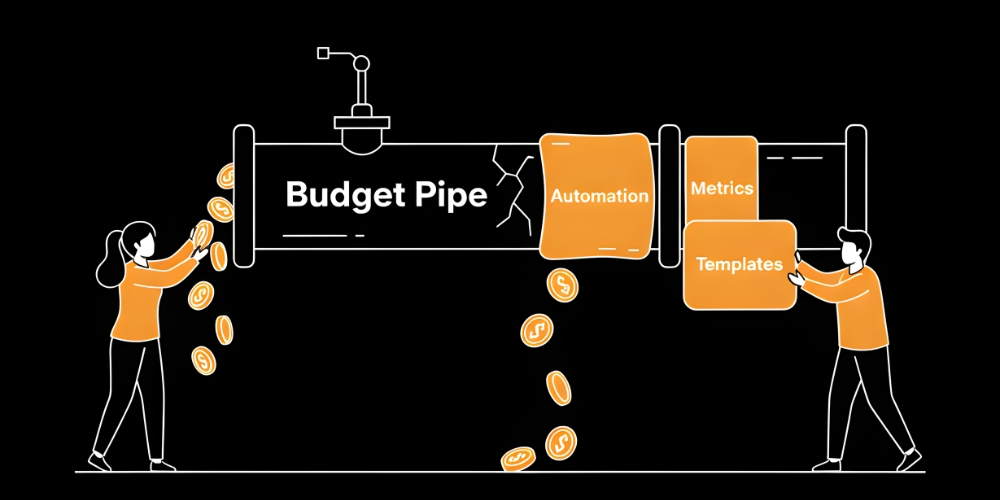
Most leaks come from invisibility, not extravagance. Five moves that close them.
Use a clear, outcome-linked budget template
Spreadsheet or HR budget tool — list every category, including the hidden ones. Tie each line to a specific outcome (hires made, time-to-fill reduced, retention lifted). The exercise alone makes invisible costs visible.
Automate the repetitive work
Resume screening, interview scheduling, candidate follow-ups, status reporting. AI-driven automation closes the largest single time cost in most recruiting functions.
Monitor hiring metrics consistently
Cost-per-hire, time-to-fill, source effectiveness, 90-day retention. Without these four, you cannot tell whether spend is working. Reviewing them quarterly is the cheapest meaningful improvement available.
Plan rolling pipeline needs
Budgets should account for known turnover patterns, seasonal spikes, and growth-stage hiring waves. Reactive panic hires consistently cost more than planned ones.
Invest in tools that enable real cost optimization
The right HR cost optimization stack — AI screening, scheduling automation, integrated assessment, centralised ATS — reduces recruiter hours, lifts accuracy, and prevents money from leaking through manual work.
How Modern Tooling Helps

Modern AI-driven recruitment tools target exactly the leaks that consume most budgets. Automated resume parsing handles the bulk of manual screening cost. AI matching surfaces strong candidates faster, reducing both recruiter hours and time-to-fill. Centralised dashboards eliminate the cross-tool data entry that wastes admin time.
For teams genuinely focused on cutting recruitment costs without sacrificing hire quality, the math is direct: time saved on screening compounds into time spent on the candidate conversations that actually close offers, while consistent scoring rubrics reduce the variance that drives bad hires.
The Bottom Line
Recruitment budgets bleed in places most teams never check. The fix is not cutting headline spending — it is making the hidden costs visible, automating the repetitive work, tracking the outcomes, and choosing tools that match the leaks you actually have. Done that way, recruiting transforms from a cost centre into a measurable growth function. The teams that take this seriously hire faster, retain hires longer, and spend less per successful placement than competitors still operating on intuition-driven budgets.
FAQs
What are the main components of a recruitment budget?
Job postings, recruiter compensation, sourcing tools, candidate assessments, background checks, employer-branding investment, technology subscriptions, and onboarding. The complete list also includes indirect costs like internal recruiter time and productivity loss from vacant roles.
How can I track hidden hiring costs accurately?
Track recruiter and hiring manager hours per role, measure productivity loss from each vacancy, and quantify the cost of bad hires. A structured budget template that includes these categories makes them visible and manageable.
How does automation actually reduce recruitment spending?
By replacing the repetitive manual work that consumes most recruiter hours. Resume screening, scheduling, follow-up sequences, and status reporting can all be automated cleanly — and the time saved tends to go to the high-value conversations that actually close offers.
What metrics best measure recruitment ROI?
Cost-per-hire, time-to-fill, source effectiveness, and 90-day retention. Tracking all four together — across quarters — reveals whether spend is producing genuine hiring success or just activity.
What is the single biggest unbudgeted cost in most recruiting functions?
Internal recruiter and hiring manager time spent on manual work that could be automated. When you measure those hours honestly and assign them their real market value, the cost dwarfs most line items on the visible budget.


