

Recruitment Efficiency: Balancing Speed and Quality in Hiring
Fast hiring without sacrificing quality — the metrics, tactics, and AI tools HR leaders use to compress time-to-hire while protecting fit and retention.
Ployo Team
Ployo Editorial
TL;DR
- 60% of companies reported increasing time-to-hire in 2024 (SelectSoftwareReviews).
- Staffing agencies can cut time-to-hire by up to 50% in many organisations (Skima.ai).
- Key metrics: time-to-hire, cost-per-hire, quality-of-hire, candidate experience, offer acceptance.
- AI handles resume parsing, scheduling, and predictive analytics; humans handle final decisions.
- Balance comes from structured screening + automated admin + clear decision gates.
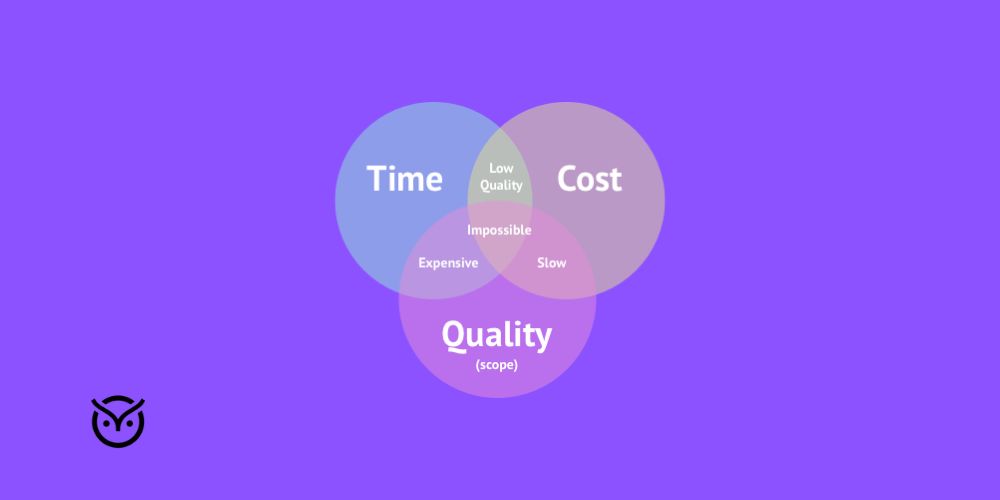
Hiring fast without sacrificing quality is the hardest balancing act in recruiting. Push too hard for speed and bad fits slip through; over-engineer for quality and top candidates accept other offers. Recruitment efficiency is about removing waste so speed and quality reinforce each other rather than trading off. This guide walks through what works.
What Recruitment Efficiency Means

Recruitment efficiency means filling roles correctly using minimal wasted time, energy, or money. Not just speed — speed that doesn't compromise quality.
The core elements: precise job definitions, screening steps that catch mismatches early, automation that removes admin, and smooth candidate communication. Good assessment tools rigorously evaluate while keeping the process moving.
The Real Tradeoff
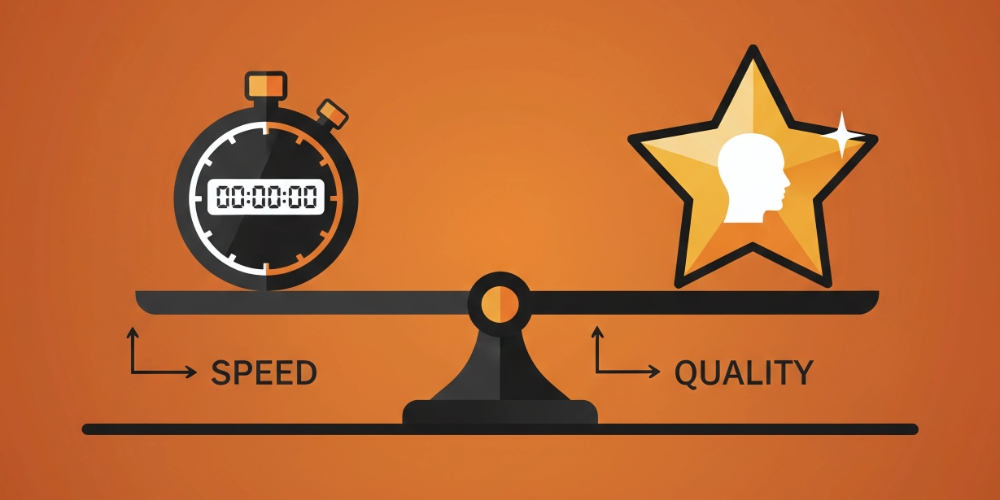
The tension is real. Push for speed too hard and you produce bad fits, high turnover, and unhappy teams. Push for quality through endless interview rounds and you lose strong candidates to faster competitors.
The data captures it. Organisations using staffing agencies report time-to-hire reductions up to 50%. Simultaneously, 60% of companies reported time-to-hire increasing in 2024 — the gap between best and worst performers is widening.
Balance comes from removing friction, not from picking a side.
How HR Leaders Balance Both

Seven moves that consistently improve both metrics simultaneously.
1. Define clear job criteria early
Precise descriptions, must-have vs nice-to-have separation. Prevents wasted time on candidates who never fit the role.
2. Use pre-screening assessments
Short skills tests and structured interviews filter for quality fast. Quality screening doesn't have to be slow.
3. Streamline the funnel
Audit each stage of your recruitment funnel. Remove redundant steps without lowering standards.
4. Adopt efficient tooling
Resume parsing, candidate tracking, automated scheduling. Each saves recruiter hours that go back into higher-leverage work.
5. Align with hiring managers
Set explicit expectations about pace and quality bar. Shifting requirements mid-process drive most delays.
6. Monitor continuously
Metrics surface bottlenecks. Adjust the process based on real data, not anecdotes.
7. Maintain candidate experience
Even fast processes need respectful communication. Strong experience reduces drop-off and protects your employer brand.
How AI Accelerates Without Sacrificing Quality

Three high-impact uses.
Resume parsing and shortlisting
AI scans thousands of applications in seconds, surfacing the highest-fit profiles. Quality of screening rises; recruiter time falls.
Conversational interfaces
Chatbots handle first-round candidate queries, scheduling, and basic screening. Recruiters focus on higher-value conversations.
Predictive analytics
Forecasting talent gaps and channel performance lets HR leaders plan smarter rather than react. Decisions improve at the strategy level too.
Drop-off rates also fall with automated reminders, follow-ups, and status updates. Better experience plus better speed — both at once.
Metrics Worth Tracking
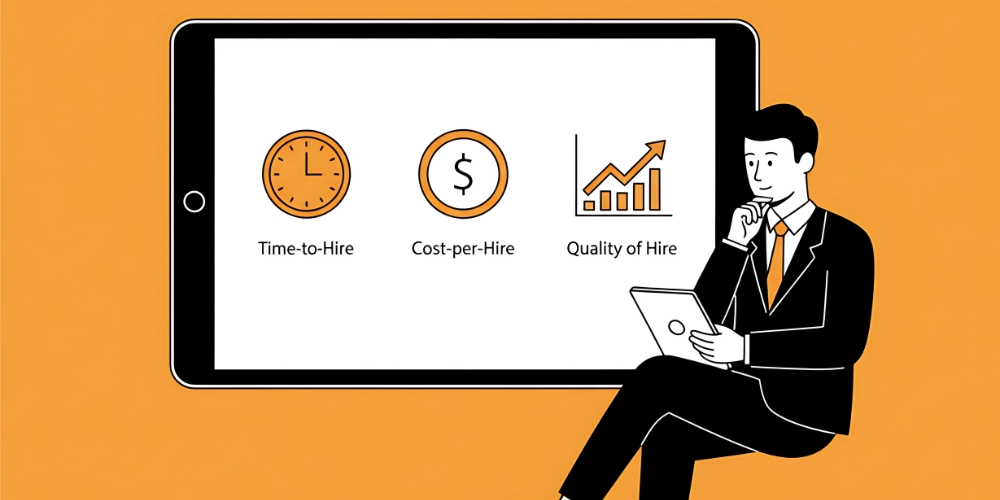
Six core metrics that capture both speed and quality.
| Metric | What it measures |
|---|---|
| Time-to-hire | Speed of moving candidates through the process |
| Cost-per-hire | Financial efficiency of recruitment effort |
| Quality-of-hire | Performance, tenure, contribution of new hires |
| Candidate experience score | Brand and funnel health signal |
| Source of hire | Channel effectiveness |
| Offer acceptance rate | Competitiveness of process and offers |
Quality-of-hire is the ultimate measure — without it, "efficiency" gains are illusory.
Best Practices
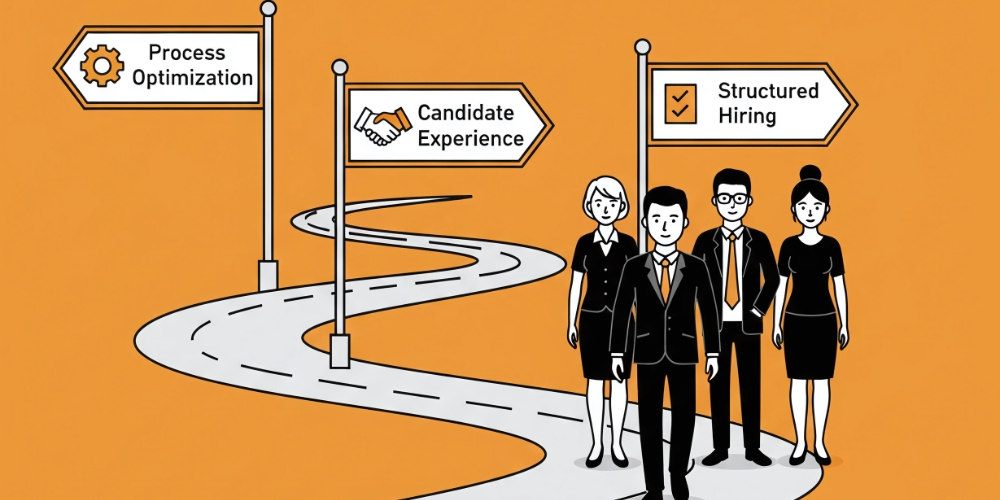
Six practices that consistently produce both speed and quality.
Design a 360 strategy
Integrate sourcing, selection, onboarding, and retention. Disconnected approaches produce duplication and inefficiency.
Map and refine the funnel
Identify bottlenecks and address them deliberately. Shorten dragging interviews; pivot weak sourcing channels.
Standardise but stay flexible
Templates and structured interviews save time. Unique roles still need bespoke evaluation when warranted.
Use efficient tooling
ATS, video interview platforms, automated assessments. The right tools materially improve outcomes.
Train hiring managers
Recruiters aren't solely responsible for efficiency. Hiring manager decision-making and timely communication matter as much as recruiter execution.
Focus on long-term outcomes
Short-term speed is meaningless if turnover spikes 6 months later. Pair fast screening with rigorous evaluation; revisit the overall recruitment process regularly.
The Bottom Line
Recruitment efficiency comes from removing waste, not from compromising on quality. Define roles clearly, screen rigorously but fast, use automation for admin, measure both speed and quality continuously, and maintain candidate experience throughout. The HR teams that achieve this balance hire stronger candidates, faster, at lower cost — and look like they're running a well-oiled machine to everyone around them. The teams that don't continue trading speed and quality off against each other, indefinitely.
FAQs
How can HR balance speed and quality?
Define clear criteria, use efficient recruitment tools, and monitor both speed and quality metrics. Automation produces speed; structured evaluation produces quality. The balance comes from doing both deliberately.
What tools improve recruitment efficiency?
ATS platforms, AI-powered screening tools, automated scheduling, and skill assessment platforms. The combination matters more than any single tool.
Which metrics matter most?
Time-to-hire, cost-per-hire, and quality-of-hire are the top three. Candidate experience scores and offer acceptance rates round out a complete view.
Can speed and quality really both improve?
Yes — when you remove waste rather than cut steps. Automation, clearer criteria, and faster decision-making compress timelines while protecting (and often improving) quality.
What's the highest-leverage improvement to make first?
Audit time-to-hire stage by stage. The stage with the worst lag is where the biggest gains live — and fixing it usually requires removing inefficiency rather than adding new tools.
Keep reading


