

Internal Mobility: The Hiring Strategy Companies Underuse in 2026
Internal mobility cuts hiring costs, lifts retention, and builds future-ready skills — how to implement it without the resistance that usually derails it.
Ployo Team
Ployo Editorial
TL;DR
- External hires cost ~18% more than internal promotions and underperform in their first two years.
- Strong internal mobility lifts retention substantially — employees with positive growth experience are up to 8x more likely to stay.
- About half of all employees will need reskilling by 2025 (WEF), making mobility a strategic capability.
- Common blockers: manager hoarding, opaque processes, missing skill data, weak career visibility.
- AI-enabled skill mapping and internal job boards remove most of the structural friction.
External hiring has gotten harder and more expensive every year. Meanwhile, capable employees quietly leave because they cannot see growth paths inside the company. The cost-effective fix sits in plain sight: internal mobility. Move people to where their skills are needed, build new capabilities through stretch assignments, and reach the open role from inside the organisation before searching outside. This guide walks through what internal mobility actually delivers, why so many programs stall, and how the strongest companies make it work in 2026.
What Internal Mobility Means
Internal mobility is the practice of moving existing employees into new roles inside the company — promotions, lateral shifts, project assignments, short-term rotations, or full role changes. It complements external hiring rather than replacing it, but for many roles it should be the first option, not the fallback.
The premise is straightforward: the company already invested in hiring, onboarding, and developing existing employees. Each role filled internally avoids re-paying that cost externally. The compounding return on existing talent investment is the structural advantage that strong internal mobility unlocks.
Why Internal Mobility Matters More in 2026
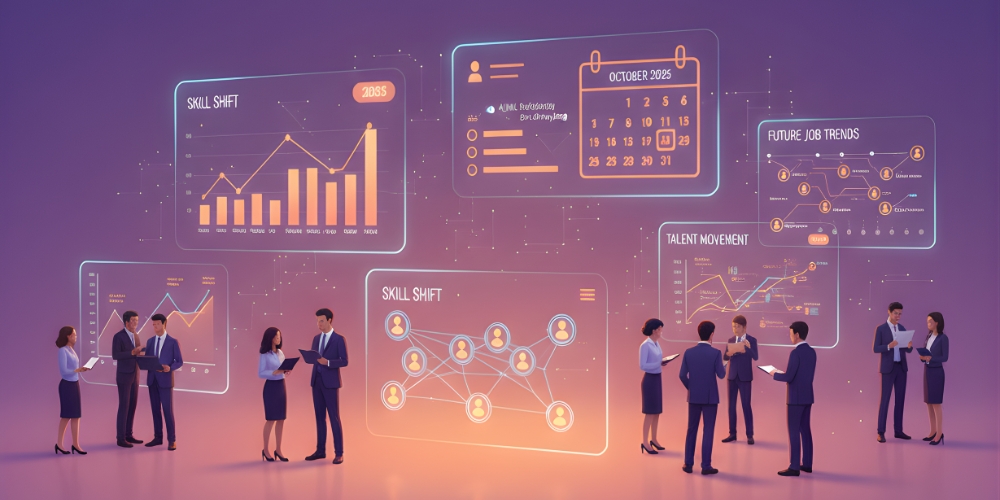
Three trends make mobility a strategic priority, not a nice-to-have.
Skill churn is accelerating
The World Economic Forum's Future of Jobs research estimates around half of all employees will need reskilling by 2025 as technology adoption shifts what work looks like. Companies that grow new skills internally adapt faster than those that try to hire them externally.
Retention is the largest controllable cost
McKinsey's HR Monitor 2025 found employees reporting positive work experiences are around 8x more likely to stay. Clear career paths are one of the strongest contributors to that experience.
External hires cost more and underperform initially
InFeedo analysis shows external hires cost ~18% more than internal promotions and typically show lower performance in their first two years. The premium pays back only on roles where internal candidates genuinely don't exist.
Key Benefits Worth Quantifying

| Benefit | What it delivers |
|---|---|
| Faster hiring | Days/weeks instead of months — culture fit already known |
| Lower hiring cost | ~18% cost savings vs external; lower onboarding lift |
| Stronger retention | Employees with growth paths stay 2-3x longer |
| Higher engagement | Visible career runway drives discretionary effort |
| Better skill alignment | Real performance history available, not just interview impressions |
| Stronger culture | Cross-team movement breaks silos and spreads knowledge |
| Future-ready skill base | Stretch assignments build capability before it's commercially urgent |
The benefits compound. Each successful internal move strengthens the next — career stories travel, the culture starts to assume growth is possible, and retention compounds.
How to Build an Internal Mobility Program That Works
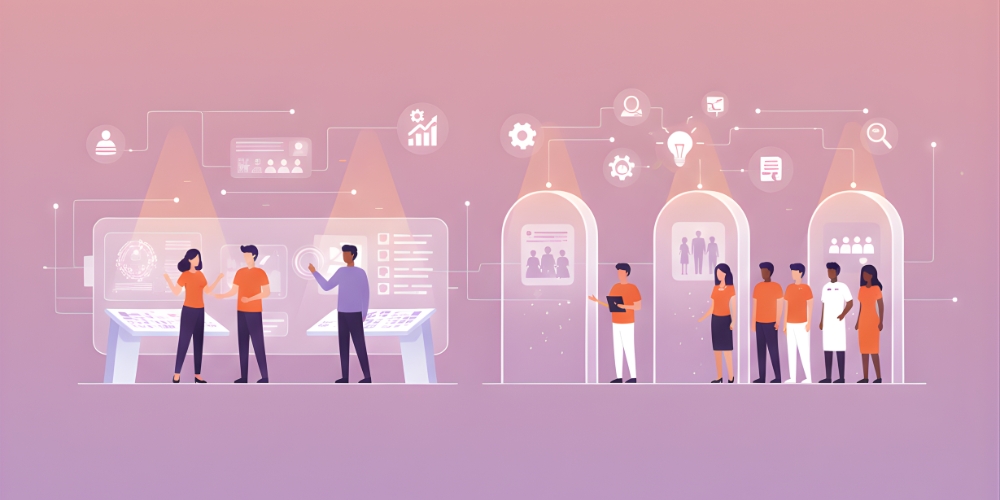
Five elements consistently distinguish working programs from theoretical ones.
1. Transparent internal job boards
Every open role should be visible to internal candidates before — or at minimum alongside — external posting. Visibility is the foundation; without it, mobility remains accidental rather than systemic.
2. Manager training and incentives
Manager hoarding is the single most common mobility blocker. Train managers on the strategic value of releasing talent and explicitly include team development (people promoted out) as a positive performance metric, not a loss.
3. Skill mapping
Companies that don't know what skills they have can't move talent to where it's needed. Modern skills platforms map current capabilities, identify gaps, and surface internal candidates for new roles that wouldn't show up through CV-based search alone.
4. Structured evaluation
Internal moves need the same rigour as external hires — structured interviews, written rubrics, consistent criteria. "Tap on shoulder" promotions damage culture even when the chosen person is the right one.
5. Visible learning pathways
If employees can't see what skills lead where, they can't plan growth. Documented career paths with the skills, experiences, and behaviours that lead between roles give employees a roadmap and the company a development engine.
Common Barriers (and How to Clear Them)

| Barrier | What it looks like | Fix |
|---|---|---|
| Manager hoarding | Strong people get blocked from applying | Mandate transparency + incentivise releases |
| Unclear paths | Employees don't know what roles are open or how to qualify | Internal job board + documented career paths |
| Missing skill data | Talent decisions made on impression rather than evidence | Skills platform + structured profiles |
| Opaque process | Some employees get tapped, others don't | Open posting + structured evaluation |
| Permission gates | Employees need manager approval to apply | Self-application with manager notification |
| Tech gaps | No system to match people to opportunities | Integrated talent platform |
Most of these blockers are structural, not motivational. Fix the structure and the behavioural changes follow.
How AI Strengthens Internal Mobility
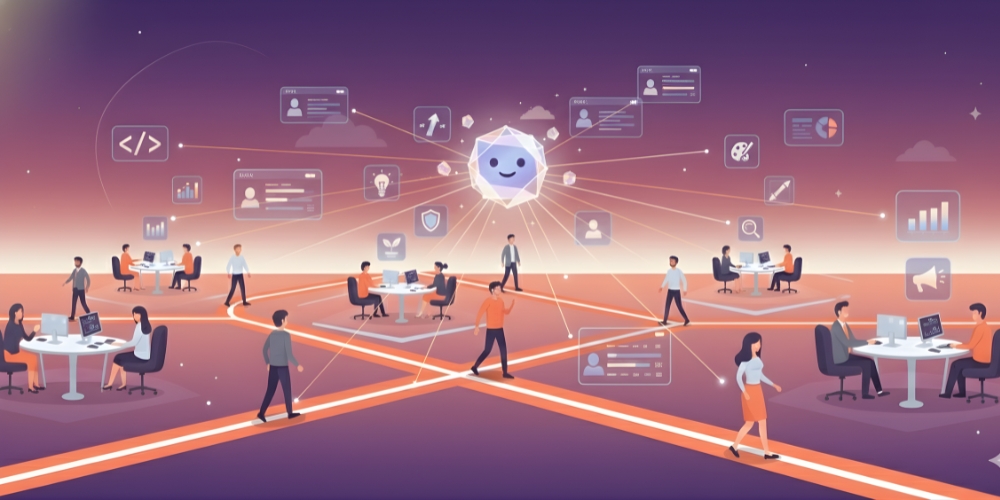
AI tooling is making internal mobility dramatically easier to operate at scale.
Skill inference at scale
Modern systems analyse work history, project assignments, code contributions, and learning data to build employee skill profiles automatically. Manual skill self-reporting alone tends to be incomplete and biased — AI-augmented profiles cover the gaps.
Role-fit matching
When an internal role opens, the system can surface candidates whose skills fit, including people who wouldn't have applied because they didn't realise the role was relevant.
Personalised learning paths
AI maps the skill delta between a person's current capability and a target role, then recommends specific learning, projects, or stretch assignments to close the gap.
Adverse impact monitoring
Internal mobility can encode bias just like external hiring. AI-driven audits surface patterns — who gets promoted, who gets passed over, where the demographic differentials show up.
What Strong Internal Mobility Looks Like in Practice
The mature pattern consistently includes:
- Roles posted internally before or alongside external posting
- Skills inventory updated quarterly and accessible to employees
- Career-path conversations as part of every 1:1
- Cross-functional projects offered as stretch experiences
- Mentorship programs that connect across teams
- Manager performance reviews including talent-out metrics
- Quarterly retrospectives on mobility outcomes
- Transparent communications about internal moves
The cumulative effect is a company that grows its own next generation of leaders rather than constantly competing for external talent.
The Bottom Line
Internal mobility is the most underutilised hiring strategy available to most companies. The cost savings, retention improvements, and skill-development gains compound across years in ways that external hiring rarely matches. The barriers to effective mobility are almost entirely structural — opaque processes, missing skill data, manager incentives that punish releasing talent — and all of them are fixable with deliberate program design. The companies that build strong internal mobility in 2026 spend less on hiring, retain more of their best talent, and adapt faster as skill needs evolve. The companies that keep treating external hiring as the default keep paying the premium for capability they could have grown.
FAQs
Why is internal mobility important?
Because it retains talent companies have already invested in, builds future-ready skills faster than external hiring can, and reduces hiring costs significantly. Employees with visible growth paths also stay longer, compounding the benefit.
What are common examples of internal mobility?
Promotions, lateral moves to different teams, stretch project assignments, cross-functional rotations, temporary leadership opportunities, and full role changes between functions. All count — variety matters.
How does AI support internal mobility?
By inferring skills at scale, matching internal candidates to open roles, recommending personalised learning paths, and monitoring for bias in promotion patterns. AI removes most of the structural friction that historically made mobility hard.
What's the biggest barrier to internal mobility?
Manager hoarding — leaders blocking strong performers from applying elsewhere to protect their own teams. Without structural fixes (transparency, manager incentives, leadership accountability), every other program element falls short.
How do I start an internal mobility program?
Begin with three moves: post all open roles internally before going external, build a basic internal job board, and train managers on the strategic value of releasing talent. These three changes unblock most of the latent mobility without major tooling investment.


