

Choosing Text Recruiting Software: Features, Compliance, AI Layer
Text recruiting reaches candidates faster than email — what to look for in a platform, compliance must-haves, and the AI features actually worth paying for.
Ployo Team
Ployo Editorial
TL;DR
- 97%+ of US adults own a mobile phone (Pew) — text reaches almost everyone.
- Email open rates average ~43% (MailerLite 2025); text typically far higher with faster replies.
- Must-have features: compliance/consent controls, ATS integration, human-feel templates.
- AI helps with reply timing, drafting, and stalled-conversation detection — not message generation in bulk.
- High-volume hiring (retail, healthcare, hourly) benefits most; senior hiring less so.
Email is still where most hiring conversations stall — candidates miss messages, recruiters chase ghosted threads, and time-sensitive roles slip. Text recruiting cuts through that friction when the tool is set up well and compliance is taken seriously. This guide walks through what to look for in a platform, how to evaluate options, and the mistakes that turn texting from a hiring accelerant into a candidate-experience disaster.
What Text Recruiting Software Does
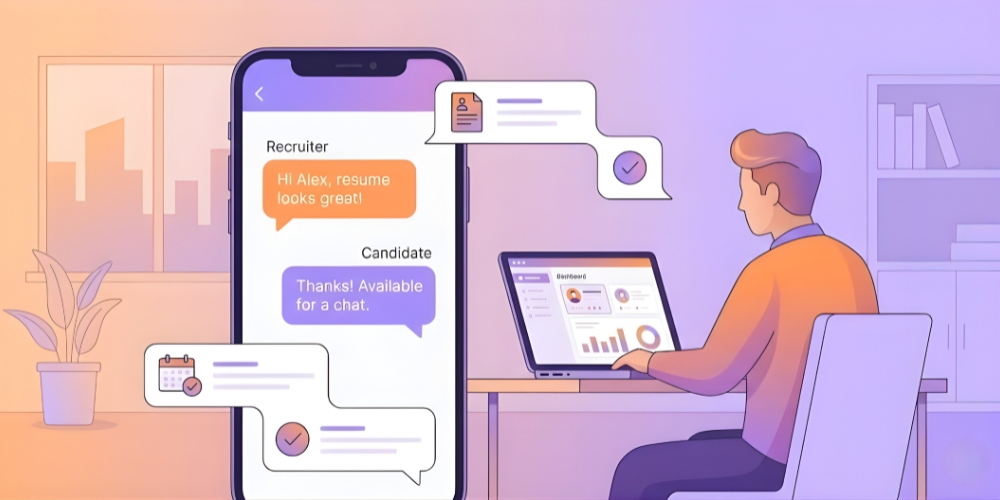
Text recruiting platforms let recruiters reach candidates by SMS — interview scheduling, updates, screening questions, reminders — without needing the candidate to download anything. They organise threaded conversations, store message history, and integrate with ATS systems. Most support templates, automated replies, and group messaging.
The reach advantage is real. Pew Research shows 97%+ of US adults own a mobile phone, and texting is one of the most-used features. Almost no other channel reaches the workforce as broadly.
Why Texting Matters in Modern Hiring
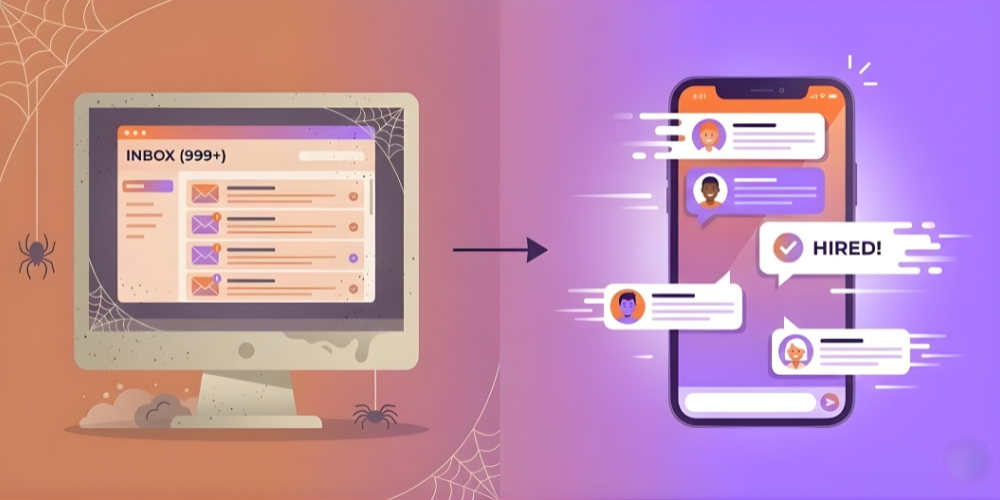
Three structural advantages over email.
Speed of response
MailerLite's 2025 benchmark puts average email open rates at 43.46% — text consistently runs much higher with faster reply times. For time-sensitive hiring decisions, that gap matters.
Volume management
Retail, healthcare, logistics, and hourly hiring teams use texting to handle large applicant volumes without losing the personal touch. Screening questions answered by text route faster than email and produce cleaner downstream data.
Inclusivity
When paired with inclusive language tools in AI recruiting software, texting removes long written barriers and supports clearer communication for candidates across literacy and language differences. This complements broader HR software insights on candidate accessibility.
Texting isn't replacing email — it's becoming a baseline channel alongside it.
Features That Actually Matter
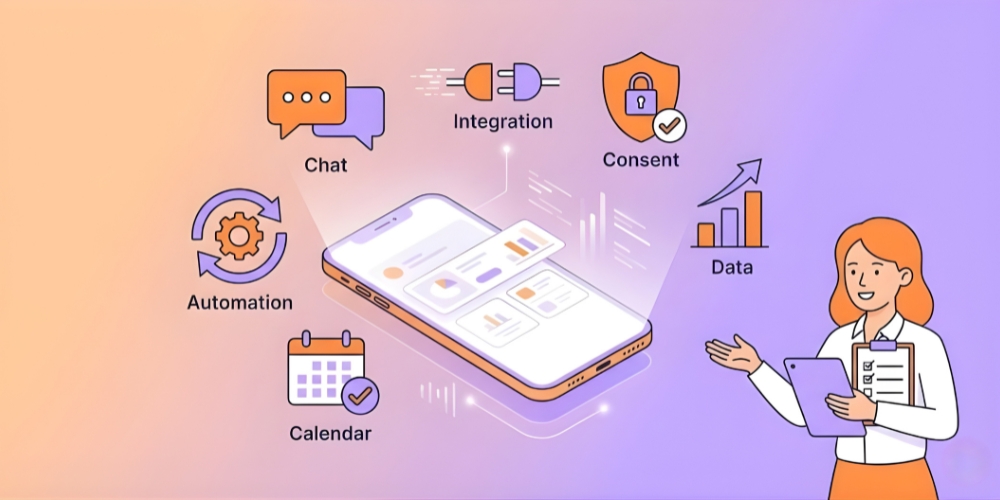
Five categories worth prioritising in evaluation.
One-to-one and group messaging
Both modes need to work without crossing wires. Threaded one-to-one views matter for personal conversations; group messaging for high-volume outreach. Bad UX here kills usage.
Human-feeling templates
Templates save time, but messages must still sound like a human wrote them. Editable templates with merge fields beat rigid mass-send tools.
Compliance and consent controls
The FCC has clear rules around SMS consent. Strong platforms handle opt-in tracking, automatic STOP responses, and time-of-day quiet hours by default. Weak compliance controls expose the company to TCPA litigation risk.
ATS integration
The texting tool should connect to your applicant tracking system so candidate data and conversation history stay synchronised. Without this, data hygiene breaks down within weeks.
Automation without losing control
Reminders, follow-ups, and screening question flows benefit from automation. Combined with recruitment automation software, recruiters reclaim hours per week — but only when the automation supports rather than replaces human judgment.
How to Evaluate Platforms
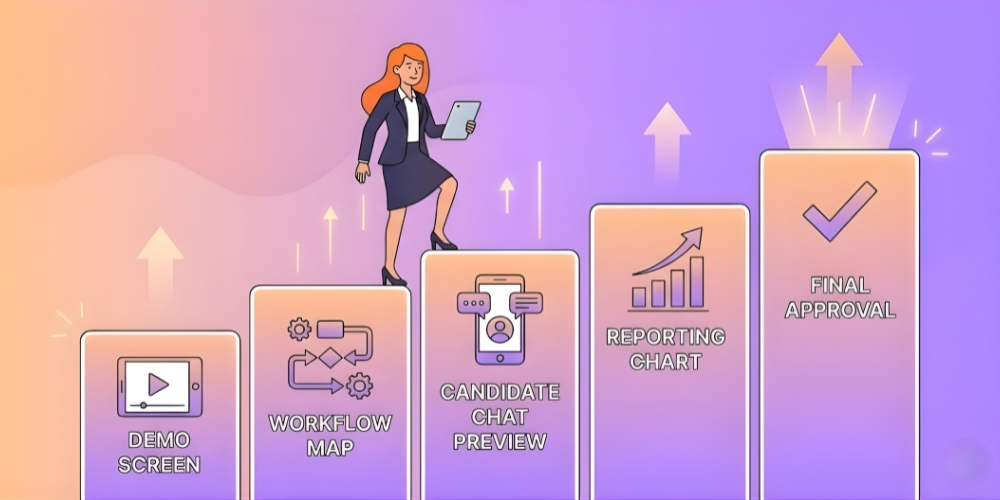
Five evaluation dimensions, in priority order.
1. Clarity on use case
High-volume hiring (50+/month) needs automation, templates, and quick screening flows. Low-volume hiring (5–10/month) needs personal, clean conversations. Pick for the dominant pattern.
2. Ease of use
Demo the actual workflow: send a message, reply as a candidate, schedule an interview. Friction at the demo stage compounds into avoidance once your team has to live with it daily.
3. Workflow fit
The tool needs to fit your existing hiring process — not force a redesign. Strong platforms wrap around ATS workflows; weak ones force you to context-switch constantly.
4. Candidate experience
How do candidates experience the messages? Tone, response timing, opt-out handling. If candidates report feeling spammed, the platform is wrong regardless of feature set.
5. Reporting
Response rates, drop-off points, time saved. Without metrics, you can't tell whether texting is actually accelerating hires or just feeling like it should.
Common Mistakes
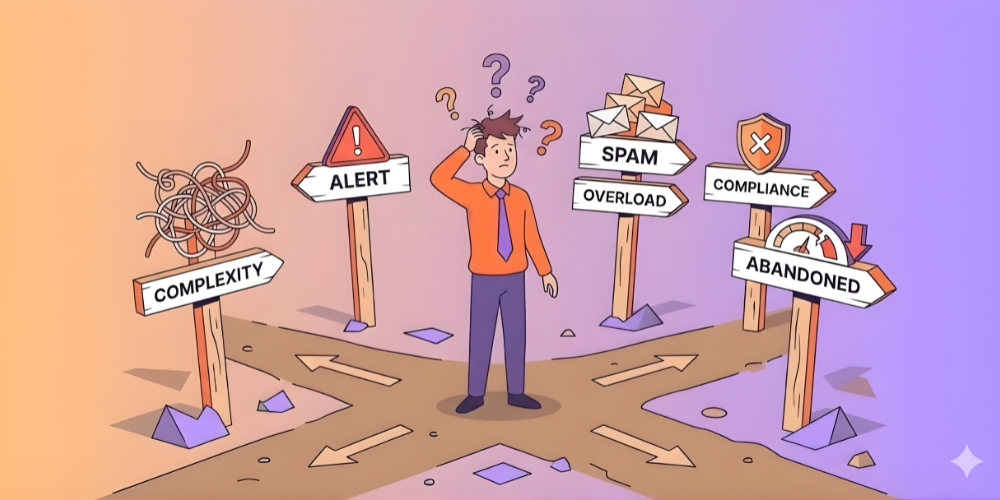
Five patterns that consistently undermine text recruiting programs.
Feature-led purchase decisions
Shiny dashboards don't matter if recruiters don't use them. Pick for adoption likelihood, not feature count.
Ignoring compliance
SMS rules around consent and opt-out are non-negotiable. Weak controls eventually produce legal exposure or candidate experience damage — usually both.
Over-automating early
Automation amplifies whatever workflow you wire into it. Wire a bad workflow and you get fast, scaled badness. Start manual, automate gradually as patterns prove out.
Skipping candidate-side testing
Teams test platforms internally but rarely as a candidate. Run the full applicant experience yourself before committing.
Treating texting as a side channel
Texting works best as a first-class part of the hiring flow, not an afterthought used only for last-minute scheduling. Build it in deliberately.
Where AI Helps
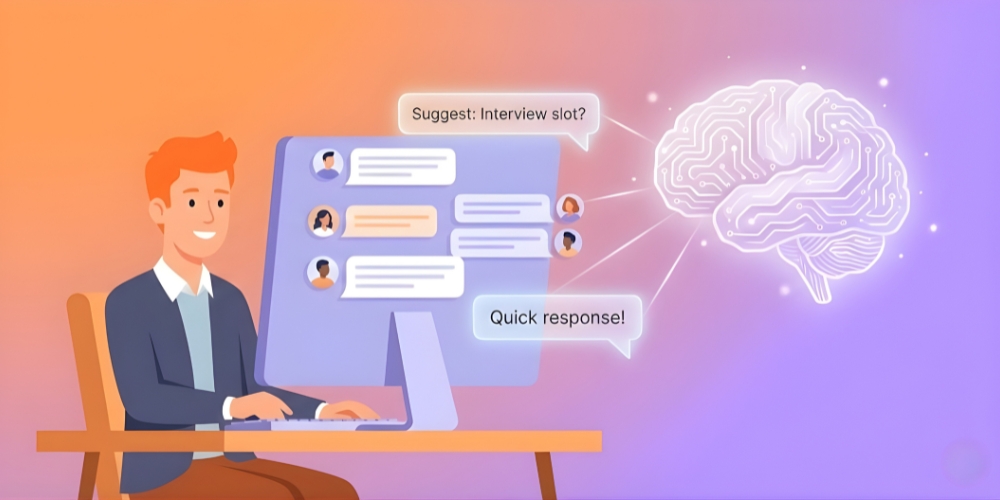
AI adds value when it reduces effort without eroding trust.
Reply timing suggestions
AI flags optimal moments to respond to specific candidates, increasing reply rates without manual cadence management.
Draft responses
Smart suggestions for common candidate questions free recruiter time for the conversations that need real thought.
Stalled conversation detection
AI identifies threads going cold and surfaces them for proactive follow-up before the candidate fully disengages.
Predictive engagement
AI flags candidates most likely to respond — and most likely to ghost — based on historical engagement patterns. Recruiter time follows the highest-probability conversations.
The goal isn't more messages; it's better conversations with less manual overhead.
The Bottom Line
Text recruiting works when it's deliberately set up — strong compliance controls, ATS integration, human-feel templates, and AI used to enhance rather than replace human judgment. It fails when it's treated as a feature add-on, bolted onto email-centric workflows, or over-automated before the underlying flow is proven. Pick the platform for adoption, not features. Run it for candidate experience, not just recruiter speed. The hiring teams that get this right reach candidates their competitors can't — and close roles before email-only teams have even started threading replies.
FAQs
Is SMS recruiting legal?
Yes, when done correctly. The TCPA and FCC rules require clear consent, respect for opt-out requests, and adherence to time-of-day messaging restrictions. Professional platforms manage most of this automatically.
Does text recruiting actually improve response rates?
Yes — substantially. Candidates open and reply to text messages faster than email, especially for time-sensitive items like interview scheduling and screening questions.
How does AI improve text recruiting?
By prioritising which conversations need attention now, suggesting replies for common situations, and reducing repetitive admin work. AI extends recruiter reach without scaling spam.
What types of hiring benefit most from texting?
High-volume hiring (retail, hospitality, healthcare, hourly), time-sensitive roles, and any process with significant drop-off between application and first interview.
What's the highest-leverage feature to require?
Strong compliance and consent controls. Everything else is convenience; compliance failure produces real legal and reputational damage. Make this the first filter.
Keep reading

Game-Based Assessments in Hiring: How They Work and What They Measure

