

Game-Based Assessments in Hiring: How They Work and What They Measure
Game-based assessments measure cognitive and behavioural traits through interactive challenges — what they evaluate, the trade-offs, and AI's role.
Ployo Team
Ployo Editorial
TL;DR
- Game-based assessments measure cognition and behaviour through interactive challenges.
- Research shows test-retest reliability of ~0.68 and convergent validity of ~0.50.
- 78% of candidates view employers using gamified tests more favourably.
- Employers report ~29% better job performance prediction vs traditional tests.
- Best deployed as one component of a structured assessment process, not standalone.
Traditional pre-employment tests feel stiff. Long questionnaires, timed exams, and standardised testing produce real anxiety that makes candidates underperform versus their actual ability. Game-based assessments replace these formats with interactive challenges that measure the same underlying skills while feeling less stressful to candidates. This guide walks through what game-based assessments actually are, how they work, what they measure reliably, and when they fit best in modern hiring.
What Game-Based Assessment Is
A game-based assessment is a structured psychometric tool that measures candidate capability through interactive game mechanics. Instead of filling in a personality inventory or solving abstract logic puzzles in test format, candidates play short games that capture the same underlying signal in a more engaging form.
These tools are not entertainment. They're designed by psychometricians and validated against the constructs they measure. Research published in PMC on game-based cognitive assessment shows convergent validity of around 0.50 and test-retest reliability of around 0.68 — comparable to many traditional assessments.
Most are mobile-friendly, time-bounded (5-30 minutes), and produce scoring that feeds into hiring decisions alongside other signals.
How Game-Based Assessments Work
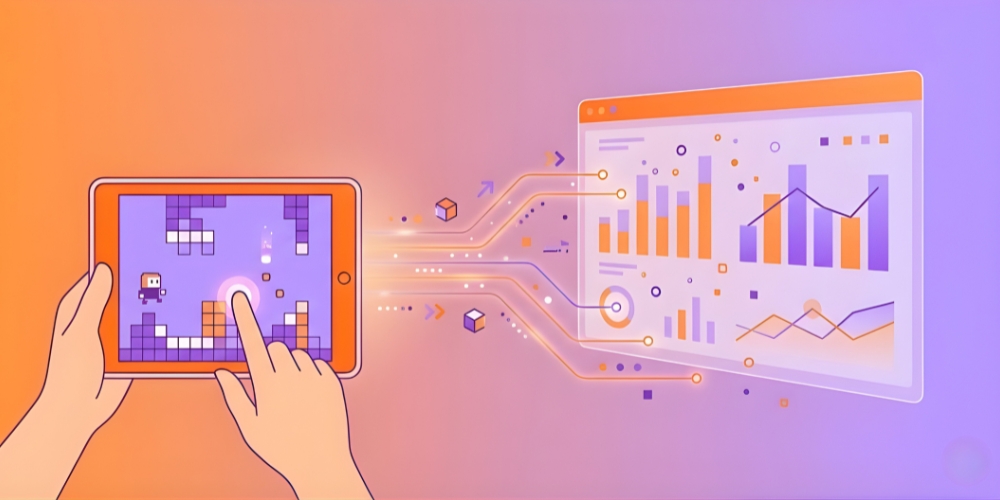
The typical flow.
1. Candidate receives a link
Web or mobile, completed at the candidate's chosen time. Usually 5-15 minutes total.
2. Candidate plays through tasks
Games may include puzzles, decision-making scenarios, pattern matching, risk-management exercises, or memory challenges. Difficulty often adapts based on performance.
3. System captures data
Beyond pass/fail, the system records reaction time, decision patterns, recovery from mistakes, and behavioural signal across many game moments. This produces a far richer profile than yes/no question responses.
4. Scoring and reporting
Results are scored against role-relevant benchmarks. Recruiters get composite scores plus detailed breakdowns showing strengths and gaps.
5. Integration with other signals
Strong programs combine game-based assessment with structured interviews, work samples, and reference checks. Game data informs but doesn't decide.
Skills Game-Based Assessments Measure
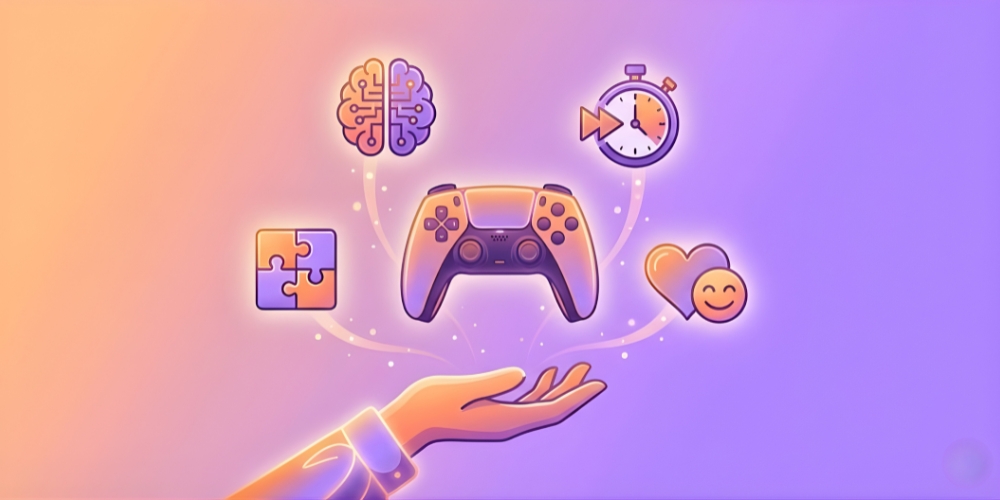
Three categories of capability.
Cognitive abilities
- Working memory and attention
- Logical reasoning and problem-solving
- Mental speed and processing flexibility
- Numerical or spatial reasoning (depending on the game)
Behavioural traits
- Decision-making under pressure (risk-taking vs caution)
- Adaptability to changing conditions
- Resilience after mistakes
- Multitasking capacity
- Emotional awareness in some advanced assessments
Job-relevant simulations
Some assessments mirror specific work scenarios — customer interactions for service roles, resource management for operational roles, data analysis for analytical roles. These produce stronger predictive signal because they directly measure capability against role-relevant tasks.
Benefits of Game-Based Assessments
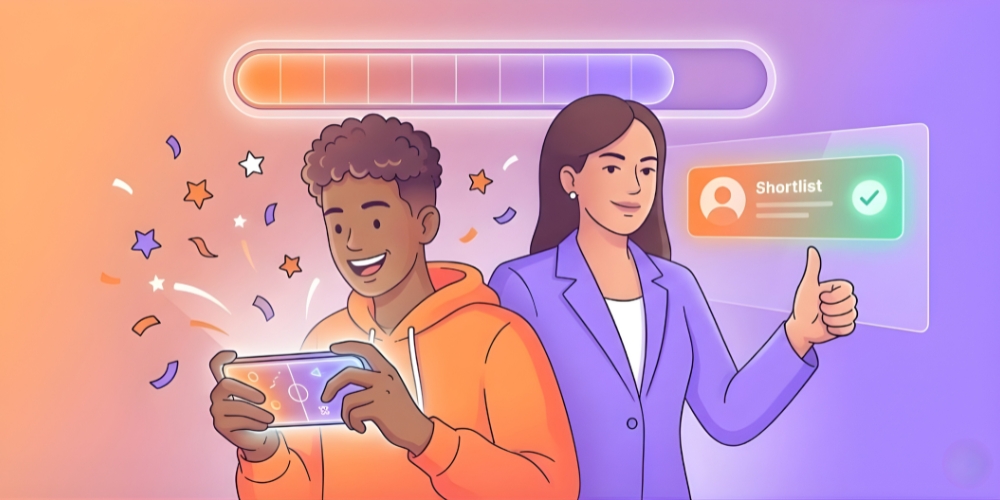
Five gains over traditional assessment formats.
More natural skill demonstration
Candidates act in realistic situations rather than answering abstract questions. Behaviour observed under simulated pressure predicts on-job behaviour better than self-report.
Better candidate experience
Test Partnership research shows ~78% of candidates view employers using gamified tests more favourably. Completion rates are higher; perceived fairness is stronger.
Faster screening at volume
Short, engaging assessments scale well for high-volume hiring. Recruiters review composite scores rather than wading through long candidate forms.
Better prediction accuracy
Employers report ~29% better job performance prediction vs traditional tests. Multi-signal capture from gameplay produces richer data than single-response questionnaires.
Brand impact
Modern, engaging assessments signal a forward-looking employer that respects candidate experience — particularly powerful for attracting early-career talent.
Challenges Worth Knowing
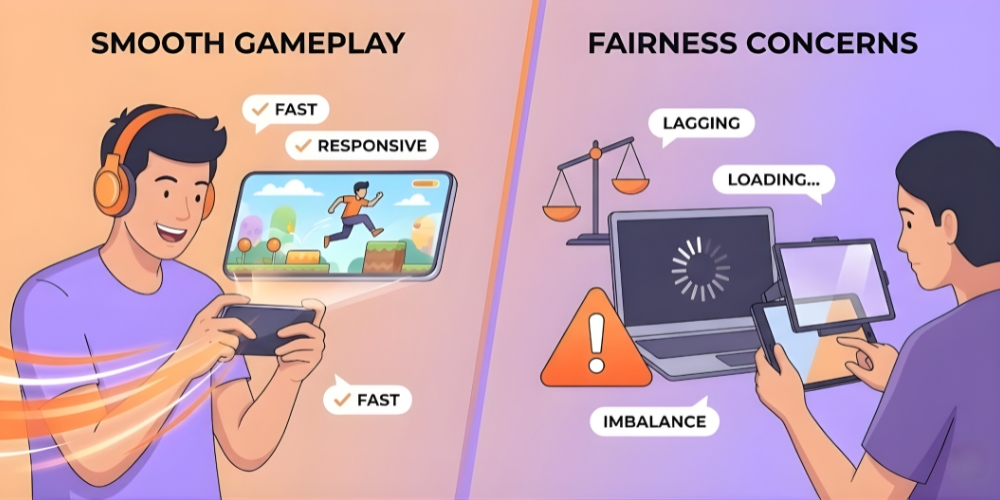
Four limitations worth respecting.
Device variability
Different screen sizes, processing speeds, and network conditions can affect scores. Well-designed assessments compensate; weaker ones don't. Verify the vendor handles this.
Accessibility considerations
Candidates with disabilities may need accommodations — keyboard alternatives, visual support, time extensions. Strong vendors offer these proactively.
Interpretation complexity
Game-based assessments produce rich data — sometimes more than recruiters know how to interpret. Vendor training and structured reporting matter.
Over-reliance risk
No single assessment should make hiring decisions. Game-based assessment works best as one input alongside interviews, work samples, and reference checks.
How Recruiters Use Game-Based Assessments
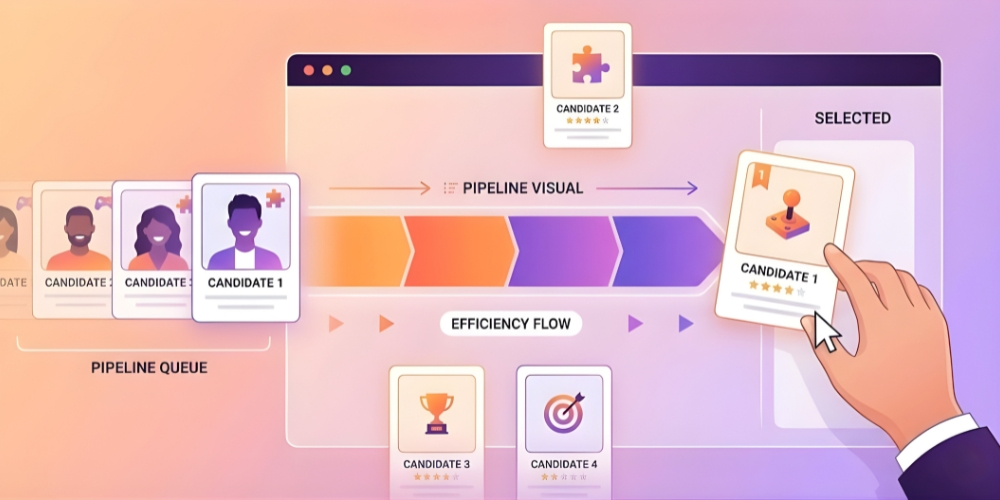
Four primary use cases.
Early-stage volume screening
Narrow a large applicant pool to a shortlist using consistent criteria. Especially effective for entry-level and high-volume hiring where resume screening alone is insufficient.
Graduate and early-career evaluation
When work history is short, game-based assessment surfaces capability that resumes can't show. Particularly valuable for graduate programs and internship hiring.
Specific cognitive style assessment
For roles where decision-making under risk, attention to detail, or pattern recognition matters specifically — analytics, trading, operations management — game-based assessment surfaces these traits directly.
Diversity-supportive hiring
Because game-based assessment captures behaviour rather than credentials, it can widen the talent pool to candidates who would have been filtered out by resume-only screening.
The Role of AI in Game-Based Hiring
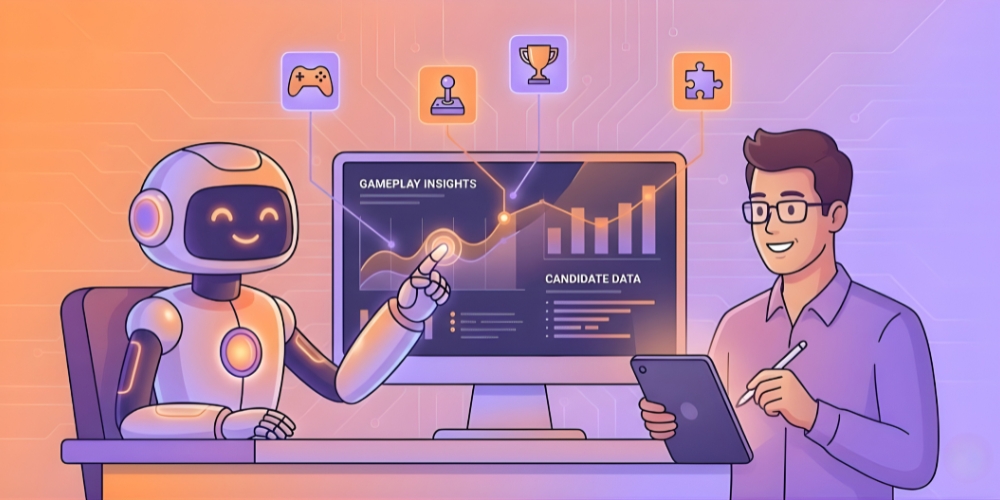
Modern game-based platforms increasingly use AI to add capability.
Real-time scoring
AI processes thousands of micro-decisions per assessment in real time, producing scores immediately rather than after batch processing.
Pattern detection
AI surfaces patterns humans would miss — subtle behavioural correlations with on-job success, predictive markers across role types.
Bias monitoring
Continuous adverse-impact analysis across demographic groups. Well-built platforms publish their bias-testing methodology and results.
Adaptive difficulty
AI-driven adaptive testing adjusts game difficulty based on candidate performance, producing more accurate measurement in less time.
Outcome correlation
AI-driven talent assessment tools connect assessment data to actual hire performance, continuously refining what the games measure and how.
Best Practices for Implementing Game-Based Assessment
Five practices that consistently produce strong outcomes.
1. Match game to role
Generic cognitive games for technical roles produce weaker signal than role-specific simulations. Match the assessment to the work.
2. Validate against actual outcomes
Track game scores against actual hire performance after 6-12 months. The validation matters more than vendor claims.
3. Combine with other signals
Game-based assessment + structured interviews + work samples consistently outperforms any single method.
4. Audit for bias quarterly
Adverse impact analysis across demographic groups. Address patterns before they become public issues.
5. Train recruiters on interpretation
Score reports without context can be misread. Vendor training and structured rubrics for action protect against misuse.
The Bottom Line
Game-based assessment is a meaningful evolution of pre-employment testing — measuring the same underlying constructs as traditional assessments while producing better candidate experience and richer behavioural data. The format isn't gimmick; the validation research consistently supports its predictive utility when properly designed. The companies using it well combine game-based assessment with structured interviews and work samples to produce hiring decisions that outperform resume-and-vibe screening. The companies treating it as standalone replace one weakness with another. Done thoughtfully, it's a strong addition to modern hiring; done thoughtlessly, it's just expensive theatre.
FAQs
How are candidates scored in gamified tests?
The game captures behaviour throughout play — decisions, reactions, recovery from mistakes, risk patterns. Scoring algorithms map these patterns against benchmarks calibrated to specific roles. Score reports show composite ratings plus underlying behavioural breakdowns.
Are game-based assessments accurate and fair?
Strong assessments built with psychometric expertise and validated against outcomes show reliability comparable to traditional tests. Fairness depends on careful design — bias audits, accessibility accommodations, and continuous monitoring.
How does AI enhance game-based recruitment?
Real-time pattern detection, adaptive difficulty, bias monitoring, and outcome correlation. AI processes the rich micro-behavioural data that gameplay produces in ways manual review can't match at scale.
Are game-based assessments only for entry-level hiring?
No — though they're most common there. Senior and specialist roles increasingly use them for specific behavioural assessment (decision-making, judgement under pressure) where traditional methods produce weaker signal.
What's the highest-leverage use case?
High-volume entry-level hiring where resume screening alone is insufficient and traditional tests produce abandonment problems. Game-based assessment improves both speed and quality in this scenario consistently.
Keep reading

Choosing Text Recruiting Software: Features, Compliance, AI Layer

