

Global Compliance Mistakes TA Leaders Make and How to Avoid Them
International hiring carries real compliance risk — the mistakes TA leaders consistently make, the exposure they create, and the systems that prevent them.
Ployo Team
Ployo Editorial

TL;DR
- International hiring exposes companies to labor law, data privacy, and benefits compliance risk.
- 55% of companies now use HR tech for compliance specifically (HR Executive).
- Common failures: misclassification, contract uniformity, ignored statutory benefits, weak local partnerships.
- EOR providers and global compliance services dramatically reduce risk.
- Treating compliance as strategic differentiator outperforms treating it as red tape.
When TA leaders say "let's hire in 10 more countries this year," the optimism is real and so is the compliance risk. Each new jurisdiction carries its own labor laws, data privacy requirements, statutory benefits, and cultural expectations. One missed obligation can trigger fines, lawsuits, or operational shutdowns that erase the value of the expansion entirely. This guide walks through what global compliance actually means in recruitment, the mistakes that consistently produce expensive consequences, and the systems that prevent them.
What Global Compliance Means in Recruitment
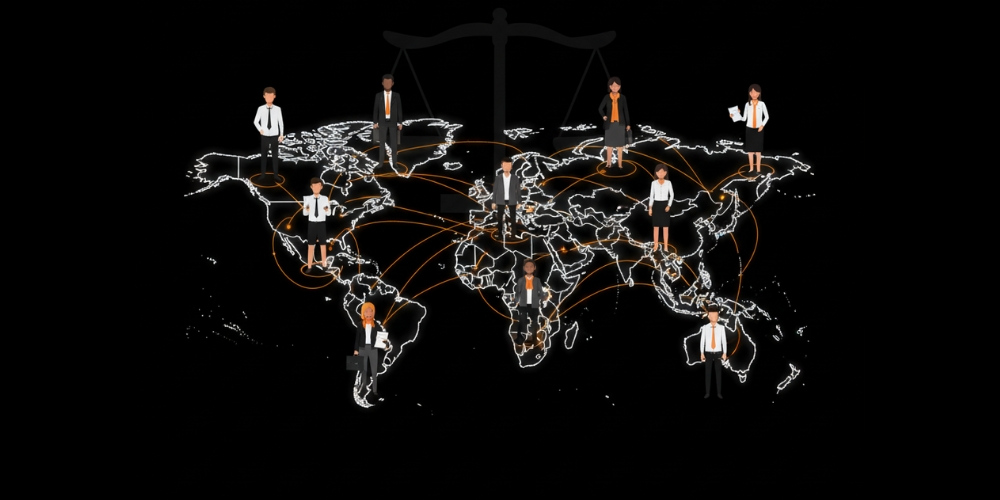
Global compliance in hiring spans every aspect of bringing on workers in foreign jurisdictions:
- Employment contracts and required clauses
- Statutory benefits (leave, social insurance, severance)
- Tax withholding and reporting
- Data privacy (GDPR, regional equivalents)
- Anti-discrimination and worker protection
- Termination procedures and notice periods
- Visa and work authorization
- Worker classification (employee vs contractor)
For example, hiring in Germany requires following German termination notice (typically 4 weeks minimum, longer with tenure), social insurance contributions, paid leave entitlements, and works council consultation. Brazil requires a 13th-month salary. The UK provides 28 days statutory paid holiday for full-time workers. UAE caps probation at 6 months.
Many companies use Employer of Record (EOR) providers or global compliance services to handle the local complexity. The investment is small relative to the risk.
Common Compliance Mistakes TA Leaders Make

Seven recurring failures.
1. Misclassifying contractors vs employees
The assumption that contractor status reduces compliance burden is dangerous. RemotePass research shows misclassification in countries like Brazil, France, and Germany triggers substantial back-payment obligations, fines, and litigation.
2. Neglecting data privacy regulations
Cross-border candidate data flows require GDPR (EU), CCPA (California), PIPEDA (Canada), and many similar frameworks. Forgetting consent mechanisms or encryption requirements creates direct legal exposure.
3. One-size-fits-all contracts
Using a US employment template in five other countries ignores local clause requirements — probation rules, severance entitlements, notice periods, statutory benefits. Generic contracts often fail enforcement.
4. Ignoring statutory benefits
Mandatory holiday pay, social insurance contributions, maternity/paternity leave, severance — overlooking any of these creates back-payment exposure plus legal action risk.
5. Over-relying on HQ legal team
US-based legal counsel rarely has the depth on Brazilian labour tribunals, French union dynamics, or Indian compliance specifics. Local counsel or EOR providers fill the gap.
6. Skipping periodic compliance audits
Regulations change. Models that worked in 2023 may not work in 2026. Without quarterly or semi-annual reviews, compliance drift becomes legal exposure.
7. Undervaluing cultural expectations
Some benefits aren't legally required but are culturally expected — transport allowances in UAE, housing in Singapore, lunch vouchers in France. Missing these doesn't create legal exposure but undermines competitiveness in hiring.
Risks of Compliance Failures
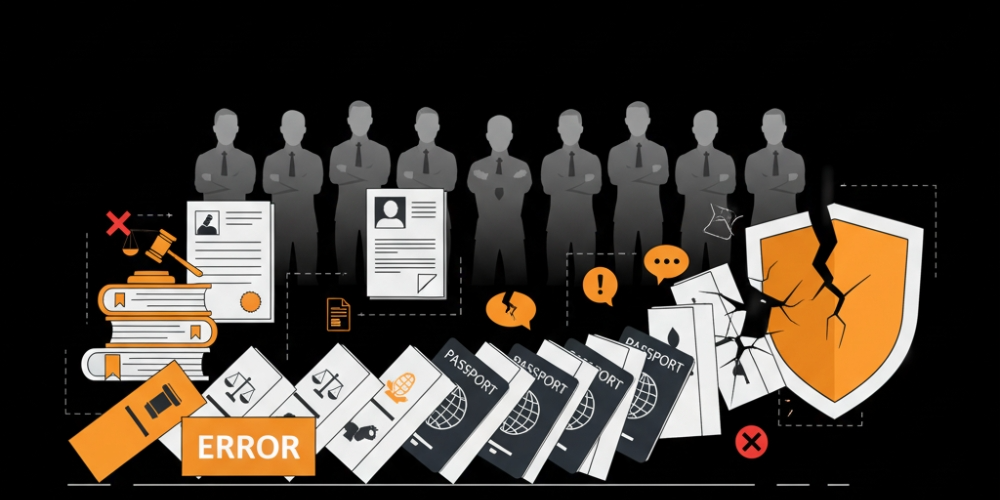
Seven categories of consequence worth quantifying.
Fines and penalties
US labor violations can produce multi-million dollar fines. Many jurisdictions impose daily penalties per violation. Multiple-country exposure multiplies fast.
Back pay and contributions
Courts that find misclassified workers were actually employees often order back salary, benefits, and social contributions retroactively.
Lawsuits and government action
Foreign litigation is expensive — local counsel, translation, jurisdiction-specific procedure. Settlement costs typically exceed US equivalents.
Reputation damage
International compliance failures travel fast. Glassdoor, LinkedIn, regional press all carry the story. Recruiting becomes harder in the affected market.
Operational disruption
Some jurisdictions can halt hiring or trade until violations are resolved. Operational standstill costs far exceed compliance investment.
Employee trust loss
Existing workforce notices when compliance fails. Morale drops; attrition rises; recruiting reputation suffers across markets.
Cascading scrutiny
Labour law violations often trigger tax audits, immigration investigations, and data protection breach reviews. One trigger; multiple exposures.
HR Executive's 2024 research shows 55% of companies now use HR tech specifically for compliance — up sharply year-on-year as the stakes have risen.
How TA Leaders Can Avoid These Mistakes

Five practices that consistently prevent expensive failures.
1. Partner with local experts
EOR providers (Deel, Remote, Velocity Global), local law firms, or specialized HR consultants who understand jurisdiction-specific requirements. The investment is small relative to risk.
2. Conduct compliance audits quarterly
Reviews of contracts, payroll, benefits, and data handling in each country surface gaps before regulators do. Annual reviews catch issues too late.
3. Build compliance into tooling
Workforce planning and analytics tools can flag expiring work permits, missing contract clauses, and tax deduction errors automatically. Manual processes consistently miss what tooling would catch.
4. Train HR teams continuously
Quarterly training on changes in major jurisdictions. Documentation of what's legal to ask in interviews, what data can be collected, and how to handle terminations.
5. Maintain a global compliance playbook
Living document with country-by-country requirements, updated quarterly. Used by recruiters as reference; protected by legal counsel.
Benefits of Compliance-First Hiring

Five gains from treating compliance as strategic capability.
Stronger employer brand
Candidates trust employers that respect local laws and worker rights. Reputation for fairness produces hiring advantage in competitive markets.
Fewer operational disruptions
No emergency pauses while remediation happens. Hiring continues smoothly; expansion proceeds on schedule.
Investor confidence
Sophisticated investors verify compliance practices during diligence. Strong compliance signals operational maturity and reduces perceived risk.
Better retention
Employees who see their rights honoured stay longer. The retention compounding across years is significant.
Long-term cost savings
Prevention costs dramatically less than remediation. Global compliance service fees are a small fraction of what one major violation costs.
How AI and Automation Fit In
Modern HR tech can support compliance in specific ways.
Contract templating
AI-assisted contract generation with country-specific clause libraries reduces template-error risk.
Document compliance tracking
Automated tracking of work permits, visa expirations, and required document refreshes.
Adverse impact monitoring
Continuous statistical analysis across demographic groups to flag potential discrimination patterns.
Data privacy enforcement
Consent tracking, encryption verification, retention period enforcement.
The combination of strong local partnerships + automated compliance tooling + disciplined audit processes produces the strongest results.
The Bottom Line
Global compliance in hiring isn't bureaucratic overhead — it's the operational infrastructure that determines whether international expansion produces value or creates expensive exposure. The TA leaders who treat compliance as strategic capability build hiring engines that scale safely across jurisdictions. The ones who treat it as red tape discover that the compliance failures they ignored were actually accumulating risk that catches up to them dramatically. Partner with local experts, audit periodically, build compliance into tooling, train teams continuously, and the international growth becomes sustainable rather than constantly threatened by the next regulatory surprise.
FAQs
How should we manage payroll compliance internationally?
Partner with global payroll providers (ADP, Deel, Remote, Velocity Global) or EOR services that specialize in cross-border compliance. They handle tax withholding, social contributions, and statutory reporting per jurisdiction. Some companies integrate this with their HRIS for real-time visibility.
Can AI tools genuinely help with hiring compliance?
Yes — with guardrails. AI tracks contract templates, flags missing clauses, ensures mandatory checks complete, and monitors adverse impact across demographics. Human review remains essential for consequential decisions.
What's the difference between workforce compliance and workforce planning?
Compliance ensures legal and regulatory requirements are met across hiring, payroll, and employee rights. Workforce planning forecasts future hiring needs and aligns headcount with business strategy. Both matter; they serve different functions.
How often should compliance audits happen?
Quarterly for high-volume international hiring; semi-annually for smaller scale. Regulations change too often for annual-only review to be reliable.
What's the single highest-leverage compliance investment?
Partnership with an EOR or global compliance services provider for the jurisdictions where you have meaningful hiring. The cost is small relative to risk; the operational simplification is significant.
Keep reading


