

Adverse Impact in Recruitment: How to Spot and Prevent It
Adverse impact in hiring explained — definition, four-fifths rule, common causes, examples, and how to prevent it while staying compliant.
Ployo Team
Ployo Editorial
TL;DR
- Adverse impact = neutral hiring methods disproportionately harming protected groups.
- Four-fifths rule: selection rate under 80% of highest group signals impact.
- Common causes: biased tests, height/weight rules, degree gatekeeping, AI trained on biased data.
- Prevention: job-related assessments, structured interviews, regular audits.
- AI can both create and reveal adverse impact — use with verification.
Some job ads say "everyone can apply" but hiring outcomes tell a different story. Adverse impact is hiring's quiet failure — neutral-seeming rules pushing certain groups aside without anyone intending harm. This guide explains what it is, how to measure it, what causes it, and how to prevent it.
What Adverse Impact Means
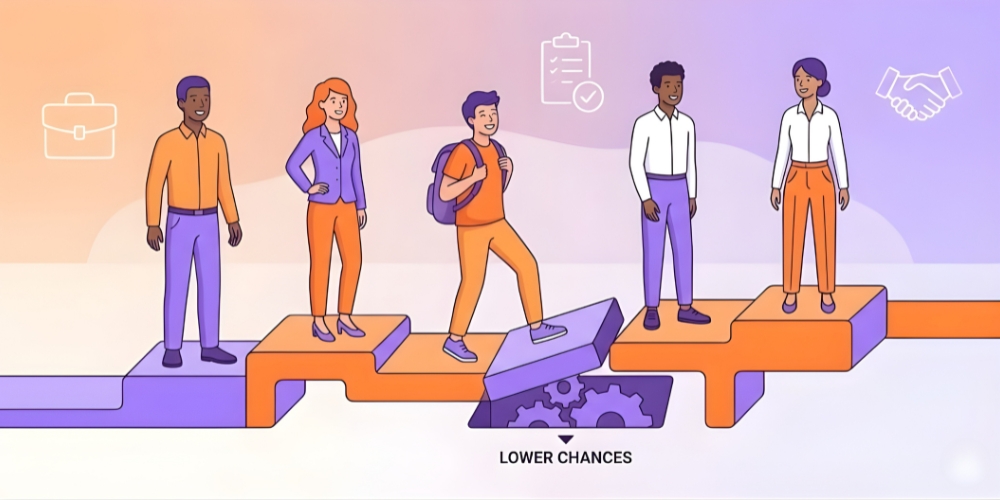
Also called "disparate impact" — when a neutral-seeming hiring or selection method has disproportionately negative effect on a group defined by race, gender, age, or other protected characteristic.
Same rule applied to everyone; one group disproportionately eliminated. That's adverse impact, regardless of intent.
In many countries (including the US), these practices can be legally challenged if they're not job-related or necessary for fair performance.
How to Identify It
The four-fifths rule
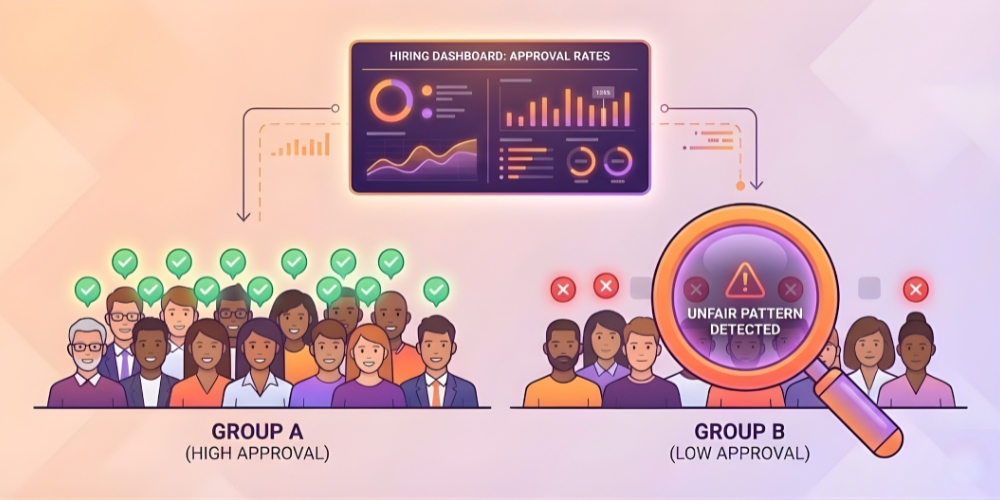
Per the Uniform Guidelines, if a group's selection rate is less than 80% of the highest-selecting group, possible adverse impact is signalled.
Example: 100 men + 100 women apply. 50 men hired, 35 women hired. Women's rate = 35/50 = 70%. Below the 80% threshold = warning sign.
Not always pure math. Organisations must also examine whether the process is "job-related and consistent with business necessity."
Per recent research on hiring discrimination, discrimination remains widespread across many protected grounds — not just race or gender, but age, disability, and appearance.
Common Causes
Five recurring sources of unintentional adverse impact.
Biased or irrelevant tests
General aptitude tests that don't reflect job needs. Per a field study cited in ResearchGate, a 79% women-vs-men hiring rate was flagged as adverse impact.
Strict screening criteria
Height or weight rules disadvantaging women. Physical ability tests pushing out older applicants disproportionately.
Background or credit checks
May disproportionately disqualify applicants from racial or economic minority groups.
Over-reliance on credentials
Certain degrees, years of experience, or language proficiency requirements disadvantage underrepresented groups with unequal access to opportunities.
Pre-existing structural inequality
Even neutral tests reinforce inequality when groups have unequal prior education, training, or resource access.
When using AI to screen, verify fairness — and watch out for online assessment myths claiming neutrality while embedding bias.
Examples in Hiring
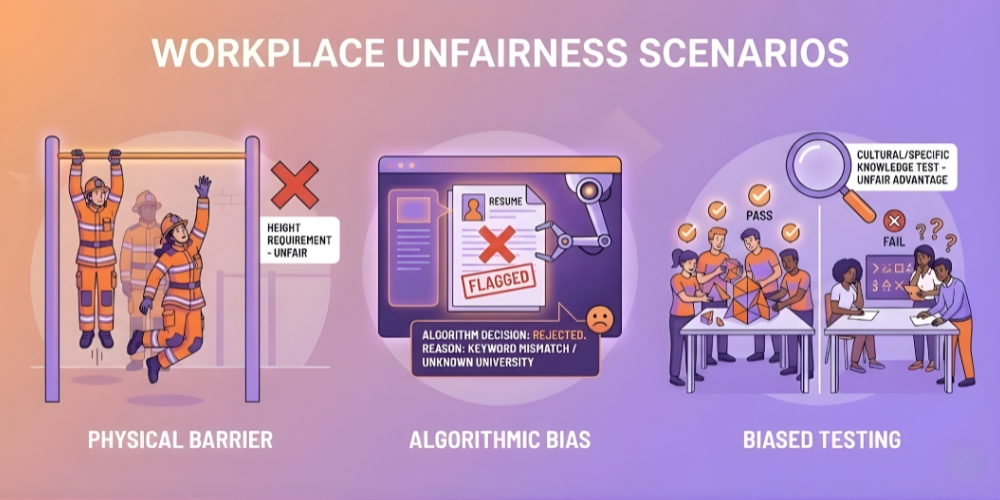
Four common patterns.
Skills tests filter out women
Tech firm uses logic-heavy game for junior roles. Looks neutral; women pass at much lower rates. Test didn't measure actual job tasks.
Height requirements in public safety
Old fire and security height rules push out female applicants who could perform safely.
Degree gatekeeping
Specific university requirements exclude skilled workers from less privileged communities.
AI screening trained on biased data
Resume screening tech learning from biased historical hiring keeps choosing similar profiles, creating unfair filtering by race, age, or gender.
How to Prevent Adverse Impact
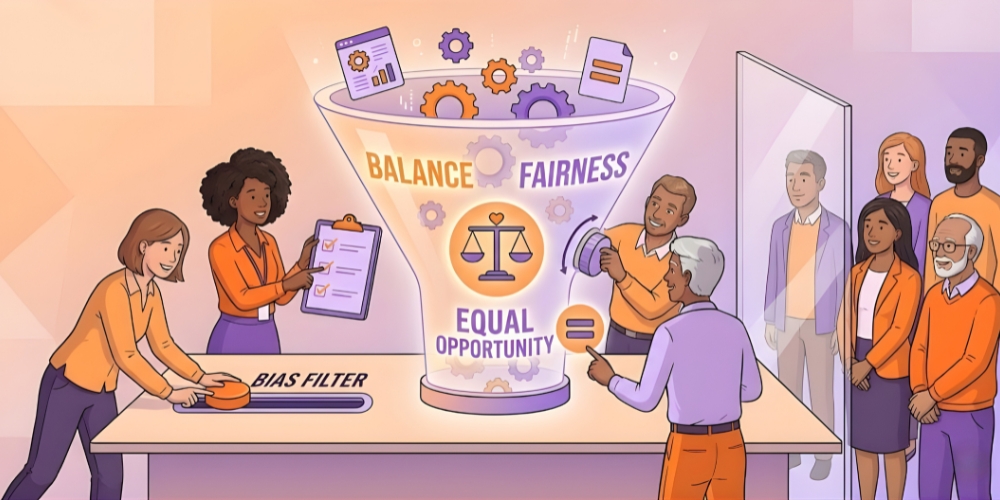
Five practices.
Hire based on truly job-related skills
Audit every requirement. Not tied to daily work or safety? Remove it.
Validate assessments
Every test job-related. Run fairness checks after hiring new roles or entering new markets.
Use structured interviews
Same questions to everyone, scored on clear rubrics. Reduces hidden preference.
Track selection patterns
Compare applications to hires. Rule causing drop in success rates for a protected group? Revisit.
Educate hiring teams
Recruiters and managers must understand what adverse impact is and how it occurs without intent. Awareness drives accountability.
Use tools already checked for fairness and AI recruitment compliance instead of building risky screening from scratch.
The Role of AI
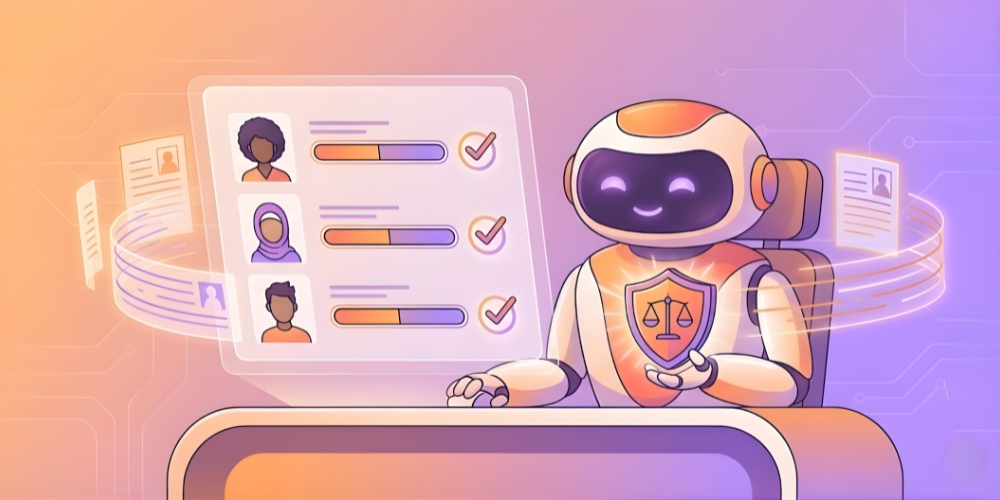
Three contributions when used carefully.
Pattern detection
AI highlights trends humans miss — small group-based differences in pass rates. Crucial for early identification.
Consistent scoring
Same standards applied uniformly across candidates. Reduces opinion-based filtering.
Real-time monitoring
AI keeps watch in the background, alerting teams when one group starts slipping. Helps maintain EEOC-compliant assessments continuously rather than periodically.
The Bottom Line
Fair hiring is more than valuing diversity — it's actively seeing where the process holds people back unintentionally. When you check rules, measure outcomes, and adjust early, you protect candidates, strengthen trust, and build teams that genuinely reflect the talent around you. Fair systems help everyone grow.
FAQs
How do you measure adverse impact?
Compare selection rates between groups. If one group's rate is under 80% of the highest, the four-fifths rule signals possible adverse impact.
What causes bias in hiring?
Biased tests, strict requirements, assumptions based on past workers, and lack of awareness about hidden inequality.
How does AI help prevent adverse impact?
Reviews results more evenly, highlights group-based gaps, supports fair screening by keeping scoring criteria consistent.
Is adverse impact illegal?
In many countries (US among them), it can be challenged legally when practices aren't job-related or necessary. Compliance matters.
What's the highest-leverage starting move?
Audit your top 3 screening filters using the four-fifths rule on the last 100 hires. Patterns surface quickly and reveal where remediation pays off most.
Keep reading


