

Internal vs External Recruitment: When to Use Each Strategy
Internal vs external recruitment is not a binary — see when each works, what the trade-offs cost, and the modern tooling that supports both well.
Ployo Team
Ployo Editorial
TL;DR
- Internal recruitment pulls from current employees; external recruitment brings new talent in. The best teams use both deliberately.
- Internal hires onboard faster, cost less, and lift retention through visible career paths.
- External hires bring new skills, fresh thinking, and faster scaling for specialised roles.
- Treat internal and external candidates with the same evaluation rigour to keep the process fair and defensible.
- Modern HR tech keeps both pipelines visible in one workflow so recruiters do not have to choose between them.
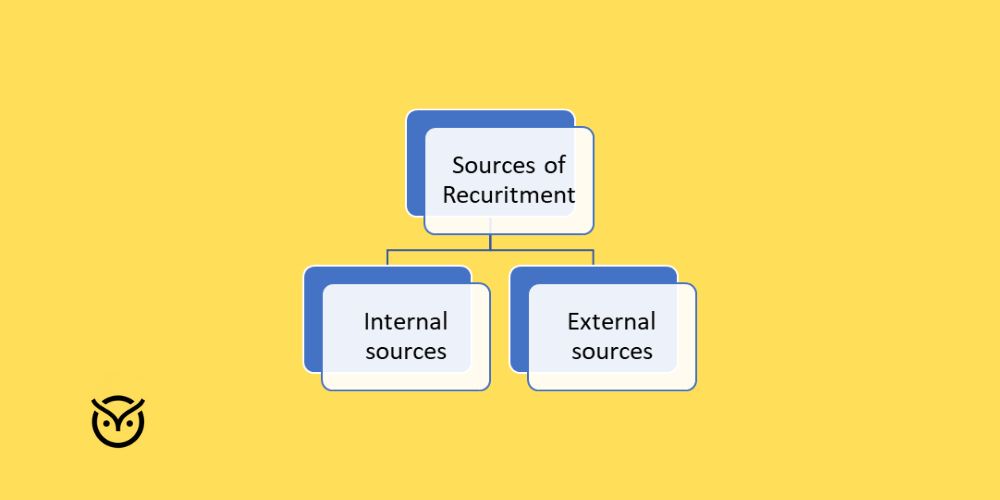
The internal-vs-external recruitment question is one of the oldest in hiring, and it has the wrong framing. The teams that hire well do not pick a side — they understand when each strategy fits, run them in parallel where appropriate, and pull from whichever pool produces the strongest candidate for the specific role. This guide walks through what each strategy actually does, the trade-offs that decide which to lean on, and the tooling that keeps both pipelines productive.
What Internal Recruitment Really Is
Internal recruitment is the practice of filling a role from inside the existing workforce — through promotion, lateral move, or transfer. It is more than a feel-good HR practice. SHRM's research on retention consistently shows that companies running visible internal-mobility programs retain employees at meaningfully higher rates because workers can see a future inside the company.
Practically, an "internal candidate" is anyone currently employed who applies for a different role — same company, different team, different scope. The benefit is structural: they already understand the company's culture, processes, and tools. Onboarding compresses; ramp time drops; the cultural-fit risk that exists with any external hire is dramatically lower.
Internal recruitment works best when the process is consistent across teams. A clean structured hiring flow applied uniformly to internal applicants protects against the perception of favouritism and keeps the bar high.
What Counts as an Internal Candidate
The "internal candidate" label covers more ground than most people think. It includes employees moving up (promotion), moving sideways (lateral), and moving across functions (cross-functional transfer). Sometimes it includes long-term contractors who have effectively been part of the team. The key signal is institutional knowledge — does this person already know how the company works?
Internal candidates deserve the same level of evaluation as external ones. The trap teams fall into is doing a softer review for someone already inside the company, which both undermines the integrity of the process and tends to produce worse outcomes when the new role genuinely needs different skills than the previous one.
What External Recruitment Really Is
External recruitment brings in candidates from outside the organisation — through job boards, sourcing, employee referrals, university programs, and professional networks. It is the right move when the team needs skills, experience, or perspectives that do not exist internally, or when scale demands more headcount than internal mobility can supply.
The pre-recruitment step is usually sourcing, which deserves its own discipline — see our talent sourcing guide for recruiters for the structured approach.
External recruitment is essential when:
- The role requires expertise the current team does not have
- The team is scaling faster than internal promotions can fill the gap
- Fresh perspective is itself the goal (e.g., a function moving in a new strategic direction)
- A leadership change is needed and internal succession is not viable
The Trade-offs, Honestly
A useful comparison.
| Dimension | Internal Recruitment | External Recruitment |
|---|---|---|
| Cost | Lower — minimal sourcing spend, faster ramp | Higher — recruiting cost + ramp time |
| Speed | Fast — known candidate, predictable timeline | Slower — sourcing, screening, onboarding |
| Cultural fit | Already established | Has to be evaluated and earned |
| New ideas | Limited — same perspectives | Strong — fresh thinking is the point |
| Morale | Lifts when promotions are visible | Can demoralise if internal candidates feel passed over |
| Risk profile | Lower (known quantity) | Higher (more unknowns) |
Wharton's research on hiring costs found that external hires for equivalent roles cost roughly 18% more in total compensation than internal moves — and often underperform their internal counterparts in the first two years, before the gap closes.
The honest read: internal recruitment is the cheaper, lower-risk default. External recruitment is the right move when the role's requirements genuinely demand it, and a recruiter who can identify which is which is more valuable than one who picks a side as a matter of principle.
How Technology Supports Both Pipelines
Modern recruiting tools keep both pipelines visible in one workflow. Applicant tracking systems show internal applicants alongside external ones. Talent assessment platforms evaluate both groups against the same rubric, which removes the perception that internal candidates get an easier path.
Some teams adopt agile recruiting workflows that explicitly run internal-mobility sourcing in parallel with external sourcing — same job opens, both pipelines feed in, the strongest candidate wins.
The tooling matters because the alternative is two separate processes with two separate biases, which is how unfair internal promotions or expensive external mishires happen.
Remote Recruitment and the Agile Hiring Cycle
Remote work has reshaped both pipelines. Owl Labs' 2024 hybrid work report found that 38% of the workforce was hybrid or remote — a 15-point jump from the prior year — which has expanded the external pool dramatically (geography stops being a constraint) and changed how internal mobility is structured (teams now compete with remote-first companies for their own talent).
The practical implication: structured video interviews, online skill assessments, and short asynchronous evaluations replace much of the in-person evaluation that used to dominate. Both pipelines now flow through the same tooling, with the same scoring criteria, evaluated by the same hiring managers.
When to Use Which
The simplest decision framework:
- Use internal recruitment when the role requires company-specific knowledge, when retention signalling matters more than fresh thinking, when a known team member can ramp into the role quickly.
- Use external recruitment when the role needs skills the team genuinely does not have, when scale requires it, when the role's success depends on perspectives that have not existed internally.
- Run both in parallel for senior or hard-to-fill roles, then compare candidates on merit. Letting both pipelines compete usually surfaces the stronger candidate either way.
Keep the conversation about career growth open with current employees so internal candidates know what roles to apply for, and review your hiring data quarterly to see which strategy has been producing the strongest hires for each function.
The Bottom Line
Internal vs external recruitment is not a binary choice — it is a portfolio decision. The best recruiting teams run both with discipline, treat internal candidates with the same evaluation rigour as external ones, and let merit decide which pipeline produces the hire. Done well, this approach lifts retention, controls cost, and keeps a steady flow of new perspectives into the team. Done badly — picking one strategy and defaulting to it — leaves talent on both sides of the wall.
FAQs
Who counts as an internal or external applicant?
An internal applicant currently works for the company and is applying for another role inside it. An external applicant has no current employment relationship and is applying from outside the organisation.
What is external recruitment in a business context?
It is the practice of sourcing and hiring candidates from outside the company — through job boards, sourcing, referrals, or recruiter networks — to fill open roles that need new skills or perspectives.
How can teams improve a remote recruitment process specifically?
Focus on clear communication, structured interviews, skill-based assessments delivered asynchronously, and short response cycles. Long silences are the most common cause of dropped candidates in remote recruitment.
What is the best platform for managing internal and external hiring together?
A modern ATS that treats both pipelines in a single view — with shared scoring rubrics, structured assessment, and visible candidate notes — is the strongest pattern. Tools that force separate workflows for each pipeline tend to produce inconsistent decisions.
Does internal recruitment limit a team's growth?
Only if it is the only strategy. Used alongside external recruitment for roles that genuinely need new perspectives, internal mobility produces some of the strongest hires available — at a fraction of the cost.
Keep reading


