

AI Talent Shortage in 2025: Real Opportunity, Real Mismatch
The AI talent shortage is real but more nuanced than headlines suggest — what the data shows, where the gap actually lives, and how to win on either side.
Ployo Team
Ployo Editorial

TL;DR
- The AI talent shortage is real, but it is a skills mismatch — entry-level oversupply with expert undersupply.
- The global AI market is projected to grow from $279B in 2024 to over $1.8T by 2030, fuelling unrelenting demand.
- Around 74% of workers report that AI-skills gaps are holding back innovation at their companies.
- For job seekers willing to build production-grade skills, the shortage is a career advantage.
- For employers, hiring strategy must shift from finding "perfect" candidates to training high-potential ones.
The AI talent shortage is one of the most-discussed and least-understood narratives in current hiring. Headlines warn of millions of unfilled roles; meanwhile, new grads report being unable to find work. Both can be true — and the way to navigate the situation depends on which side of the imbalance you are on. This guide breaks down what the data actually shows, why the gap exists, and the practical moves both job seekers and employers can make to win in 2026.
What the AI Talent Shortage Actually Is
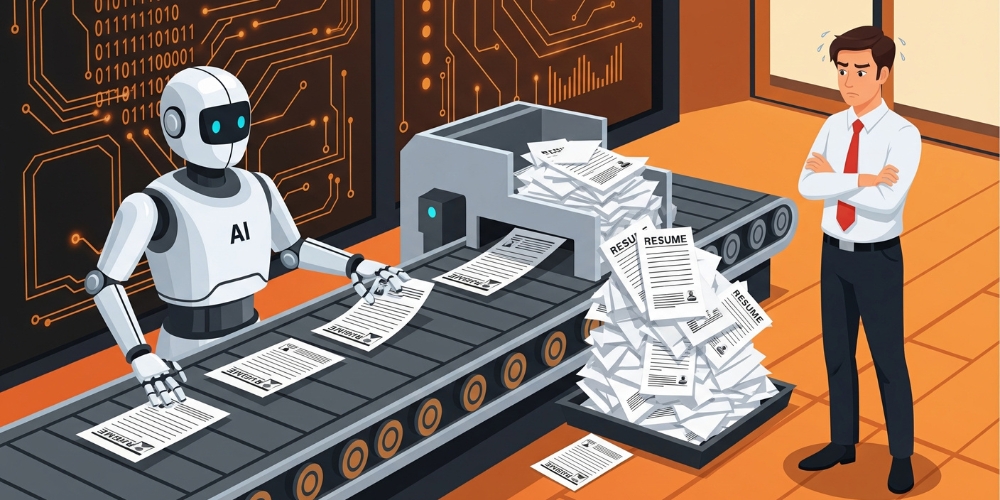
The AI talent shortage describes the gap between demand for professionals with hands-on AI skills and the supply of qualified candidates. Importantly, it is not a generic tech-talent shortage — it is a specific gap in machine learning, NLP, AI infrastructure, machine learning recruitment, and applied AI engineering.
Three structural causes drive the gap:
- Explosive demand. Grand View Research projects the global AI market to grow from $279B in 2024 to over $1.8T by 2030 — every sector now wants AI capability.
- Insufficient hands-on training. Universities graduate computer science students; most graduate without the production-grade AI experience companies actually need.
- Outdated hiring pipelines. Traditional hiring processes were not designed for the skill profiles AI roles require.
The hardest roles to fill span AI/ML engineering, data science, AI product management, AI infrastructure, and trust-and-safety specialism (particularly for generative AI tools).
What the 2025 Data Shows
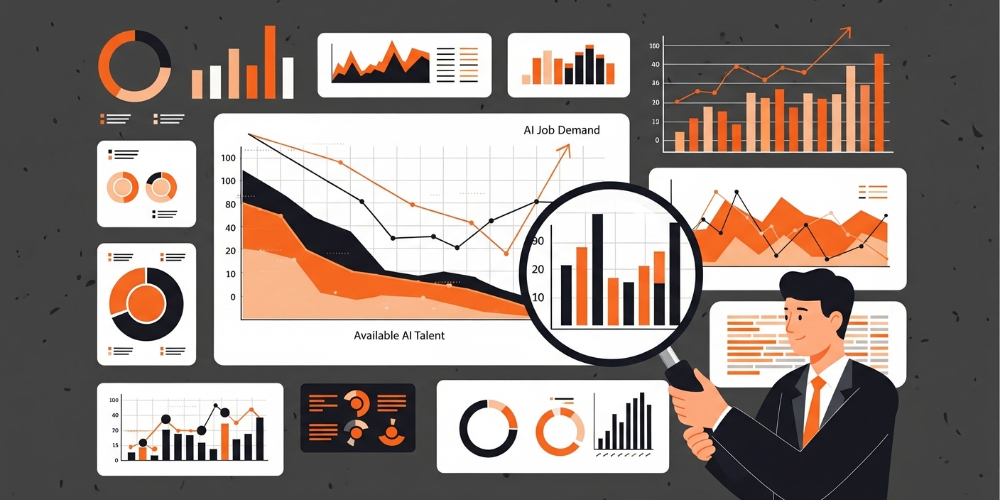
The numbers paint a clearer picture than the headlines.
Skill mismatch is the top barrier
CIO research found that 74% of workers say lack of AI-skilled employees is holding back innovation at their companies. The issue is not a shortage of applicants — it is a shortage of applicants with the right experience.
The gap spans industries
AI talent gaps are most visible in:
- Finance — fraud detection, risk modelling
- Healthcare — diagnostic AI, patient data prediction
- Retail and ecommerce — recommendation engines, supply chain optimisation
- Cybersecurity — defence against AI-driven threats
The cross-industry demand compounds the shortage because every sector competes for the same scarce pool.
Why the Shortage Is Real and Growing

The hard numbers
The World Economic Forum projected 97 million new AI-and-automation roles emerging by 2025 alongside significant gaps in qualified professionals. Gartner's late-2024 enterprise AI research found that 70-80% of enterprise AI projects fail to scale — primarily because of internal expertise gaps.
The whole tech stack is short
Evans Data Corporation reported the global developer population at around 26.3 million in 2023 — still millions short of what businesses need. In cybersecurity, ISC2's 2024 workforce study recorded 4 million unfilled roles globally. Because AI intersects with software engineering and cybersecurity, shortages in those areas compound the AI gap.
Where the skills gap actually lives
The applicant pool is large; the production-ready applicant pool is small. The specific skills in short supply:
- TensorFlow, PyTorch, and modern deep learning frameworks
- Cloud platforms (AWS, Azure, GCP)
- MLOps and data pipeline management
- Prompt engineering and LLM tuning
- AI deployment and infrastructure operation
The shortage is not "not enough people" — it is "not enough people with these specific skills."
Why Some Critics Say the Shortage Is Overhyped
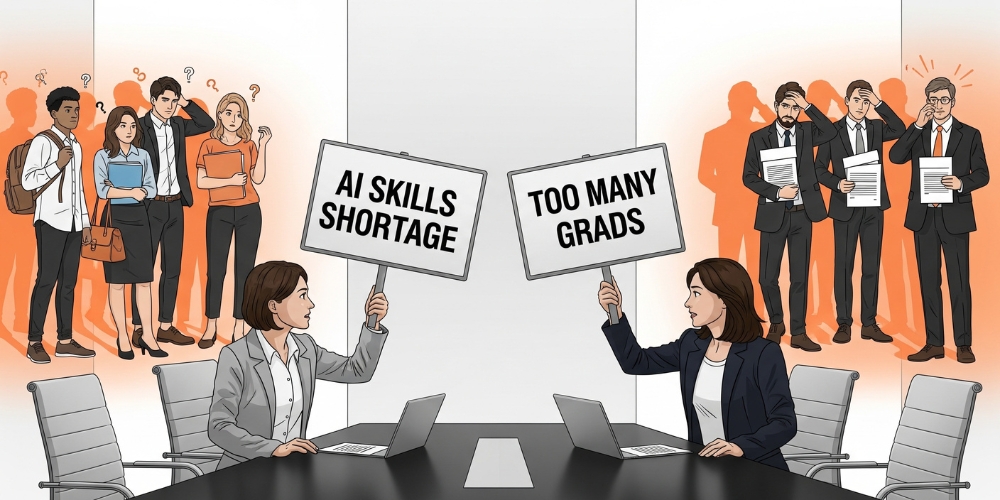
Three legitimate counterpoints worth understanding.
Entry-level oversupply
Companies cite shortages while new graduates report being unable to find AI jobs. The disconnect is real — many roles demand production-grade experience that academic programs do not provide. The market is over-supplied at junior level and under-supplied at expert level simultaneously.
AI tools handle more of the work
No-code AI platforms like DataRobot, H2O.ai, and AutoML reduce the need for engineers to build models from scratch. The argument is that fewer AI experts will be needed as tooling matures. The counter-argument: tools handle automation, but humans still frame the problem, clean the data, evaluate outcomes, and provide ethical oversight.
Companies over-specify roles
Some hiring teams write "unicorn" job descriptions — 7+ years of experience, five frameworks, three cloud platforms, two PhDs. Very few people qualify for any single posting, which fuels the talent-gap narrative without reflecting a genuine market shortage.
Each of these critiques has merit. The honest synthesis: the shortage is real for production-ready senior talent and overstated for entry-level candidates.
What This Means for Job Seekers in 2026
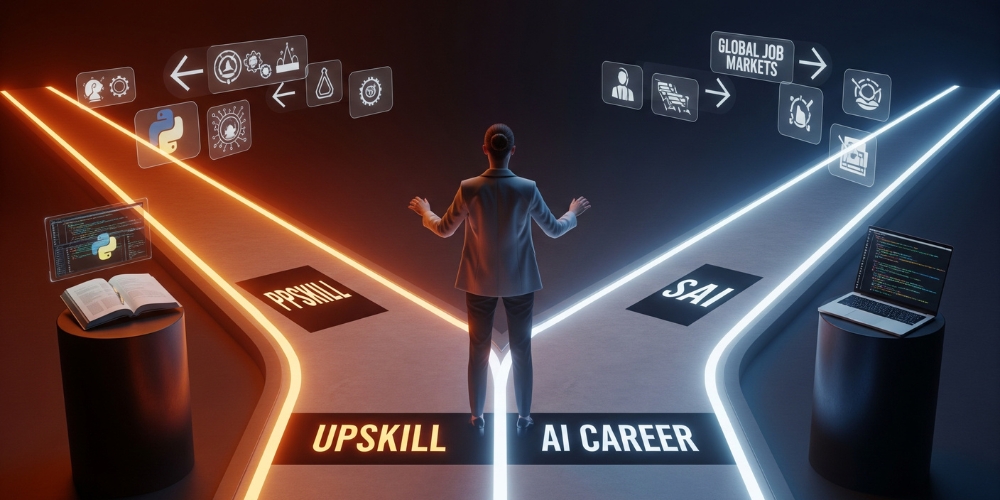
The shortage is a real career advantage if you build the right skills.
The hardest-to-fill roles right now
- AI Infrastructure Engineers (cloud-native model deployment)
- Prompt Engineers and LLM trainers
- MLOps Engineers (model lifecycle automation)
- AI Governance and Ethics Experts
- Applied AI specialists (industry-specific — fintech, healthtech, etc.)
These roles need more than coding. Strategic thinking, domain expertise, and the ability to translate AI outcomes to business value all matter.
The foundational skills that compound
- Python, SQL, data wrangling
- ML frameworks: scikit-learn, TensorFlow, PyTorch
- Cloud fluency (AWS, GCP, Azure)
- Hands-on practice with real datasets (Kaggle, Hugging Face)
- Deployment skills: Docker, Kubernetes, CI/CD for ML
Google's AI certification and Microsoft's AI Skills Initiative are strong free starting points for the foundational layer.
Pick upskilling programs with real-world deliverables
The strongest courses include hands-on projects, mentorship, and feedback loops with production-grade deployment scenarios. Pure theory courses without project work have a poor track record of producing job-ready candidates.
Geography matters less than it did
Remote-first companies prioritise skills over location. Toronto, the UAE, Berlin, and Singapore have all become real AI hiring hubs. Living in Silicon Valley is no longer a prerequisite for working at the frontier.
What Employers Should Do About the Shortage
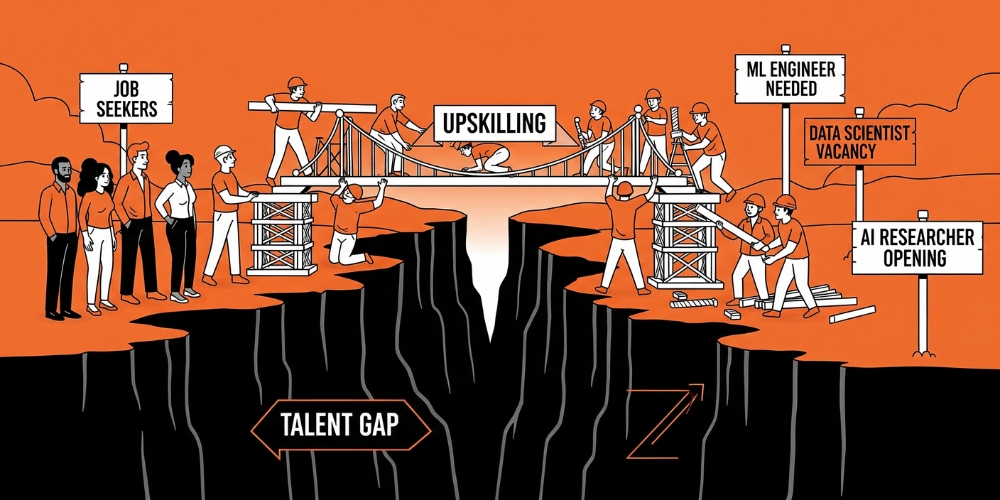
Four moves consistently differentiate companies that win on AI talent.
Rethink the hiring pipeline
Stop hunting "perfect" candidates. Instead, hire high-potential professionals from adjacent fields (software engineering, data analysis, cloud engineering) and provide structured upskilling. Loyalty compounds when companies invest in growth.
Invest in upskilling current employees
Often the best AI hire is already on your team. Launch focused programs in areas your AI roadmap actually needs, with real projects and measurable learning outcomes — not generic training that produces certificates without capability.
Build a culture AI talent wants to join
Strong AI professionals choose where to work. Open culture, freedom to experiment across functions, responsible AI practices, real growth paths, and remote/hybrid flexibility all matter. So does the substance of the work — engineers want to build tools that solve real problems, not just optimise clicks.
Broaden the talent pool geographically
Toronto (Vector Institute), Bangalore (national AI push), Berlin (research depth), Dubai (AI 2031 vision) — all produce strong AI talent that does not appear on standard US-only hiring channels. Sponsor international hires, use global job boards, and build relationships with local AI communities.
The Bottom Line
The AI talent shortage in 2025 is real, but it is more nuanced than the headlines suggest. The mismatch lives between abundant entry-level applicants and scarce production-ready senior talent — which means the strategic answer differs by which side of the hiring conversation you are on. Job seekers willing to build hands-on skills face an unusually open market. Employers willing to train high-potential candidates and broaden their talent geography can build strong AI teams without competing on US-only premium salaries. The companies and individuals that adapt to this reality fastest are the ones who will dominate the next phase of AI deployment.
FAQs
Which AI jobs are hardest to fill in 2026?
MLOps engineers, AI infrastructure specialists, ethics and compliance experts (especially for generative AI), and applied AI professionals with deep industry domain knowledge. Cross-disciplinary roles often stay open for months.
Do I need a PhD to break into AI?
No, for most applied roles. PhDs help for pure-research positions, but hands-on experience with PyTorch or TensorFlow, ML pipelines and deployment, and domain knowledge consistently matter more than formal credentials.
What do AI engineers earn in 2026?
Junior (0-2 years): $100K-$140K. Mid-level (3-5 years): $140K-$180K. Senior (5+ years): $180K-$250K+. Specialised areas (GenAI, MLOps) can push past $300K in high-cost US markets. Remote roles often trade slightly lower base for greater flexibility.
Which countries are hiring the most AI talent?
The US still leads. The UAE is growing fast under the AI 2031 Strategy. Canada has strong immigration pathways and research centres. Germany is investing heavily in industrial AI. India is rising in fintech and healthtech AI. Singapore is a government-backed AI hub.
What is the single most important skill to learn right now?
For most applied roles: hands-on MLOps experience — moving models to production reliably. The deployment side is where genuine market scarcity lives, and skills in this area command the strongest compensation premiums.


