

AI Hiring Trends in 2025: Why Soft Skills Became the New Hard Skills
AI hiring has shifted from pure technical screening to soft-skill emphasis — the trends shaping AI team hiring, the skills that decide outcomes now.
Ployo Team
Ployo Editorial

TL;DR
- AI hiring has shifted decisively toward soft skills — communication, collaboration, adaptability — alongside technical depth.
- The global AI staffing market is projected to hit $15.24B by 2030, growing 24.8% annually.
- Diverse AI teams produce around 19% higher innovation revenues than less diverse ones.
- High-profile AI implementation failures usually trace back to weak team collaboration, not weak code.
- The smartest hiring teams now treat technical fluency and soft-skill strength as equally weighted criteria.
For years, AI hiring optimised almost entirely for technical depth — model expertise, math fluency, paper output. That model produced highly skilled teams that often still failed to ship working AI systems. The reason was rarely technical; it was usually communication, collaboration, or organisational alignment. The 2025 shift recognises this directly: soft skills are now treated as equally important as technical credentials in AI hiring. This guide walks through the trends shaping AI hiring now, why soft skills are taking centre stage, and the specific traits employers are screening for.
How the AI Talent Landscape Changed
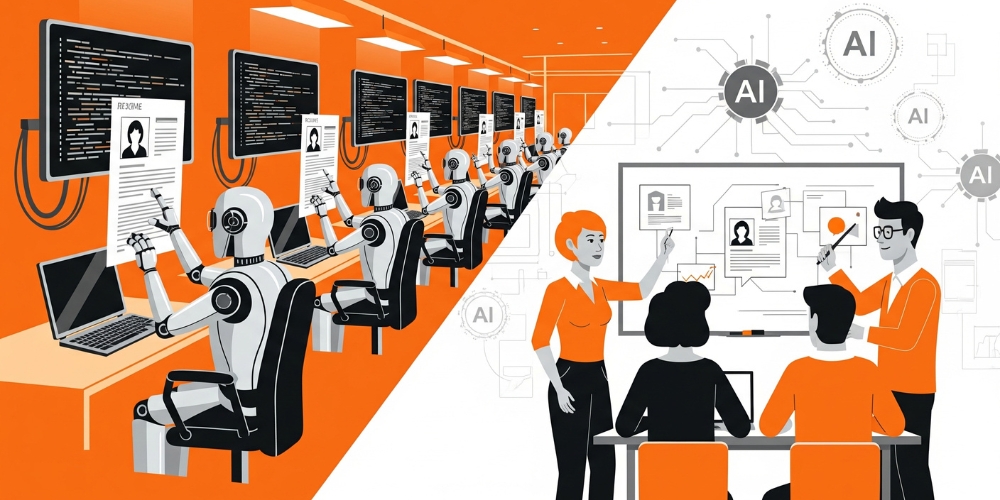
The market is growing fast and the expectations are evolving with it. The Grand View Research AI HR market analysis projects the global AI staffing sector to reach $15.24 billion by 2030, growing at 24.8% per year.
Four structural shifts drive the soft-skill emphasis.
1. Automation alone is not enough
The framing has moved from "automation vs human" to "automation plus intelligence." Automated pipelines accelerate hiring; AI tools surface candidate signal; but neither replaces the judgement that decides whether a candidate will actually thrive in a real team. Teams need people who can pivot, cross-collaborate, and communicate under pressure — capabilities that code skill alone cannot guarantee. Strong teams pair tooling with structured hiring methodology.
2. Total workforce management has become standard
Modern HR teams track the full employee journey — engagement, collaboration patterns, project effectiveness — not just hiring metrics. The data shows which soft-skill signals predict long-term success, and hiring criteria are adjusting accordingly.
3. Remote collaboration is now the default
Post-pandemic, hybrid and remote AI roles are standard. Async communication, digital collaboration fluency, and emotional intelligence have all become baseline requirements, not differentiators.
4. Diversity is a measurable performance signal
Brihan Consultants' research on leadership diversity found that AI teams with high cognitive and demographic diversity produce around 19% higher innovation revenues. The hiring implication is concrete — inclusive job descriptions and structured screening for varied perspectives directly affect performance.
Why Soft Skills Matter More in AI Hiring Now
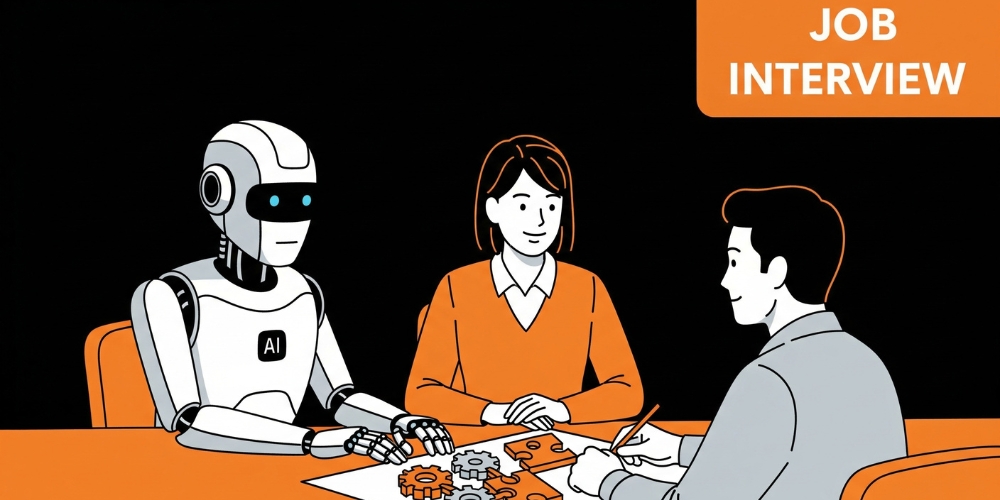
The shift is not philosophical — it is operational. AI teams without strong communication, alignment, and emotional intelligence consistently underperform technical equivalents that have those traits.
The hidden cost of pure hard-skill hiring
High-profile AI deployments fail more often than the press notices. The root cause is almost never the model — it is the organisational system around the model. Teams that cannot align with stakeholders, that miscommunicate user requirements, or that resist iterative feedback ship technically impressive failures.
AI is now a team sport
The rise of AI staffing across functions means data scientists, product managers, ethicists, engineers, and customer-facing staff all work on the same launches. Pure individual brilliance is rarely enough — the candidates who succeed are the ones who translate work clearly, give and receive feedback, and make decisions under ambiguity with others.
Communication has become a differentiator
The World Economic Forum's 2025 Future of Jobs Report identifies emotional intelligence, listening, and resilience as top skills across industries — and particularly in AI roles where the work touches users, ethics, and complex business decisions.
AI-driven hiring still requires human insight
Ironically, the better AI screening becomes at parsing technical resumes, the more human judgement matters in evaluating empathy, adaptability, and team fit. Modern hiring uses AI as a co-pilot — surfacing patterns from public profiles, scoring collaboration signals — while humans evaluate the qualitative read on coachability and curiosity.
The Soft Skills Most in Demand for AI Roles
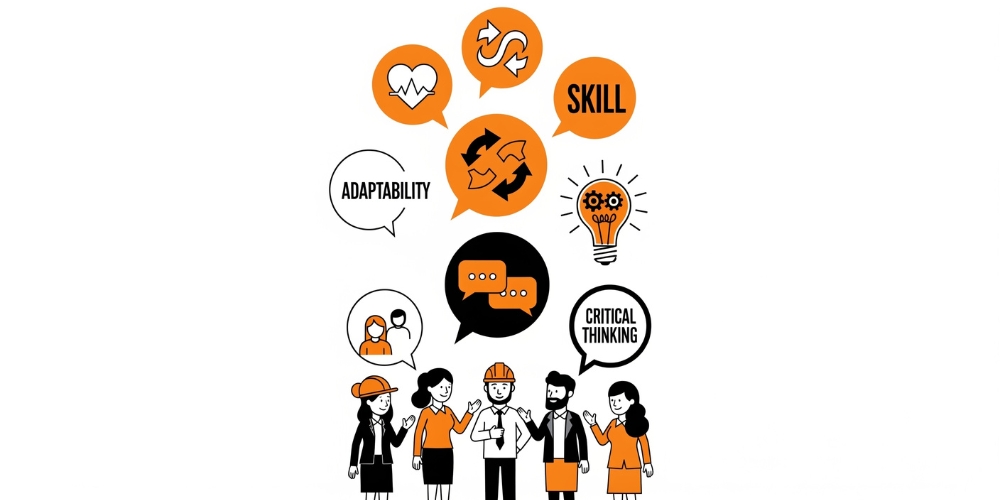
Five soft skills consistently top AI hiring requirements.
1. Communication (written and verbal)
The most screened-for soft skill across AI recruiting agencies. Engineers must explain complex models to non-technical stakeholders; data scientists must produce visualisations that drive decisions; AI ethicists must translate principles into engineering requirements. Poor communication delays products, misaligns requirements, and creates team tension that compounds.
2. Collaboration and teamwork
AI now spans marketing, operations, customer experience, and ethics. Cross-functional collaboration is non-negotiable. Hiring teams increasingly prioritise candidates who have worked in agile pods or remote teams before — real evidence of working effectively across boundaries.
3. Emotional intelligence
AI ethics, bias mitigation, and inclusive design all require empathy. Engineers must think beyond data to impact. Emotional intelligence helps team members navigate conflict, surface concerns from quieter contributors, and ensure AI systems are built responsibly.
4. Adaptability
What worked six months ago may be obsolete today. LLMs, multi-modal models, and regulatory frameworks shift quickly. Employers want candidates who treat change as normal rather than threatening — adaptability separates strong AI professionals from talented but rigid ones.
5. Critical thinking
AI engineers and data scientists must continuously challenge data sources, model choices, and real-world applications. "Can this scale?" "Is this creating bias?" "Does the user actually benefit?" Hiring managers increasingly run case-style interviews and AI scenario probes to evaluate critical thinking directly, not just technical fluency.
Real-World Examples of Soft-Skill-First AI Hiring
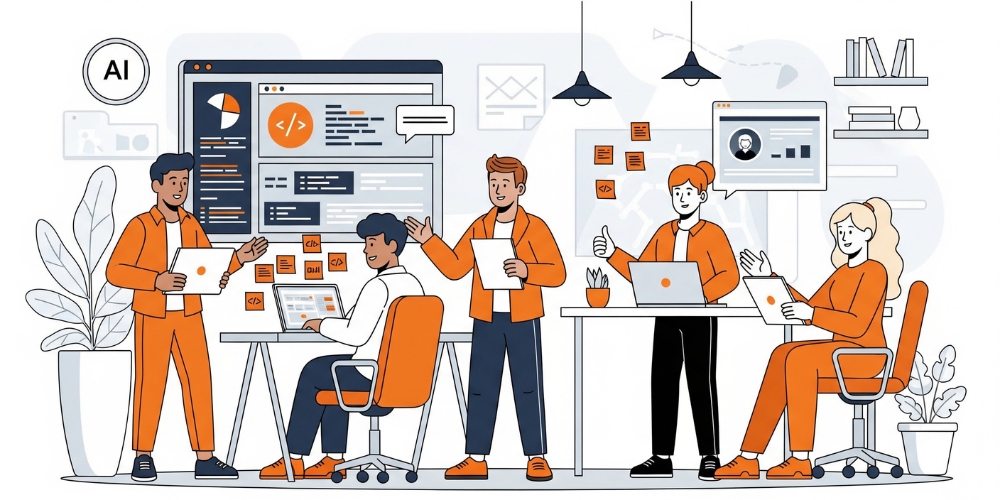
Two companies that have made soft-skill-first AI hiring measurable.
Google DeepMind: collaboration-first team structure
DeepMind is known publicly for breakthroughs in reinforcement learning and protein folding. Less publicly known is how deliberately the teams are structured for cross-disciplinary collaboration. Their ethics-society initiative pairs ethicists with engineers and psychologists with product managers from the start of projects.
The result: AI research that is both technically novel and considers impact from day one — and engineers who develop cognitive empathy, structured communication, and inclusive feedback skills as core competencies.
Salesforce AI: soft skills as performance KPIs
Salesforce's AI organisation builds soft-skill assessment directly into performance reviews. Their published approach evaluates engineers not just on code quality but on their ability to explain model decisions to business users, mentor junior staff, and contribute to ethical discussions.
Their internal workforce management system tracks project retrospectives specifically for interpersonal effectiveness. The measurement keeps the soft-skill emphasis from drifting into platitude — it is grounded in observable contribution.
The Bottom Line
AI hiring in 2025 has moved decisively beyond the "best coder wins" model. The teams that consistently ship working AI systems combine technical excellence with deliberate emphasis on communication, collaboration, adaptability, emotional intelligence, and critical thinking. Hiring managers, recruiters, and founders building AI organisations now look beyond credentials to evidence of these capabilities. The companies that get this balance right build measurably better AI products; the companies that hold to pure technical screening keep producing impressive prototypes that never ship at scale. Treating soft skills as the new hard skills is not soft thinking — it is what the data on AI team performance now consistently supports.
FAQs
Are soft skills more important than coding skills for AI roles?
Not more important — equally important. Technical depth is necessary; soft skills are what turn that depth into shipped impact. The strongest hires combine both.
What are the most-demanded soft skills for machine learning engineers in 2026?
Communication (explaining model outputs to non-technical stakeholders), critical thinking (evaluating fairness and performance), adaptability (working in fast-changing environments), collaboration (aligning with diverse teams), and empathy (designing human-centred AI systems).
How do recruiters assess soft skills in remote hiring?
Behavioural interviews, asynchronous video assessments, soft-skill scoring platforms like HireVue or Spark Hire, and review of candidate behaviour on platforms like GitHub or in code reviews. The combination produces a fuller picture than any single signal.
Why do AI projects fail even when the technical team is strong?
Most failures trace to alignment, communication, or collaboration issues — not technical capability. Successful AI projects require integration across business, ethical, and engineering perspectives, which fails without strong soft skills regardless of model quality.
What is the single most underrated soft skill for AI hiring?
Adaptability. The pace of change in AI tooling and approach is too fast for rigid candidates to keep up. Engineers who treat new methods as opportunity rather than threat consistently outperform technically equivalent peers who do not.


